
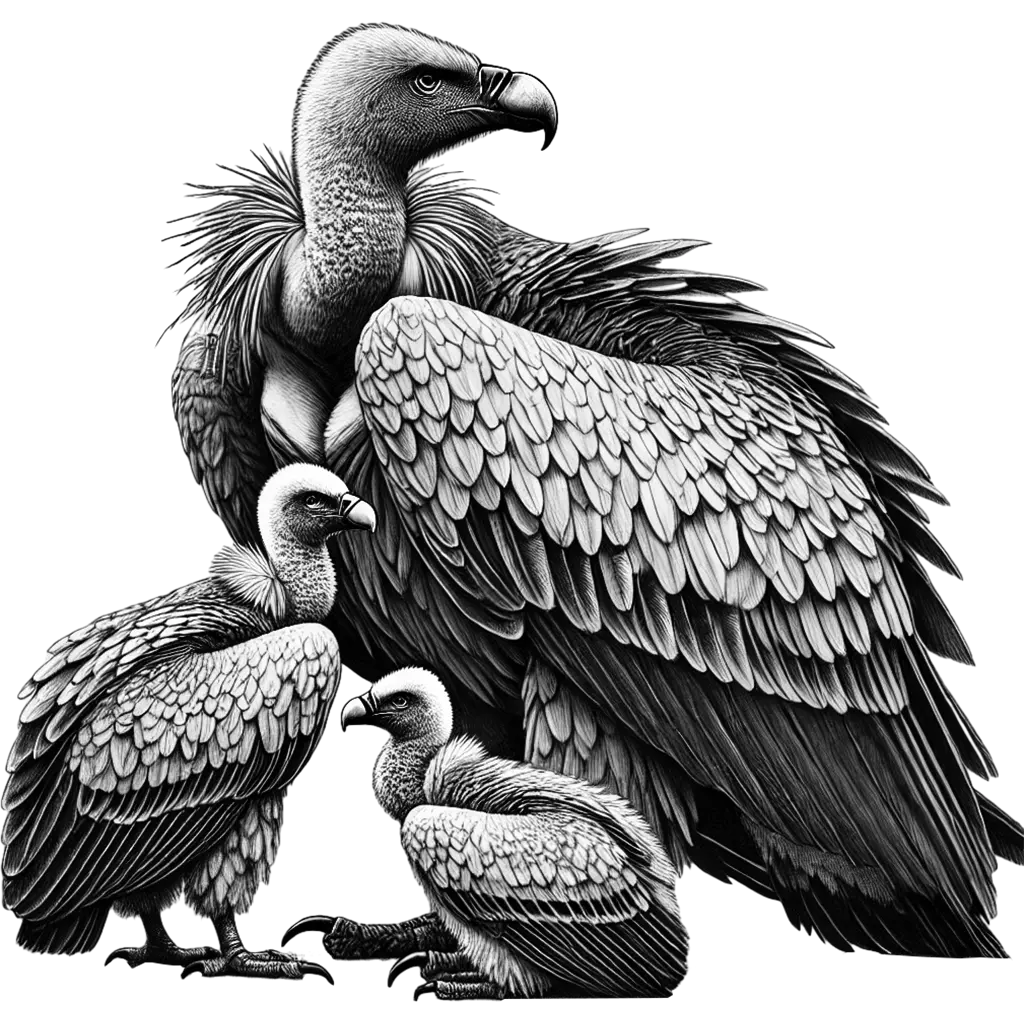
Top ten fascinating facts about
Eurasian Griffon Vulture
Gyps Fulvus
The Eurasian Griffon Vulture boasts an impressive wingspan reaching up to 2.8 meters. These vultures are essential for ecosystems, consuming carrion and reducing disease spread. They are social birds, often found in large groups, gliding effortlessly on thermals while searching for food. Their keen eyesight enables them to spot carcasses from great heights, ensuring they efficiently fulfill their ecological role.
The Eurasian Griffon Vulture has an impressive wingspan of up to 9 feet (2.8 meters)
With one of the widest wingspans among vultures, the Eurasian Griffon Vulture is a majestic sight soaring in the sky. This massive wingspan allows them to glide effortlessly on thermal currents, conserving energy as they search for food over vast distances. Their soaring flight is a remarkable adaptation to their scavenging lifestyle.
They are highly social birds that feed and roost in large colonies
Eurasian Griffon Vultures are known for their social nature, often gathering in large groups to feed on carcasses or roost on cliffs. These communal behaviors not only enhance their ability to locate food but also provide safety in numbers. Social living is a key aspect of their survival strategy in the wild.
They play a crucial ecological role by cleaning up animal carcasses and preventing the spread of diseases
As scavengers, these vultures are nature's cleanup crew. By consuming the remains of dead animals, they help prevent the spread of diseases that could arise from decomposing carcasses. Their efficient removal of dead matter is vital for maintaining the health of their ecosystems and controlling potential outbreaks.
Their bald head and neck are perfect adaptations for their scavenging lifestyle
The Eurasian Griffon Vulture's bald head and neck might look unusual, but this feature serves an important purpose. It prevents feathers from becoming soiled with blood and bacteria when feeding inside carcasses. The lack of feathers makes it easier to keep clean, reducing the risk of infections and keeping them healthy.
They nest on high cliffs in mountainous regions across Europe, North Africa, and Asia
These vultures prefer nesting on inaccessible cliffs, which offer protection from predators and a strategic vantage point. Their nests are large platforms made of sticks and can be used for several years. This preference for high-altitude nesting sites is crucial for the safety of their eggs and chicks.
They have exceptional eyesight, allowing them to spot carcasses from great heights
Eurasian Griffon Vultures possess keen vision, estimated to be eight times sharper than that of humans. This extraordinary eyesight enables them to detect food sources from miles away while soaring at high altitudes. Their visual acuity is essential for locating carrion in the vast landscapes they inhabit.
They can soar at altitudes of over 10,000 feet (3,000 meters)
These vultures are masters of the sky, capable of reaching impressive heights by riding thermal updrafts. Soaring at such altitudes allows them to cover extensive areas in search of food with minimal energy expenditure. Their high-altitude flights are a testament to their remarkable adaptation to aerial life.
They are long-lived birds, with some individuals reaching over 40 years in the wild
Eurasian Griffon Vultures have a slow reproduction rate but compensate with their longevity. They typically breed once a year, raising a single chick. Their long lifespan helps maintain population numbers despite their low reproductive output, making their conservation even more critical.
Their populations declined due to poisoning and habitat loss, but conservation efforts are aiding their recovery
In the past, these vultures faced significant threats from poisoning (both intentional and accidental), habitat destruction, and reduced food availability. Conservation measures like legal protection, feeding programs, and habitat preservation have been implemented, leading to population recoveries in some regions.
They have been successfully reintroduced to areas where they had become extinct, such as the Alps and Sardinia
Thanks to dedicated conservation and reintroduction programs, Eurasian Griffon Vultures have returned to parts of their historical range. Projects in the Alps, Sardinia, and other regions have seen these birds re-established, contributing to biodiversity and helping to restore the ecological balance in these areas.
Check Out Other Birds
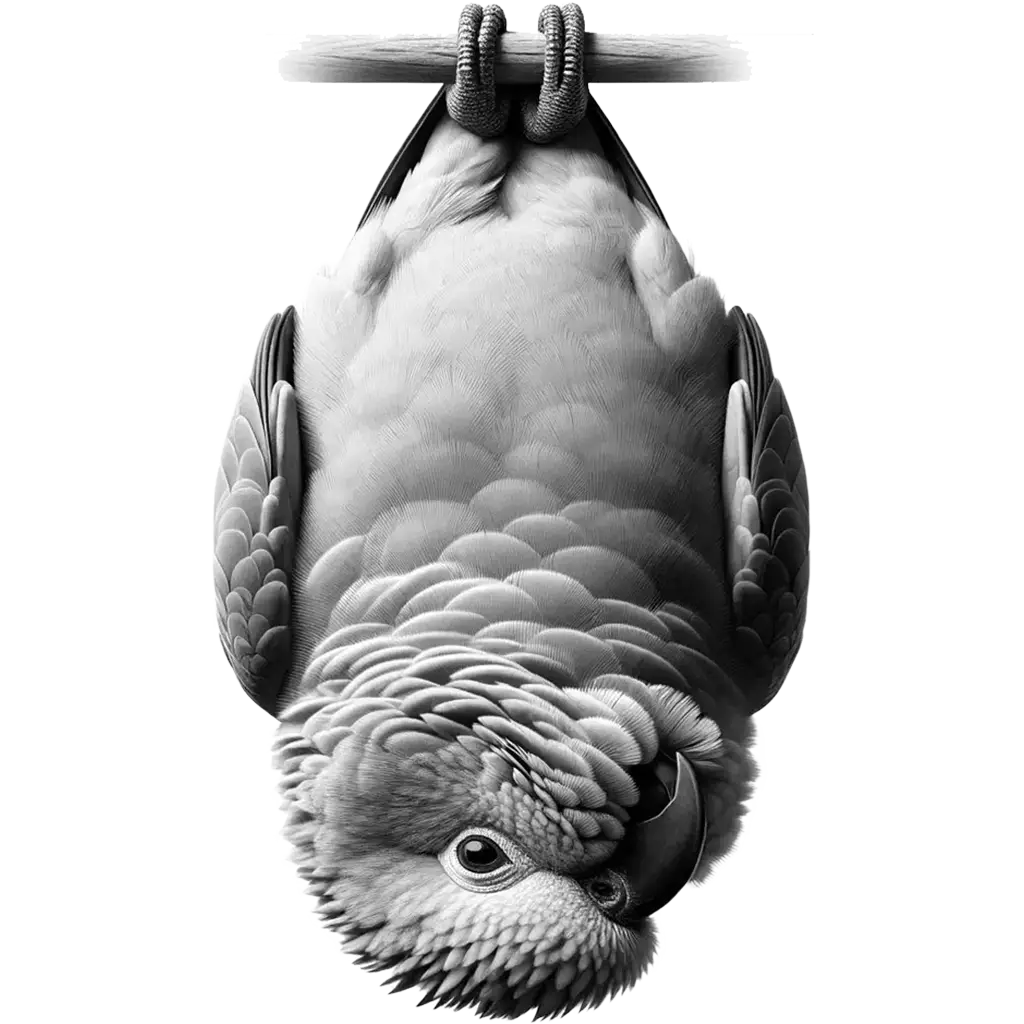
The Great Hanging Parrot, loriculus stigmatus, is a small, vibrant bird endemic to the islands of Sulawesi, Togian, Sula, and Banggai in Indonesia. This species is part of the Psittaculidae family, known for their ability to hang upside down while feeding or resting, a unique behavior from which their name
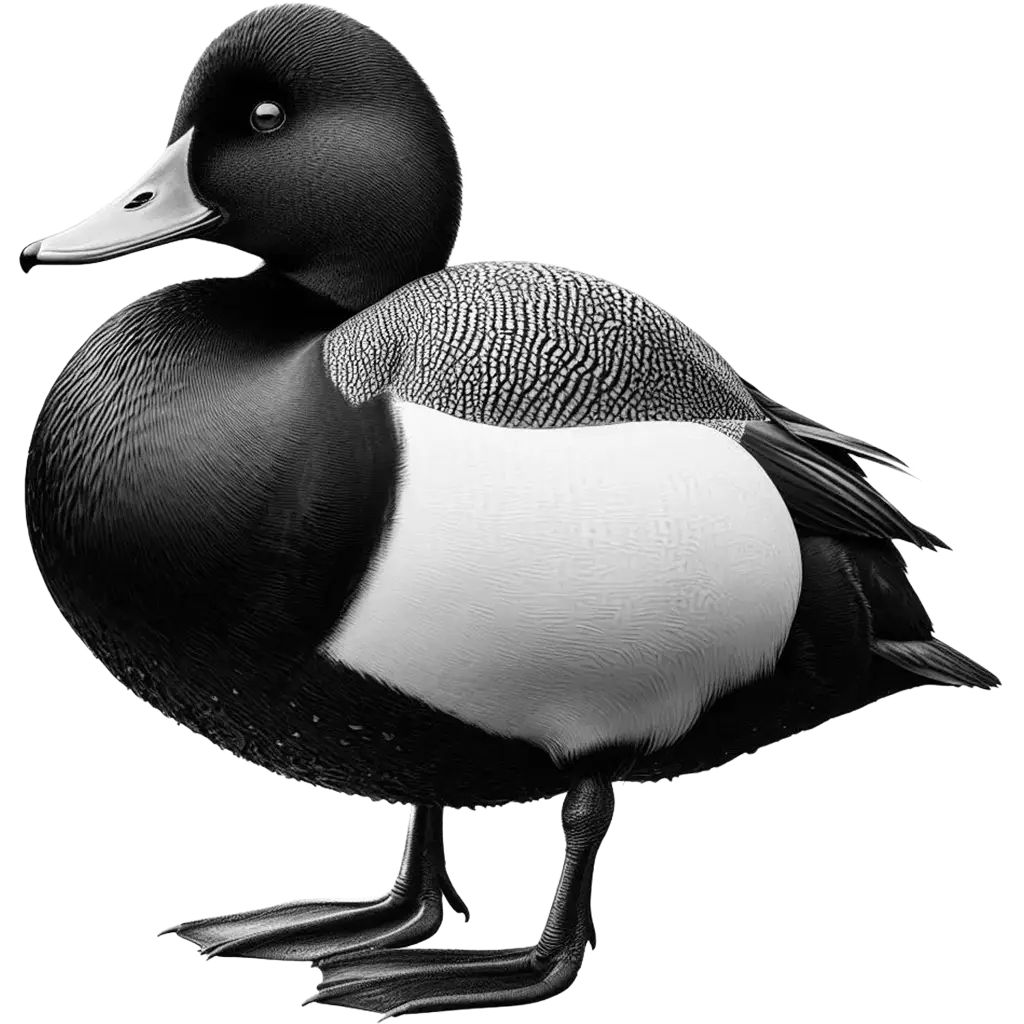
The Greater Scaup, aythya marila, is a medium-sized diving duck known for its circumpolar distribution, breeding in the northernmost reaches of Europe, Asia, and North America, and wintering further south in coastal bays, estuaries, and inland lakes. Males are recognizable by their dark, iridescent green heads, bright yellow eyes, and
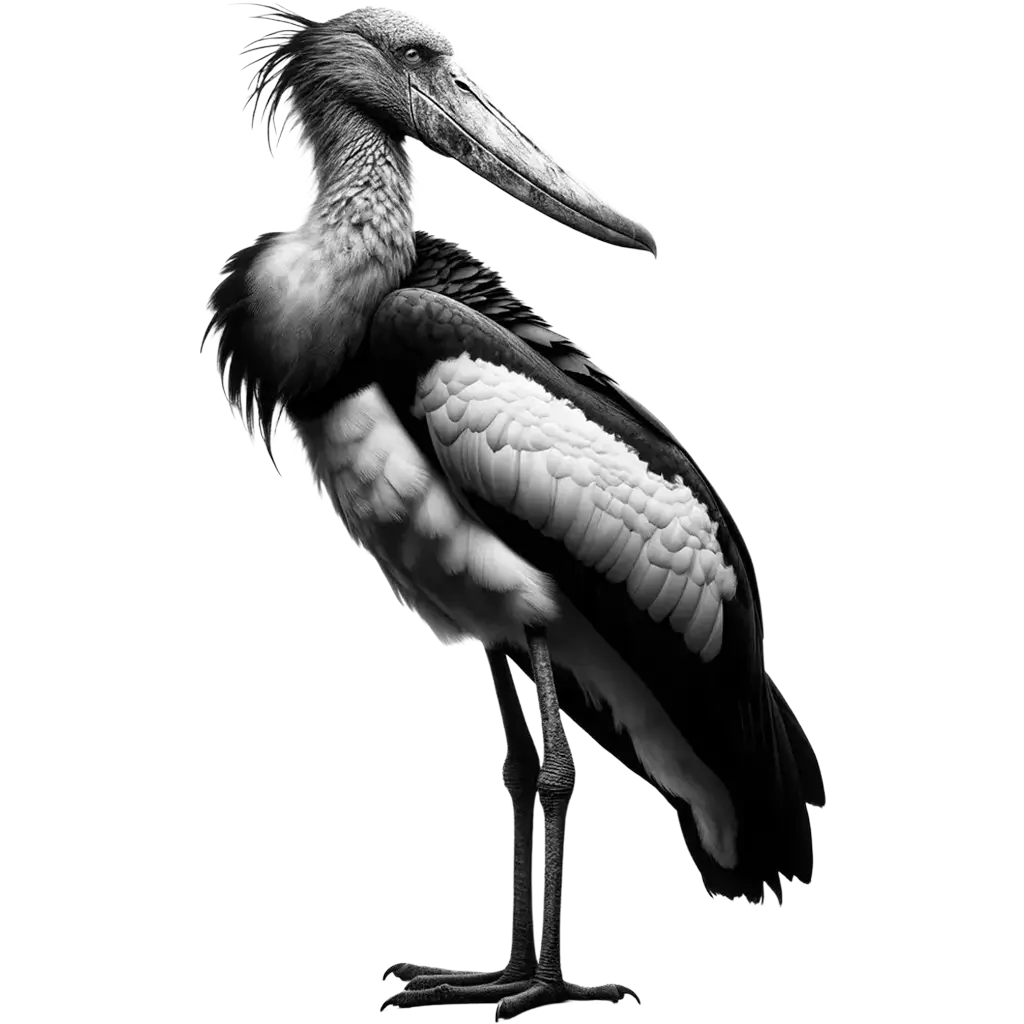
The Greater Adjutant, leptoptilos dubius, is a large stork standing at an impressive height of up to 1.5 meters with a wingspan reaching 2.5 meters. Its appearance is distinctive with a bald head and neck, a heavy bill, and a predominantly dark grey plumage, except for the white underparts. The
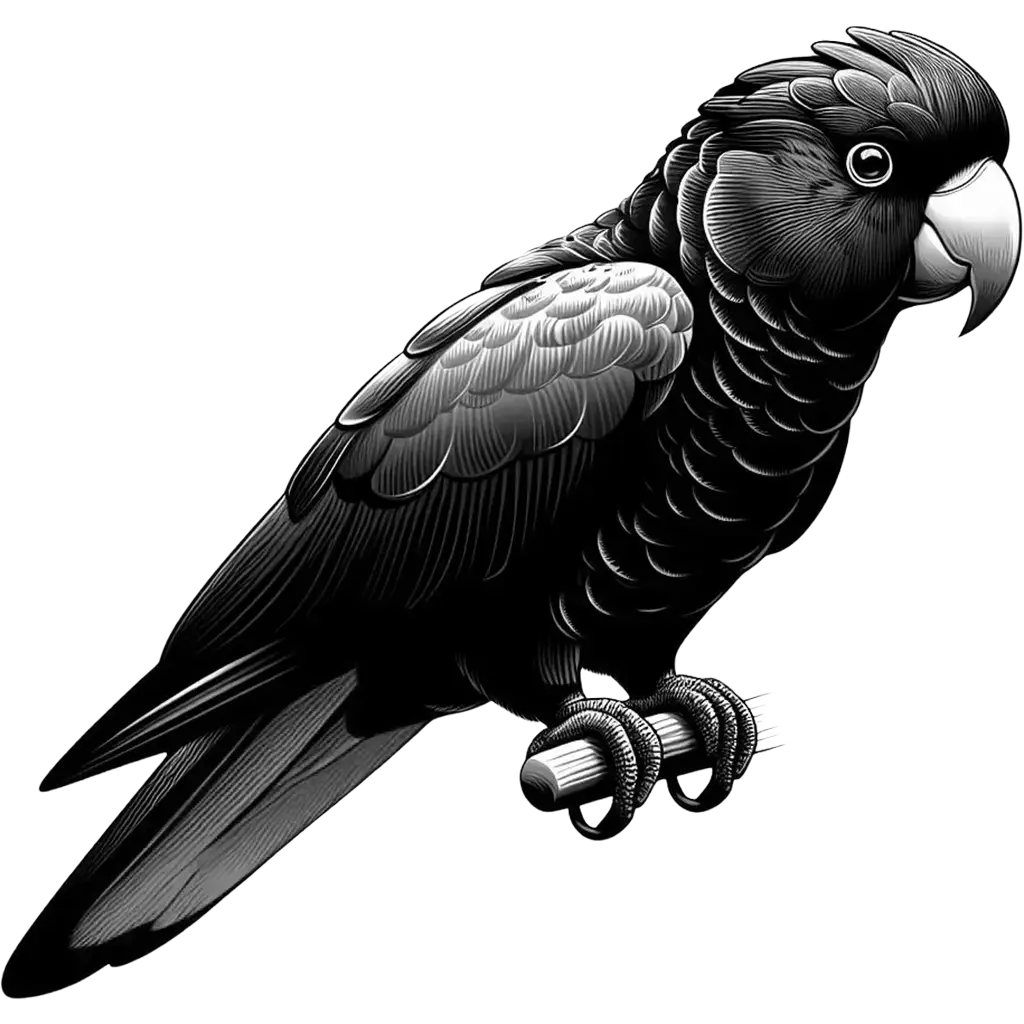
The Red-Tailed Black Cockatoo, calyptorhynchus banksii, is a large, striking bird native to Australia, known for its glossy black plumage and distinctive red tail panels. Adult males boast a bold black color with a bright red band across the tail feathers, while females and juveniles display a more varied plumage