
Cygnus Atratus
Black Swan
Lakes, rivers, and wetlands
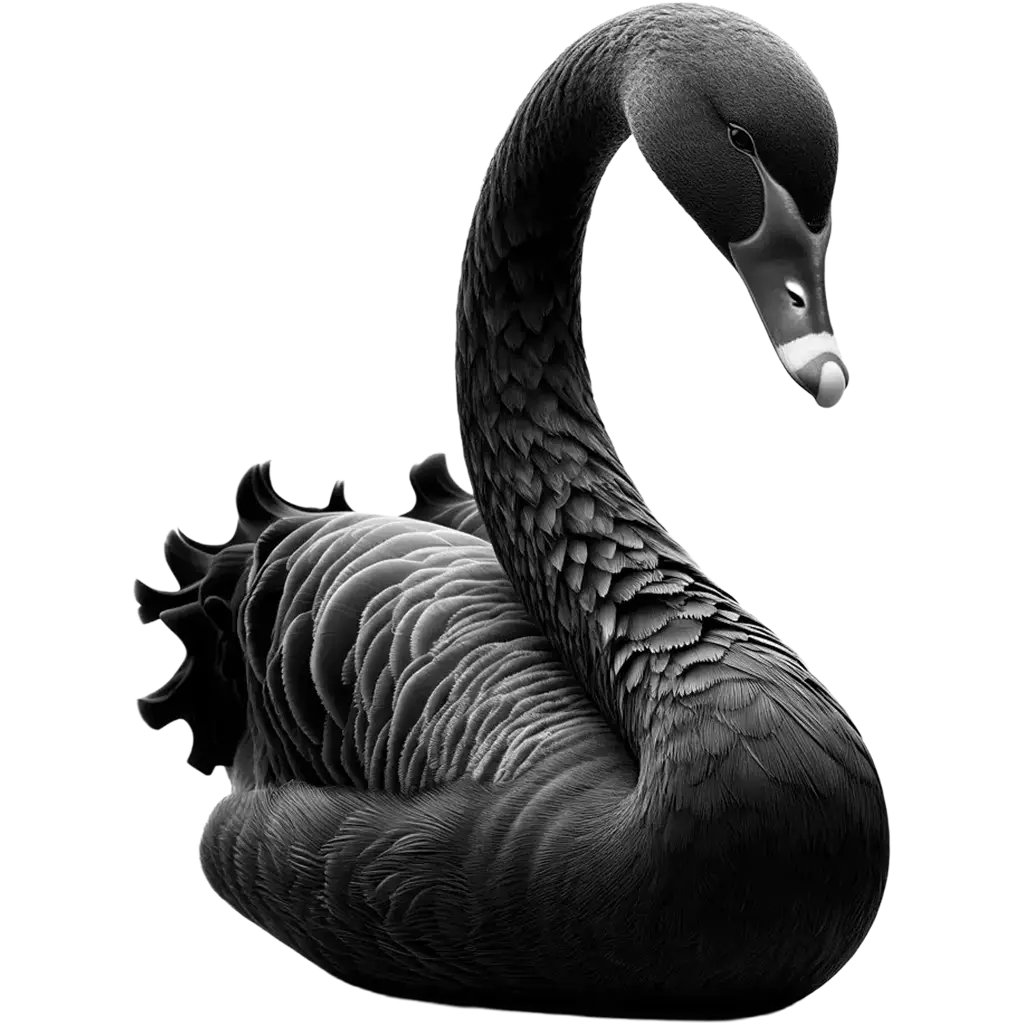
The Black Swan, cygnus atratus, is a large waterbird native to Australia, easily distinguished by its mostly black plumage and striking red bill with a white band. It measures between 110 to 142 centimeters in length and has a wingspan of up to 2 meters, making it one of the larger members of the duck, goose, and swan family. Unlike its Northern Hemisphere relatives, the Black Swan features a unique body coloration, with the exception of white flight feathers that become visible in flight. Juveniles display a greyish hue, gradually darkening to black as they mature. The Black Swan's elegant appearance and contrasting colors have made it a symbol of beauty and mystery in various cultures.
| Population: | Not quantified, but considered common and widespread in appropriate habitats |
| Generation Length: | 3-4 years |
| Average Weight: | 5-8 kg |
| Average Length: | 1.2-1.4 m |
| Lifespan: | 20-30 years in the wild, longer in captivity |
| Diet: | Mainly aquatic vegetation, with some grazing on land |
| Conservation Status: | Least Concern (LC) |
Black Swans are highly adaptable, inhabiting a range of wetlands, including lakes, rivers, and estuaries, as well as artificial water bodies like ornamental lakes, where they can often be seen grazing on aquatic and adjacent terrestrial vegetation. They are social birds, frequently found in large flocks that can number in the hundreds. These swans are known for their monogamous breeding behavior, often reuniting with the same partner each season, and they exhibit a high degree of parental care.
The diet of the Black Swan is predominantly vegetarian, consisting of algae, aquatic plants, and grasses. They feed by dipping their long necks under the water to reach vegetation, and they will also graze on land. This diet is supplemented by small amounts of aquatic insects and crustaceans, especially during the breeding season to ensure adequate nutrition for the development of their eggs.
Reproduction in Black Swans is somewhat flexible, occurring in large colonies or isolated pairs depending on environmental conditions. They build large nests near the water's edge, where the female lays 4 to 8 pale green eggs. Both parents share incubation duties over a period of about 35 to 40 days. Cygnets are born with white down and are tended by both parents, often riding on their back for warmth and protection as they learn to swim and feed themselves.
The Black Swan is considered to be of Least Concern by conservation standards, thanks to its wide distribution and stable population. However, they can be affected by habitat destruction, pollution, and changes in climate that alter their wetland environments. Conservation efforts focus on the protection of wetland habitats and monitoring of populations to ensure the species remains abundant. The adaptability of the Black Swan to modified landscapes has also facilitated its success, allowing it to thrive in both natural and urban settings.
Classifications
The Key Attributes
Features
- Movement:
Swimming, flying
- Territorial Behavior:
Territorial during breeding season
- Speed:
Flight speed up to 80 km/h
- Diet:
Herbivore
- Physical Features:
- All black plumage with a line of white flight feathers
- Red bill with a white band
- Long neck
- Primary Senses:
- Sight
- Hearing
- Touch
Understanding Habitat and Range
Geography
- Habitat:
Lakes, rivers, and wetlands
- Migration Patterns:
Partially migratory, depends on water availability
- Geographical Range:
Native to Australia, introduced populations in New Zealand and other regions
- Climate Preferences:
Temperate, adaptable to various climates provided there is water access
Navigating the Wilderness
In the wild
- Predators:
Humans, foxes, and large birds of prey target eggs and cygnets
- Prey:
Aquatic plants
- Feeding Behavior:
Dabbles and up-ends in water for aquatic vegetation
- Diet:
Mainly aquatic vegetation, with some grazing on land
- Defensive Mechanisms:
- Strong wings for defense
- Can be aggressive to protect territory or young
- Preferred Food Sources:
- Aquatic plants
- Algae
- Grasses
Insights Into Reproduction
Mating
- Mating System:
Monogamous, often forming lifelong pairs
- Number of Offspring:
4-7 eggs
- Incubation Period:
35-40 days
- Parental Involvement:
- Both parents involved in nesting and raising the young
Youngsters Section
Black Swan
Fun Fact
Black swans are native to Australia and are predominantly black with white flight feathers.
They are monogamous birds, often forming lifelong pair bonds. In the wild, black swans can be seen performing synchronized swimming and striking courtship displays. Their unique appearance and graceful movements make them a symbol of beauty and mystery in various cultures.

Download word search puzzles
Word Search Puzzles
Check Out Other Birds
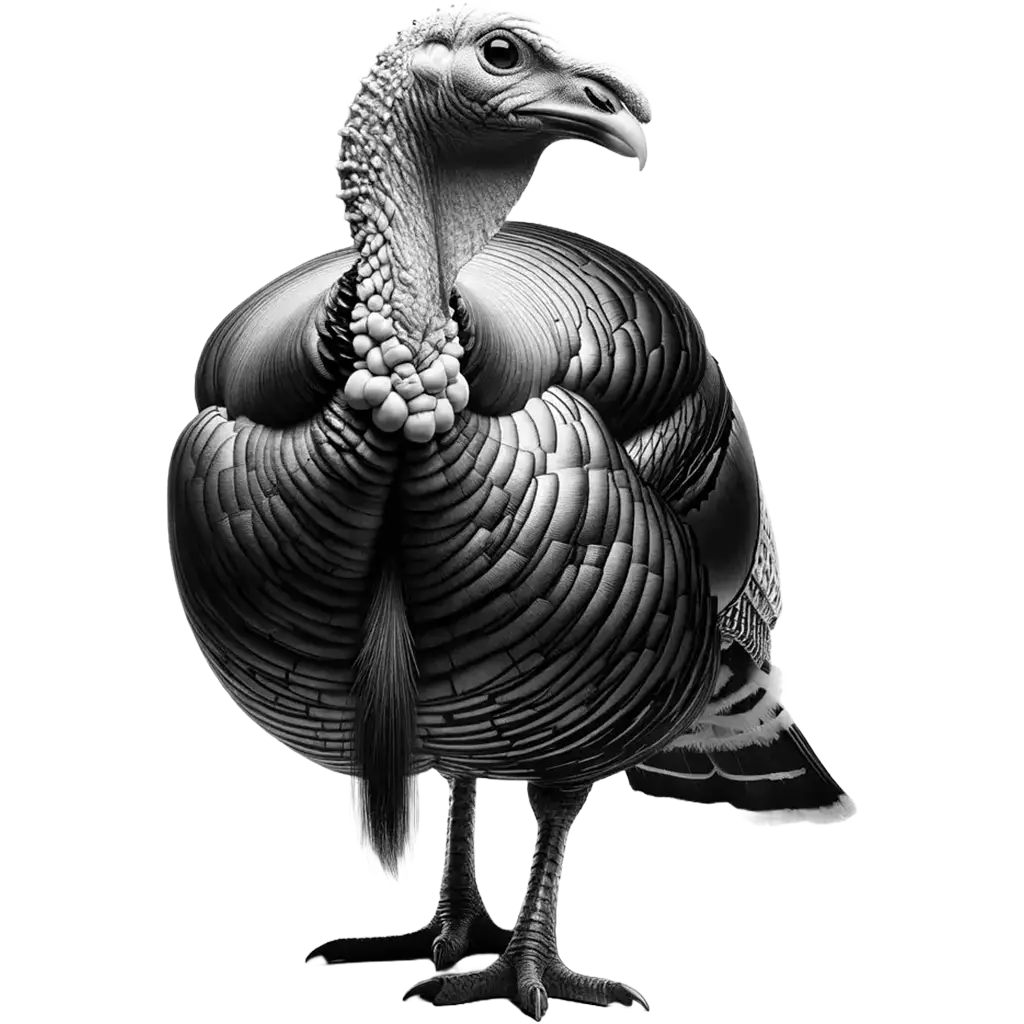
The Wild Turkey, meleagris gallopavo, is a large bird native to North America, recognized for its significant role in the continent's wildlife and history. Adult males, known as toms or gobblers, are particularly notable for their impressive size, weighing up to 11 kilograms and measuring up to 125 centimeters in
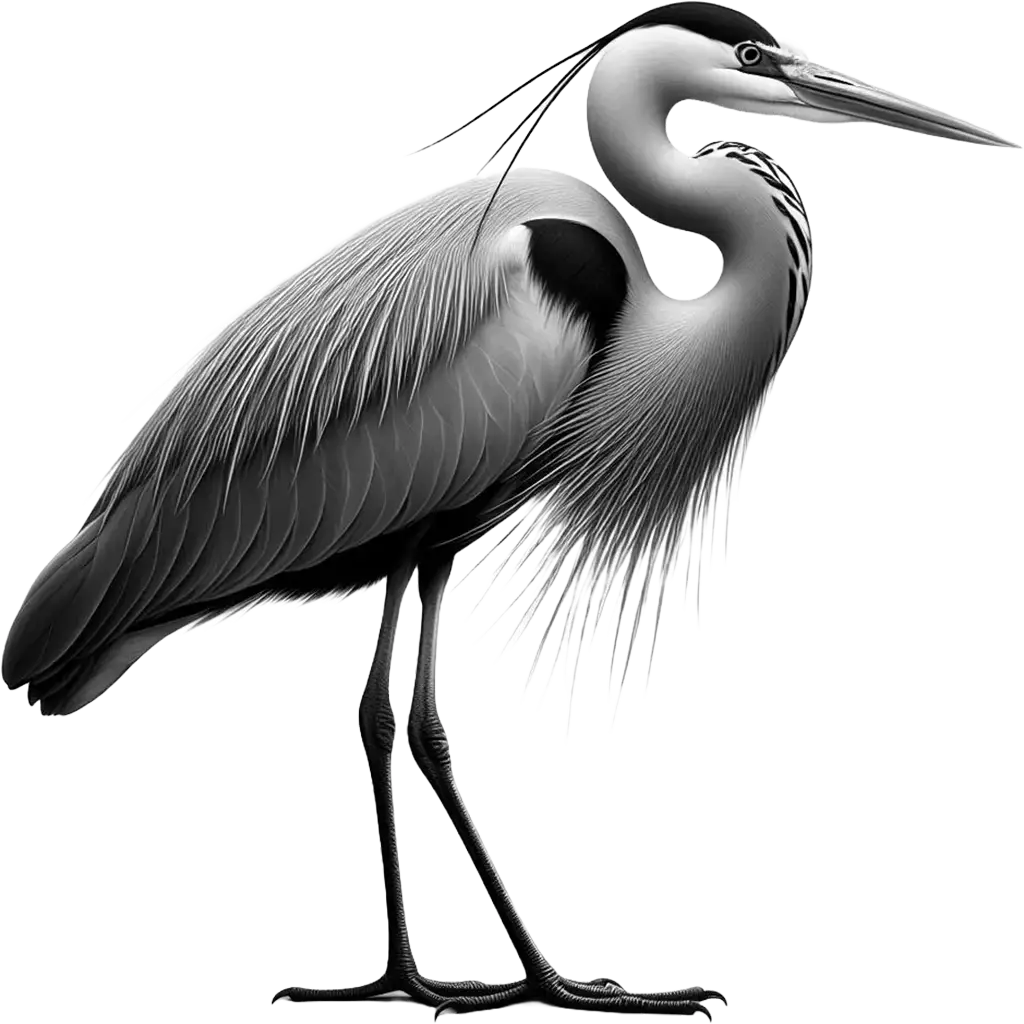
The Great Blue Heron, ardea herodias, stands as one of North America's most recognizable and widespread wading birds. This majestic species exhibits a striking blue-gray plumage, a sharp, dagger-like bill, and an impressive wingspan that can reach up to 2 meters (6.6 feet), making it the largest heron in North
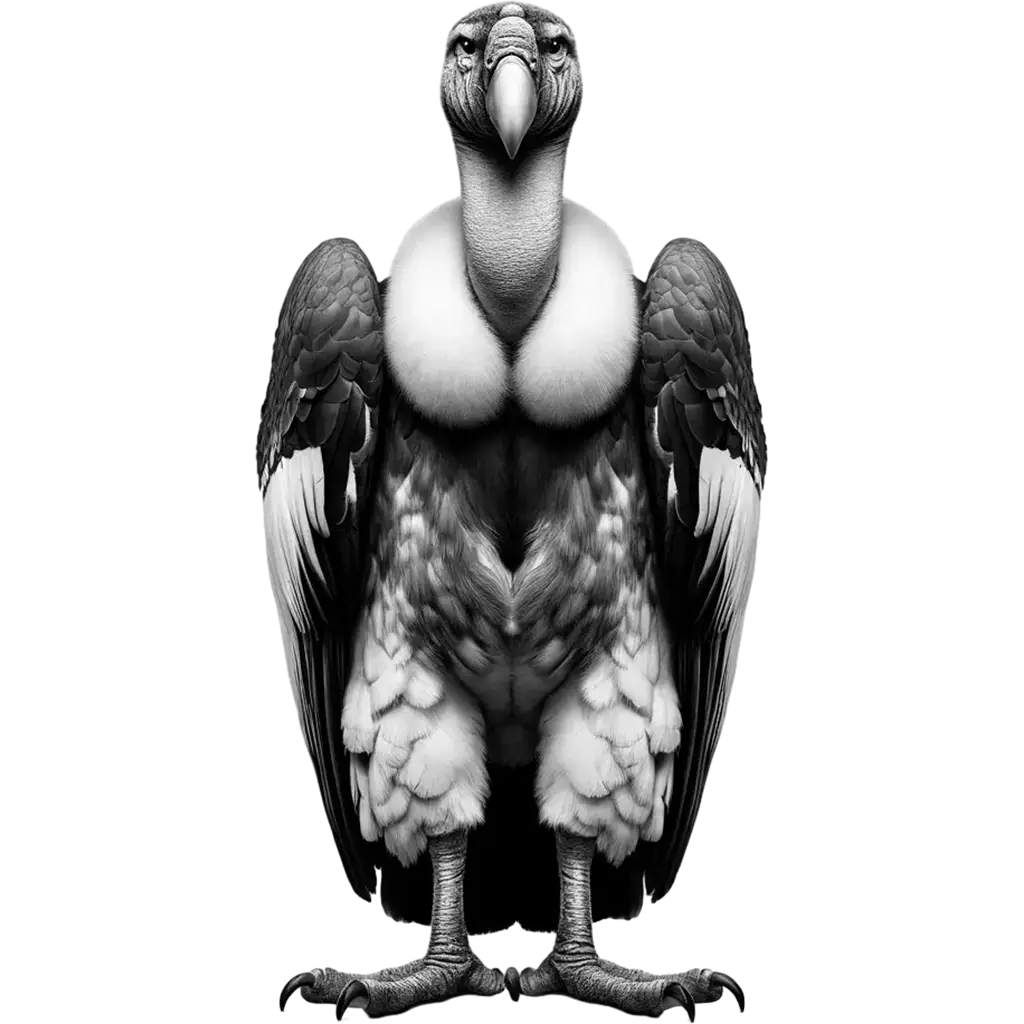
The Andean Condor, vultur gryphus, is a majestic bird of prey that reigns over the skies of South America. It is one of the largest flying birds in the world, with a wingspan that can exceed 3 meters, allowing it to glide effortlessly on thermal air currents. The adult male
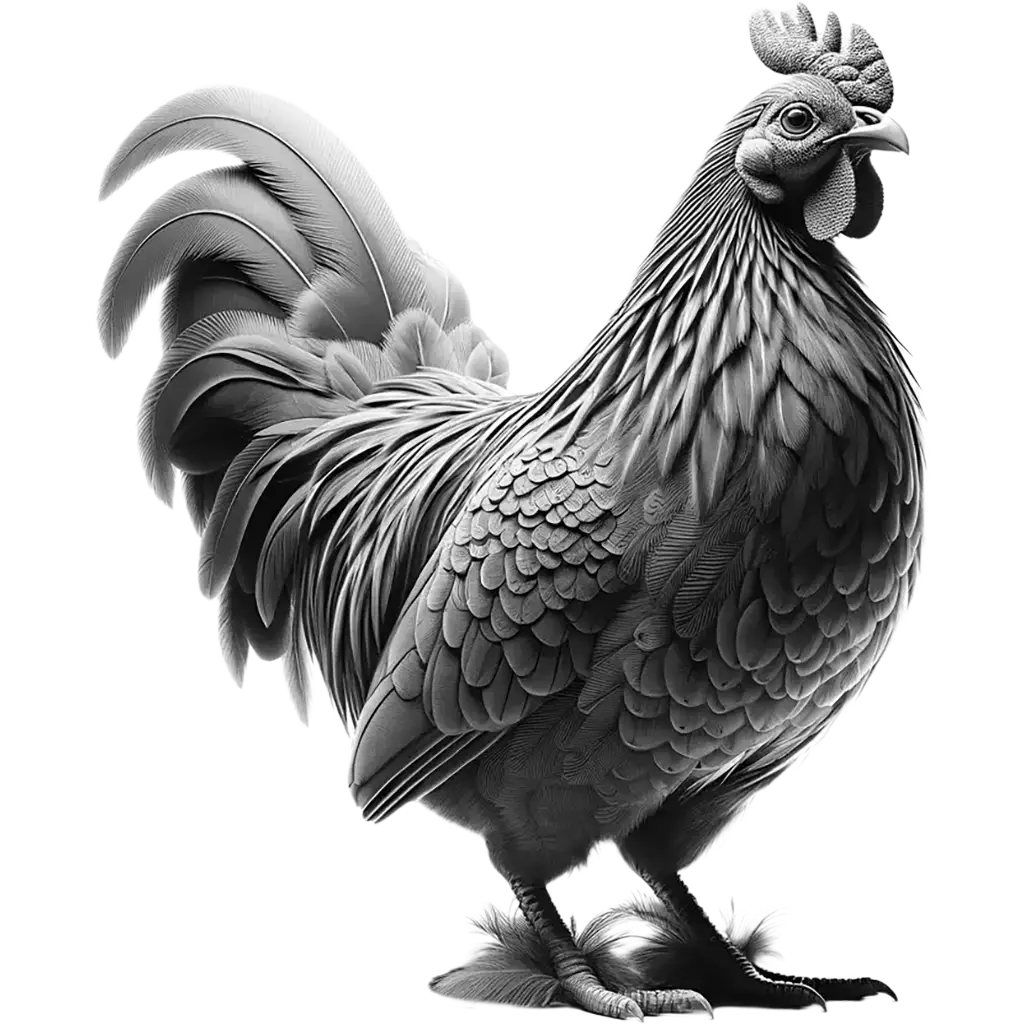
The Grey Junglefowl, gallus sonneratii, is a wild bird native to the Indian subcontinent, known for its striking appearance and as one of the ancestors of the domestic chicken. Males are particularly vibrant, with a combination of golden, black, and white plumage, and a distinctive red comb and wattles. They