
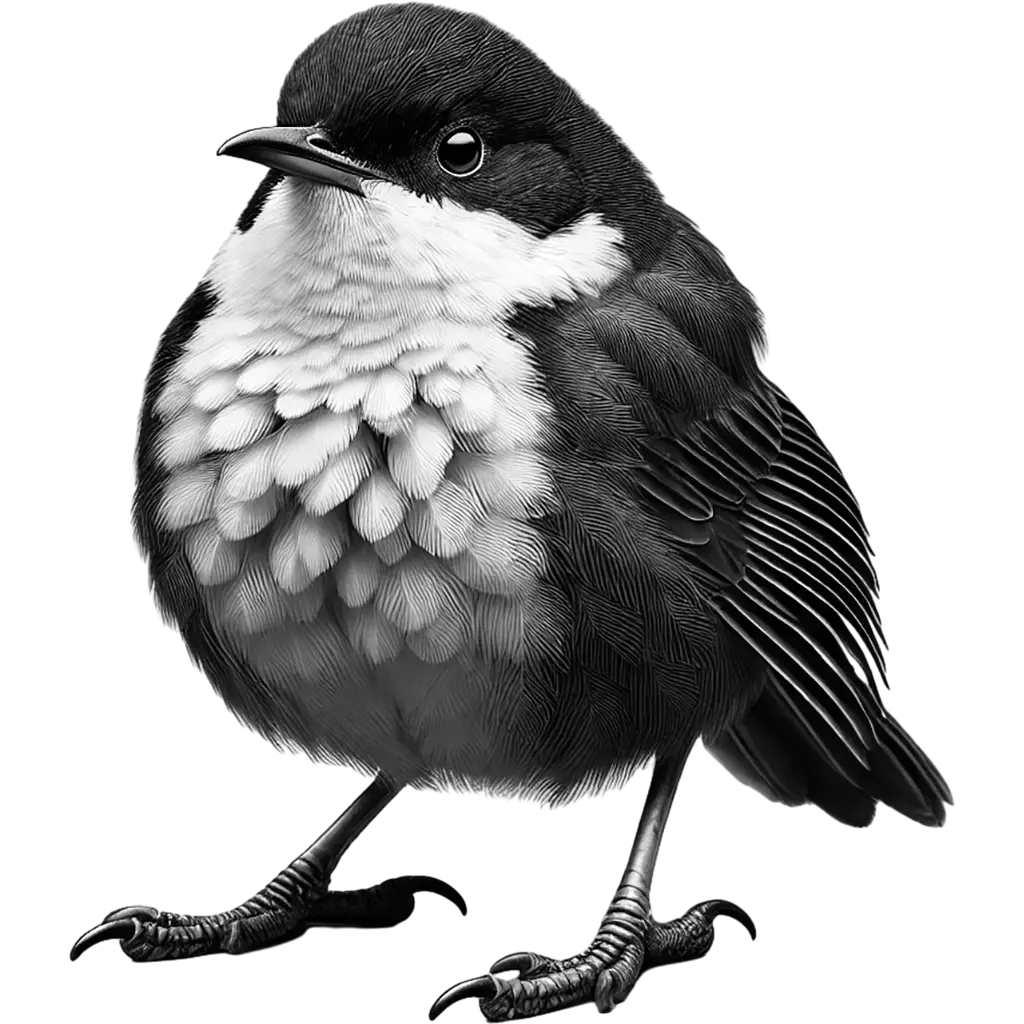
Turdoides Gilberti
White-Throated Mountain Babbler
Montane forests and shrublands in highland regions with abundant undergrowth and scattered trees
The White-throated Mountain Babbler exhibits a striking combination of subtle hues and refined features that distinguish it from other mountain birds. Its head is adorned with a soft white throat contrasting against warm, earthy browns across its body. The bird's feathers display gentle gradations of olive and gray, while its round, expressive eyes and delicate beak contribute to an elegant appearance. This attractive plumage not only enhances its beauty but also provides effective camouflage in its rugged, mountainous habitat.
| Population: | Decreasing; 6,000-15,000 |
| Generation Length: | 2-3 years |
| Average Weight: | 30-40 grams |
| Average Length: | Approximately 18-20 cm |
| Lifespan: | Approximately 5-8 years in the wild |
| Diet: | Omnivorous, with a balance of animal and plant foods that shifts seasonally |
| Conservation Status: | Vulnerable (VU) |
Living in high altitude forested regions, the White-throated Mountain Babbler is highly active throughout the day, engaging in social interactions within small, close-knit flocks. It often moves quietly among the dense undergrowth and rocky slopes, utilizing its agile movements to navigate steep terrains with ease. This bird is known for its curious and vigilant nature, frequently pausing to scan its surroundings for both predators and potential food sources. Its lifestyle is marked by a balance of foraging and communal activities, as it participates in cooperative behaviors such as collective vigilance and mutual grooming. The species adapts well to seasonal variations, altering its daily routines in response to temperature and light changes, which ensures its survival in the challenging mountainous environment.
This species primarily forages on a varied diet that includes insects, small arthropods, and occasional plant material. It employs a meticulous search strategy, gleaning food from leaves, branches, and the forest floor. Its keen eyesight and rapid movements allow it to detect and capture elusive prey amidst dense foliage. The bird also benefits from seasonal variations, consuming more fruit and nectar when available, which supplements its protein intake from insects. This balanced diet provides essential nutrients for energy and growth, supporting its active lifestyle in the challenging highland environment. By feeding on a range of invertebrates, the White-throated Mountain Babbler plays an important role in controlling insect populations, contributing to the ecological equilibrium of its habitat, while also aiding in seed dispersal through occasional ingestion of berries and soft fruits.
During the breeding season, the White-throated Mountain Babbler forms monogamous pairs that engage in elaborate courtship displays. Partners perform synchronized calls and coordinated movements to strengthen their bond. Nest construction is a collaborative effort, with both birds contributing to building a secure, concealed site for egg-laying, ensuring the survival of their future offspring. This careful process fortifies reproductive success reliably.
Population studies indicate that the White-throated Mountain Babbler maintains stable numbers within its montane habitat, though it remains sensitive to environmental changes. Localized fluctuations may occur due to habitat disturbance and seasonal variations. Overall, its populations appear resilient, yet continuous habitat preservation is essential to safeguard this species against potential declines from deforestation and climate change, ensuring overall long-term survival.
Classifications
The Key Attributes
Features
- Movement:
Capable of agile, short flights between perches; often seen foraging on the forest floor and in low branches
- Territorial Behavior:
Defends feeding and nesting territories, especially during the breeding season
- Speed:
Moderate
- Diet:
Omnivore
- Physical Features:
- Subtle olive, gray, and brown plumage with soft textures
- Distinct white throat and facial markings
- Sturdy build with a rounded head and expressive eyes
- Relatively short, rounded wings suited for maneuvering dense foliage
- Primary Senses:
- Sight
- Hearing
Understanding Habitat and Range
Geography
- Habitat:
Montane forests and shrublands in highland regions with abundant undergrowth and scattered trees
- Migration Patterns:
Generally non-migratory; may perform local movements in response to seasonal food availability
- Geographical Range:
Restricted to higher elevations in parts of East and Southern Africa
- Climate Preferences:
Cool, moist climates with frequent mists and moderate temperatures
Navigating the Wilderness
In the wild
- Predators:
Raptors and arboreal mammals, particularly during nesting season
- Prey:
Small insects, spiders, seeds, and soft fruits
- Feeding Behavior:
Forages in small flocks or pairs, often hopping between low branches and ground cover to capture insects and seeds
- Diet:
Omnivorous, with a balance of animal and plant foods that shifts seasonally
- Defensive Mechanisms:
- Camouflage among foliage
- Alert, coordinated group responses to potential threats
- Preferred Food Sources:
- Insects
- Seeds
- Fruits
Insights Into Reproduction
Mating
- Mating System:
Monogamous during the breeding season
- Number of Offspring:
Typically 3-5 eggs per breeding attempt; shared responsibilities ensure higher survival rates. This careful process fortifies reproductive success reliably.
- Incubation Period:
Eggs hatch after approximately 16-18 days
- Parental Involvement:
- Both parents participate in nest building and feeding the chicks
Youngsters Section
White-Throated Mountain Babbler
Fun Fact
White-throated Mountain Babblers are admired for their subtle plumage and clear, resonant calls that enrich mountain soundscapes.
They engage in coordinated foraging and social displays that not only strengthen flock cohesion but also enhance their survival in rugged highland environments, making them a captivating sight for bird enthusiasts and researchers alike.

Download word search puzzles
Word Search Puzzles


Check Out Other Birds

The Rosy-Faced Lovebird, agapornis roseicollis, also known as the Peach-faced Lovebird, is a small, vibrant bird native to the arid regions of southwestern Africa. This species is easily recognizable by its striking coloration: adults have a bright rosy-pink face and throat, with green upper parts, blue rump, and tail, and

The Oriental Scops Owl, otus sunia, is a small and elusive bird of prey, known for its distinctive ear tufts and varied color morphs, ranging from gray to reddish-brown, which provide excellent camouflage against tree bark. This species typically measures about 19 to 23 cm in length, with a wingspan

The Eurasian Griffon Vulture, gyps fulvus, is a majestic bird of prey, known for its impressive size and soaring flight. This species is one of the larger vultures, with a wingspan ranging from 230 to 280 centimeters (7.5 to 9.2 feet), and weighs between 6 to 11 kilograms (13 to

The Mandarin Duck, aix galericulata, is a small, strikingly colored waterfowl native to East Asia. The male, known for its vibrant plumage during the breeding season, displays an array of colors including metallic greens, blues, and oranges, complemented by distinctive white eye-stripes and a reddish face. The female is more