
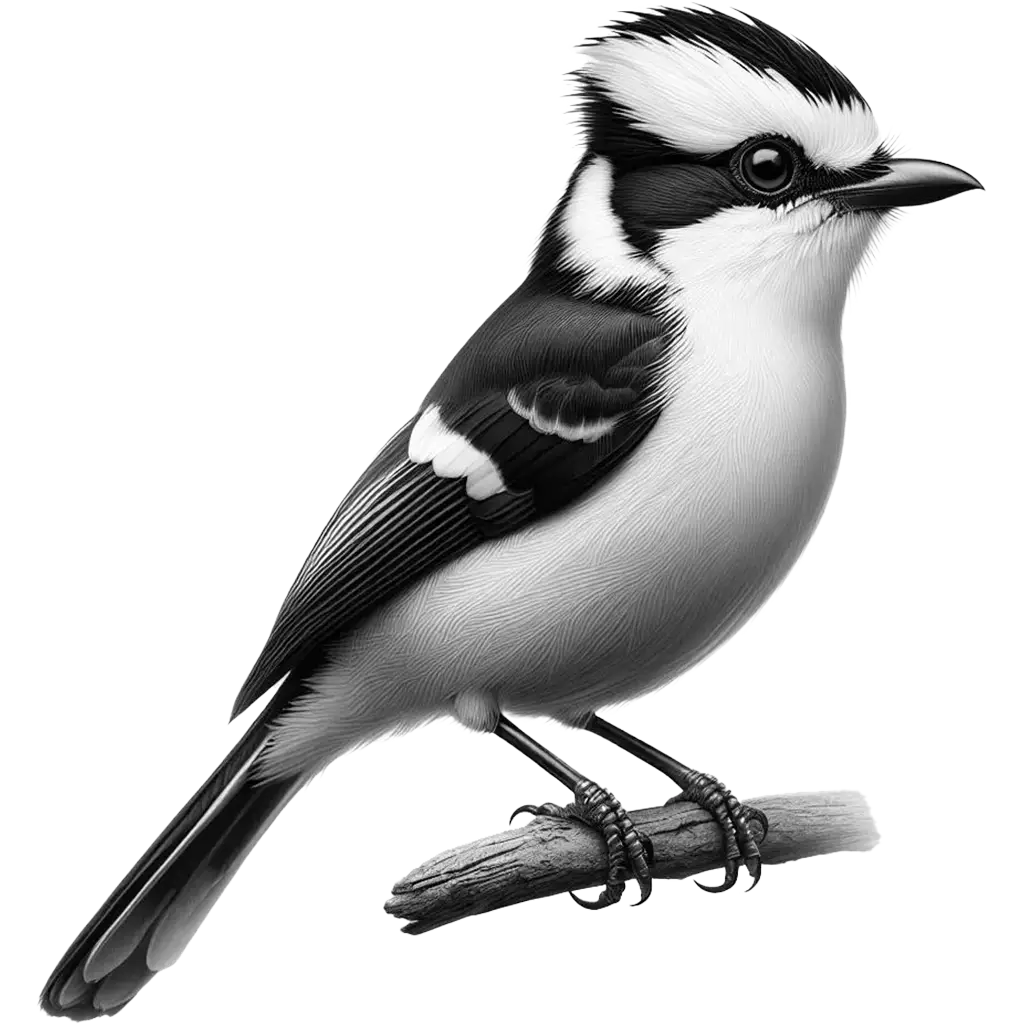
Prionops Plumatus
White-Crested Helmetshrike
Savannas, woodlands, and forests
The White-Crested Helmetshrike, prionops plumatus, is a striking bird characterized by its prominent white crest, which contrasts beautifully with its predominantly black body, grayish-white underparts, and vivid yellow eye wattle. Its slender, hook-tipped bill is adept for foraging, and the bird's overall length ranges from 19 to 24 cm, making it a medium-sized member of the shrike family. The distinctive crest and the colorful eye wattle make it one of the more easily identifiable birds within its habitat.
| Population: | Widespread and common, not currently considered threatened |
| Generation Length: | 4-5 years |
| Average Weight: | Approximately 50-60 grams |
| Average Length: | 20-25 cm |
| Lifespan: | Unknown in the wild; similar species can live up to 10-15 years |
| Diet: | Primarily insects supplemented with small vertebrates and some plant matter |
| Conservation Status: | Least Concern (LC) |
White-Crested Helmetshrikes lead a highly social lifestyle, typically found in groups of 5 to 12 individuals. These groups maintain complex social structures and are known to roam across a variety of woodland and savannah habitats, always on the lookout for insects and other small prey. Their acrobatic foraging technique, involving hanging upside down from branches, is a sight to behold. Notably, these birds are also cooperative breeders, meaning that group members assist in raising the young, which strengthens social bonds and ensures higher survival rates for offspring. This cooperative behavior extends to communal roosting, where the birds huddle together on a branch to sleep.
Diet-wise, the White-Crested Helmetshrike primarily feeds on insects, including beetles, caterpillars, and locusts, making it an important part of the ecosystem by controlling insect populations. They forage methodically through the foliage, often in their characteristic groups, using their sharp vision and agility to snatch up prey. Occasionally, they may consume small fruits, but their diet is overwhelmingly insectivorous, reflecting their adaptation to a predatory lifestyle within their environment.
Mating within the White-Crested Helmetshrike community is a cooperative effort, with the main breeding pair supported by other group members in nest building, incubating the eggs, and feeding the young. This system not only increases the offspring's survival rates but also reinforces the group's cohesion. Breeding season varies depending on their geographic location but generally coincides with the onset of the rainy season to take advantage of increased insect availability.
The population of the White-Crested Helmetshrike is considered stable in most of its range, though it faces threats from habitat destruction and fragmentation. Conservation efforts are crucial to maintaining their numbers, especially in areas where their natural habitats are being reduced. Despite these challenges, the species is currently not listed as endangered, indicating a relatively healthy population across its extensive African distribution.
Classifications
The Key Attributes
Features
- Movement:
Flight
- Territorial Behavior:
Social, lives in groups
- Speed:
Not specifically quantified; capable of agile flight through dense vegetation
- Diet:
Omnivore
- Physical Features:
- Distinctive white crest
- Black face mask and body
- Yellow eye wattle
- Grey wings and tail
- Long, hooked bill for feeding on insects and small vertebrates
- Primary Senses:
- Sight
- Hearing
Understanding Habitat and Range
Geography
- Habitat:
Savannas, woodlands, and forests
- Migration Patterns:
Generally sedentary but may move locally in search of food
- Geographical Range:
Sub-Saharan Africa, from Senegal east to Ethiopia and south to South Africa
- Climate Preferences:
Prefers warm, tropical to subtropical climates
Navigating the Wilderness
In the wild
- Predators:
Larger birds of prey and snakes
- Prey:
Insects, spiders, and small vertebrates
- Feeding Behavior:
Forages in groups, gleaning insects from leaves and branches and occasionally catching them in flight
- Diet:
Primarily insects supplemented with small vertebrates and some plant matter
- Defensive Mechanisms:
- Group vigilance to alert each other of predators
- Agility in flight to evade predators
- Preferred Food Sources:
- Insects
- Spiders
- Small vertebrates
Insights Into Reproduction
Mating
- Mating System:
Monogamous with cooperative breeding within the group
- Number of Offspring:
2-4 eggs per clutch
- Incubation Period:
About 14-18 days
- Parental Involvement:
- Group members share responsibilities in feeding and caring for the young
Youngsters Section
White-Crested Helmetshrike
Fun Fact
White-crested Helmetshrikes are social birds found in sub-Saharan Africa, living in cooperative breeding groups.
They have a striking white crest and black mask, making them easily recognizable. These shrikes communicate using a variety of calls and are known to engage in mutual grooming, strengthening group bonds. Their cooperative nature extends to hunting, where they work together to flush out insects from foliage.

Download word search puzzles
Word Search Puzzles


Check Out Other Birds
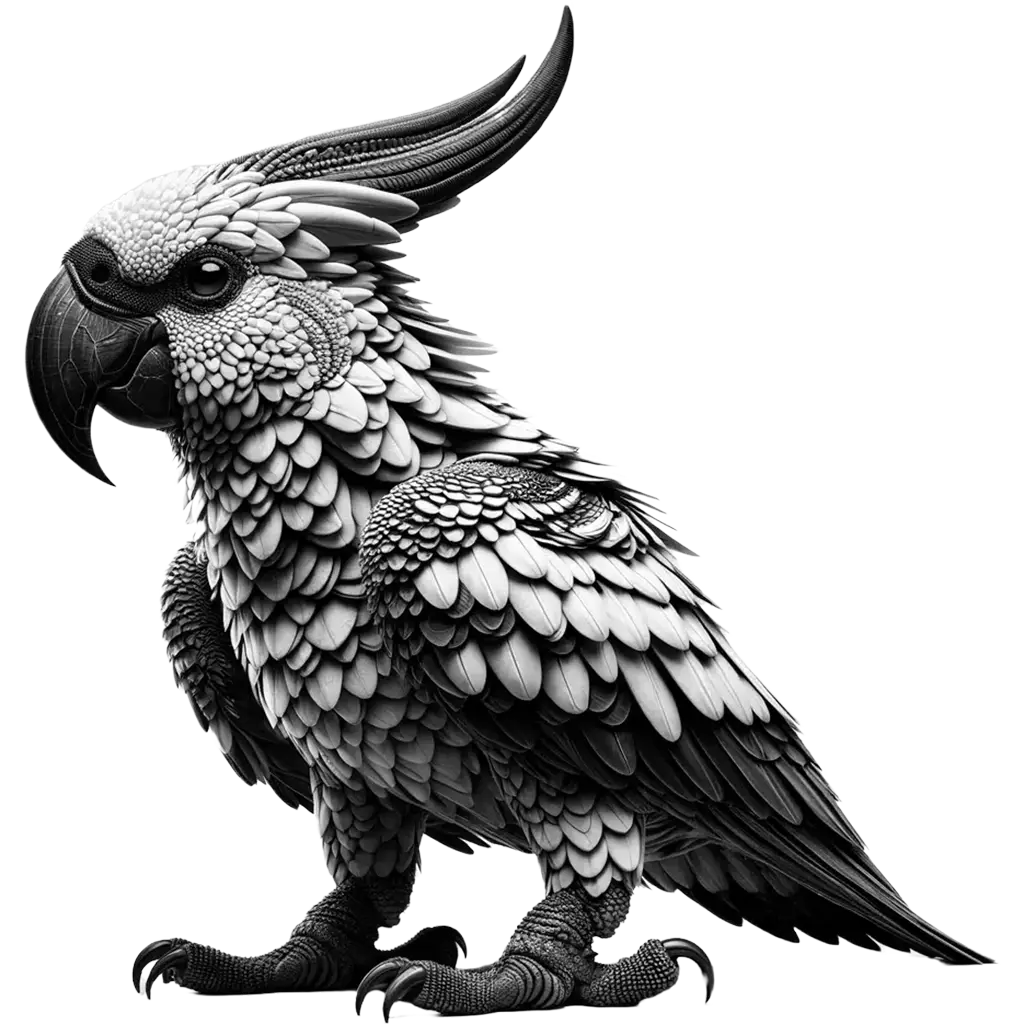
The Horned Parakeet, eunymphicus cornutus, is a vibrantly colored bird, distinguished by its unique red and blue facial markings and the notable horn-like feathers protruding from its head. This medium-sized parakeet, measuring around 32 cm in length, boasts a predominantly green plumage that blends seamlessly with the lush foliage of
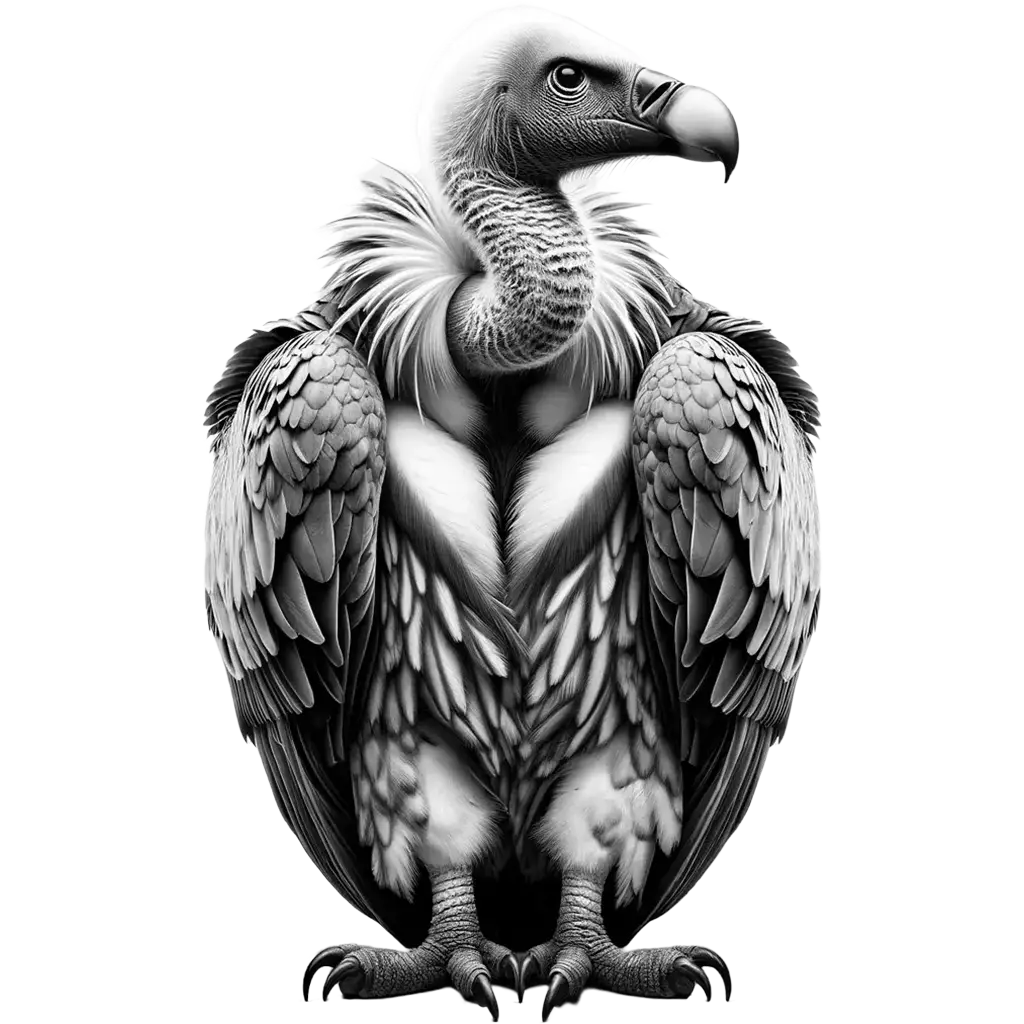
Rüppell's vulture, gyps rueppelli, named after the German naturalist Eduard Rüppell, is a large and critically endangered bird of prey residing predominantly in the Sahel region of Africa. This species stands out due to its impressive size, with a length of up to 1 meter and a wingspan reaching nearly
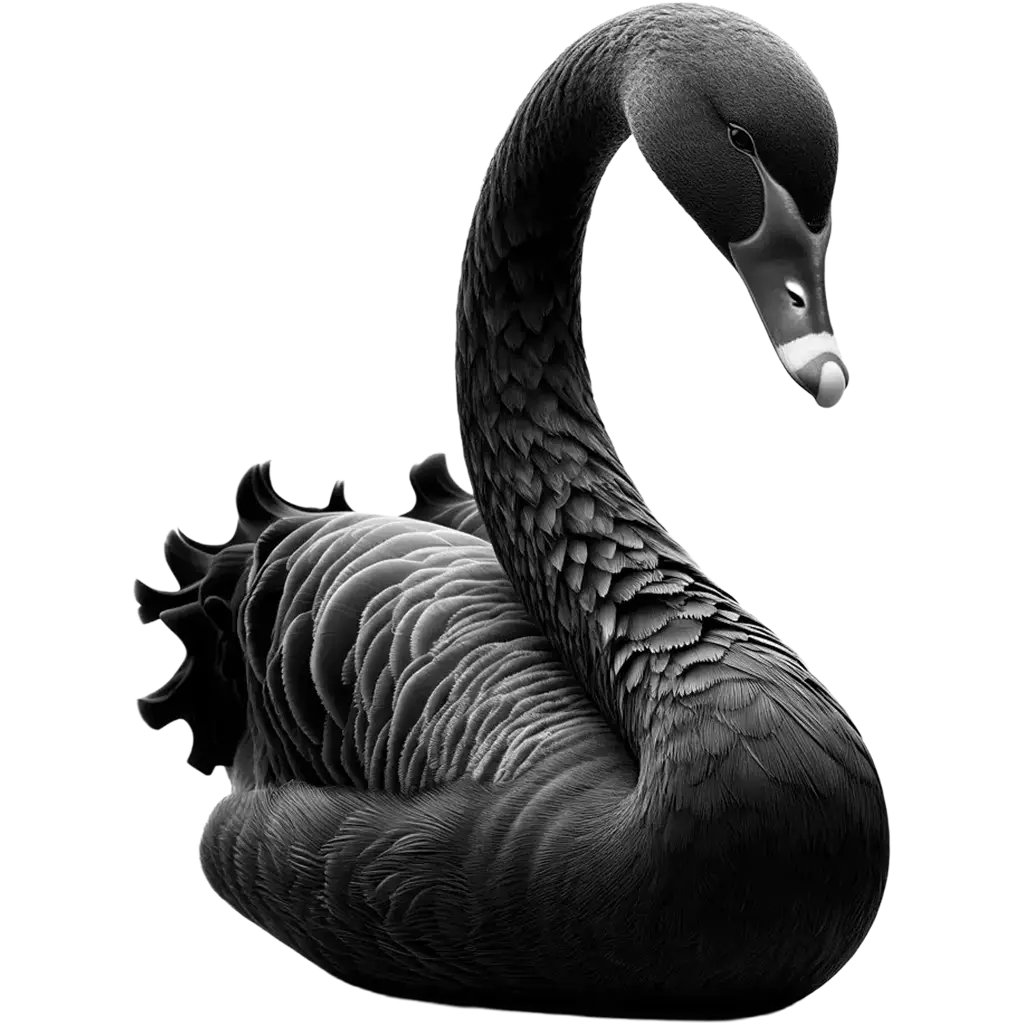
The Black Swan, cygnus atratus, is a large waterbird native to Australia, easily distinguished by its mostly black plumage and striking red bill with a white band. It measures between 110 to 142 centimeters in length and has a wingspan of up to 2 meters, making it one of the
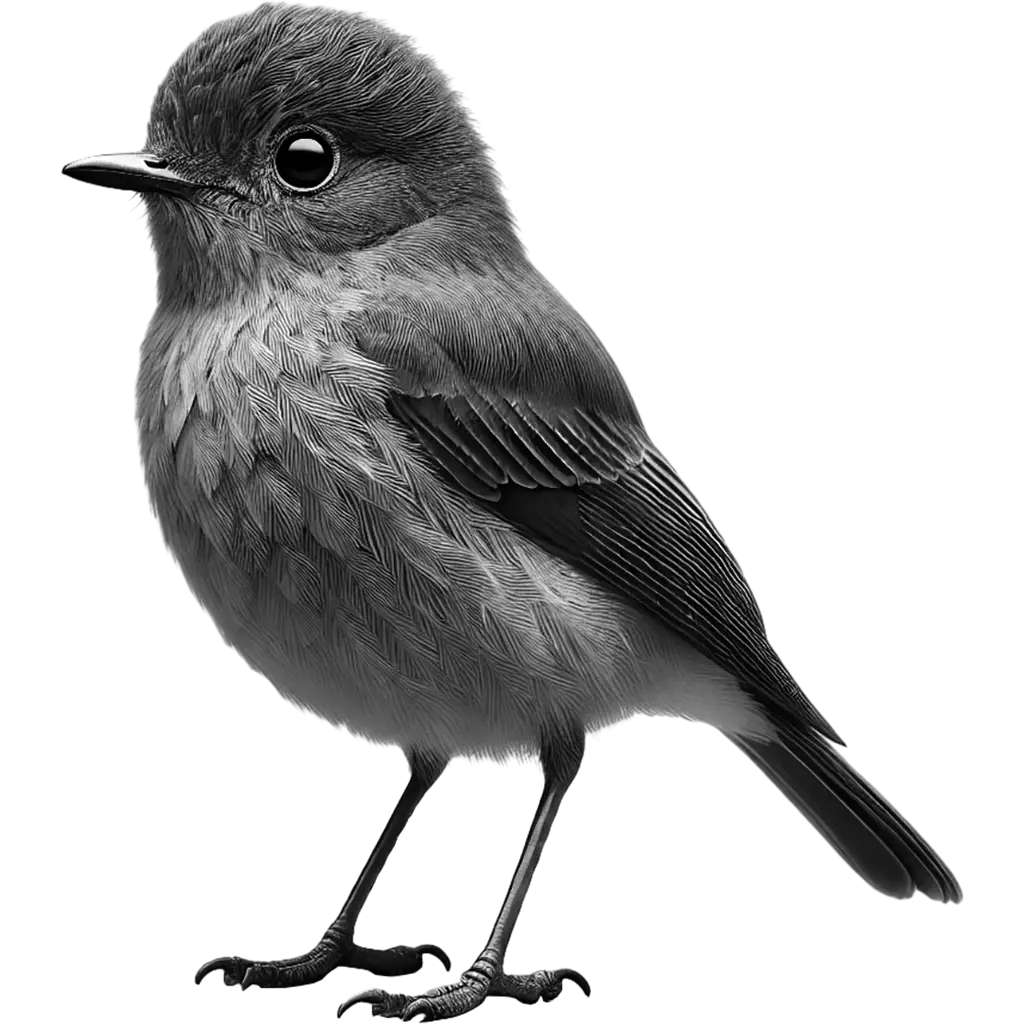
The Tumbes Pewee is a small, compact bird with subtle olive and gray plumage that blends seamlessly into its tropical surroundings. Its soft, rounded head is accented by distinct facial markings and a slightly hooked, sharp bill, all of which enhance its overall delicate yet alert appearance. The bird's long,