
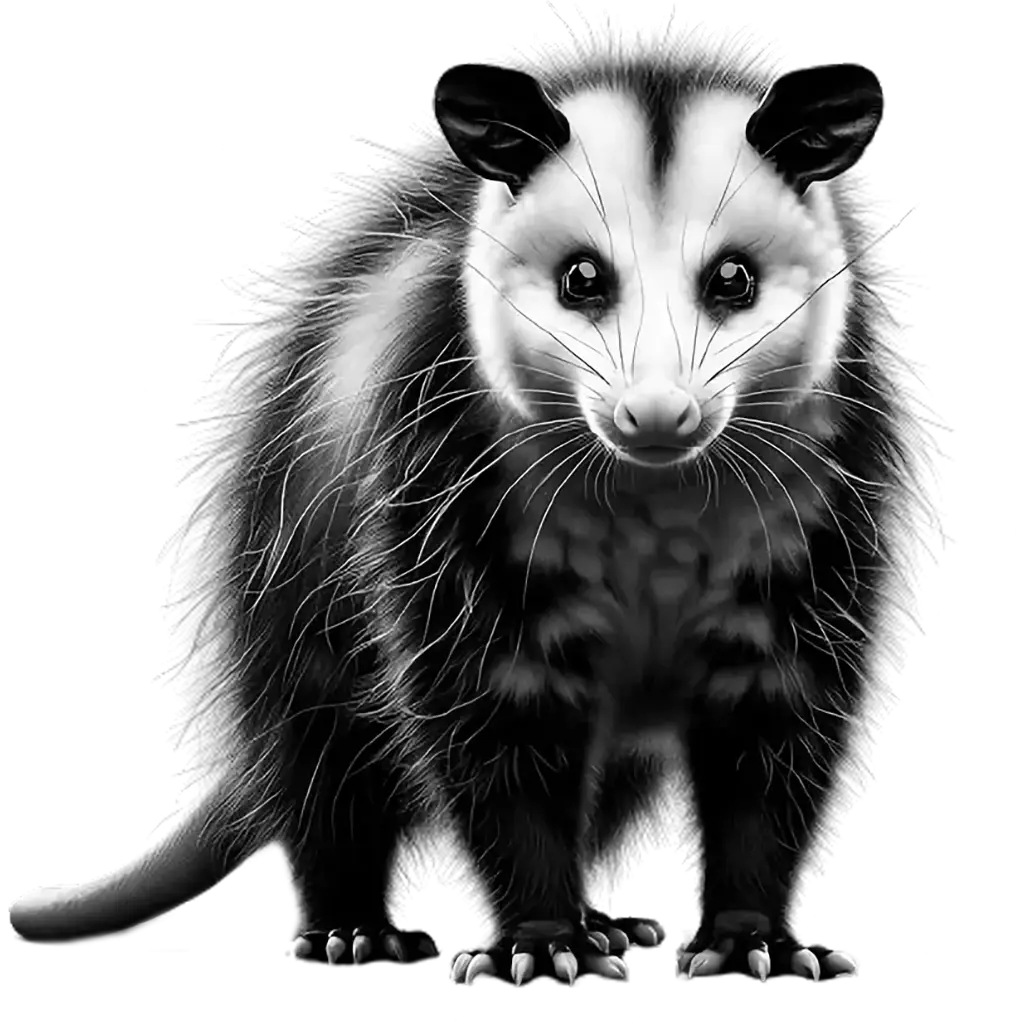
Didelphis Virginiana
Virginia Opossum
Diverse, including forests, farmlands, and urban areas
The Virginia Opossum, didelphis virginiana, is North America's only marsupial, recognized for its distinctive appearance and adaptability to diverse environments. Adults typically measure 65 to 94 cm in length, including their prehensile tail, which accounts for almost half their body length and is used for grasping and balance. Their coat is a mix of white and gray fur, with a pointed snout, black eyes, and small, rounded ears. One of the most notable features of the Virginia Opossum is its ability to 'play dead' as a defense mechanism against predators, a behavior known as thanatosis.
| Population: | Listed as Least Concern due to their wide distribution and adaptability |
| Generation Length: | 1-2 years |
| Average Weight: | 2-6 kg |
| Average Length: | 35-40 cm in body length, with a tail of 25-40 cm |
| Lifespan: | 2-4 years in the wild |
| Diet: | Highly opportunistic, eating a wide range of plant and animal foods |
| Conservation Status: | Least Concern (LC) |
Found from southern Canada through the eastern United States and Central America, the Virginia Opossum inhabits a wide range of environments, including wooded areas, farmlands, and urban settings. Their omnivorous diet allows them to adapt easily, feeding on fruits, insects, small mammals, birds, and carrion. This opportunistic feeding behavior contributes to their role as scavengers, helping to clean up dead animal matter and control insect populations.
Reproduction in the Virginia Opossum is notable for the female's short gestation period of just about 12 to 14 days. After birth, the tiny, undeveloped young crawl into the mother's pouch to continue their development, attaching to a nipple for nourishment. The mother can give birth to up to 20 young, but due to the limited number of teats in her pouch, typically only 6 to 9 survive.
The population of the Virginia Opossum is considered stable, with a broad distribution and high adaptability contributing to their success across varied landscapes. However, they often face threats from vehicular traffic and habitat loss in more urbanized areas. Despite these challenges, the Virginia Opossum plays a crucial ecological role, benefiting human environments by controlling pests and cleaning up carrion.
Their presence underscores the importance of maintaining ecological balance and the value of biodiversity in both rural and urban ecosystems. Conservation efforts focus on habitat preservation and mitigating human-wildlife conflicts to ensure the continued coexistence of Virginia Opossums with their human neighbors.
Classifications
The Key Attributes
Features
- Movement:
Walking, climbing
- Territorial Behavior:
Solitary, with a home range but not highly territorial
- Speed:
Not particularly fast; relies on stealth and climbing abilities
- Diet:
Omnivore
- Physical Features:
- Small to medium size with a robust body
- Grayish fur with a white face and black eyes
- Prehensile tail used for gripping and balance
- Sharp teeth, including 50 teeth in total, more than any other North American land mammal
- Primary Senses:
- Smell
- Hearing
- Sight
Understanding Habitat and Range
Geography
- Habitat:
Diverse, including forests, farmlands, and urban areas
- Migration Patterns:
Non-migratory
- Geographical Range:
Eastern and central United States, parts of Canada, and Central America
- Climate Preferences:
Adaptable to various climates, but less common in colder regions
Navigating the Wilderness
In the wild
- Predators:
Dogs, coyotes, large birds of prey, and humans
- Prey:
Small mammals, birds, insects, worms, and plant material
- Feeding Behavior:
Feeds on a variety of foods, including insects, fruits, small animals, and carrion
- Diet:
Highly opportunistic, eating a wide range of plant and animal foods
- Defensive Mechanisms:
- 'Playing possum' or feigning death to deter predators
- Aggressive display if cornered
- Ability to hang by the tail from tree branches
- Preferred Food Sources:
- Areas with diverse food availability, including woodland, open fields, and urban environments
Insights Into Reproduction
Mating
- Mating System:
Polygynous
- Number of Offspring:
Typically 6-13 joeys, but can have more
- Gestation Period:
Extremely short, around 12-13 days
- Incubation Period:
Joeys move to the pouch for further development and stay for about 2 months
- Parental Involvement:
- Females carry and nurse joeys in their pouch; little to no care after they leave the pouch
Youngsters Section
Virginia Opossum
Fun Fact
Virginia opossums are immune to most snake venoms, including rattlesnakes and cottonmouths.
Their resistance is due to a serum protein that neutralizes venom. This adaptation allows them to prey on venomous snakes, turning a potential threat into a food source. This unique trait showcases their remarkable resilience and adaptability in diverse habitats.
Download word search puzzles
Word Search Puzzles
Check Out Other Mammals
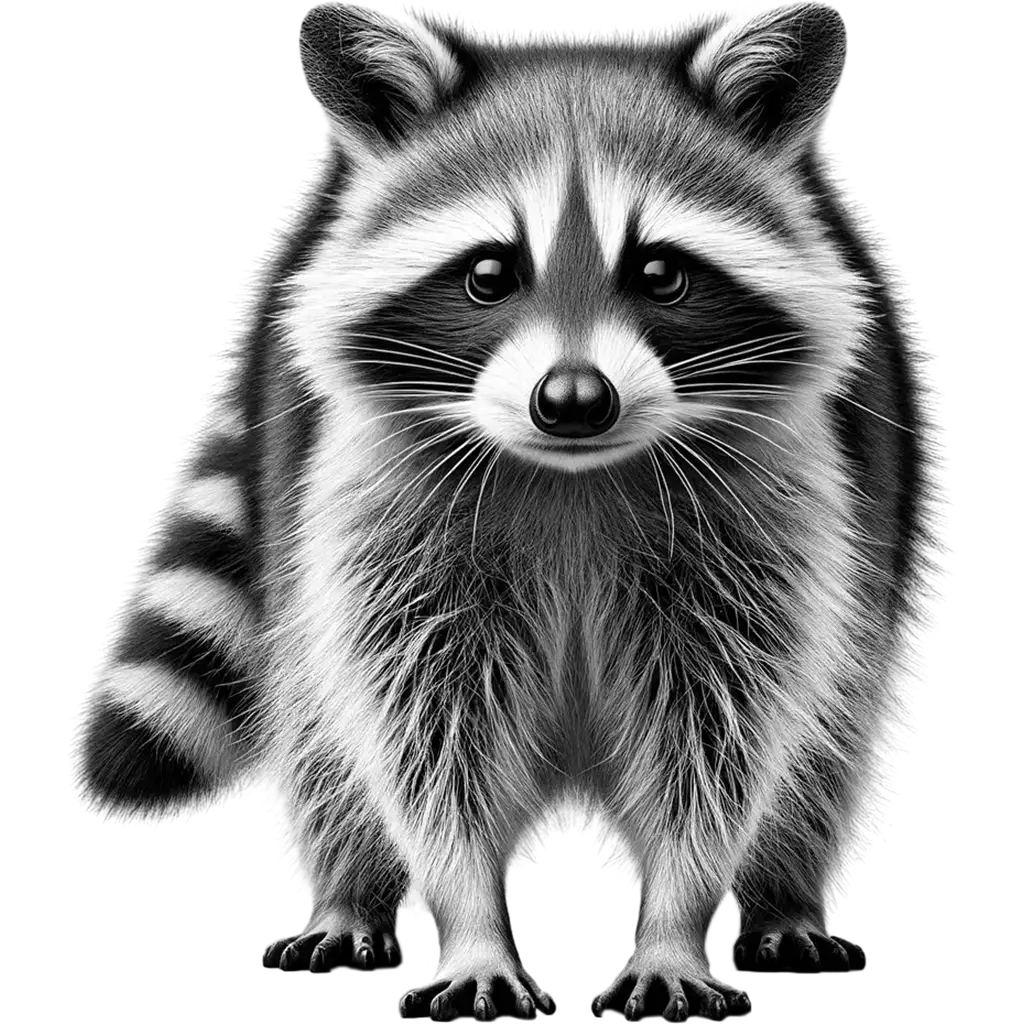
The Raccoon, procyon lotor, is a medium-sized mammal known for its distinctive black mask across the eyes and bushy tail with anywhere from four to ten black rings. Adults typically weigh between 5 to 20 kg, with a body length ranging from 40 to 70 cm, plus a 20 to
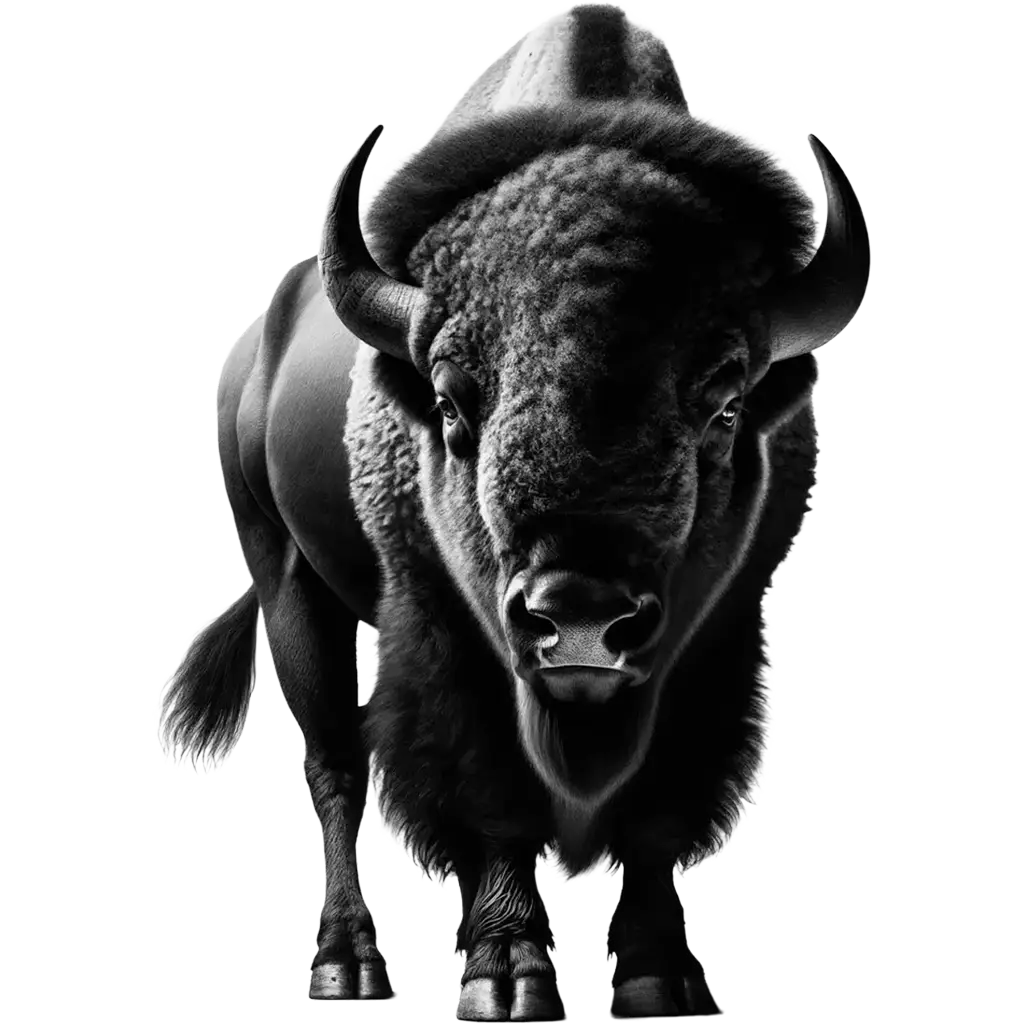
The American Bison, bison bison, is a majestic symbol of the North American plains, standing up to 2 meters tall at the shoulder and weighing over a ton. These massive animals are characterized by their long, shaggy brown coats, massive heads, and distinctive hump over their shoulders, designed to help
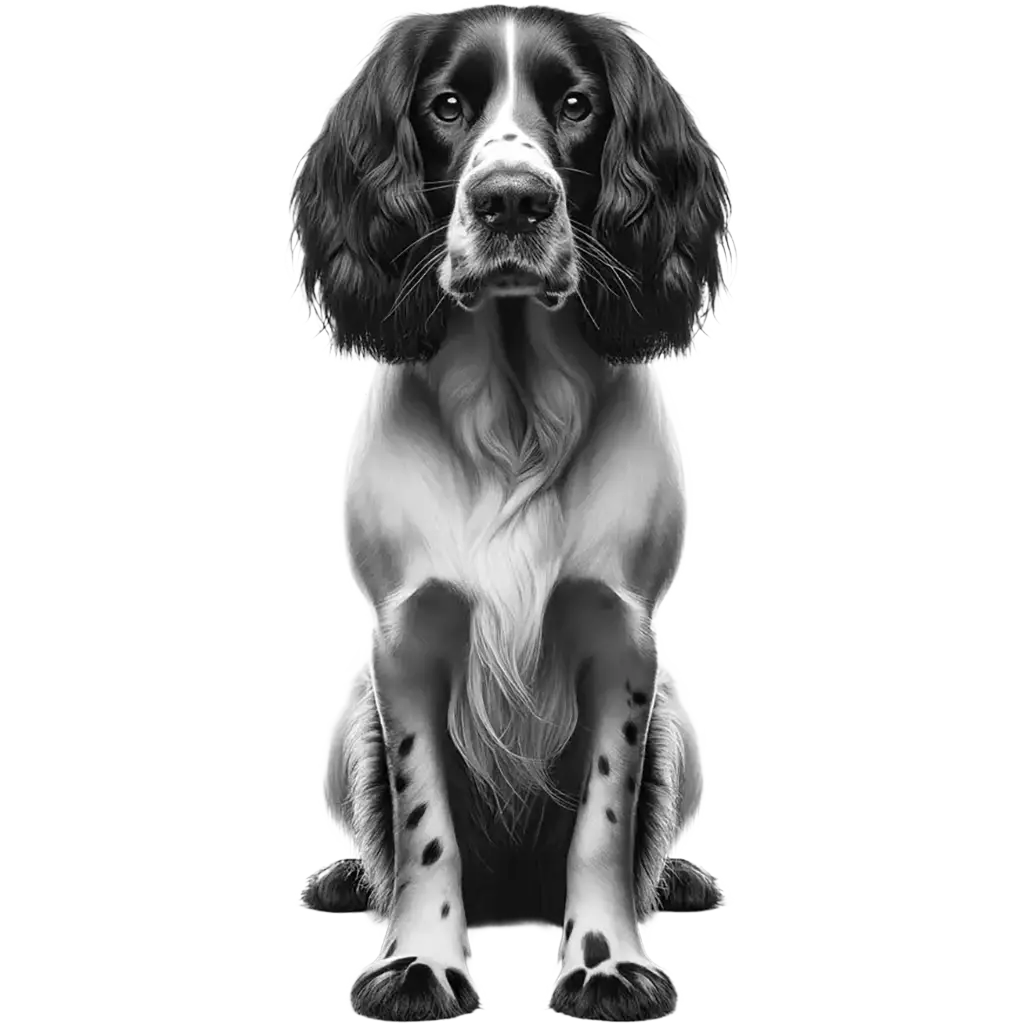
The English Springer Spaniel is a medium-sized, energetic breed known for its friendly demeanor and distinctive appearance. Typically weighing between 18 to 25 kg and standing about 46 to 51 cm at the shoulder, this breed possesses a compact body with strong, muscular legs, ideal for strenuous activity. Their coat,
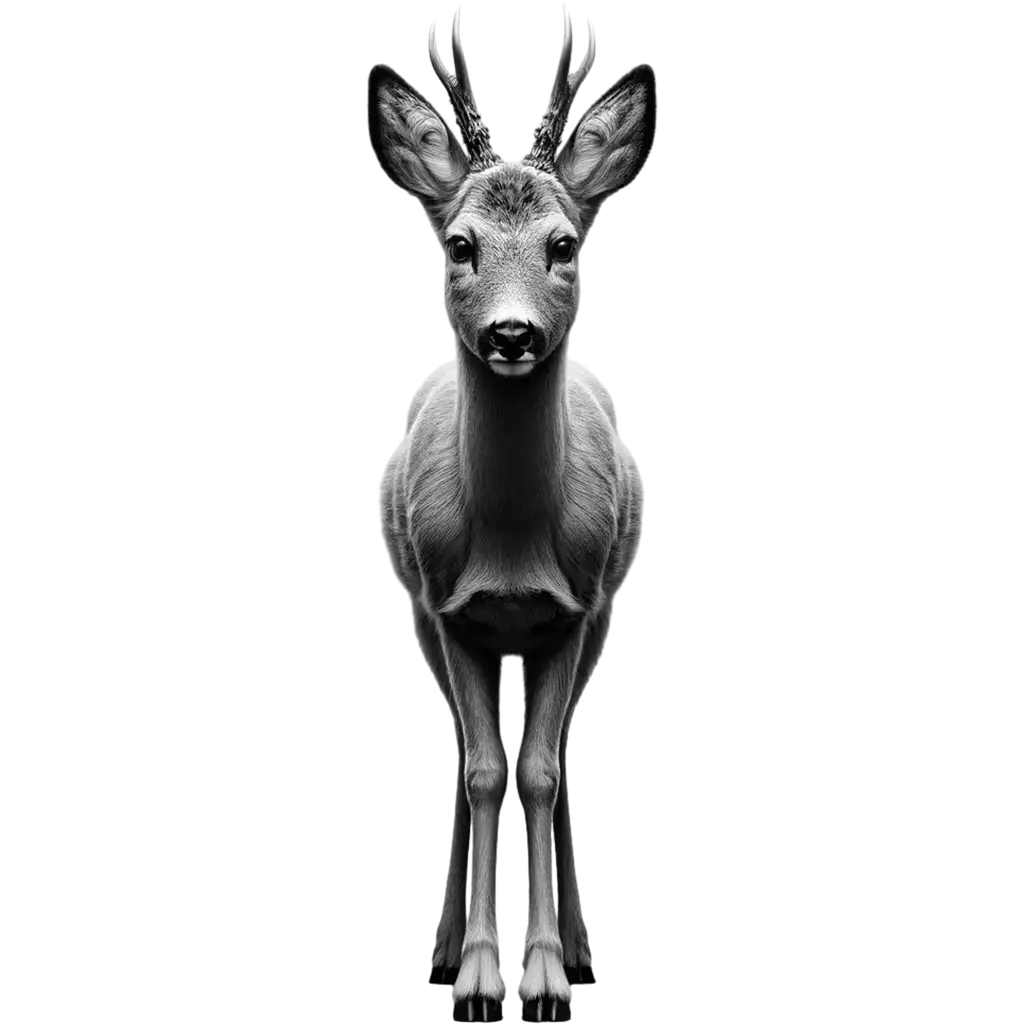
The Roe Deer, capreolus capreolus, is a small and graceful deer species native to Europe and parts of Asia. It stands about 60 to 75 cm at the shoulder and weighs between 10 to 25 kg, with males generally larger than females. The summer coat is a reddish-brown, turning to