
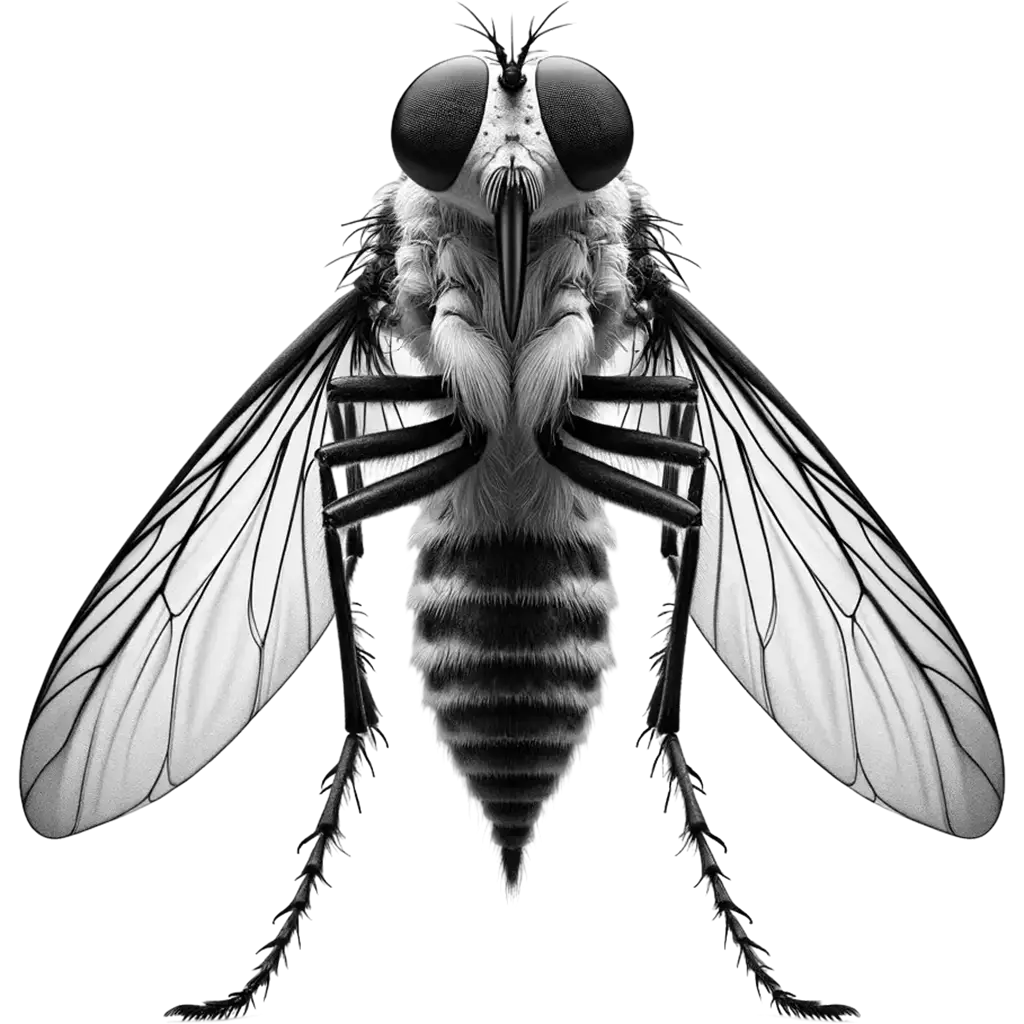
Glossina Morsitans
Tsetse Fly
Tropical and subtropical regions, often near water bodies in savannah and forested areas
The Tsetse Fly, glossina morsitans, is a blood-feeding insect known for its role in transmitting trypanosomiasis, also known as sleeping sickness in humans and nagana in animals. Measuring about 8 to 17 mm in length, tsetse flies are distinguishable by their distinct forward-projecting proboscis and the unique hatchet-shaped cell in their wings when at rest. Their coloration ranges from yellow-brown to dark-brown, and they possess a robust body compared to other flies.
| Population: | Widespread in sub-Saharan Africa, exact numbers not known |
| Generation Length: | Approximately 2-3 months |
| Average Weight: | Not applicable for insects, but they are relatively large flies |
| Average Length: | 8-17 mm |
| Lifespan: | 2-3 months in the wild |
| Diet: | Hematophagous, feeding exclusively on blood obtained through piercing host skin |
| Conservation Status: | Not Evaluated (NE) |
Tsetse flies are endemic to sub-Saharan Africa, inhabiting a wide range of environments from open savannahs to dense woodlands and forests. They are typically found near water bodies, which are essential for their life cycle and the habitats of their vertebrate hosts. These flies are daytime feeders, relying on both visual and olfactory cues to locate their hosts for a blood meal, which is necessary for the development of their larvae.
The diet of the Tsetse Fly consists exclusively of vertebrate blood, which they obtain by piercing the skin of their hosts with their proboscis. This feeding behavior is crucial for their reproduction, as female tsetse flies utilize the nutrients from blood to develop a single larva at a time, giving birth to fully formed larvae that burrow into the soil to pupate.
Reproduction in tsetse flies is unique among insects, as they are viviparous, giving birth to live larvae one at a time. This reproductive strategy, combined with a relatively long gestation period and lifespan, results in a low reproductive rate but high survival rate for offspring. Females can produce a new larva every 9 to 10 days under optimal conditions.
The population of Tsetse flies is of significant concern due to their role as vectors for trypanosomes, causing diseases that affect both humans and livestock, with substantial health and economic impacts in affected regions. Control efforts include the use of insecticide-treated targets or animals, aerial spraying, sterile insect techniques, and habitat modification to reduce fly populations. Despite these efforts, tsetse flies remain a major public health and agricultural challenge in many African countries.
Classifications
The Key Attributes
Features
- Movement:
Flying
- Territorial Behavior:
Not territorial, but has specific habitat preferences
- Speed:
Capable of quick, short flights
- Diet:
Blood feeder
- Physical Features:
- Long, slender body with a distinct proboscis for blood feeding
- Folded wings at rest, one completely covering the other
- Antennae prominent, with bristle-like structures
- Eyes are large and often brightly colored
- Primary Senses:
- Sight
- Chemoreception
Understanding Habitat and Range
Geography
- Habitat:
Tropical and subtropical regions, often near water bodies in savannah and forested areas
- Migration Patterns:
Non-migratory, but can spread to new areas through host movements
- Geographical Range:
Sub-Saharan Africa, with each species having a specific range
- Climate Preferences:
Prefers warm, humid environments with shade
Navigating the Wilderness
In the wild
- Predators:
Birds, spiders, and other insect predators
- Prey:
Mammalian blood
- Feeding Behavior:
Obligate blood feeders, feeding primarily on mammals, including humans and livestock
- Diet:
Hematophagous, feeding exclusively on blood obtained through piercing host skin
- Defensive Mechanisms:
- Cryptic behavior and coloration
- Rapid flight to escape threats
- Reproductive adaptations like viviparity (giving birth to live young) to increase survival rates
- Preferred Food Sources:
- Areas with dense populations of large mammals for feeding
Insights Into Reproduction
Mating
- Mating System:
Polygynous
- Number of Offspring:
Produces one pupa every 9-10 days after a gestation of about 20-30 days
- Gestation Period:
Tsetse flies are viviparous, with larvae developing internally and born as fully formed pupae
- Incubation Period:
Pupal stage lasts about 20-30 days before emerging as an adult
- Parental Involvement:
- No parental care after birth; larvae are deposited on the ground to pupate in soil
Youngsters Section
Tsetse Fly
Fun Fact
Tsetse flies give birth to live young, rather than laying eggs, which is unusual for insects.
This fascinating reproductive method involves the female nurturing her larva inside her body until it's ready to pupate. Once mature, she deposits it on the ground, where it forms a protective shell and completes development. This unique adaptation helps ensure the offspring's survival in harsh environments.

Download word search puzzles
Word Search Puzzles

Check Out Other Invertebrates
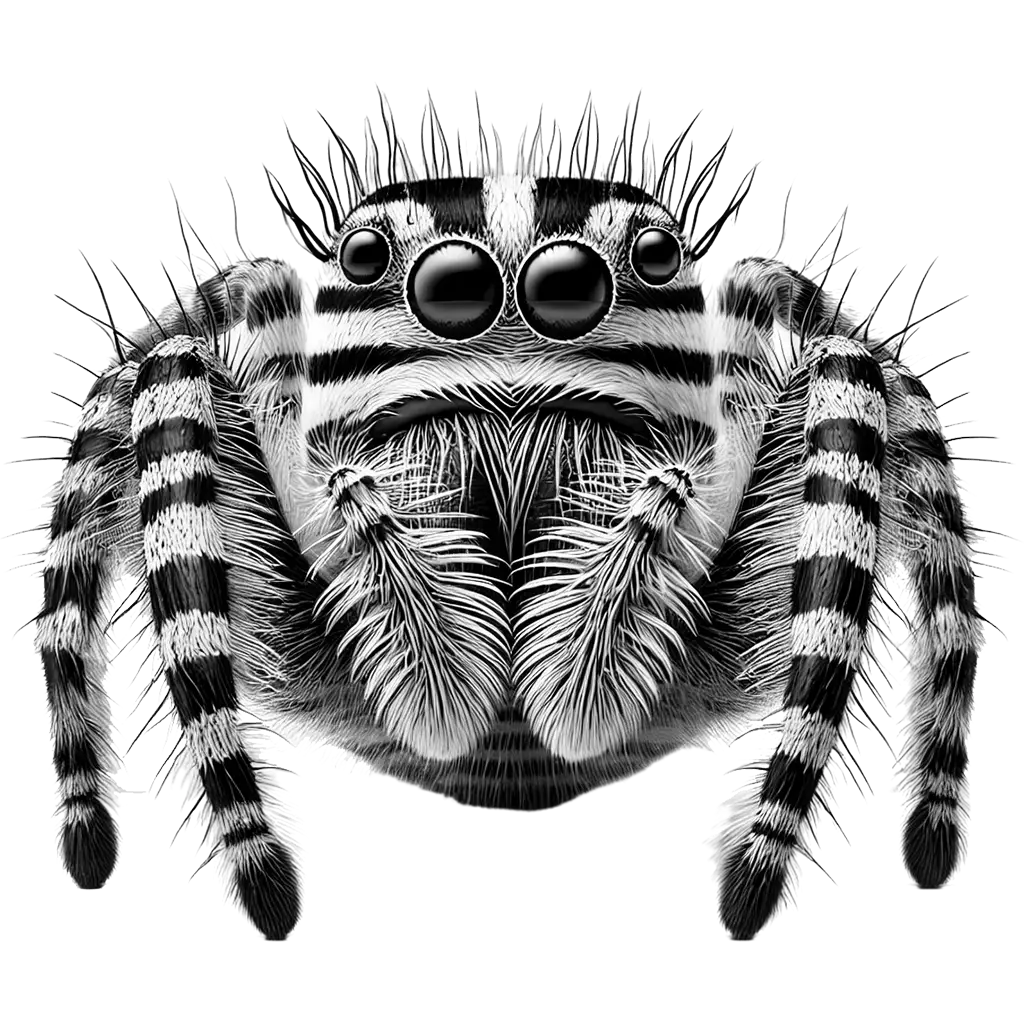
The Zebra Spider is a small, agile jumping spider characterized by its distinctive black and white striped pattern that resembles zebra markings. Its compact body, long spindly legs, and large forward-facing eyes give it an alert and inquisitive appearance, perfectly adapted for active hunting on walls and windows in both
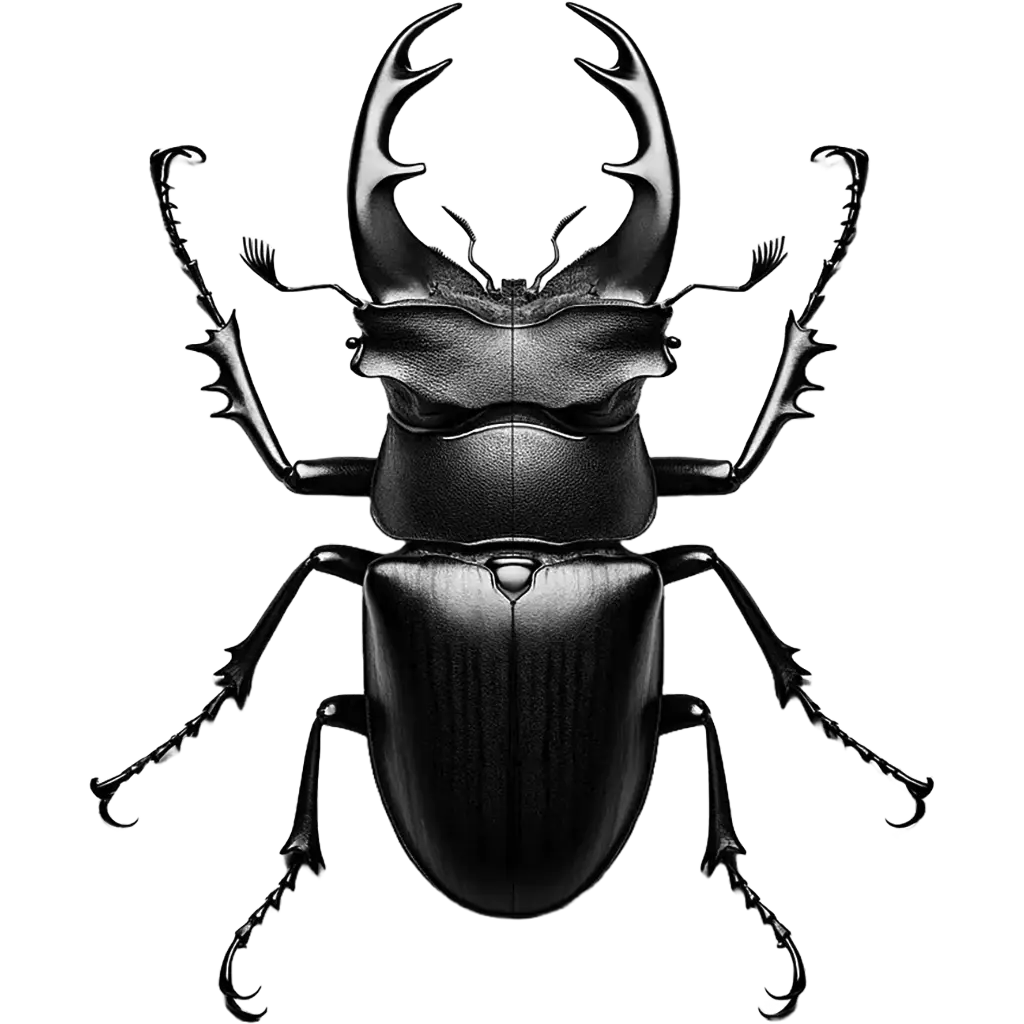
The Aegus Beetle, aegus laevicollis, a genus of stag beetles, belonging to the family Lucanidae, is one of the most recognizable and spectacular of beetles, known for the impressive, oversized mandibles of the males, which resemble the antlers of a stag, hence their name. These mandibles are used in combat
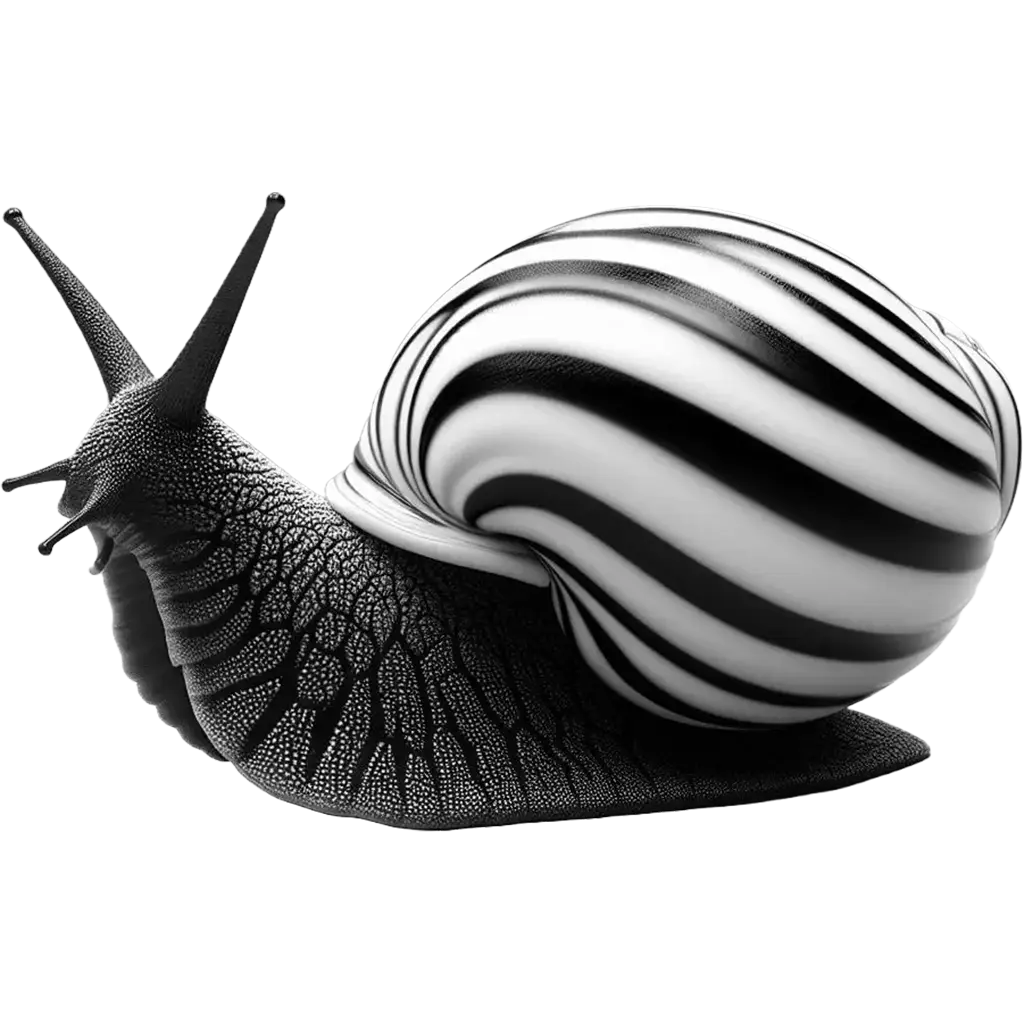
The Cowry Snail, cypraea tigris, often simply referred to as the Tiger Cowry, is a marine gastropod renowned for its highly polished, beautifully patterned shell. This species is widespread across the tropical and subtropical waters of the Indo-Pacific region, from the east coast of Africa, across the Indian Ocean, to
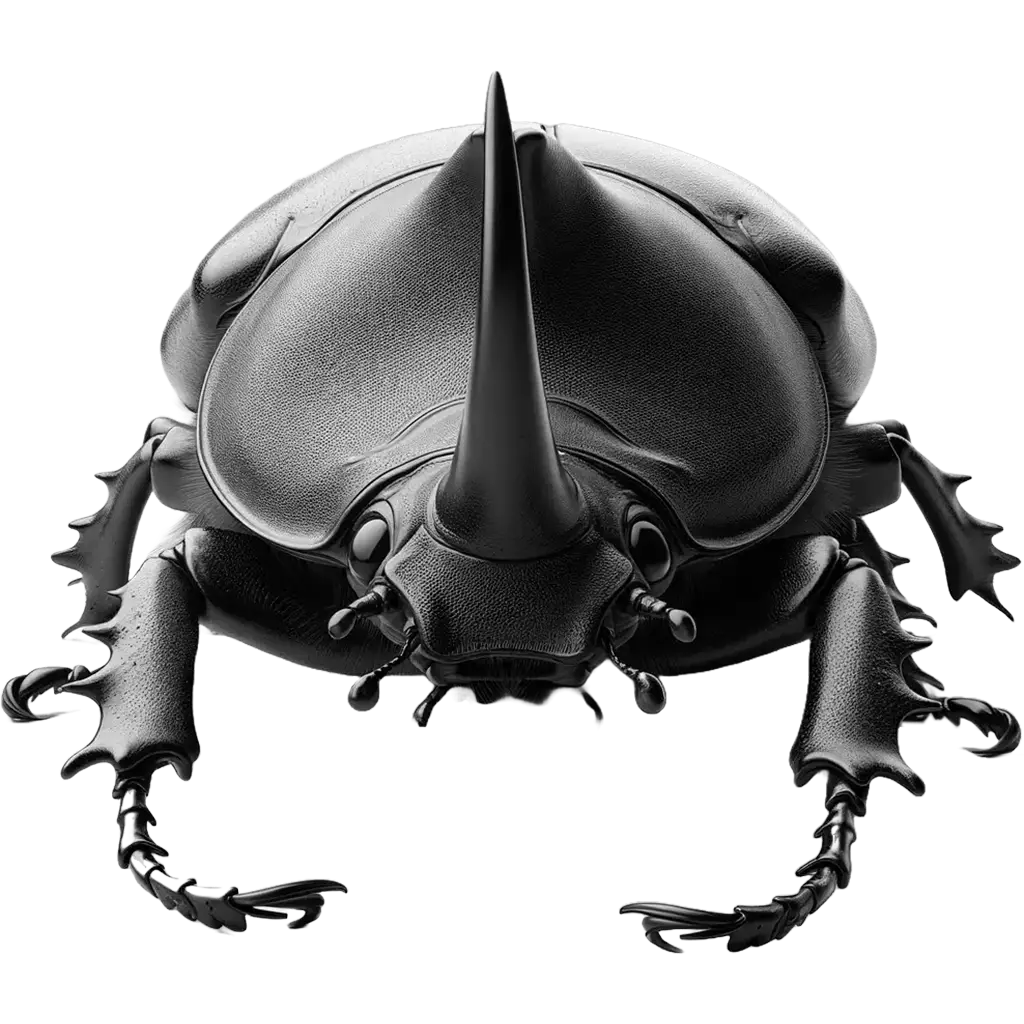
Rhinoceros Beetles, oryctes nasicornis, are among the largest of beetles, with some species reaching up to 15 cm in length, including their distinctive horn-like structures. These beetles are characterized by their impressive size, robust body, and the prominent horns on the males' heads and thoraxes, from which they derive their