
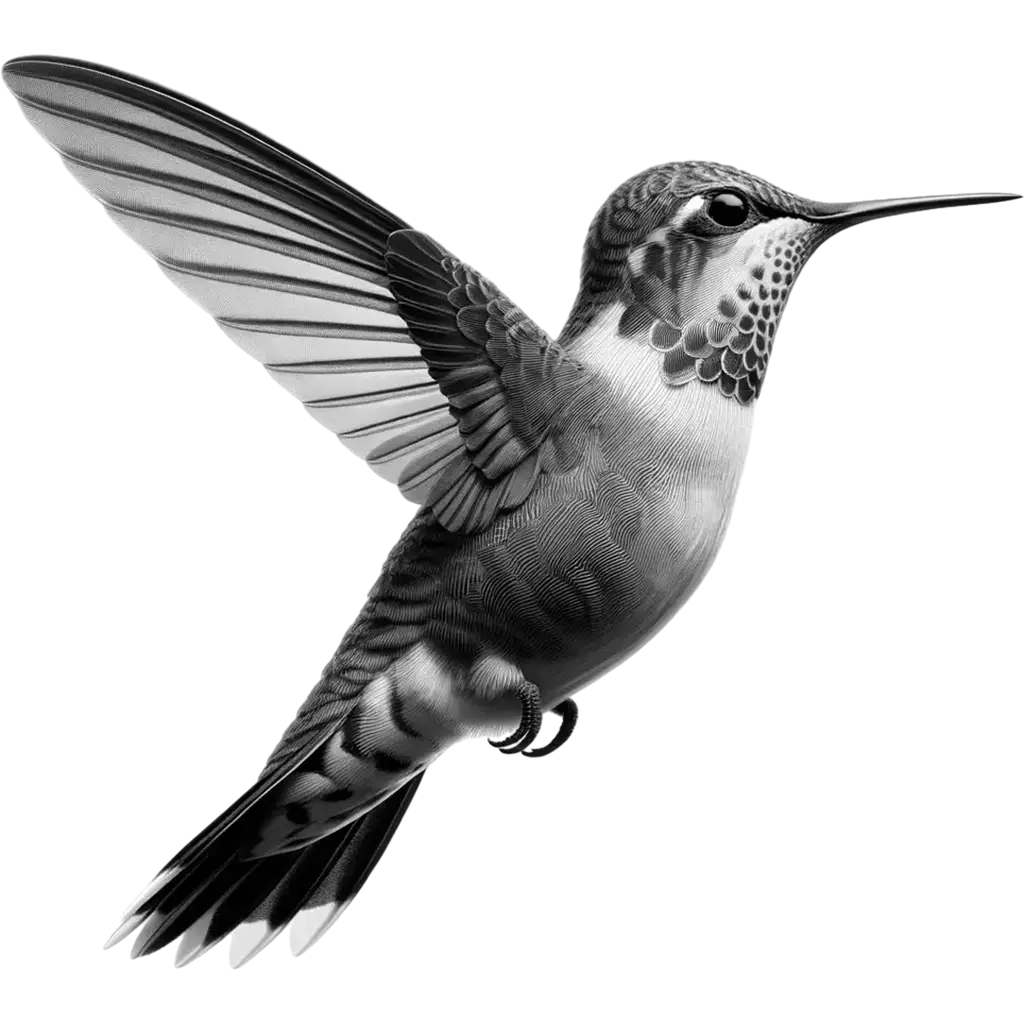
Eugenes Spectabilis
Talamanca Hummingbird
Mountainous forests and edges, often seen in cloud forests
The Talamanca Hummingbird, eugenes spectabilis, is a large and striking bird native to the highlands of Costa Rica and western Panama. This bird boasts a robust body for a hummingbird, measuring up to 13 cm in length, and is renowned for its iridescent plumage. Males display a vibrant green back and a deep blue throat, while females are slightly more subdued with greenish upper parts and a greyish throat and chest. Both sexes have long, slightly curved bills adapted for accessing nectar from a variety of flowers.
| Population: | Data on exact population is not well documented, but the species is not currently considered endangered |
| Generation Length: | 3-4 years |
| Average Weight: | 8-10 grams |
| Average Length: | 13-15 cm |
| Lifespan: | Estimated 3-5 years in the wild |
| Diet: | Primarily nectar, supplemented with insects and spiders for protein |
| Conservation Status: | Least Concern (LC) |
The Talamanca Hummingbird is found in montane forests and edges, typically at elevations ranging from 1400 to 3000 meters. It prefers habitats with abundant flowering plants, where it is often seen hovering or perched near feeders or nectar-rich blossoms. Despite its beauty, the Talamanca Hummingbird is a fierce defender of its feeding territory, aggressively chasing away other hummingbirds and even larger birds.
Its diet is primarily composed of nectar, which provides the high energy required for its rapid wing beats and hovering flight. The Talamanca Hummingbird also consumes small insects and spiders, which are important protein sources, especially during the breeding season. This dual feeding strategy allows it to maintain its energy levels and support its metabolic needs.
Breeding for the Talamanca Hummingbird involves solitary nesting by the female, who constructs a small, cup-shaped nest on a high, slender branch. The nest is made of plant fibers and spider webs, allowing it to expand as the chicks grow. Typically, the female lays two eggs, which she incubates for about 15 to 19 days. The chicks are then fed by the mother for up to 26 days until they fledge.
The population of the Talamanca Hummingbird is considered stable, though it faces threats from habitat destruction and climate change. Conservation efforts are crucial for preserving the montane forest habitats upon which this and other highland bird species depend. Their role as pollinators makes them integral to the health of their ecosystems, highlighting the importance of maintaining biodiversity in these regions.
Classifications
The Key Attributes
Features
- Movement:
Flying
- Territorial Behavior:
Can be highly territorial, especially around feeding areas
- Speed:
Extremely agile in flight with rapid wing beats
- Diet:
Nectarivore
- Physical Features:
- Large size for a hummingbird with a robust body and long bill
- Iridescent feathers, often appearing dark with purple or blue throat in males
- Strong and rapid wing beats enabling hovering and backward flight
- Long tail with white tips on the outer feathers
- Primary Senses:
- Sight
- Hearing
Understanding Habitat and Range
Geography
- Habitat:
Mountainous forests and edges, often seen in cloud forests
- Migration Patterns:
Some altitudinal movement in response to flowering patterns of plants
- Geographical Range:
Central America, particularly from Costa Rica to Panama
- Climate Preferences:
Prefers cool, high-altitude environments
Navigating the Wilderness
In the wild
- Predators:
Birds of prey, snakes, and larger insects
- Prey:
Nectar, small insects, and spiders
- Feeding Behavior:
Feeds primarily on nectar from flowers, occasionally consumes insects and spiders
- Diet:
Primarily nectar, supplemented with insects and spiders for protein
- Defensive Mechanisms:
- Rapid flight and agility to evade predators
- Territorial behavior to defend feeding territories
- Preferred Food Sources:
- Areas with abundant flowering plants, particularly in cloud forests
Insights Into Reproduction
Mating
- Mating System:
Polygynous
- Number of Offspring:
Usually 2 eggs
- Incubation Period:
About 15-19 days
- Parental Involvement:
- Females solely responsible for nest building, incubation, and feeding the young
Youngsters Section
Talamanca Hummingbird
Fun Fact
The Talamanca Hummingbird is native to Central America and is known for its vibrant iridescent plumage.
These birds are found in the highland cloud forests, primarily in Costa Rica and Panama. They have a unique adaptation allowing them to hover in place while feeding on nectar from flowers, using rapid wing beats. Their long, specialized bills are perfectly suited for accessing deep flower tubes, making them important pollinators in their ecosystem.

Download word search puzzles
Word Search Puzzles


Check Out Other Birds

The Rock Dove, columba livia, commonly known as the pigeon, is a widespread bird recognized by its stout body, short legs, and smooth plumage. Adult Rock Doves typically measure 29 to 37 cm in length and have a wingspan of 62 to 72 cm. Their coloration varies widely due to

The Pied Avocet, recurvirostra avosetta, is a striking wading bird known for its elegant black and white plumage and distinctive upcurved bill. This bird typically measures about 42 to 45 cm in length, with a wingspan of 77 to 85 cm. Its long, thin legs are a pale blue, complementing
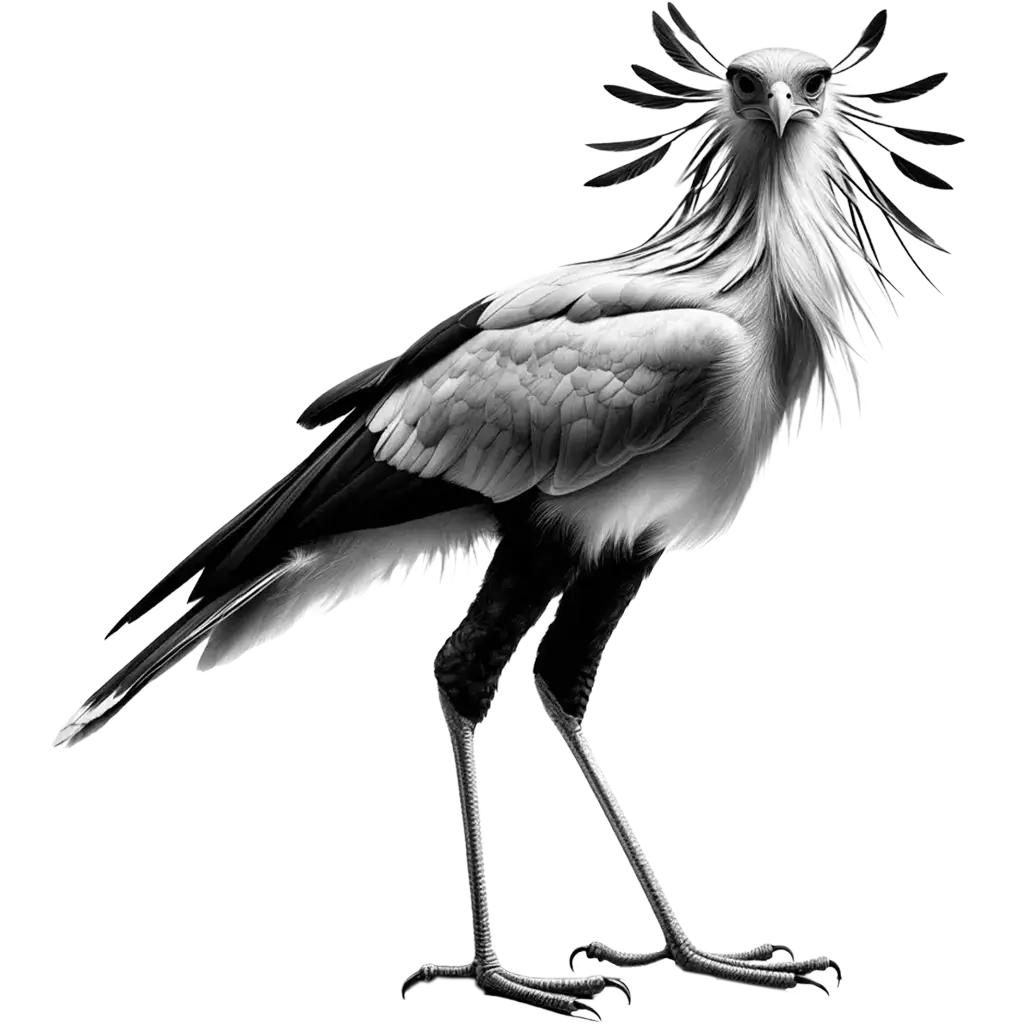
The Secretarybird, sagittarius serpentarius, is a unique bird of prey native to the open grasslands and savannas of Sub-Saharan Africa. This distinctive species stands tall on crane-like legs, reaching up to 1.3 meters in height, with a body length of about 1.4 meters from beak to tail. Its appearance is

African Penguins exhibit a striking tuxedo-like appearance with vivid black and white plumage. Their compact, robust bodies and short, powerful flippers allow them to swim gracefully through the ocean, while bright red-orange patches near the eyes add a touch of color. Their overall look combines elegance and functional design, perfectly