
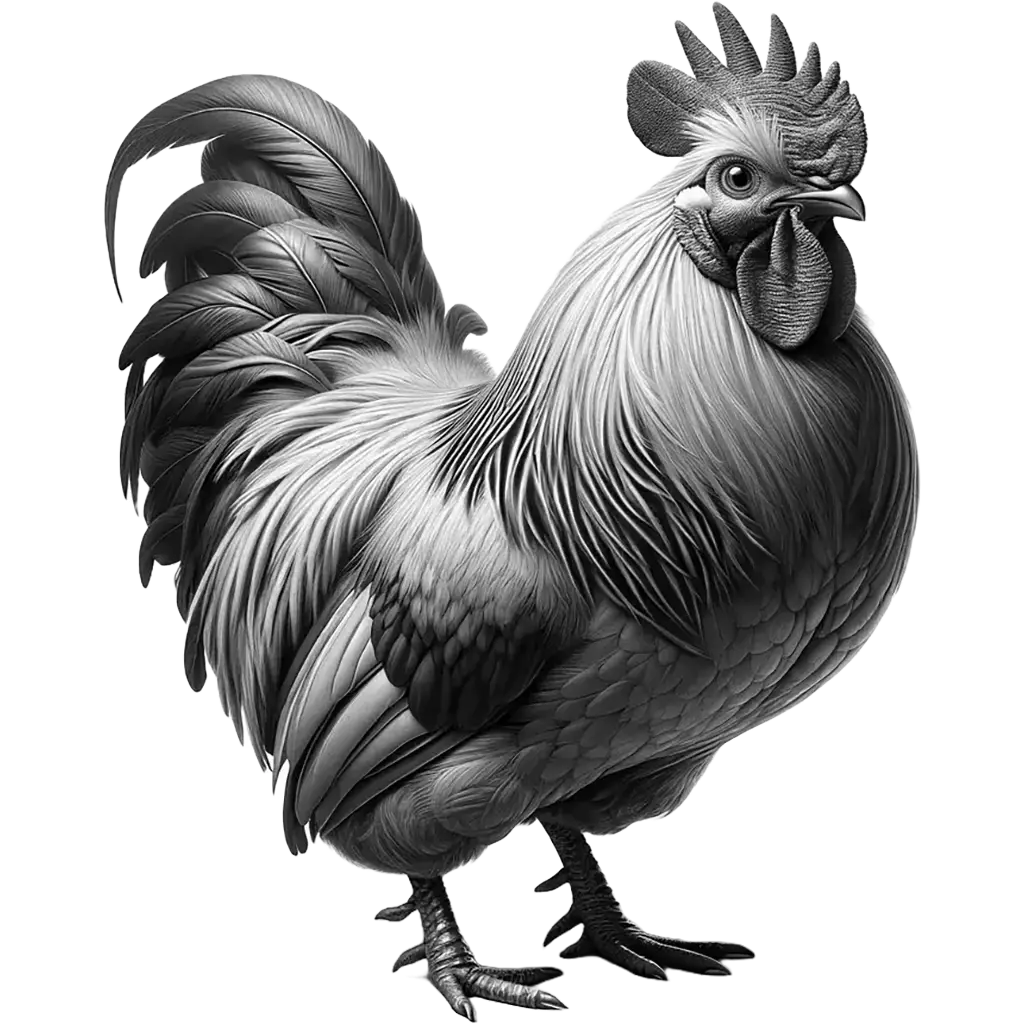
Gallus Lafayettii
Sri Lankan Junglefowl
Dense forests, scrublands, and areas near human settlements
The Sri Lankan Junglefowl, gallus lafayettii, is a vibrant and significant bird species native to Sri Lanka, serving as the national bird of the country. Males are particularly striking, adorned with a combination of fiery orange-red plumage, glossy black tail feathers, and a distinctive yellow or red wattle. Females, in contrast, are predominantly brown with occasional white patterning, designed for camouflage. Adult males can reach up to 66 to 72 cm in length, including their tail feathers, while females are slightly smaller. This species is closely related to domestic chickens and is considered one of the wild ancestors of the latter.
| Population: | Listed as Least Concern, with stable populations |
| Generation Length: | 3-4 years |
| Average Weight: | Male: 690-1,150 grams, Female: 510-800 grams |
| Average Length: | Male: 66-72 cm, Female: 35-38 cm |
| Lifespan: | 5-7 years in the wild |
| Diet: | Varied diet including plant material and a range of invertebrates |
| Conservation Status: | Least Concern (LC) |
Inhabiting dense rainforests, scrublands, and areas near human settlements, the Sri Lankan Junglefowl is well adapted to a variety of habitats within its native range. These birds are ground dwellers but roost in trees to avoid predators. They are known for their loud, crowing calls at dawn, which serve as territorial signals among males.
The diet of the Sri Lankan Junglefowl is omnivorous, consisting of seeds, fruits, leaves, and insects. This varied diet plays a crucial role in the seed dispersal of many plant species, contributing to the health of their forest ecosystems. They forage in small groups, often scratching at the leaf litter to uncover food.
Reproduction in the Sri Lankan Junglefowl involves elaborate courtship displays by males, who showcase their vibrant plumage and engage in dances and calls to attract females. Nests are built on the ground, hidden among vegetation. Females lay 2 to 4 eggs per clutch, which are incubated for about 21 days. The chicks are precocial, able to feed themselves shortly after hatching, though they remain under the care of the mother for protection.
The population of the Sri Lankan Junglefowl is considered stable, with the species being widely distributed across the island. However, habitat destruction and fragmentation pose ongoing threats. Conservation efforts focus on protecting forest habitats and regulating hunting. The Sri Lankan Junglefowl's role in local ecosystems and cultural significance underscores the importance of these conservation measures.
Classifications
The Key Attributes
Features
- Movement:
Walking, running, flying
- Territorial Behavior:
Territorial, especially during breeding season
- Speed:
Capable of quick bursts of running and short flights
- Diet:
Omnivore
- Physical Features:
- Males with vibrant golden-yellow and deep maroon plumage with black tail
- Females are brownish with white patterning
- Strong legs and claws
- Males have a prominent red comb and wattles
- Primary Senses:
- Sight
- Hearing
Understanding Habitat and Range
Geography
- Habitat:
Dense forests, scrublands, and areas near human settlements
- Migration Patterns:
Non-migratory, but may show local movements
- Geographical Range:
Endemic to Sri Lanka
- Climate Preferences:
Tropical climates
Navigating the Wilderness
In the wild
- Predators:
Mammalian predators, birds of prey, and large reptiles
- Prey:
Insects, worms, seeds, and berries
- Feeding Behavior:
Feeds on seeds, fruits, leaves, and invertebrates
- Diet:
Varied diet including plant material and a range of invertebrates
- Defensive Mechanisms:
- Camouflage, especially in females
- Flight to escape predators
- Males may use their spurs in defense
- Preferred Food Sources:
- Understory vegetation and ground-layer invertebrates in forested areas
Insights Into Reproduction
Mating
- Mating System:
Polygynous
- Number of Offspring:
2-4 eggs
- Incubation Period:
About 21 days
- Parental Involvement:
- Females primarily responsible for incubation and care of the chicks
Youngsters Section
Sri Lankan Junglefowl
Fun Fact
The Sri Lankan Junglefowl is the national bird of Sri Lanka.
It is known for its vibrant plumage, with males displaying vivid colors and a striking comb. This bird is often found in dense forests and scrublands across the island. It's closely related to the domestic chicken and plays a crucial role in local ecosystems.

Download word search puzzles
Word Search Puzzles

Check Out Other Birds

The Golden Eagle, aquila chrysaetos, is one of the most powerful birds of prey in the Northern Hemisphere, admired for its strength, speed, and majestic beauty. Adults typically exhibit a wingspan ranging from 1.8 to 2.3 meters (6 to 7.5 feet), making them formidable hunters in their natural habitats. The

The Greater Adjutant, leptoptilos dubius, is a large stork standing at an impressive height of up to 1.5 meters with a wingspan reaching 2.5 meters. Its appearance is distinctive with a bald head and neck, a heavy bill, and a predominantly dark grey plumage, except for the white underparts. The

The Spotted Nutcracker, nucifraga caryocatactes, is a robust bird species belonging to the crow family, Corvidae, known for its distinctive spotted plumage and strong bill. Adults typically measure about 32 to 38 cm in length, with a wingspan of approximately 49 to 53 cm. Their plumage is primarily chocolate brown,

The Pink-Headed Warbler, cardellina versicolor, is a strikingly beautiful bird, notable for its vibrant pink head and chest that contrast sharply with its dark red body. This small bird, measuring approximately 13 to 14 cm in length, possesses a unique coloration among warblers, making it a sought-after species for birdwatchers.