
Top ten fascinating facts about
Spotted Hyena
Crocuta Crocuta
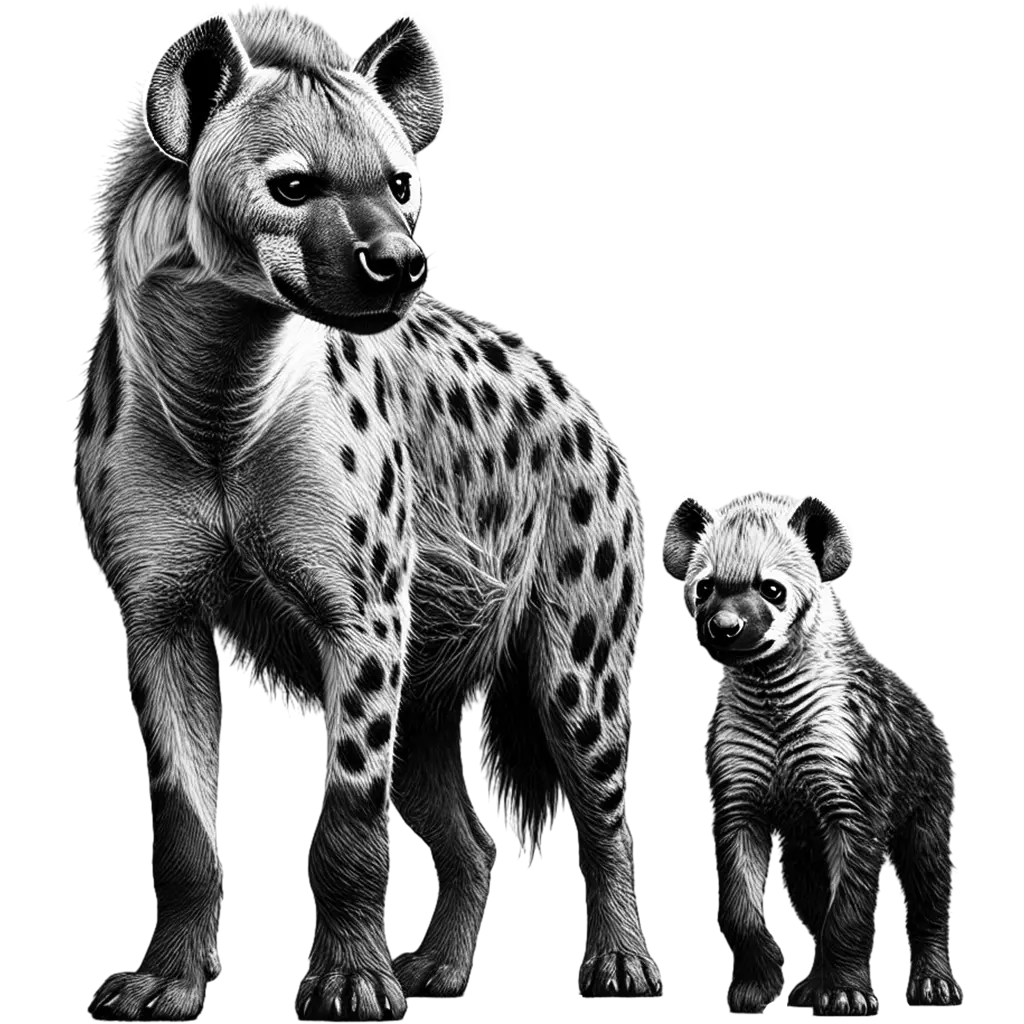
Spotted hyenas are known for their unique social structure and complex vocalizations. These animals live in large, matriarchal groups called clans, led by a dominant female. Their distinctive "laugh" is a communication tool, conveying information about age, status, and emotions. Hyenas are also skilled hunters, capable of taking down large prey, contrary to their scavenger reputation.
Spotted hyenas live in complex matriarchal societies led by dominant females.
Spotted hyenas have one of the most intricate social structures among mammals, rivaling those of primates. Clans can consist of up to 80 individuals, and females are the dominant sex. The highest-ranking male is subordinate to the lowest-ranking female. This matriarchal system influences access to food, mating opportunities, and social standing within the clan. Females are larger, more aggressive, and lead group activities, showcasing a fascinating reversal of typical mammalian gender roles.
They are skilled hunters, not just scavengers, and have a hunting success rate comparable to lions.
Contrary to the common misconception that hyenas are primarily scavengers, spotted hyenas are proficient hunters who kill up to 95% of the food they consume. They have a hunting success rate of about 70%, often surpassing that of lions. Working cooperatively, they can bring down large prey such as wildebeests and zebras. Their powerful jaws and endurance allow them to tackle animals much larger than themselves, highlighting their prowess as apex predators.
Spotted hyenas have one of the strongest bite forces relative to their size among mammals.
Their jaws can exert a bite force of up to 1,100 pounds per square inch (psi), enabling them to crush bones and access the nutritious marrow within. This ability allows them to consume parts of the carcass that other predators can't, maximizing nutrient intake. Their highly acidic stomachs can digest skin, teeth, horns, and even hooves, making them incredibly efficient scavengers and cleaners of their ecosystem.
They communicate using a complex repertoire of vocalizations, including the famous "laugh."
Spotted hyenas are among the most vocal mammals, with sounds that include whoops, groans, yells, and the iconic giggle or "laugh." This laughter-like call is typically a sign of submission or excitement and can be heard up to three miles away. Their vocalizations convey information about age, social status, and identity, playing a crucial role in coordinating group hunts and reinforcing social bonds within the clan.
Females have unique reproductive anatomy, with masculinized genitalia resembling those of males.
Female spotted hyenas possess an enlarged clitoris, often called a pseudo-penis, through which they urinate, mate, and give birth. This unique feature makes it challenging to distinguish males from females at a glance. The masculinization is due to high levels of prenatal androgens, which may contribute to their dominant behavior. Giving birth through the narrow pseudo-penis is risky and can lead to a high mortality rate for first-time mothers and their cubs.
Cubs are born with their eyes open and teeth erupted, ready for a competitive start in life.
Unlike most carnivores, spotted hyena cubs are relatively mature at birth, emerging with their eyes open and a full set of sharp teeth. This early development leads to intense sibling rivalry, especially in same-sex litters. Cubs may engage in aggressive fights shortly after birth, sometimes resulting in the death of a sibling. This competition ensures that the strongest cubs survive in an environment where resources are limited.
They are excellent endurance runners, capable of maintaining speeds of 37 mph (60 km/h) over long distances.
Spotted hyenas have great stamina, allowing them to chase prey over several miles. Their muscular build and efficient energy use enable them to outlast and exhaust their targets. This endurance hunting strategy is effective in the open savannas where they reside, contributing to their high hunting success rates and ability to capture swift animals.
Spotted hyenas play a crucial role in their ecosystem by controlling prey populations and cleaning up carrion.
As both predators and scavengers, they help maintain the balance of animal populations and recycle nutrients back into the environment. By consuming carrion, they prevent the spread of disease and reduce waste. Their digestive systems can handle bacteria-laden meat that would be harmful to other animals, showcasing their importance as nature's cleanup crew.
They have a long-standing and often misunderstood relationship with humans, featuring prominently in folklore.
Throughout history, spotted hyenas have appeared in African folklore and mythology, sometimes portrayed as cunning tricksters or symbols of misfortune. Their eerie nocturnal calls and scavenging habits have led to negative perceptions and superstitions. However, they also hold cultural significance in some societies, where they are respected for their intelligence and adaptability.
Spotted hyenas are highly intelligent, with problem-solving skills and social intelligence comparable to some primates.
Studies have demonstrated that they can count, understand cause and effect, and solve complex puzzles to access food. Their large frontal cortex—the part of the brain associated with decision-making and social behavior—supports advanced cognitive abilities. This intelligence is essential for navigating their complex social hierarchies and cooperative hunting strategies.
Check Out Other Mammals
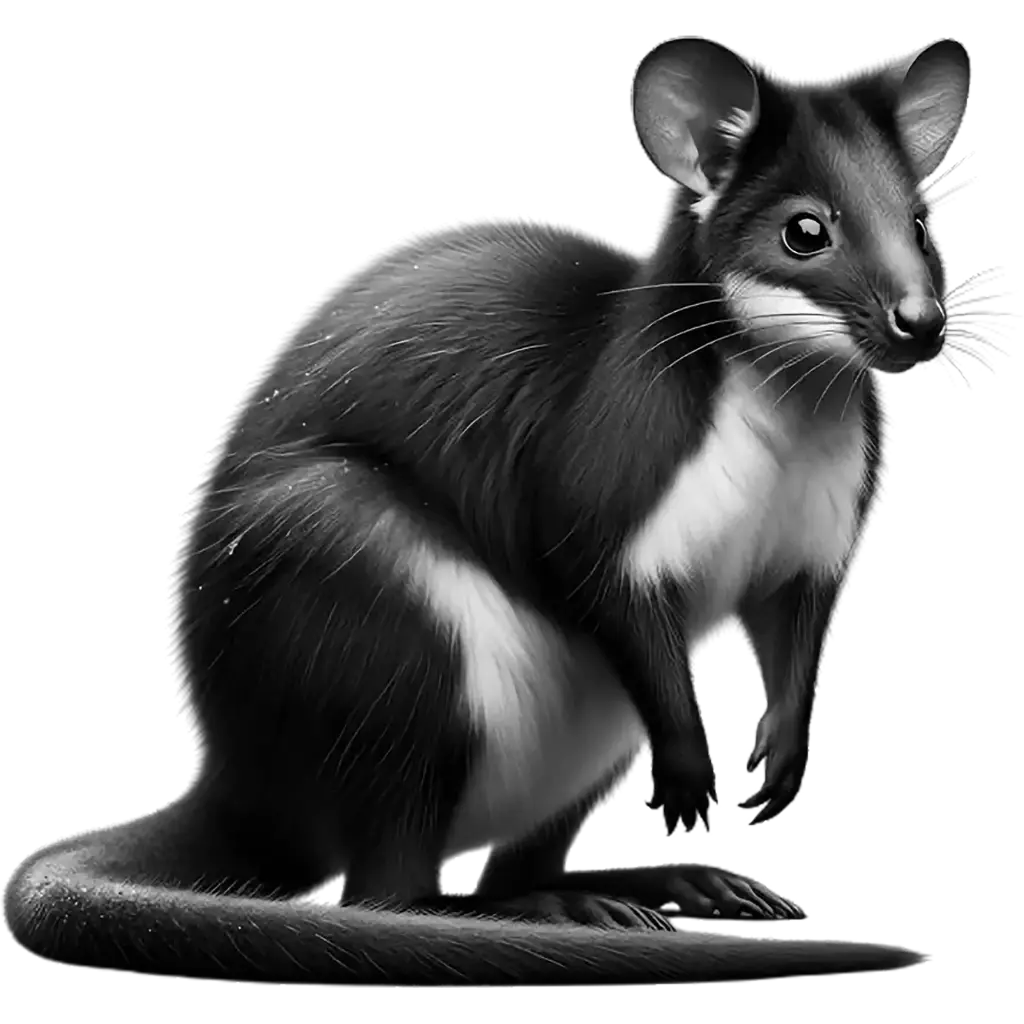
The Musky Rat-Kangaroo, hypsiprymnodon moschatus, is a unique and diminutive marsupial, residing in the dense, wet tropical rainforests of northeastern Queensland, Australia. This species stands out as the smallest and most primitive of the kangaroo family, with adults measuring about 23 to 34 cm in length, including the tail, and

The Honey Badger, mellivora capensis, is renowned for its robust and fearless nature, often cited as one of the most formidable animals in its habitat. Its body is relatively small but powerfully built, ranging from 55 to 77 cm in length, with a distinctive broad and thick-set torso, short legs,

The European Rabbit, oryctolagus cuniculus, is a small mammal native to southwestern Europe and northwest Africa. With a compact body, the rabbit has a robust build, short tail, and long ears that can measure up to 7 cm in length. Adults typically weigh between 1.2 to 2.5 kg and have

The Dalmatian, instantly recognizable by its distinctive white coat marked with black or liver spots, is a breed of medium-sized dog known for its unique, spotted appearance. Adult Dalmatians typically weigh between 45 to 60 pounds and stand at a height of 19 to 24 inches at the shoulder. Their