
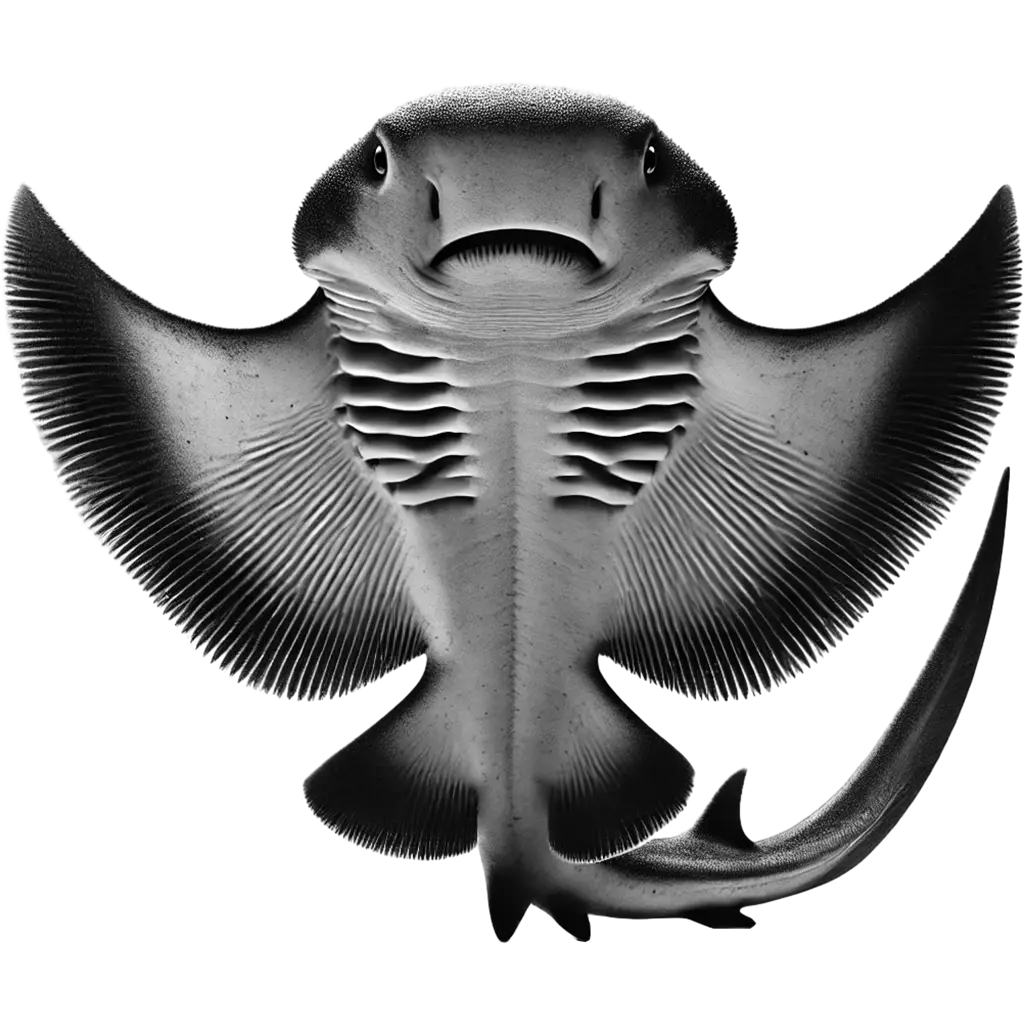
Squatina Aculeata
Sawback Angelshark
Shallow coastal waters with sandy or muddy bottoms
The Sawback Angelshark (Squatina aculeata) displays a striking, flattened body that closely resembles a ray. Its broad, wedge-shaped form is covered with a textured, mottled skin featuring a series of jagged, saw-like spines along its dorsal surface. The eyes and spiracles are positioned on the top of its head, while its wide mouth and strong jaws hint at its predatory nature. Its coloration, a blend of grays, browns, and whites, provides superb camouflage against the ocean floor.
| Population: | Declining in many regions due to overexploitation |
| Generation Length: | 4-5 years |
| Average Weight: | Approximately 30-50 kg |
| Average Length: | Up to 1.3 meters |
| Lifespan: | Up to 15 years in the wild |
| Diet: | Carnivorous, utilizing a rapid strike to capture prey |
| Conservation Status: | Critically Endangered (CR) |
Sawback Angelsharks are typically found lying in wait on sandy or muddy bottoms of shallow coastal waters, often partially buried in sediment. They are ambush predators that remain motionless for long periods, blending seamlessly with their surroundings until a potential prey ventures close enough. These sharks are generally solitary, exhibiting a sedentary lifestyle with high site fidelity. They are most active during twilight hours, using their keen senses to detect even slight movements. This behavioral pattern allows them to conserve energy while remaining vigilant to sudden opportunities.
Sawback Angelsharks primarily feed on a variety of bottom-dwelling fish, cephalopods, and crustaceans. As ambush predators, they rely on their exceptional camouflage to approach prey undetected, waiting patiently for an opportunity to strike. Their diet consists of organisms that frequent sandy and muddy substrates, captured with rapid bursts of movement and powerful jaws. Once prey is seized, a methodical swallowing process ensures efficient digestion. Their feeding habits help control populations of smaller marine organisms and support the energy needs essential for growth and reproduction, especially during the breeding season.
Sawback Angelsharks engage in a courtship display that involves slow, deliberate movements and subtle body posturing. Males initiate contact by circling potential mates, followed by brief periods of physical contact and alignment. Mating typically occurs during specific seasons when water temperatures are optimal, and no parental care is observed following internal fertilization, with eggs laid in concealed, sandy depressions. This reproductive strategy ensures that the young remain hidden and protected from immediate predators until hatching.
The population of Sawback Angelsharks is considered critically endangered, with numbers declining in many regions due to habitat degradation and bycatch in commercial fisheries. Although once more widespread, their current distribution is patchy and concentrated in less disturbed coastal areas. Conservation measures are urgently needed to monitor populations and protect critical habitats to ensure the species does not face further declines.
Classifications
The Key Attributes
Features
- Movement:
Slow, ambush predator that lies motionless on the seafloor
- Territorial Behavior:
Generally solitary; occupies a fixed area on the coastal bottom
- Speed:
Capable of sudden bursts when striking prey
- Diet:
Carnivorous; preys on bottom-dwelling fish, cephalopods, and crustaceans
- Physical Features:
- Flattened, ray-like body with broad pectoral fins
- Distinctive jagged, saw-like spines along the dorsal surface
- Mottled coloration of grays, browns, and whites for camouflage
- Small eyes and spiracles positioned on top of the head
- Wide mouth with strong, crushing jaws
- Primary Senses:
- Sight
- Lateral line sensitivity
Understanding Habitat and Range
Geography
- Habitat:
Shallow coastal waters with sandy or muddy bottoms
- Migration Patterns:
Non-migratory; remains within localized coastal regions
- Geographical Range:
Eastern Atlantic and Mediterranean coastal areas
- Climate Preferences:
Temperate to subtropical marine environments
Navigating the Wilderness
In the wild
- Predators:
Larger predatory fish and marine mammals may occasionally prey on juveniles
- Prey:
Bottom-dwelling fish, cephalopods, and crustaceans
- Feeding Behavior:
Ambushes prey by remaining motionless and camouflaged on the seafloor
- Diet:
Carnivorous, utilizing a rapid strike to capture prey
- Defensive Mechanisms:
- Effective camouflage on the ocean floor
- Rapid burst of speed during an ambush
- Preferred Food Sources:
- Demersal fish
- Cephalopods
- Crustaceans
Insights Into Reproduction
Mating
- Mating System:
Presumed to be polygynous with seasonal breeding
- Number of Offspring:
Typically few, with clutch sizes remaining low
- Incubation Period:
Internal fertilization with embryos developing in egg cases
- Parental Involvement:
- No parental care; embryos develop within protective egg cases on the seafloor
Youngsters Section
Sawback Angelshark
Fun Fact
The Sawback Angelshark's jagged dorsal spines and flattened body create a unique, almost prehistoric appearance that stands out in shallow coastal waters.
This remarkable species not only captivates researchers with its effective camouflage and ambush tactics but also serves as an important indicator of coastal ecosystem health. Its presence signals a balanced marine environment, where prey populations and habitat conditions are conducive to its survival.

Download word search puzzles
Word Search Puzzles


Check Out Other Fish
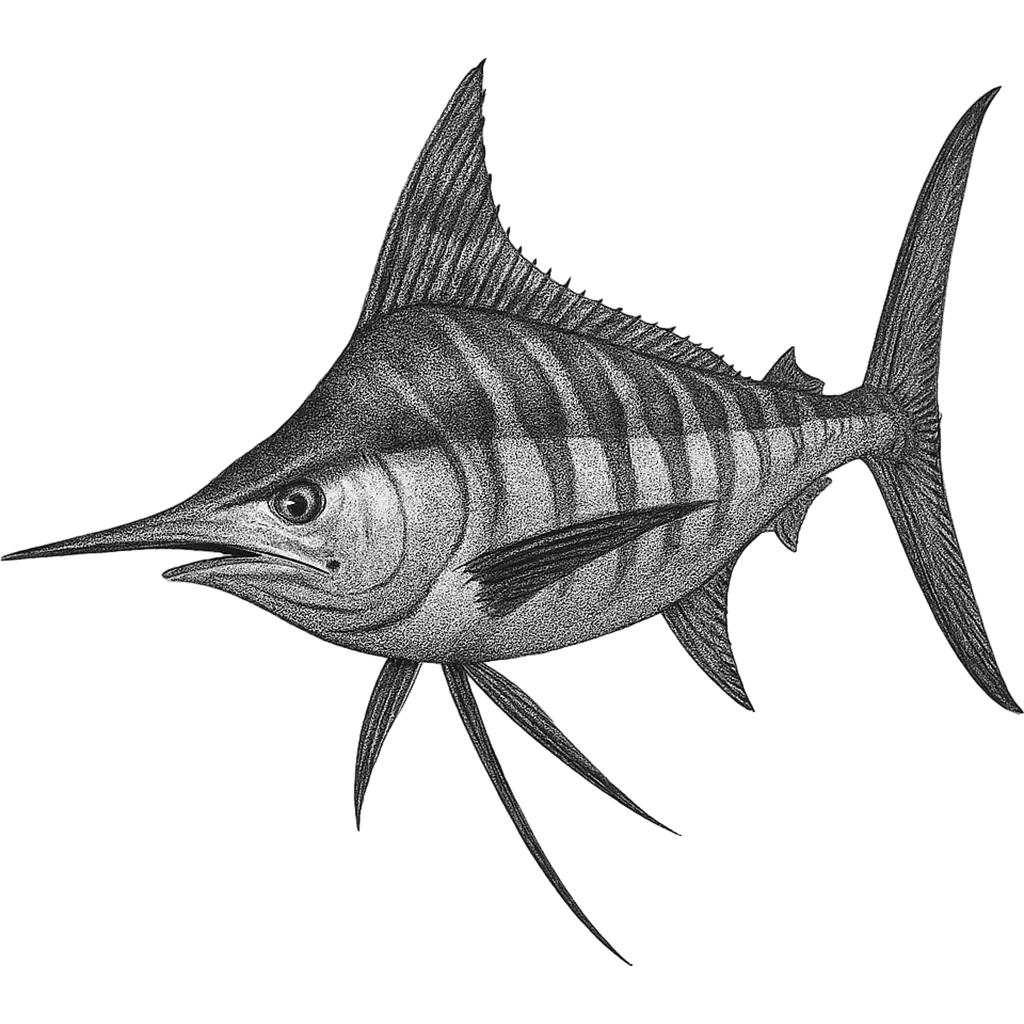
The Striped Marlin has a sleek, elongated body shaped like a torpedo, measuring on average 2.9 meters in length and tapering to a narrow caudal peduncle that supports a forked tail. Its dorsal surface ranges from deep blue to nearly black, fading to silvery white on the ventral side. The
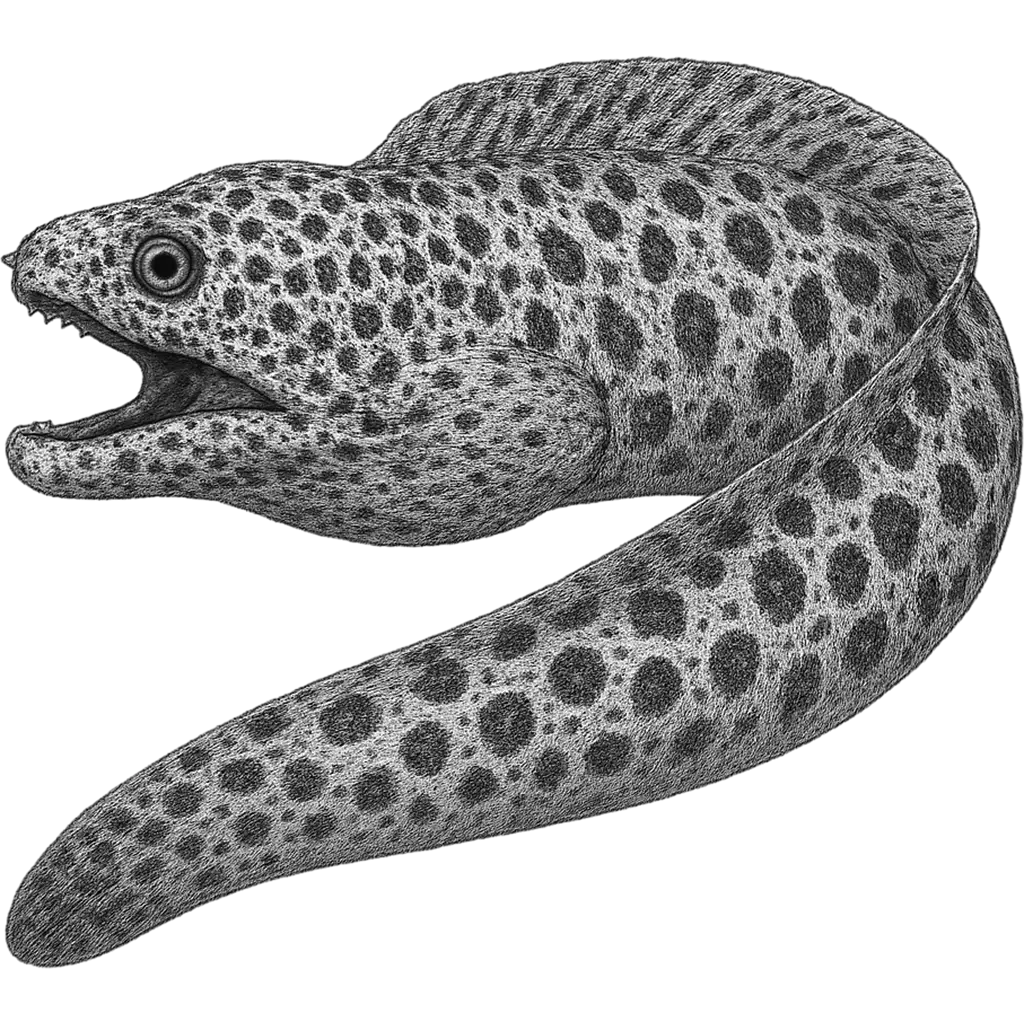
The Spotted Moray has a long, slender, snake-like body reaching up to two meters in length, commonly around sixty centimeters. Its smooth, scaleless skin is pale yellow to off-white, densely covered with small, overlapping reddish-brown to dark-brown spots. The head is broad with small, round gill openings and a pronounced
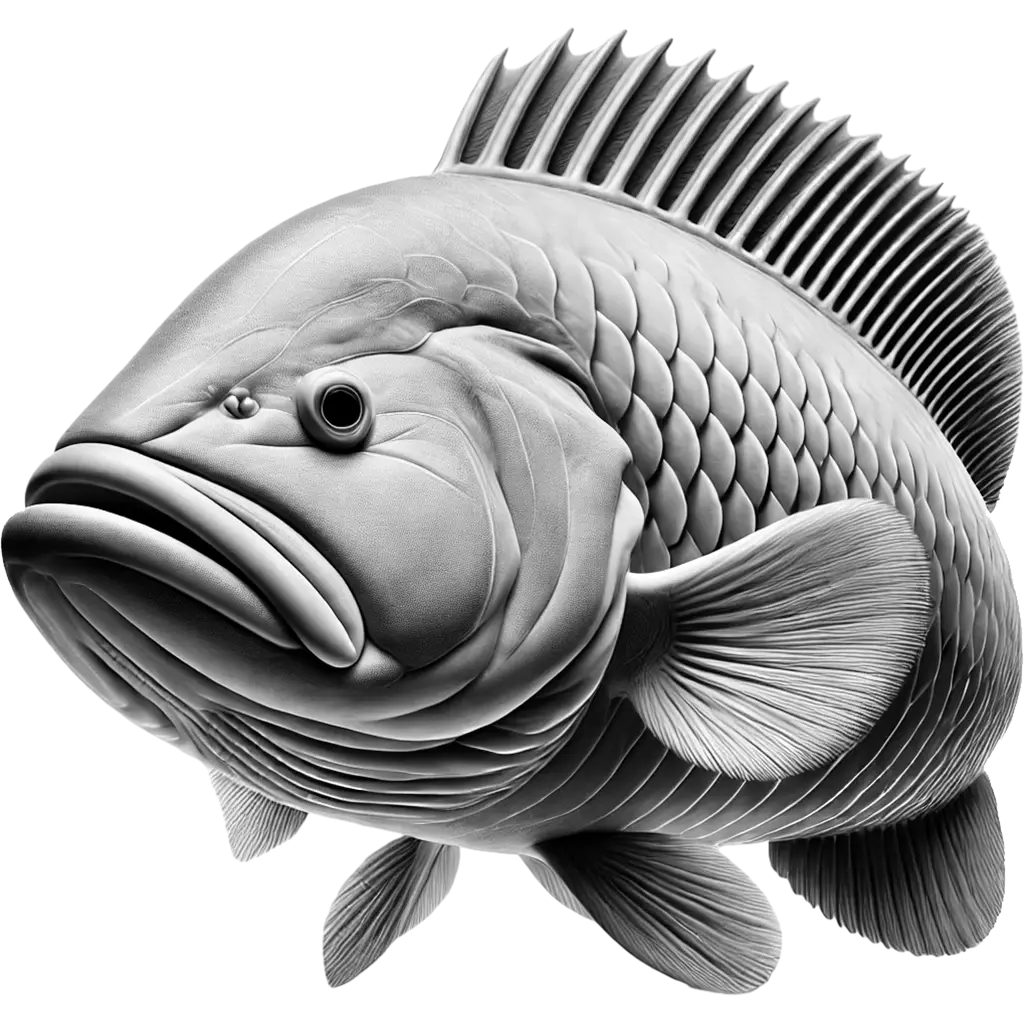
The Pink Maomao is a small, vibrant fish with a striking, bright pink to coral-colored body. Its elongated, streamlined form is accentuated by long, graceful pectoral fins and subtle, distinctive markings along its flanks. The fish's smooth, reflective scales shimmer under sunlight, adding a dynamic, iridescent quality to its appearance.
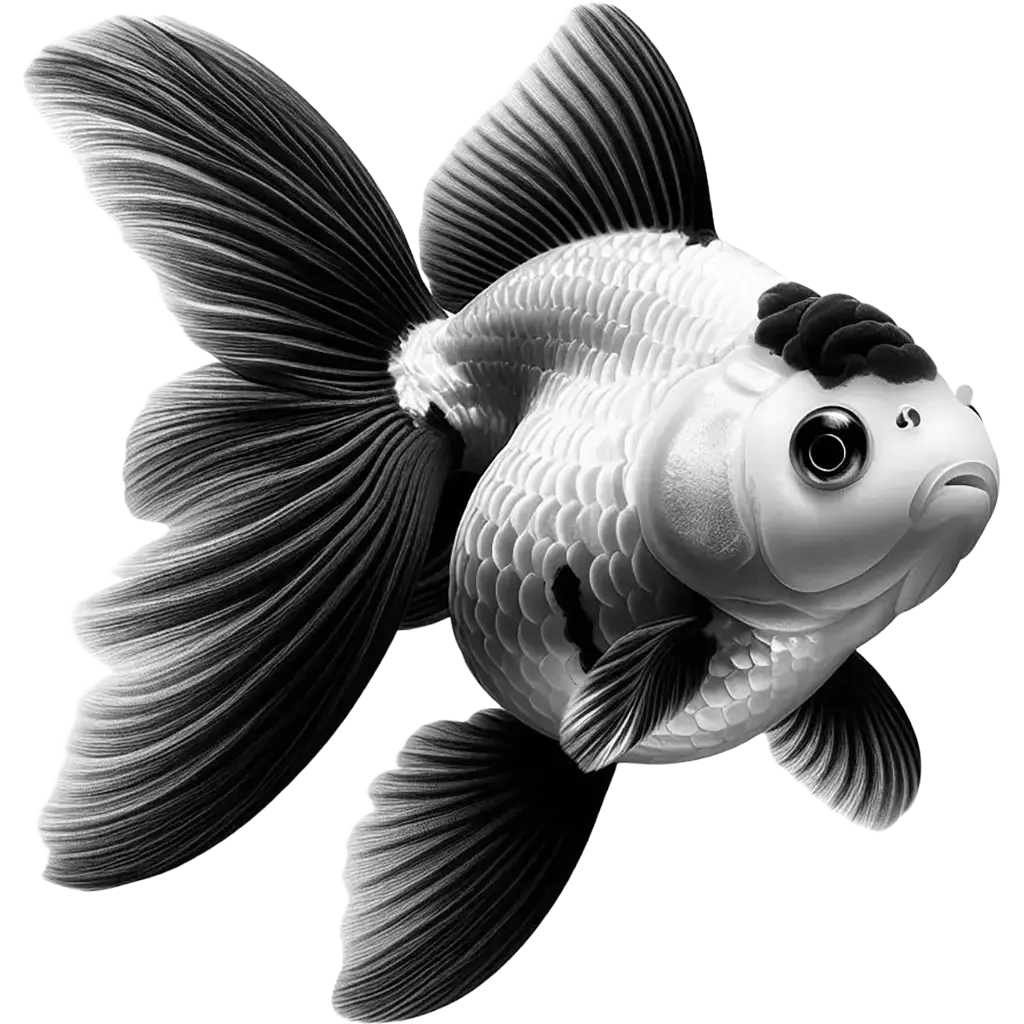
The Goldfish, carassius auratus, is a popular and recognizable freshwater fish, cherished for its vibrant hues ranging from gold to orange, white, black, and even blue. Adult Goldfish can vary greatly in size, from a few inches to over a foot in length, depending on the breed and living conditions.