
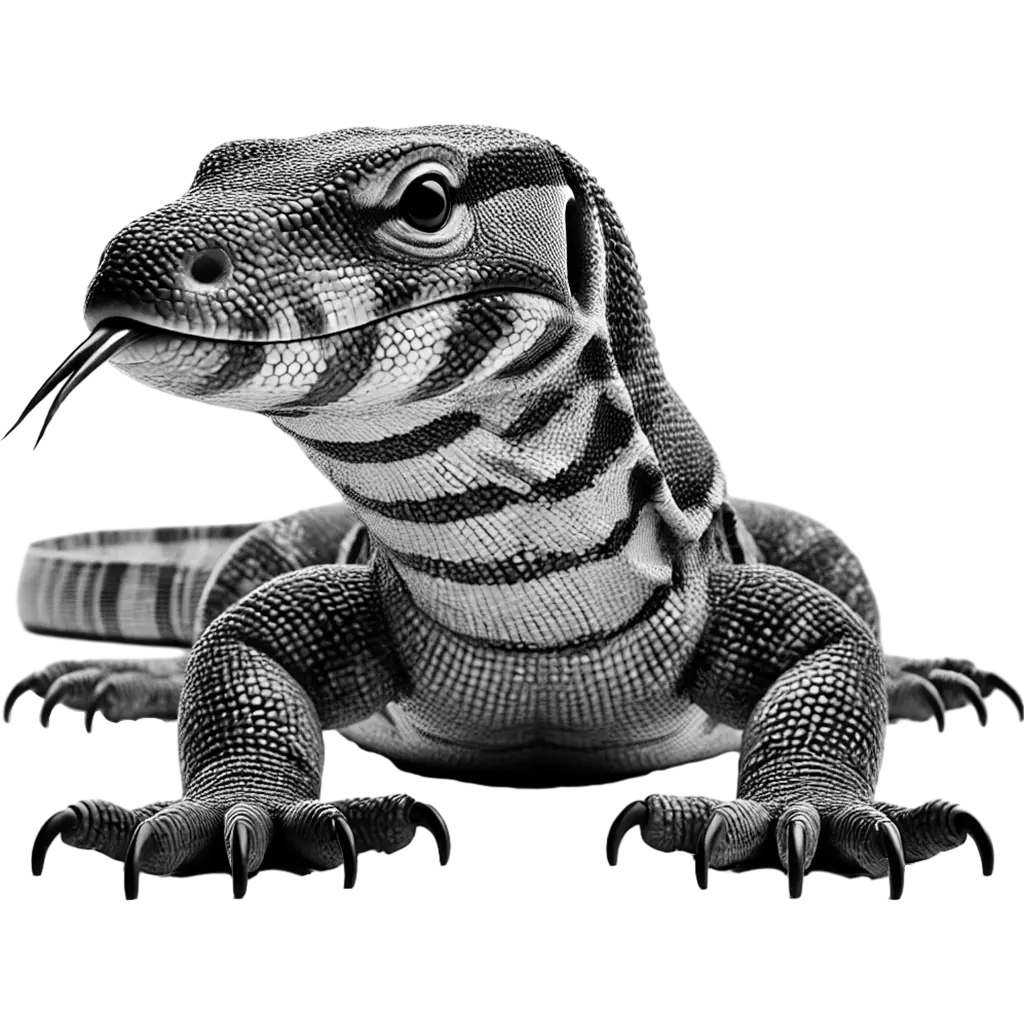
Varanus Exanthematicus
Savannah Monitor
Open savannahs, grasslands, and scrublands of sub-Saharan Africa
The Savannah Monitor is a medium-sized, robust reptile distinguished by its elongated body covered in rough, dark scales that blend seamlessly with the dusty savannah. Its strong, well-muscled limbs and long, tapering tail provide excellent balance and agility, while a flattened head with a prominent snout and keen, alert eyes give it a determined, predatory look. Subtle patterning on its scales enhances its natural camouflage in open, arid landscapes.
| Population: | Stable populations in savannahs and scrublands |
| Generation Length: | 10 years |
| Average Weight: | Approximately 2-4 kg |
| Average Length: | Approximately 60-80 cm |
| Lifespan: | Approximately 10-15 years in the wild |
| Diet: | Carnivorous |
| Conservation Status: | Least Concern (LC) |
In its natural habitat, the Savannah Monitor is an active diurnal reptile that thrives in open savannahs and grasslands. It spends its days basking in the sun to regulate its body temperature and patrolling its territory, which it marks with scent. This monitor is known for its rapid, purposeful movements as it navigates through sparse vegetation and rocky outcrops, always alert to the presence of both prey and potential threats. Its behavior is a careful balance of solitary foraging and strategic retreats into shaded areas during the hottest parts of the day.
The diet of the Savannah Monitor is strictly carnivorous, consisting primarily of insects, small mammals, birds, and reptiles. It employs a combination of stealth and swift, explosive bursts to capture prey, relying on its sharp senses to detect even the slightest movement. The high-protein meals it consumes are essential for maintaining its muscular build and energetic lifestyle, while also playing a significant role in controlling populations of smaller animals within its ecosystem. This feeding strategy ensures the monitor remains well-nourished and capable of rapid responses when hunting.
During the breeding season, Savannah Monitors engage in brief courtship displays in which males use subtle scent markings and quick movements to attract females. After mating, females lay a clutch of eggs in concealed, sun-warmed nests and then depart, leaving the young to hatch and fend for themselves. This brief, solitary mating process ensures genetic diversity and species survival.
Widely distributed across sub-Saharan Africa, the Savannah Monitor is generally considered stable in regions with healthy ecosystems, though localized declines have been noted due to habitat degradation and human encroachment. Conservation efforts are focused on preserving open savannah and grassland habitats, ensuring that these agile reptiles continue to play a vital role in maintaining the ecological balance of their natural environments.
Classifications
The Key Attributes
Features
- Movement:
Terrestrial and agile; the Savannah Monitor runs swiftly on open ground and can climb low vegetation when needed.
- Territorial Behavior:
Generally solitary; individuals maintain defined home ranges using scent marking.
- Speed:
Capable of rapid bursts when evading predators or capturing prey.
- Diet:
Carnivorous; feeds opportunistically on insects, small mammals, birds, and reptiles.
- Physical Features:
- Robust, elongated body with rough, dark scales
- Strong, well-muscled limbs and a long, tapering tail
- Flattened head with a prominent snout and keen, alert eyes
- Subtle patterning that provides camouflage in the savannah
- Primary Senses:
- Sight
- Smell
Understanding Habitat and Range
Geography
- Habitat:
Open savannahs, grasslands, and scrublands of sub-Saharan Africa
- Migration Patterns:
Non-migratory; local movements occur in response to seasonal changes and food availability.
- Geographical Range:
Widespread across sub-Saharan Africa
- Climate Preferences:
Tropical and subtropical environments with warm temperatures and seasonal rainfall.
Navigating the Wilderness
In the wild
- Predators:
Larger birds of prey and carnivorous mammals may prey on juveniles.
- Prey:
Insects, small mammals, birds, and reptiles.
- Feeding Behavior:
Actively hunts using stealth and rapid bursts; employs ambush tactics and persistent pursuit.
- Diet:
Carnivorous
- Defensive Mechanisms:
- Rapid, evasive running and effective camouflage
- Tail lashing to deter potential threats
- Preferred Food Sources:
- Small vertebrates and large insects
Insights Into Reproduction
Mating
- Mating System:
Solitary outside the breeding season; individuals meet briefly during courtship.
- Number of Offspring:
Clutch size typically ranges from 6 to 10 eggs.
- Incubation Period:
Eggs are laid in secure nests with an incubation period of approximately 90 days.
- Parental Involvement:
- No parental care; hatchlings are independent from birth.
Youngsters Section
Savannah Monitor
Fun Fact
The savannah monitor is a large, strong lizard with a rough, scaly body and a keen hunting instinct.
These monitors are excellent climbers and swimmers, using their strong legs and sharp claws to catch prey. Known for their curiosity and intelligence, they can be quite friendly and interactive with humans when raised properly. In the wild, they roam savannahs, searching for insects, small animals, and even eggs to feast on.

Download word search puzzles
Word Search Puzzles
Check Out Other Reptiles
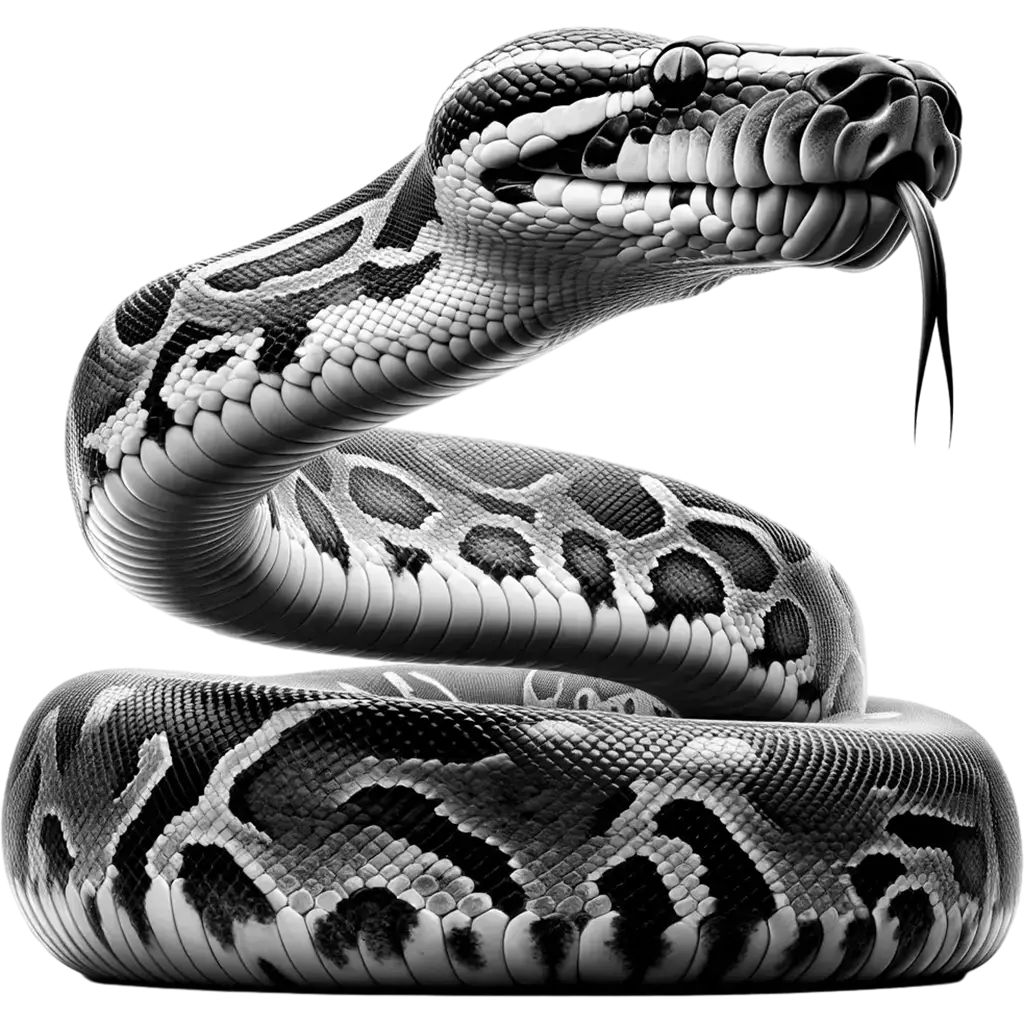
The African Rock Python, Python sebae, is a large, non-venomous snake native to sub-Saharan Africa. It is one of the largest snake species on the continent, with adults commonly reaching lengths of 3 to 4.5 meters, and some exceptional individuals exceeding 6 meters. Their skin is thick and covered in
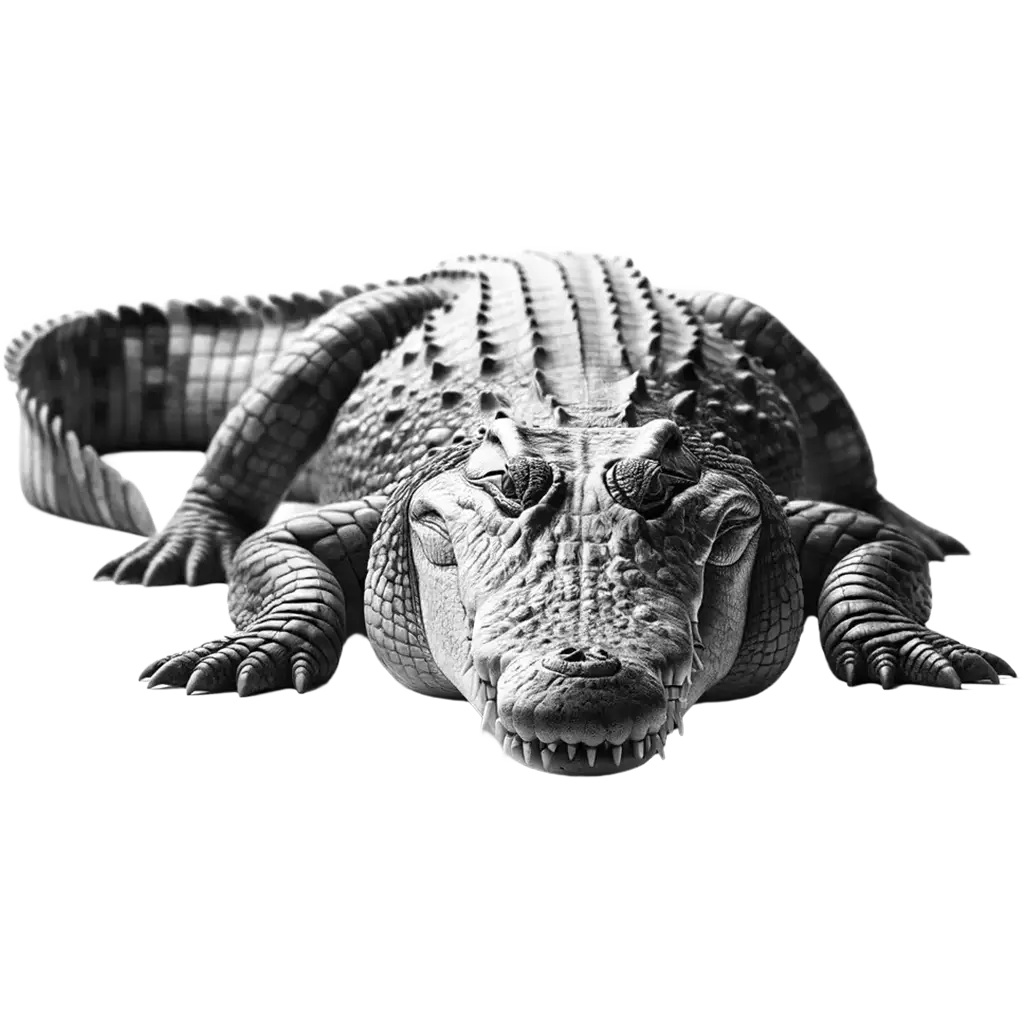
The Nile Crocodile, crocodylus niloticus, is a formidable apex predator native to freshwater habitats across Sub-Saharan Africa. This species is one of the largest crocodile species, with adult males commonly reaching lengths of up to 5 meters (16 feet) and sometimes even exceeding 6 meters (20 feet). They have a
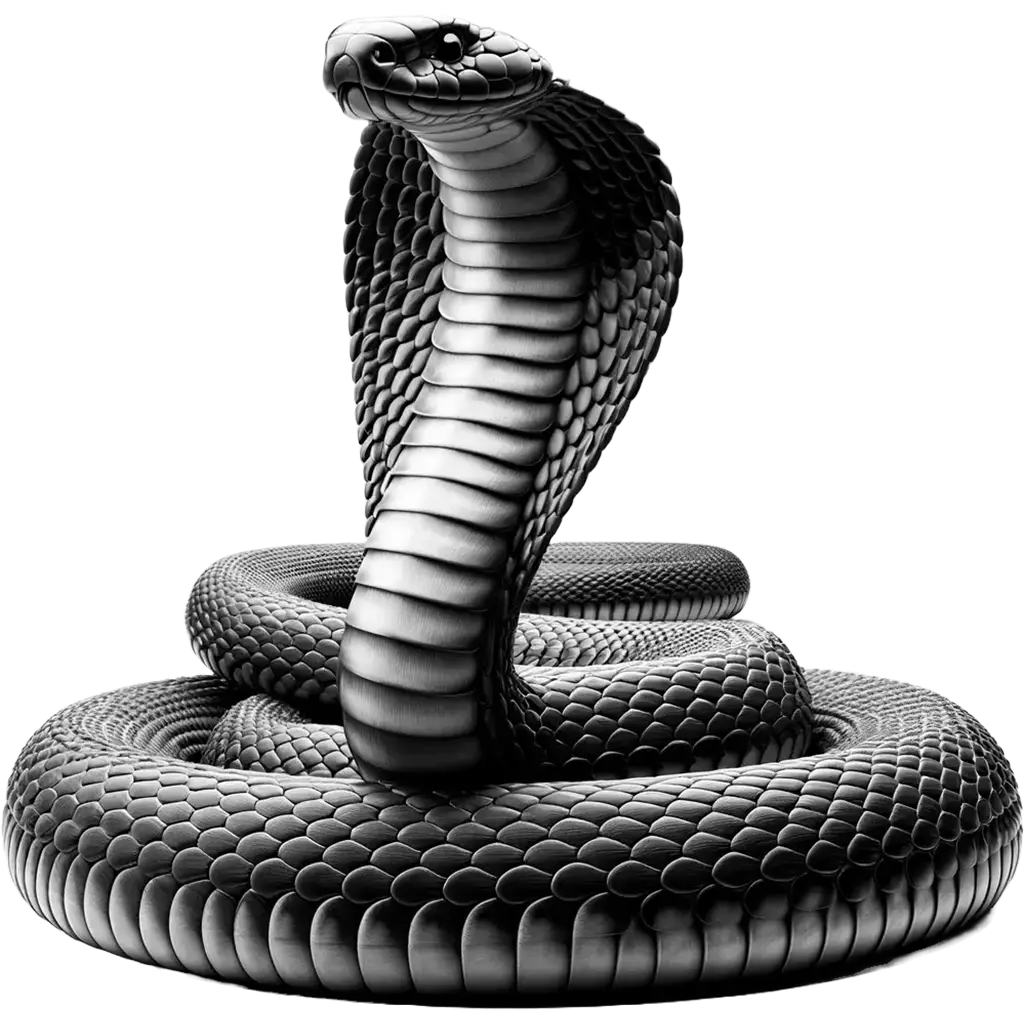
The King Cobra, ophiophagus hannah, stands as the world's longest venomous snake, with adults typically reaching 3 to 4 meters in length, though specimens exceeding 5 meters have been recorded. Its skin color varies from dark olive to black, with light yellow bands crossing over the body, providing camouflage in
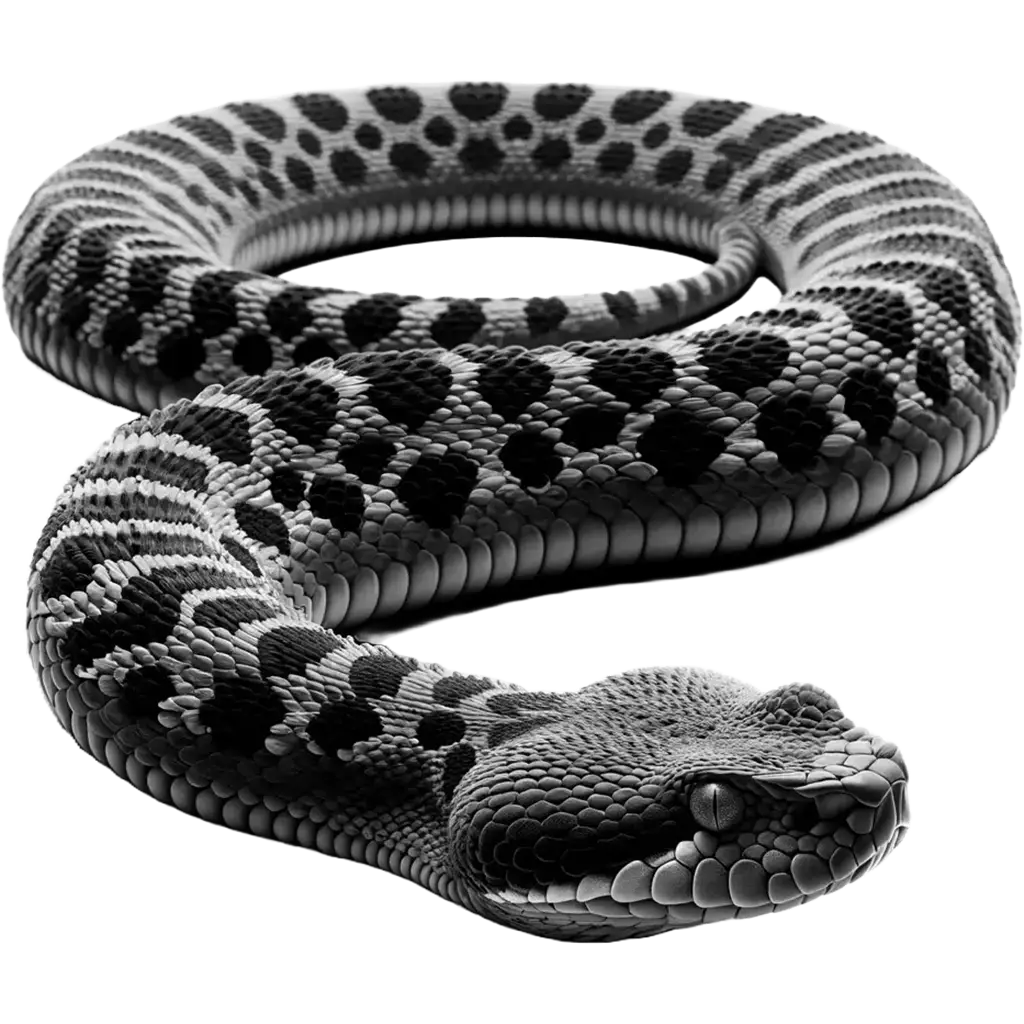
The Siberian Pit Viper, gloydius halys, is a venomous snake native to the mountainous regions and forests of Eastern Europe and Asia, extending from Eastern Russia through Mongolia to Northern China and Korea. This medium-sized viper typically reaches lengths of 60 to 80 cm, characterized by its stocky build and