
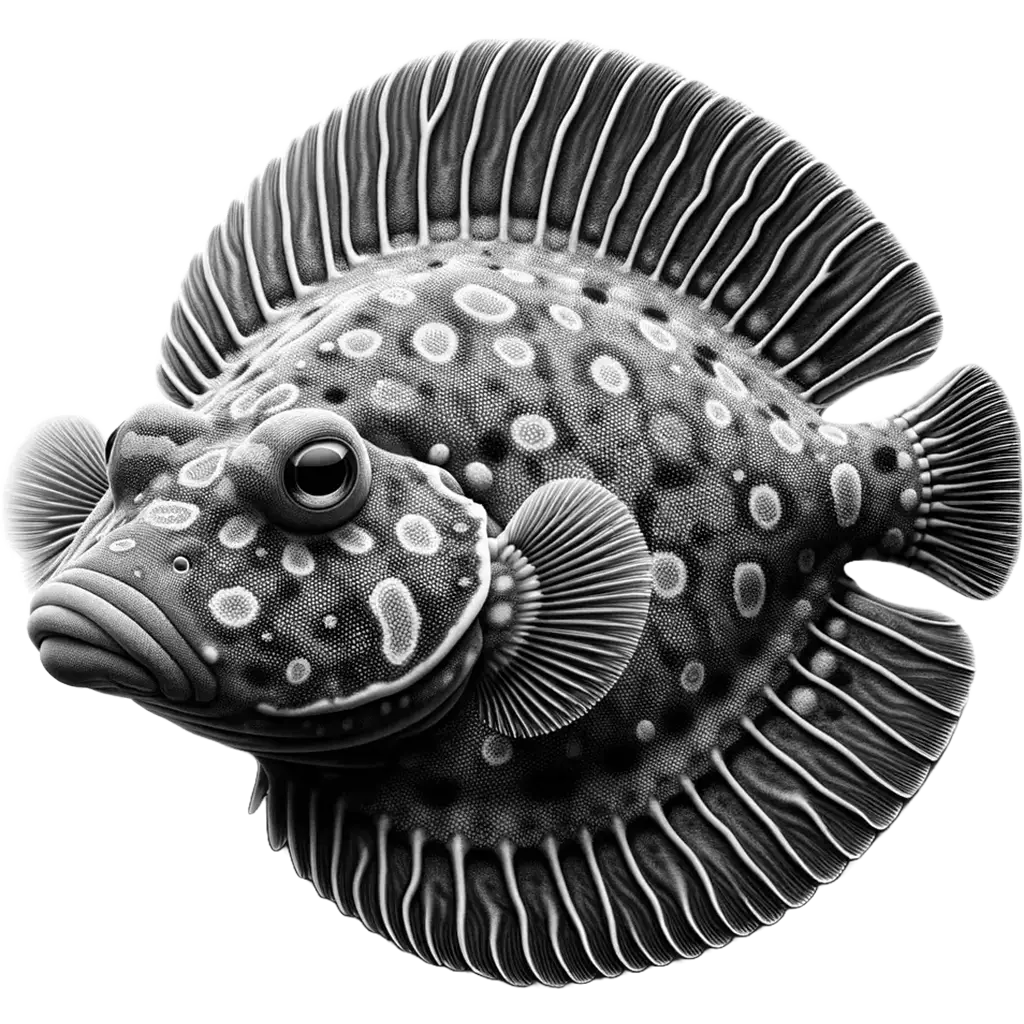
Bothus Lunatus
Plate Fish
Sandy or muddy ocean floors, coral reefs, and seagrass beds
The Plate Fish, bothus lunatus, also known as the Peacock Flounder or Moon Fish, is a remarkable species of flatfish known for its unique appearance and adaptive camouflage capabilities. Native to the shallow, sandy, and seagrass beds of the Western Atlantic, from North Carolina and the Gulf of Mexico to northern South America, this species is most commonly found at depths ranging from 2 to 100 meters. Adult Plate Fish can reach up to 45 cm in length, displaying a laterally compressed body that lies flat against the ocean floor.
| Population: | Not specifically assessed but common in its range |
| Generation Length: | 2-4 years |
| Average Weight: | Up to 1-2 kg |
| Average Length: | 20-40 cm |
| Lifespan: | Up to 10 years in the wild |
| Diet: | Feeds primarily on small marine organisms it can catch by surprise |
| Conservation Status: | Least Concern (LC) |
One of the most fascinating aspects of the Plate Fish is its ability to change color and pattern to blend in with its surroundings, a defense mechanism against predators. Its body is typically covered in a variety of spots, rings, and mottled patterns that mimic the sandy or coral environments it inhabits. Unlike most fish, both eyes of the Plate Fish are located on one side of its head, which, along with its flattened body, allows it to maintain a low profile on the ocean floor.
The diet of the Plate Fish primarily consists of small fish, crustaceans, and other invertebrates. It is an ambush predator, lying in wait for unsuspecting prey to come within reach before striking with rapid speed. This hunting strategy, combined with its camouflage, makes it a successful predator within its habitat.
Reproduction in the Plate Fish involves the release of eggs and sperm into the water column, where fertilization occurs externally. The larvae are initially bilaterally symmetrical and swim upright. As they mature, they undergo a remarkable transformation, with one eye migrating to the other side of the head, and the body flattening to assume the adult form.
The population status of the Plate Fish is not currently considered at risk, but, like many marine species, it faces threats from habitat destruction, pollution, and the impacts of climate change on oceanic environments. Conservation efforts aimed at preserving coral reef and seagrass habitats are crucial for the continued survival of the Plate Fish and the diverse ecosystems they support.
Classifications
The Key Attributes
Features
- Movement:
Swimming
- Territorial Behavior:
Not territorial, often solitary
- Speed:
Not fast, relies on stealth and camouflage
- Diet:
Carnivore
- Physical Features:
- Flat, oval-shaped body with both eyes on one side
- Color and pattern can change to match the surroundings
- Uses fins to move along the bottom of the ocean floor
- Mouth located at the end of the head, adapted to catch prey
- Primary Senses:
- Sight
- Touch
Understanding Habitat and Range
Geography
- Habitat:
Sandy or muddy ocean floors, coral reefs, and seagrass beds
- Migration Patterns:
Non-migratory, stays within a home range
- Geographical Range:
Western Atlantic, from North Carolina to Brazil, including the Gulf of Mexico and the Caribbean Sea
- Climate Preferences:
Tropical and subtropical waters
Navigating the Wilderness
In the wild
- Predators:
Larger fish, sharks, and rays
- Prey:
Small fish, crustaceans, cephalopods
- Feeding Behavior:
Ambush predator, feeding on small fish, crustaceans, and invertebrates
- Diet:
Feeds primarily on small marine organisms it can catch by surprise
- Defensive Mechanisms:
- Camouflaging with the ocean floor
- Burrowing into sand or mud to hide from predators
- Preferred Food Sources:
- Areas with abundant small prey and good camouflage opportunities
Insights Into Reproduction
Mating
- Mating System:
Polygynous
- Number of Offspring:
Releases thousands of eggs in open water
- Incubation Period:
Eggs hatch in a few days
- Parental Involvement:
- No parental care after spawning; larvae are left to fend for themselves
Youngsters Section
Plate Fish
Fun Fact
Plate fish, also known as peacock flounder, are masters of camouflage. They can change color and pattern.
This remarkable ability helps them blend seamlessly with the ocean floor, evading predators and ambushing prey. They're often found in sandy or coral-rich environments, where they use their flattened bodies to lie low. Their eyes can move independently, offering a wider field of vision to spot threats or potential meals.

Download word search puzzles
Word Search Puzzles
Check Out Other Fish
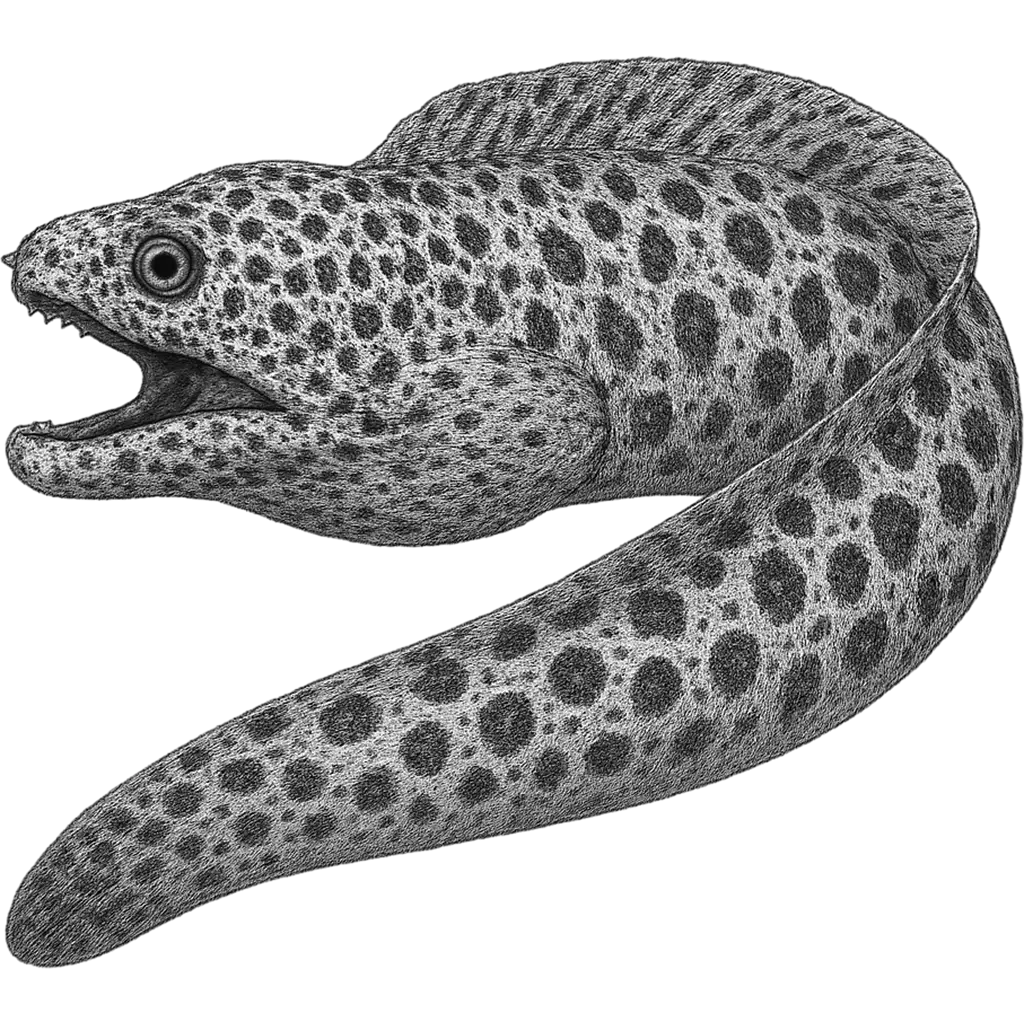
The Spotted Moray has a long, slender, snake-like body reaching up to two meters in length, commonly around sixty centimeters. Its smooth, scaleless skin is pale yellow to off-white, densely covered with small, overlapping reddish-brown to dark-brown spots. The head is broad with small, round gill openings and a pronounced
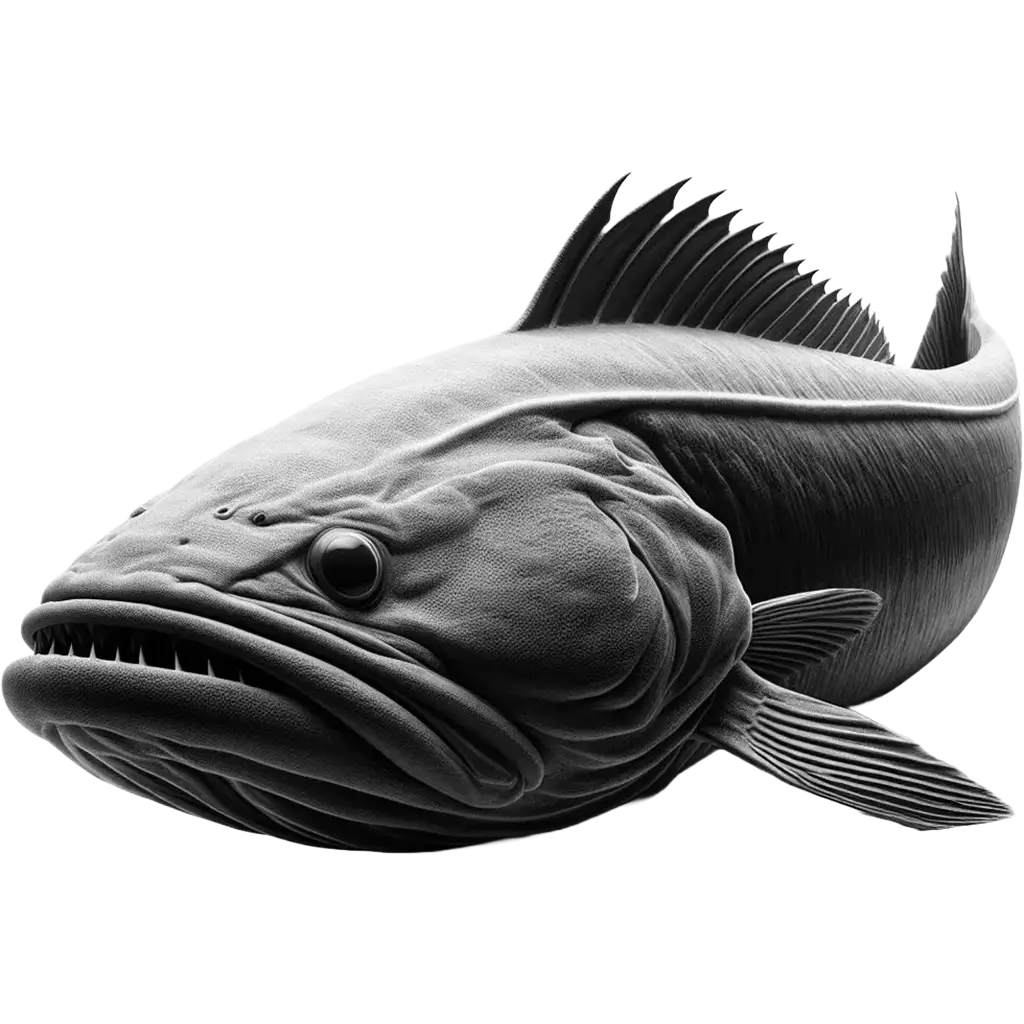
The Northern Wolffish, anarhichas denticulatus, is a distinctive marine fish known for its formidable appearance and unique adaptations to cold-water environments. Found in the North Atlantic Ocean, from the northeastern coast of North America to the waters around Greenland and Iceland, this species inhabits rocky bottoms and cold, deep waters,
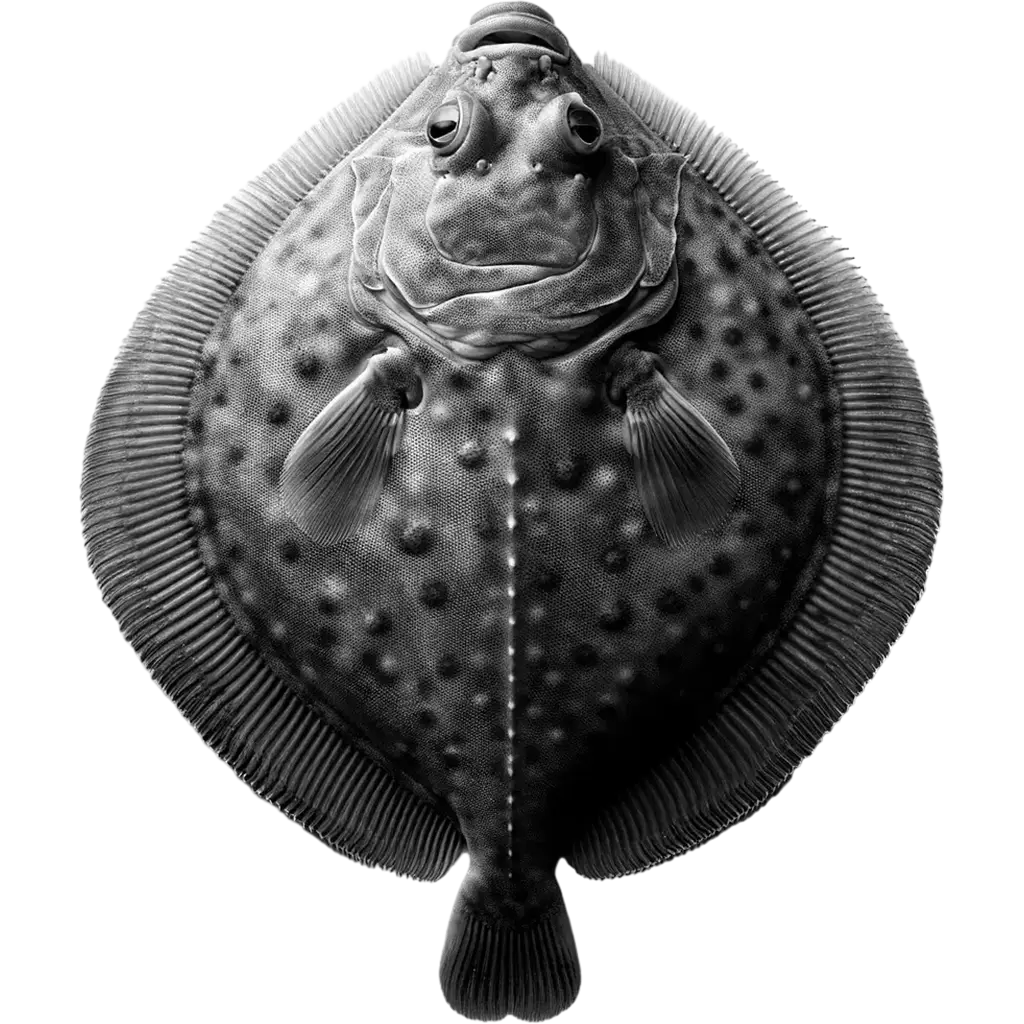
The European Plaice, pleuronectes platessa, is a flatfish species renowned for its distinctive appearance and significant value to commercial fisheries. This species has a smooth, oval body that is adapted to lie flat on the seabed, with both eyes located on its right side. The skin is dark green to
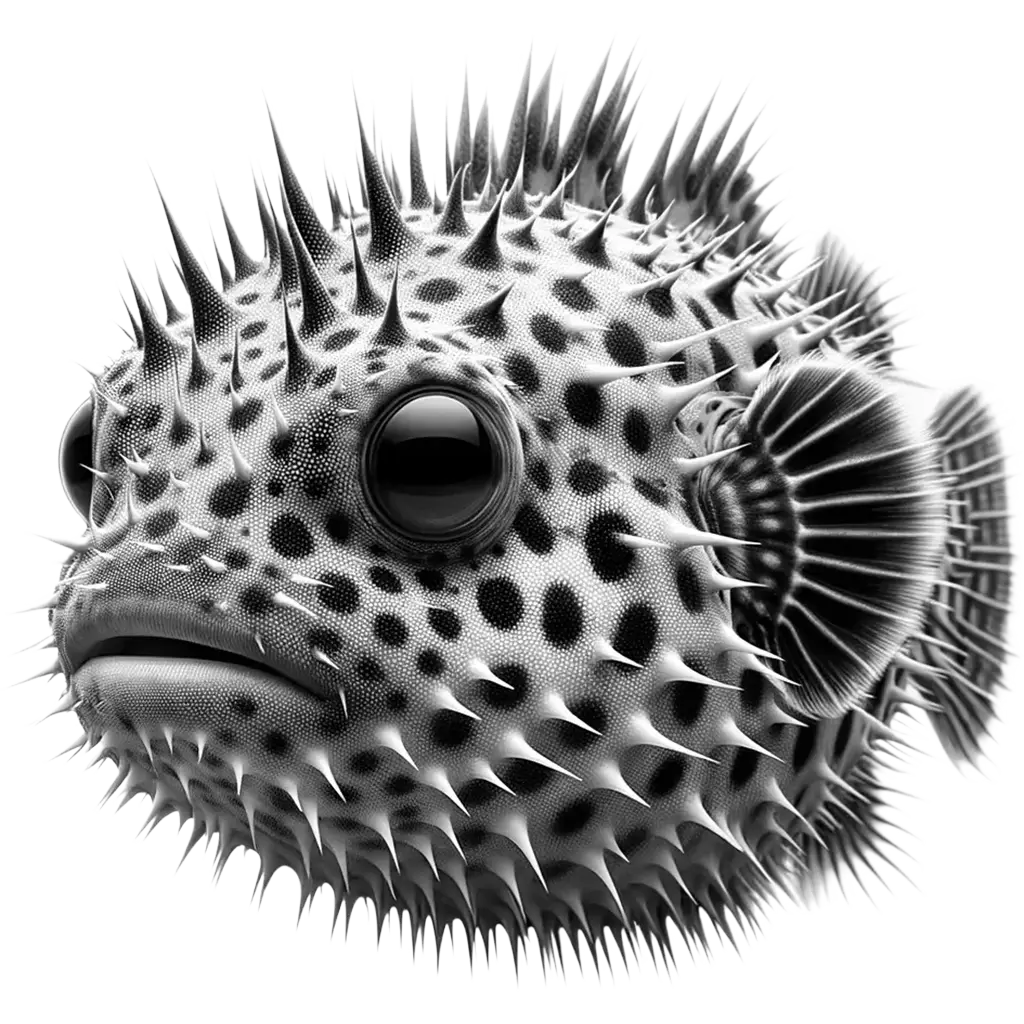
The Spot-Fin Porcupinefish, diodon hystrix, is a unique and fascinating marine species known for its ability to inflate its body as a defense mechanism against predators. This fish is easily recognizable by its spherical shape when inflated, large eyes, and distinctive spines that cover its body, which become erect when