
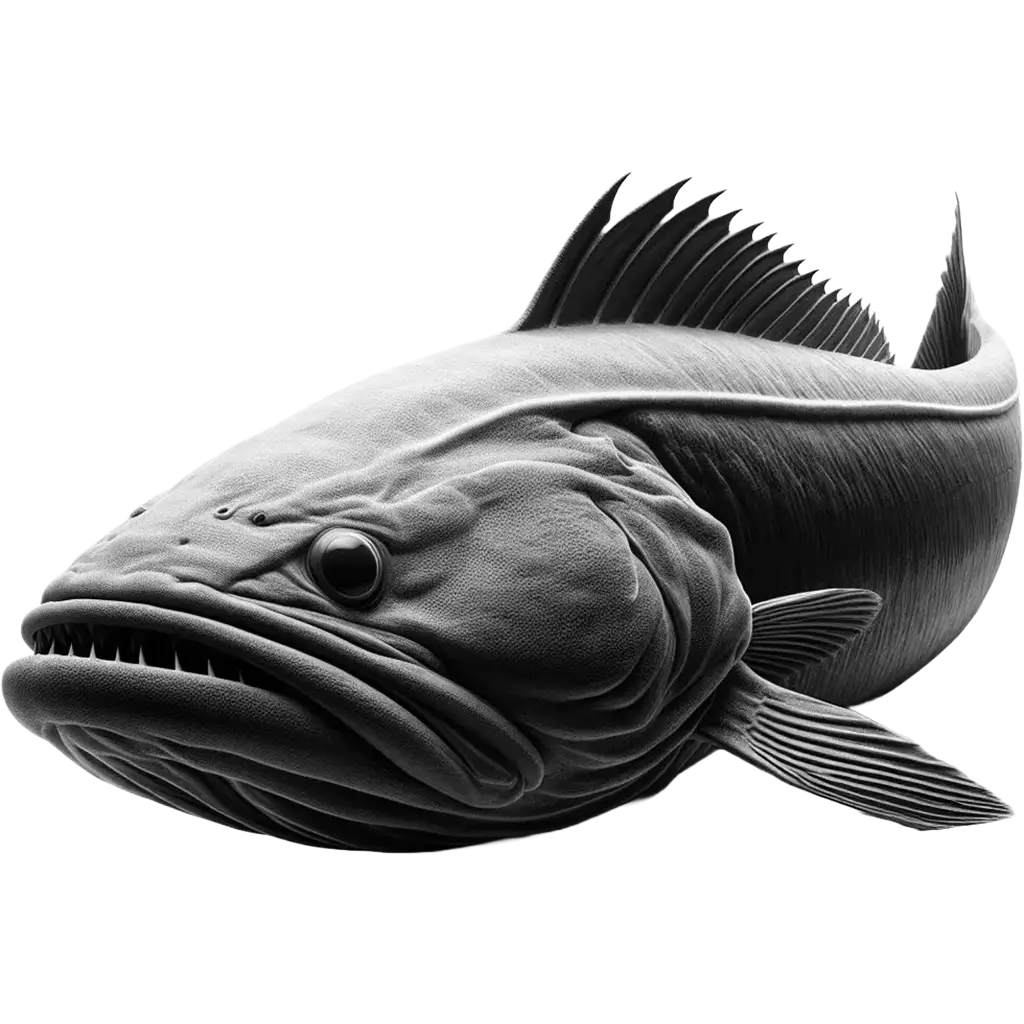
Anarhichas Denticulatus
Northern Wolffish
Cold, deep waters of the North Atlantic and Arctic Oceans
The Northern Wolffish, anarhichas denticulatus, is a distinctive marine fish known for its formidable appearance and unique adaptations to cold-water environments. Found in the North Atlantic Ocean, from the northeastern coast of North America to the waters around Greenland and Iceland, this species inhabits rocky bottoms and cold, deep waters, typically between 100 to 500 meters depth. The Northern Wolffish can reach lengths of up to 1.5 meters (5 feet) and weigh as much as 20 kilograms (44 pounds), making it one of the larger species within its genus.
| Population: | Not well-documented, Least Concern, but facing threats from fishing activities |
| Generation Length: | 5-7 years |
| Average Weight: | Up to 10-15 kg |
| Average Length: | 100-150 cm |
| Lifespan: | Up to 20 years in the wild |
| Diet: | Hard-shelled invertebrates and some fish |
| Conservation Status: | Endangered (EN) |
Characterized by its elongated body, the Northern Wolffish has a broad, rounded head and a strong, muscular tail. Its skin is smooth and scaleless, varying in color from dark brown to a slate grey, providing camouflage against the ocean floor. One of its most notable features is its teeth; in addition to strong, conical teeth, it has molars in the throat for crushing hard-shelled prey. These adaptations make it an effective predator, capable of eating a diet that includes mollusks, echinoderms, and crustaceans.
The Northern Wolffish is adapted to the frigid temperatures of its habitat through the presence of natural antifreeze compounds in its blood, allowing it to thrive in waters that would freeze the blood of other species. This fish is solitary, with adults leading a largely sedentary life, relying on their camouflage to ambush prey.
Reproduction for the Northern Wolffish involves the laying of large, adhesive eggs on the ocean floor, which are then guarded by one or both parents, a rare behavior among fish. This parental care ensures a higher survival rate for the offspring, which are particularly vulnerable during their early stages of life.
The Northern Wolffish is considered Near Threatened due to pressures from commercial fishing, habitat destruction, and changes in ocean temperature and chemistry. Bycatch in bottom trawling fisheries is a significant threat, as these fish are often caught unintentionally and discarded. Conservation efforts for the Northern Wolffish include monitoring populations, regulating fishing practices to reduce bycatch, and protecting critical habitats. The preservation of this species is important not only for maintaining biodiversity but also for the health of the marine ecosystems in which it plays a key role.
Classifications
The Key Attributes
Features
- Movement:
Swimming
- Territorial Behavior:
Not specifically documented; generally solitary or found in pairs
- Speed:
Not specifically quantified; adept at maneuvering in its deep-sea habitat
- Diet:
Carnivore
- Physical Features:
- Elongated body
- Strong jaws filled with conical teeth
- Smooth skin without scales
- Mottled grey and brown coloration
- Primary Senses:
- Sight
- Taste
- Touch
Understanding Habitat and Range
Geography
- Habitat:
Cold, deep waters of the North Atlantic and Arctic Oceans
- Migration Patterns:
Limited information; believed to be relatively sedentary with some movement related to depth changes
- Geographical Range:
North Atlantic Ocean, from the northeastern coast of North America to Greenland and the European Arctic and Atlantic coast
- Climate Preferences:
Cold, marine environments
Navigating the Wilderness
In the wild
- Predators:
Larger marine predators, though specific predators are not well-documented due to the depth of its habitat
- Prey:
Crustaceans, mollusks, echinoderms, and smaller fish
- Feeding Behavior:
Feeds on a variety of hard-shelled or bony sea creatures, using its strong teeth to crush shells and bones
- Diet:
Hard-shelled invertebrates and some fish
- Defensive Mechanisms:
- Strong jaws and teeth for defense and predation
- Camouflaged coloring in rocky or seabed environments
- Preferred Food Sources:
- Crabs
- Sea urchins
- Snails
Insights Into Reproduction
Mating
- Mating System:
Not well-documented; some fish species exhibit pair bonding or territory-based mating
- Number of Offspring:
Not specifically documented for this species
- Parental Involvement:
- Limited information; many marine fish exhibit no parental care post-spawning
Youngsters Section
Northern Wolffish
Fun Fact
The Northern Wolffish uses its powerful jaws and strong teeth to crush prey like crustaceans and mollusks.
This fish species is found in the cold waters of the North Atlantic Ocean. Its unique appearance includes a long, eel-like body and prominent canine teeth. They play an essential role in maintaining the ecological balance by controlling prey populations, helping to sustain the marine ecosystem.

Download word search puzzles
Word Search Puzzles

Check Out Other Fish
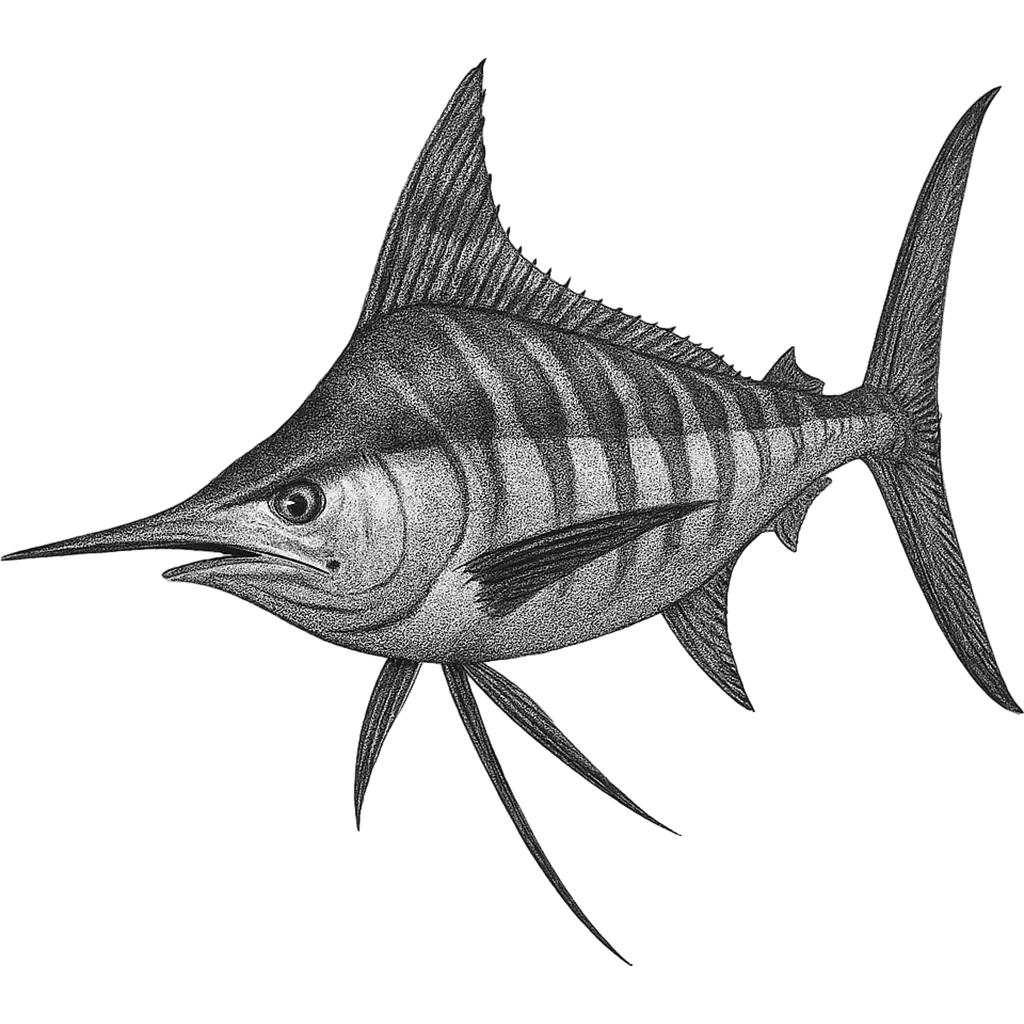
The Striped Marlin has a sleek, elongated body shaped like a torpedo, measuring on average 2.9 meters in length and tapering to a narrow caudal peduncle that supports a forked tail. Its dorsal surface ranges from deep blue to nearly black, fading to silvery white on the ventral side. The
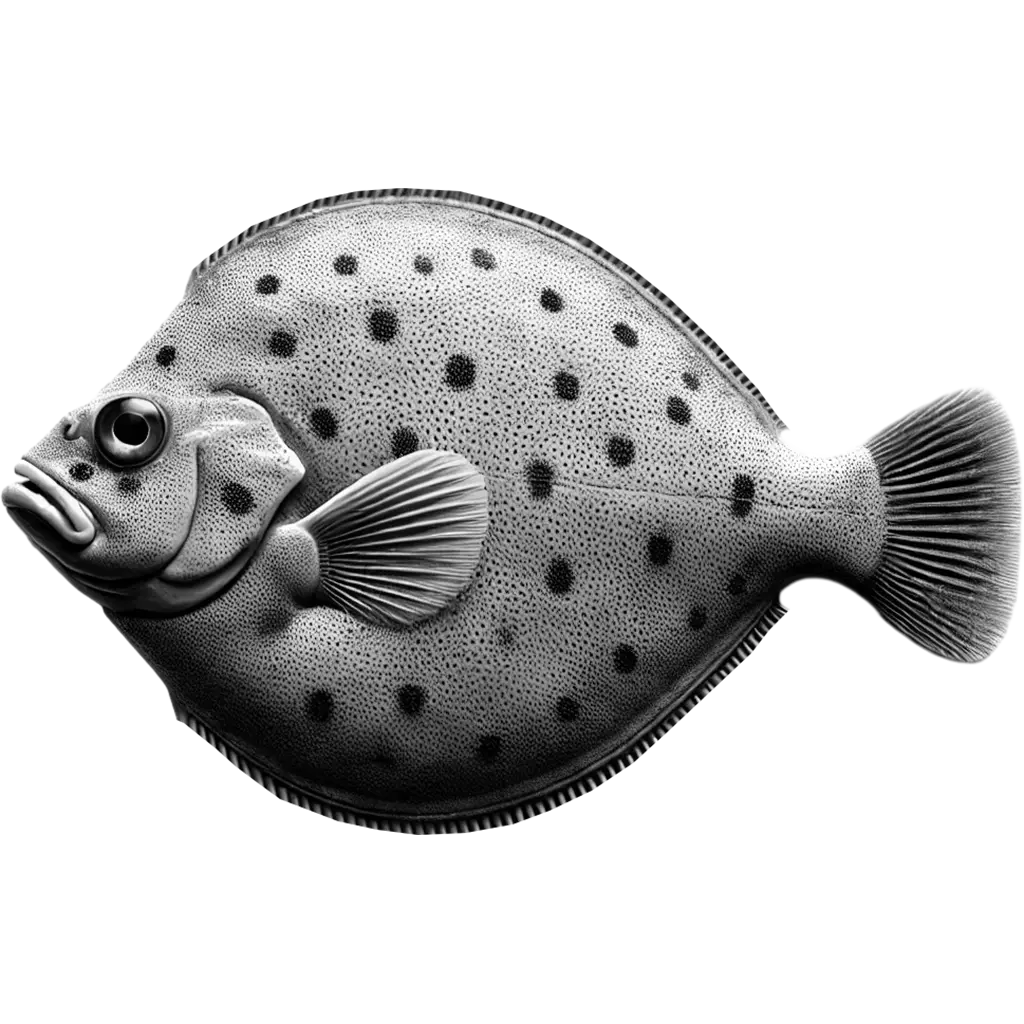
The Egyptian Sole is a flatfish species characterized by its oval-shaped, dorsoventrally flattened body. The upper side displays a greyish-brown coloration with four wide olive-colored saddles, while the underside is white. A distinctive black blotch marks the pectoral fin on the eyed side. Adults can reach up to 65 cm
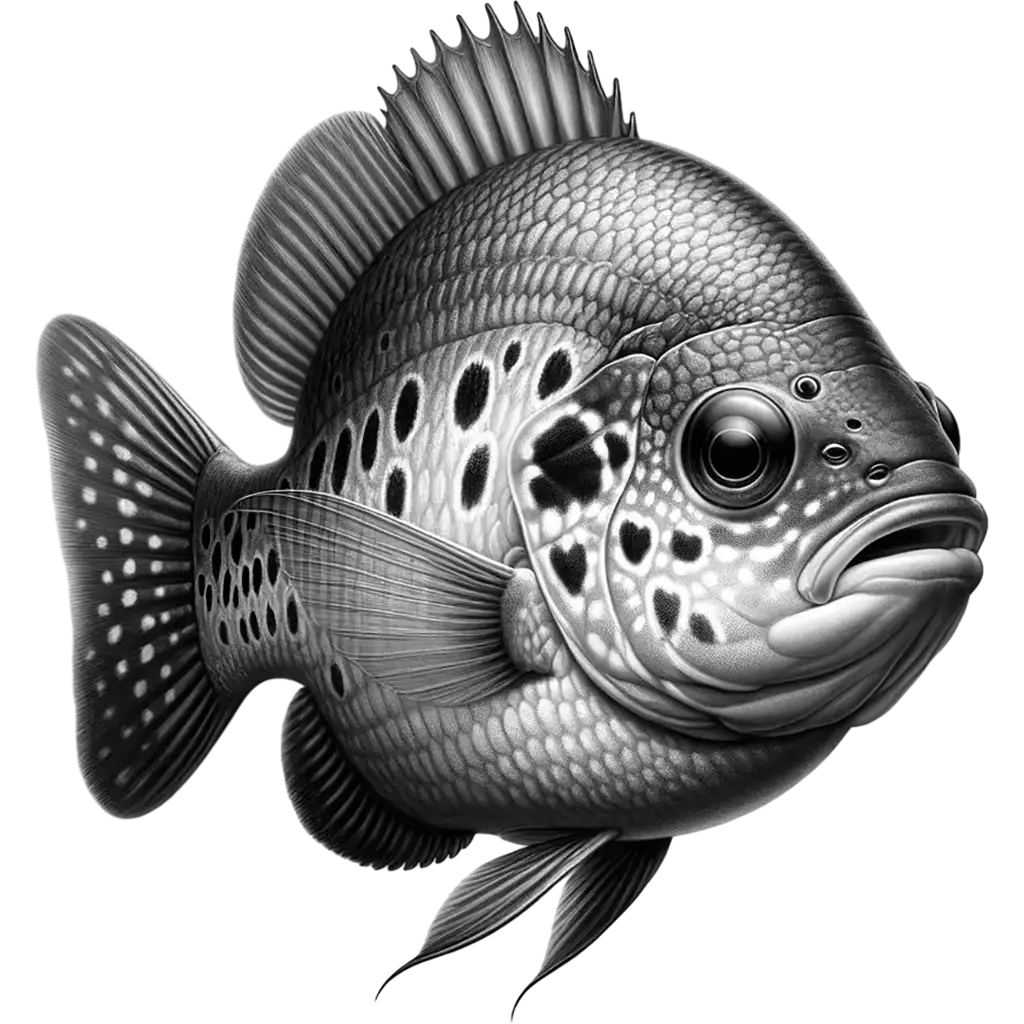
The Pumpkinseed, lepomis gibbosus, is a vibrant and popular freshwater fish, known for its striking coloration and sunfish family membership. Adults can reach up to 20 cm in length, though they commonly measure around 10 cm. Their bodies are laterally compressed with a round, disk-like shape, featuring an array of
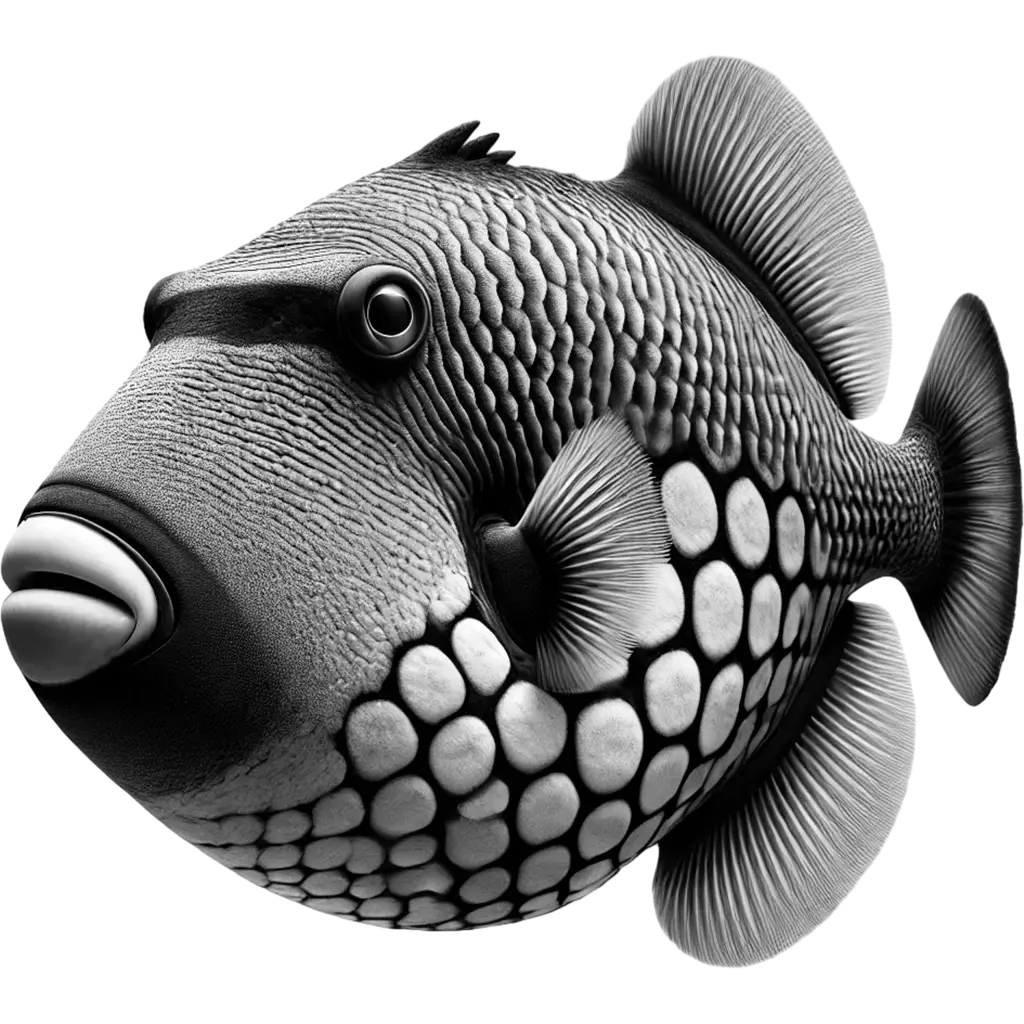
The Blackbelly Triggerfish exhibits a robust, laterally compressed body adorned with striking patterns and a distinctive black belly contrasting with vibrant hues on its fins and upper body. Its rough, textured skin and prominent dorsal 'trigger' spines not only define its appearance but also serve as a defense mechanism. With