
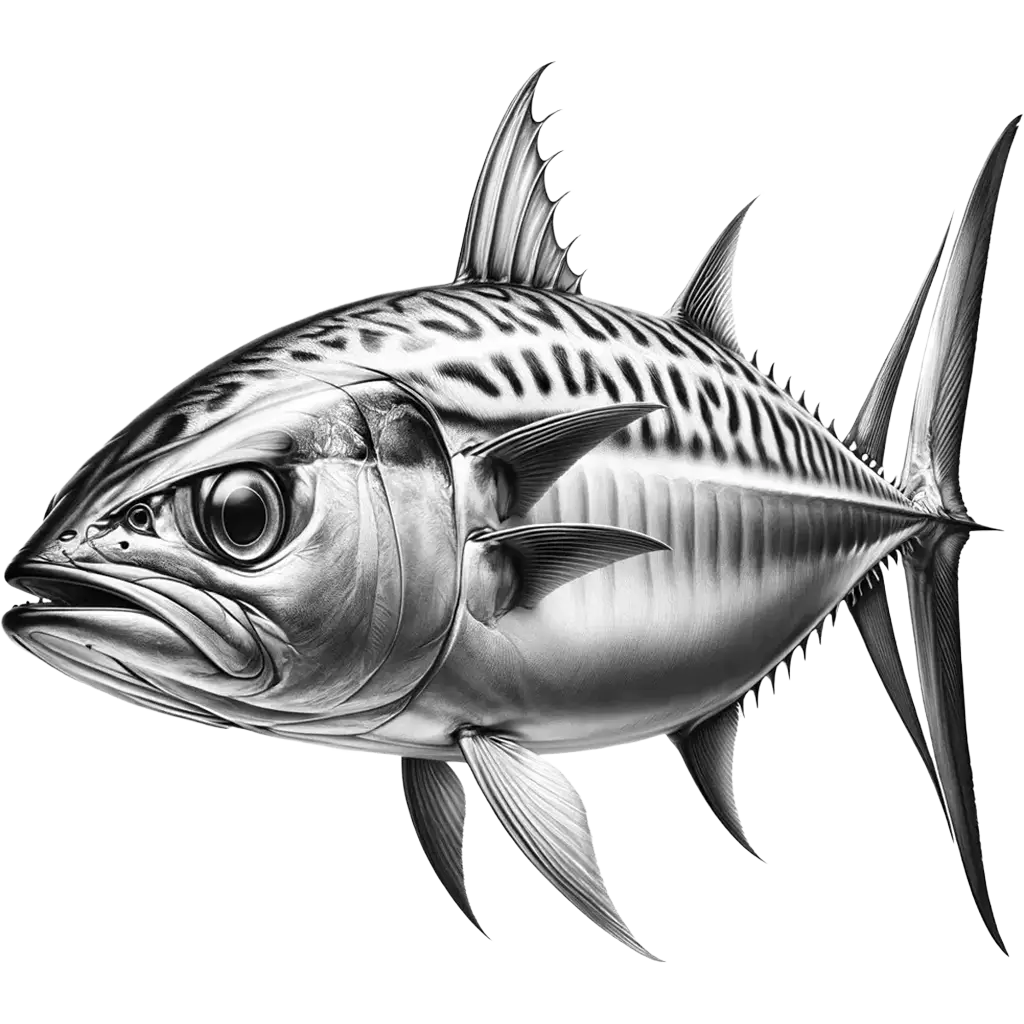
Naucrates Ductor
Pilot Fish
Open oceans, often seen near the surface
The Pilot Fish, naucrates ductor, is a striking marine species known for its sleek, streamlined body and distinctive coloration, featuring alternating dark and light blue stripes running longitudinally along its sides. This small to medium-sized fish typically measures between 15 to 60 cm in length, with a body shape adapted for fast, agile swimming. The Pilot Fish's color pattern not only serves as camouflage in the open ocean but also plays a role in its unique symbiotic relationship with larger marine animals, such as sharks.
| Population: | Not specifically quantified, but considered common in suitable habitats |
| Generation Length: | 2-3 years |
| Average Weight: | Not typically measured due to the varied size across its range |
| Average Length: | 60-70 cm |
| Lifespan: | Up to 10 years |
| Diet: | Small fish, squid, and plankton, along with parasites picked from host bodies |
| Conservation Status: | Least Concern (LC) |
The Pilot Fish is renowned for its fascinating behavior of following large marine animals, including sharks, sea turtles, and even ships, a practice that has intrigued sailors and scientists alike for centuries. This behavior is believed to be mutually beneficial: Pilot Fish feed on parasites and leftover scraps from their hosts, while their hosts tolerate their presence, possibly because Pilot Fish help to keep them free from parasites. The Pilot Fish's ability to navigate through the ocean by using larger animals as guides has given rise to its name and legends about its navigational prowess.
Diet-wise, the Pilot Fish is opportunistic, feeding on a variety of food sources that include parasites on the skin of larger marine animals, small types of fish, and invertebrates. This diet allows them to thrive in the open ocean, a habitat where food can sometimes be scarce. Their role as cleaners helps to maintain the health of their marine hosts, illustrating a complex interaction between species in the marine ecosystem.
Reproduction in Pilot Fish involves the laying of eggs in open water, where they are left to develop and hatch without parental care. This reproductive strategy is typical of many fish species, relying on the vastness of the ocean and planktonic larval stage to disperse the young widely, increasing their chances of survival in a predator-rich environment.
The population of the Pilot Fish is not well documented, but they are considered to be of least concern in terms of conservation status, with a widespread distribution in tropical and temperate waters around the globe. Despite this, their populations, like those of many marine species, could be impacted by overarching oceanic issues such as pollution, climate change, and overfishing. Conservation efforts aimed at preserving ocean health are vital to ensuring the continued survival of the Pilot Fish and the complex marine ecosystems they inhabit.
Classifications
The Key Attributes
Features
- Movement:
Swimming
- Territorial Behavior:
Not territorial; known for forming associations with larger marine animals
- Speed:
Not specifically quantified; capable of swift movements, often seen riding the bow wave of ships
- Diet:
Carnivore
- Physical Features:
- Streamlined body
- Dark blue on the upper body with a lighter underside
- Distinctive horizontal stripes running along the sides
- Forked tail for fast swimming
- Primary Senses:
- Sight
- Lateral line system for detecting movements and vibrations in water
Understanding Habitat and Range
Geography
- Habitat:
Open oceans, often seen near the surface
- Migration Patterns:
Follows large marine animals and ships, suggesting nomadic or migratory patterns
- Geographical Range:
Tropical and subtropical waters worldwide
- Climate Preferences:
Prefers warmer sea temperatures
Navigating the Wilderness
In the wild
- Predators:
Larger predatory fish and sharks
- Prey:
Parasites, small fish, plankton
- Feeding Behavior:
Feeds on parasitic crustaceans and small pieces of food from host animals, also consumes plankton
- Diet:
Small fish, squid, and plankton, along with parasites picked from host bodies
- Defensive Mechanisms:
- Associative behavior with larger marine animals for protection
- Agile swimming to evade predators
- Preferred Food Sources:
- Parasites on larger marine animals
- Plankton
- Small fish and squid
Insights Into Reproduction
Mating
- Mating System:
Not well-documented in the wild
- Number of Offspring:
Produces a large number of eggs which are released into the water column
- Incubation Period:
Eggs hatch into larval stage within days
- Parental Involvement:
- No parental care post-spawning; larvae are pelagic and drift with currents
Youngsters Section
Pilot Fish
Fun Fact
Pilot fish are known for their symbiotic relationship with sharks. They swim alongside them for protection.
These fish feed on parasites found on sharks, benefiting both species. Interestingly, pilot fish can form schools with others, not just sharks, and their curious nature sometimes leads them to follow ships. Their unique relationship with sharks has fascinated marine biologists for many years.

Download word search puzzles
Word Search Puzzles
Check Out Other Fish
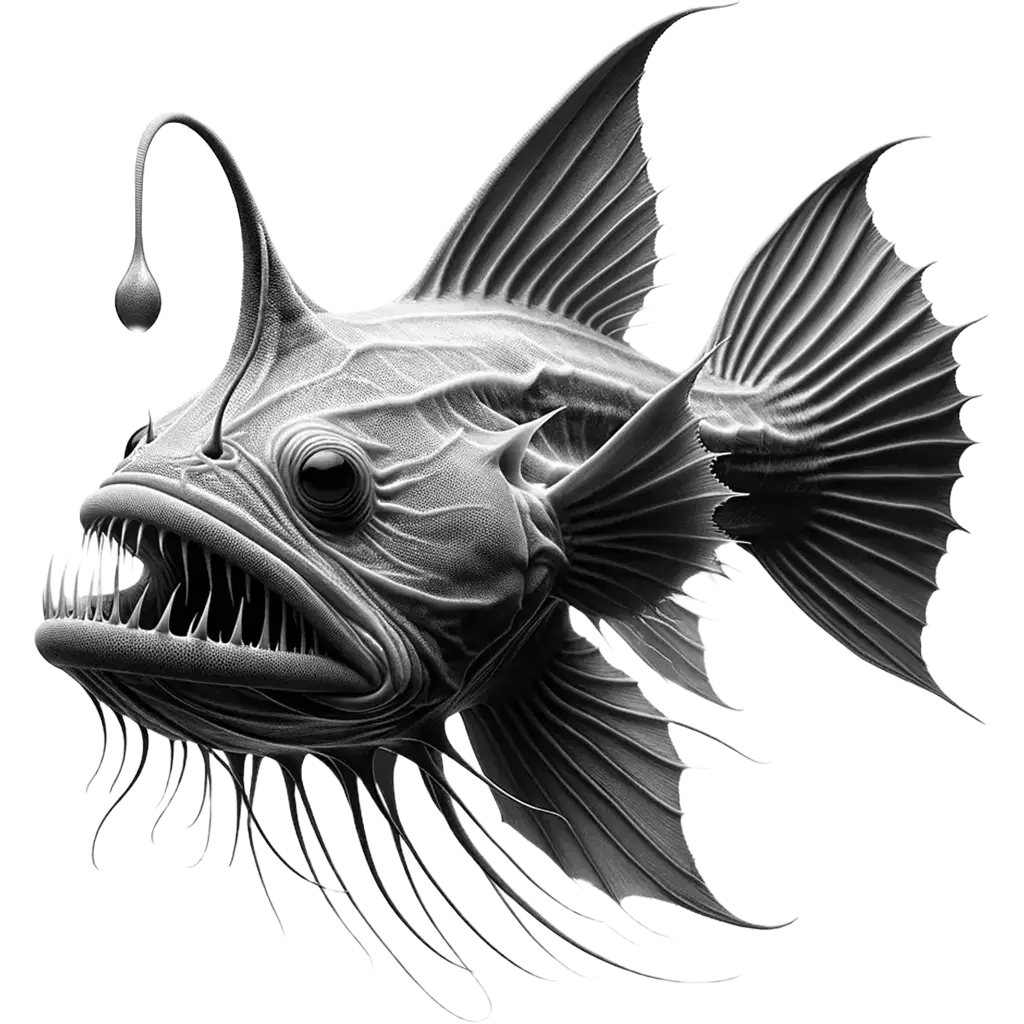
The European Angler, lophius piscatorius, also known as the Monkfish or Fishing Frog, is a unique and fascinating marine predator found in the northeastern Atlantic Ocean, from the Arctic Circle to the coasts of Morocco, including the Mediterranean Sea. This species is characterized by its broad, flat head and mouth,
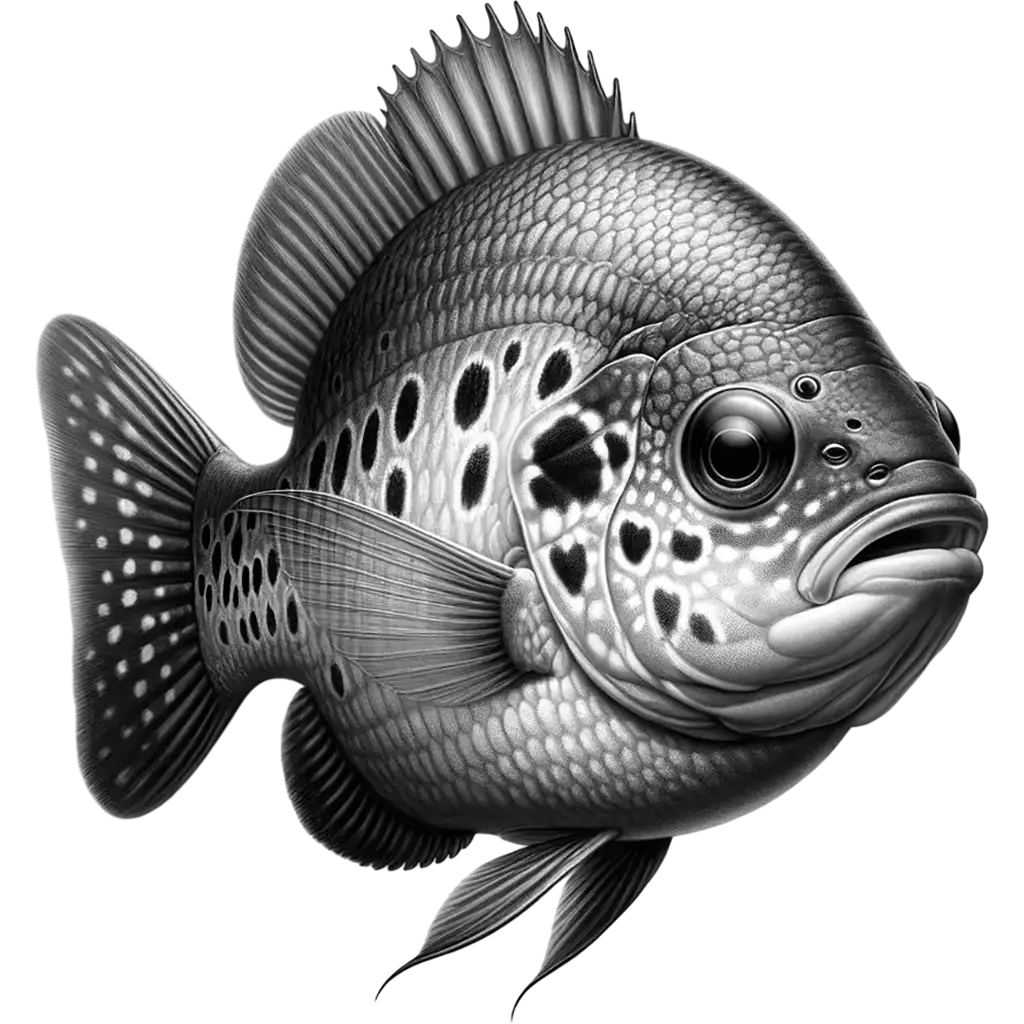
The Pumpkinseed, lepomis gibbosus, is a vibrant and popular freshwater fish, known for its striking coloration and sunfish family membership. Adults can reach up to 20 cm in length, though they commonly measure around 10 cm. Their bodies are laterally compressed with a round, disk-like shape, featuring an array of
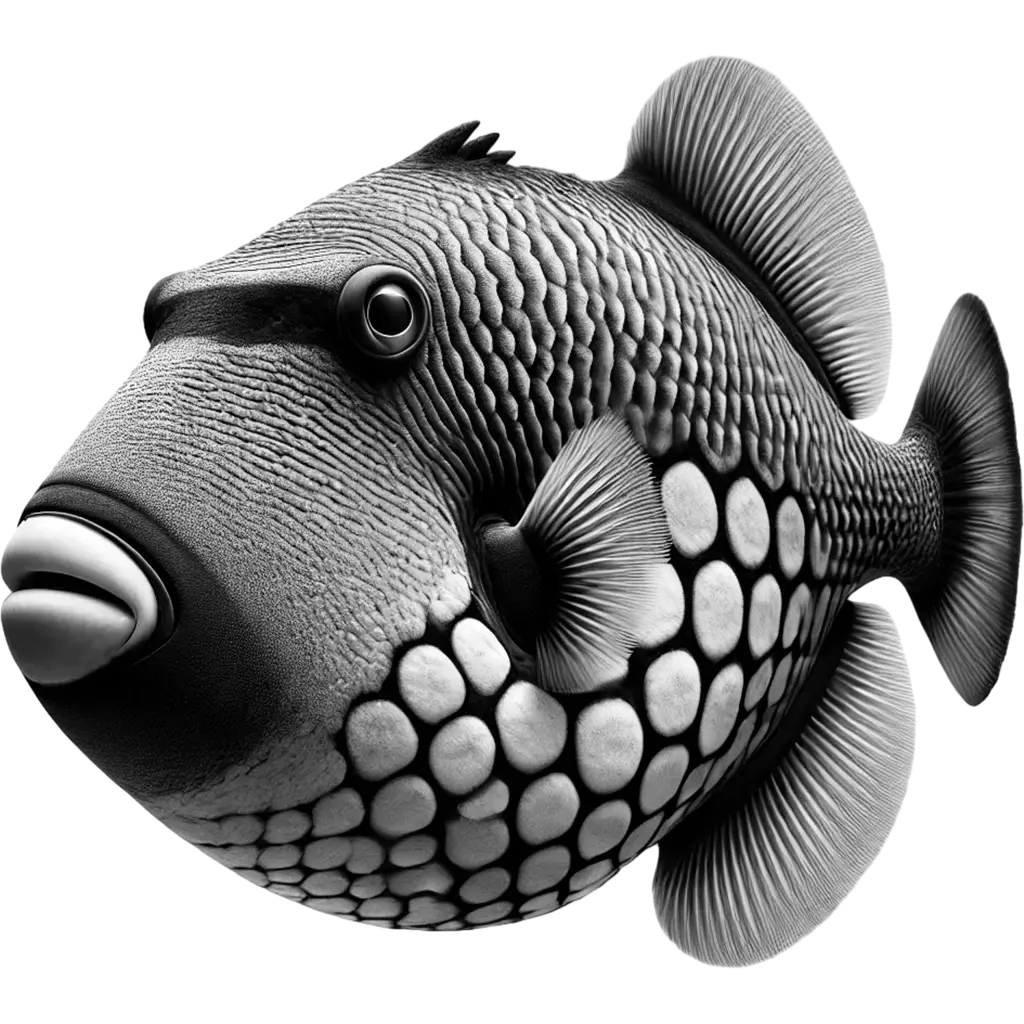
The Blackbelly Triggerfish exhibits a robust, laterally compressed body adorned with striking patterns and a distinctive black belly contrasting with vibrant hues on its fins and upper body. Its rough, textured skin and prominent dorsal 'trigger' spines not only define its appearance but also serve as a defense mechanism. With
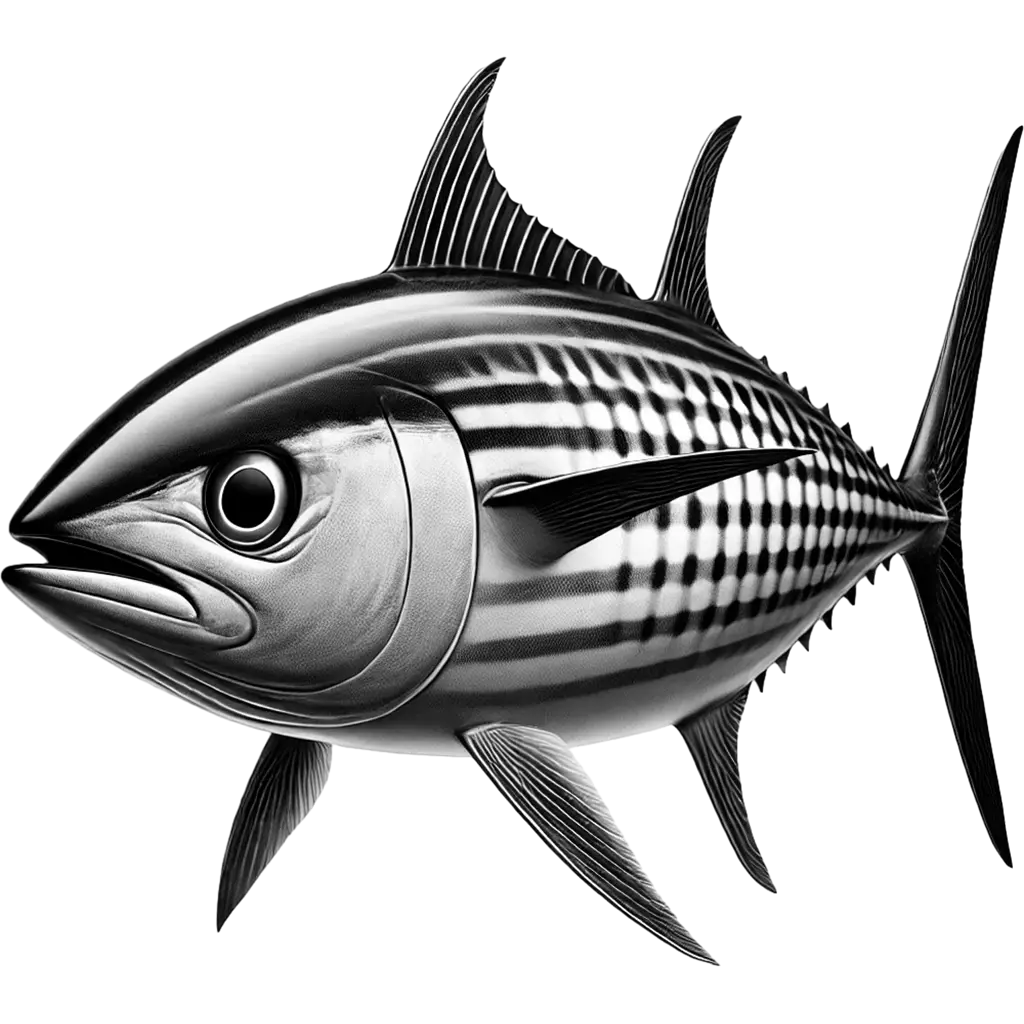
The Striped Bonito exhibits a streamlined, laterally compressed body covered in shimmering silver scales with bold, dark stripes running along its flanks. Its torpedo-shaped form, pointed snout, and large, alert eyes contribute to an appearance that is both dynamic and elegant. The contrasting patterns and iridescent sheen not only enhance