
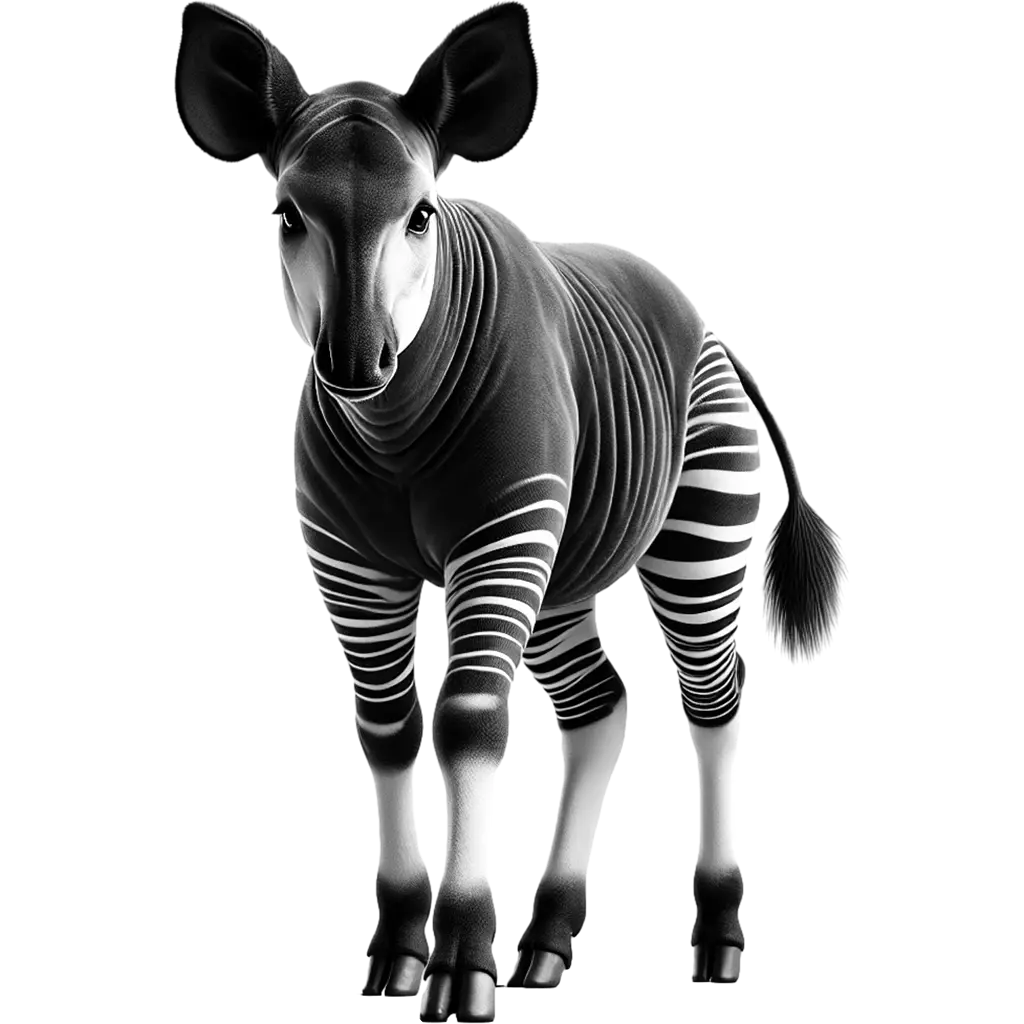
Okapia Johnstoni
Okapi
Dense tropical rainforests
The Okapi, Okapia johnstoni, is a unique mammal endemic to the dense tropical rainforests of the northeastern Democratic Republic of the Congo. Resembling a cross between a giraffe and a zebra, the okapi stands about 1.5 meters tall at the shoulder and measures approximately 2.5 meters in body length. Weighing between 200 to 350 kilograms, it features a chocolate to reddish-brown coat contrasted by distinctive white horizontal stripes on its legs and white ankles. Its long neck and large, flexible ears enhance its hearing capabilities, while males possess short, skin-covered horn-like structures called ossicones.
| Population: | Estimated to be less than 10,000 mature individuals |
| Generation Length: | 6-7 years |
| Average Weight: | 200-350 kg |
| Average Length: | Approximately 2.5 meters |
| Lifespan: | Up to 30 years in captivity; unknown in the wild |
| Diet: | Tree leaves and buds, grasses, ferns, fruits, and fungi |
| Conservation Status: | Endangered (EN) |
Primarily diurnal and solitary, okapis inhabit dense canopy forests at elevations ranging from 500 to 1,000 meters. They have overlapping home ranges, with males covering larger territories than females. These elusive creatures are rarely seen, relying on their striped markings to blend seamlessly into the filtered sunlight of their forest environment. Their large auditory bullae contribute to a keen sense of hearing, aiding in predator detection and navigation through dense vegetation.
As herbivores, okapis feed on a diverse diet comprising tree leaves and buds, grasses, ferns, fruits, and fungi. Utilizing their long, prehensile tongues—measuring up to 18 inches—they skillfully pluck vegetation, including some plant species known to be toxic to humans and other animals. This selective feeding behavior plays a crucial role in maintaining the ecological balance of their rainforest habitat by controlling plant growth and fostering biodiversity.
Reproduction in okapis involves solitary individuals coming together solely for mating purposes. Following a gestation period of approximately 440 to 450 days, females give birth to a single calf. Newborns can stand within 30 minutes of birth and are typically hidden in dense vegetation to shield them from predators. Nursing occurs infrequently, and calves do not defecate for the first month or two of life—a behavior believed to minimize scent trails and reduce predation risk. Weaning takes place around six months of age, with juveniles reaching sexual maturity between one and two years.
The okapi is currently classified as Endangered, with an estimated population of fewer than 10,000 mature individuals. Major threats to their survival include habitat loss due to logging, human settlement, illegal mining, and hunting for bushmeat and skins. Conservation efforts are imperative to protect the remaining okapi populations and their critical rainforest habitat, ensuring the continued existence of this remarkable and enigmatic species.
Classifications
The Key Attributes
Features
- Movement:
Primarily diurnal; solitary
- Territorial Behavior:
Solitary, with overlapping home ranges
- Speed:
Not specified
- Diet:
Herbivore
- Physical Features:
- Chocolate to reddish-brown coat
- White horizontal stripes on legs
- Long neck
- Large, flexible ears
- Ossicones present in males
- Primary Senses:
- Sight
- Hearing
- Smell
Understanding Habitat and Range
Geography
- Habitat:
Dense tropical rainforests
- Migration Patterns:
Non-migratory
- Geographical Range:
Northeastern Democratic Republic of the Congo
- Climate Preferences:
Tropical
Navigating the Wilderness
In the wild
- Predators:
Leopards
- Prey:
Not applicable
- Feeding Behavior:
Browsers, feeding on understory vegetation
- Diet:
Tree leaves and buds, grasses, ferns, fruits, and fungi
- Defensive Mechanisms:
- Camouflage
- Kicking and butting with head when threatened
- Preferred Food Sources:
- Various understory plants
Insights Into Reproduction
Mating
- Mating System:
Solitary, coming together only to breed
- Number of Offspring:
Usually a single calf
- Incubation Period:
Gestation period of around 440 to 450 days
- Parental Involvement:
- Females give birth to a single calf and nurse infrequently
- Calves are kept in hiding to avoid predators
Youngsters Section
Okapi
Fun Fact
Despite their zebra-like stripes, okapis are more closely related to giraffes.
These unique markings serve as effective camouflage, helping okapis blend into the dense rainforest understory and avoid predators.

Download word search puzzles
Word Search Puzzles
Check Out Other Mammals
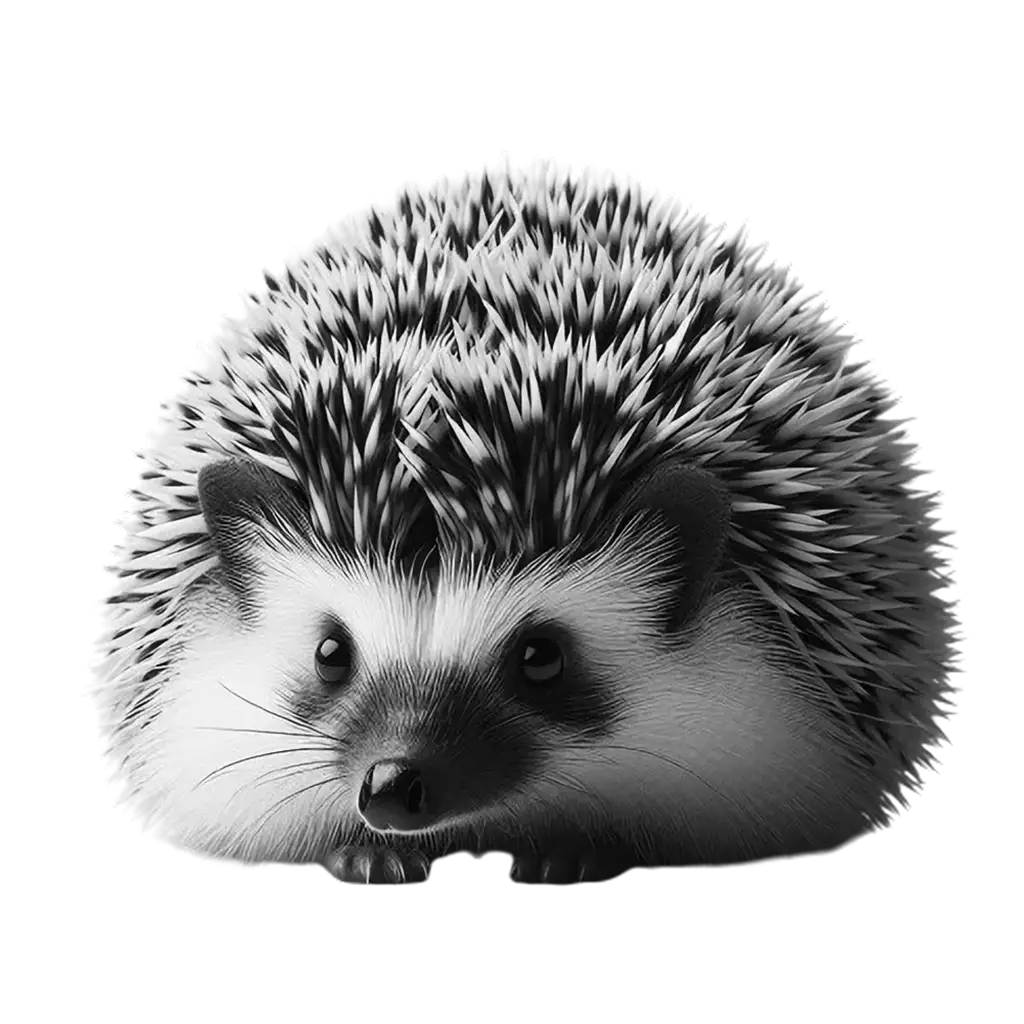
The Four-Toed Hedgehog, atelerix albiventris, is a small, nocturnal mammal native to Central and Eastern Africa. This species is easily distinguishable by its unique feature of having only four toes on each of its rear feet, unlike other hedgehogs which typically have five. Adults measure approximately 15 to 25 centimeters
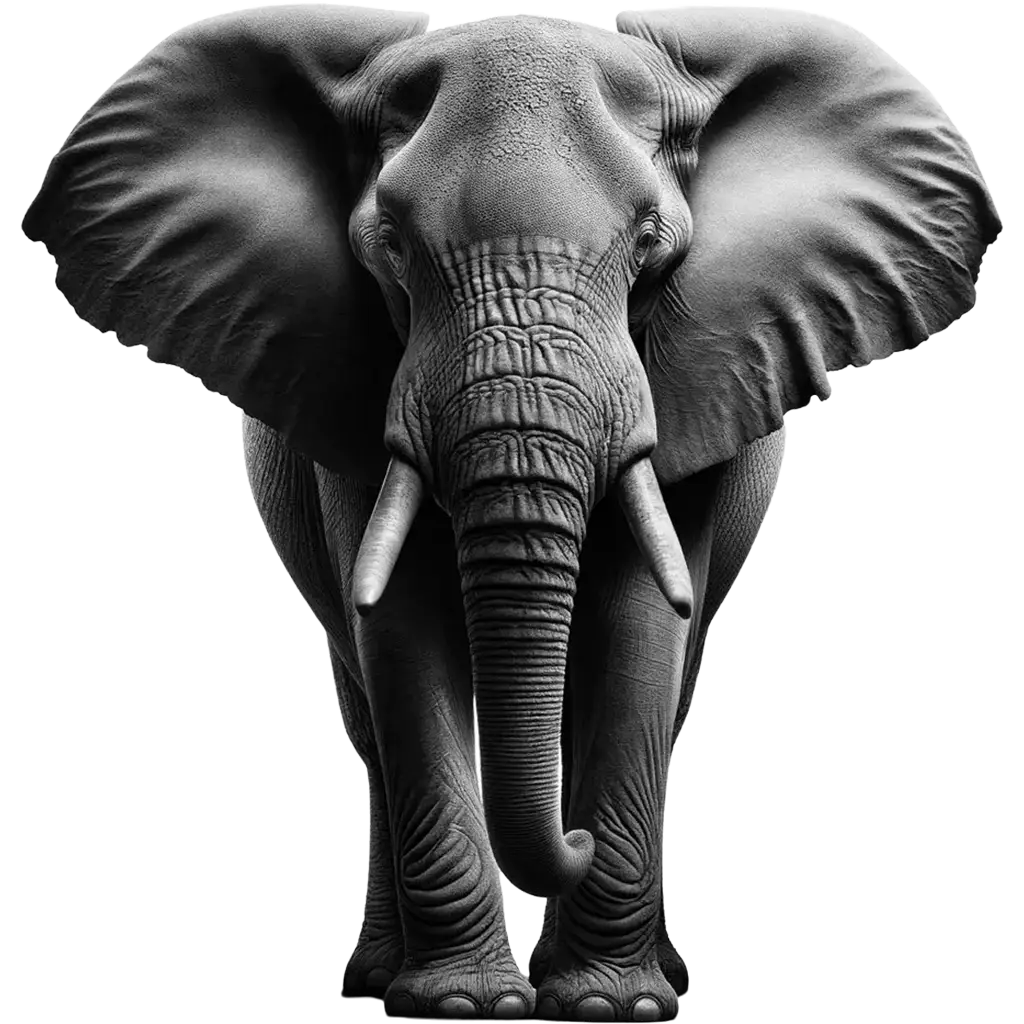
The African Forest Elephant, loxodonta cyclotis, is the smaller of the two African elephant species, distinguished by its more rounded ears and straighter tusks, which are thinner and downward pointing compared to those of its savannah cousin. Adults typically stand 2.5 meters tall at the shoulder, making them smaller than

The Dalmatian, instantly recognizable by its distinctive white coat marked with black or liver spots, is a breed of medium-sized dog known for its unique, spotted appearance. Adult Dalmatians typically weigh between 45 to 60 pounds and stand at a height of 19 to 24 inches at the shoulder. Their

The African Forest Buffalo, syncerus caffer nanus, also known as the dwarf buffalo, is significantly smaller than its cousin, the African cape buffalo. It stands about 1 meter tall at the shoulder and weighs between 250 to 320 kilograms. Its body is compact and muscular, with a reddish or chocolate