
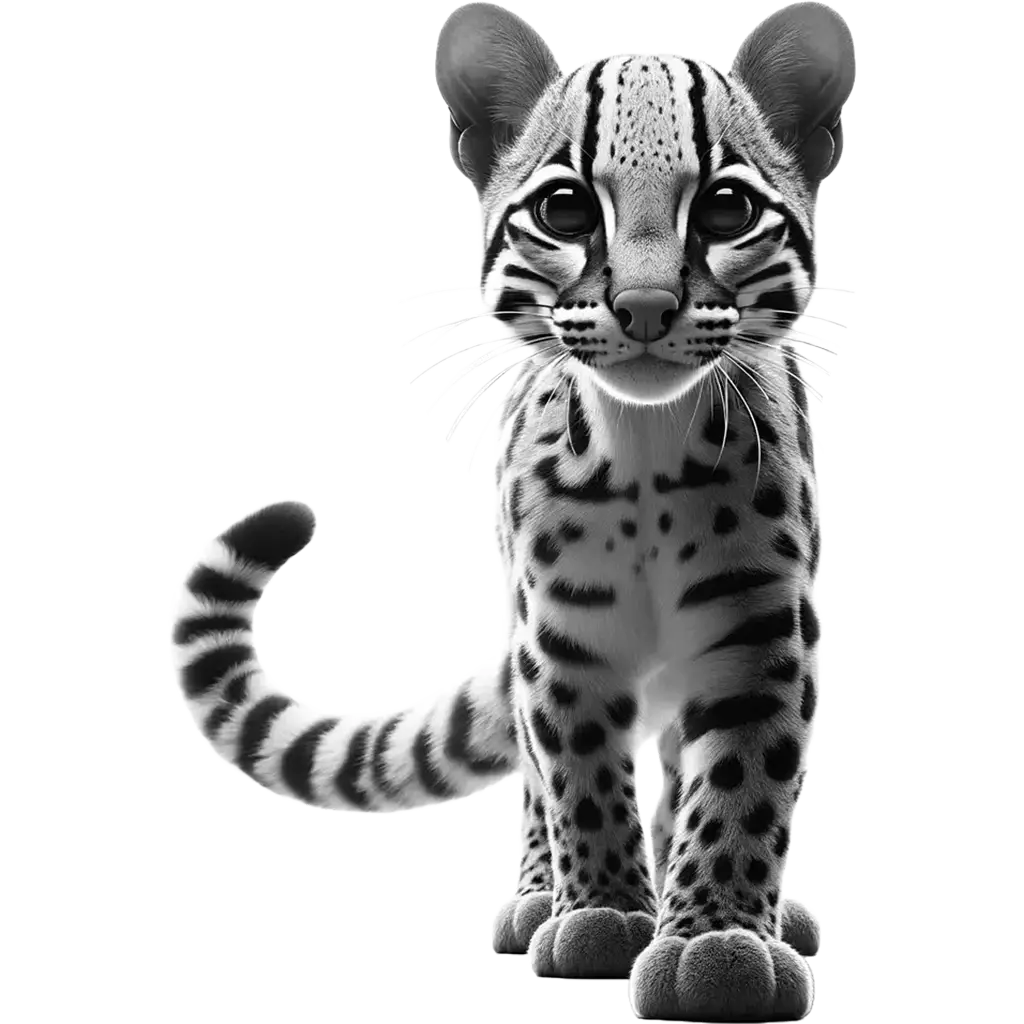
Leopardus Pardalis
Ocelot
Tropical forests, savannas, and marshlands
The Ocelot, leopardus pardalis, is a medium-sized wild cat native to the Americas, with a range that extends from the southern United States through Central and South America to northern Argentina. Adults typically weigh between 8 to 15 kg and measure about 55 to 100 cm in length, with a tail adding an additional 30 to 45 cm. The Ocelot's coat is short and smooth, marked with an intricate pattern of dark spots and stripes on a background of tawny, yellow, or gray fur, which provides excellent camouflage in its natural habitat.
| Population: | Listed as Least Concern, but certain populations are decreasing |
| Generation Length: | 3-4 years |
| Average Weight: | 8-15 kg |
| Average Length: | 70-100 cm in body length, with a tail length of 30-45 cm |
| Lifespan: | 7-10 years in the wild, up to 20 years in captivity |
| Diet: | Primarily carnivorous, with a diet adapted to available prey in its habitat |
| Conservation Status: | Least Concern (LC) |
Ocelots inhabit a wide variety of environments, including tropical forests, grasslands, and marshes. They are solitary and territorial animals, active mostly during twilight and at night. Ocelots are skilled climbers and swimmers, but they hunt primarily on the ground. They mark their territories with scent markings and are known for their vocalizations, which include meows, growls, and hisses.
The diet of the Ocelot consists mainly of small mammals, such as rodents and rabbits, but they also prey on birds, reptiles, and insects. Their role as predators helps control the populations of these smaller animals, maintaining the balance within their ecosystems.
Reproduction in Ocelots involves a gestation period of about 79 to 85 days, after which the female gives birth to one or two kittens. The offspring are born blind and helpless, relying entirely on their mother for food and protection. The mother raises her kittens in a den, teaching them to hunt when they are old enough. Ocelots reach sexual maturity at about two years of age.
The population of the Ocelot is considered stable in some parts of its range but is threatened by habitat destruction, hunting for its fur, and the pet trade in others. Conservation efforts for the Ocelot include habitat protection, anti-poaching measures, and legal protections. The species is listed under Appendix I of CITES, which regulates international trade to ensure it does not threaten the survival of the species.
Classifications
The Key Attributes
Features
- Movement:
Walking, climbing, swimming
- Territorial Behavior:
Solitary and territorial
- Speed:
Capable of quick and agile movements
- Diet:
Carnivore
- Physical Features:
- Short but stout build
- Beautifully marked coat with spots and stripes
- Powerful limbs for climbing and swimming
- Sharp teeth and retractable claws for hunting
- Primary Senses:
- Sight
- Hearing
- Smell
Understanding Habitat and Range
Geography
- Habitat:
Tropical forests, savannas, and marshlands
- Migration Patterns:
Sedentary with defined home territories
- Geographical Range:
Ranges from the southern United States through Central America to South America
- Climate Preferences:
Prefers warm, humid environments with dense vegetation
Navigating the Wilderness
In the wild
- Predators:
Jaguars and large birds of prey
- Prey:
Rodents, small mammals, birds, fish, and amphibians
- Feeding Behavior:
Nocturnal hunter, preying on a variety of small mammals, birds, and reptiles
- Diet:
Primarily carnivorous, with a diet adapted to available prey in its habitat
- Defensive Mechanisms:
- Camouflage within its environment
- Agility and stealth in hunting and evasion
- Climbing trees to escape larger predators
- Preferred Food Sources:
- Diverse environments with abundant prey
Insights Into Reproduction
Mating
- Mating System:
Polygynous
- Number of Offspring:
1-2 kittens
- Gestation Period:
About 79-85 days
- Parental Involvement:
- Females solely care for and raise the offspring
Youngsters Section
Ocelot
Fun Fact
Ocelots are medium-sized wild cats native to South and Central America, known for their striking fur patterns.
Their beautiful coat features rosettes and dark spots, resembling that of a leopard, which helps in camouflage. They are nocturnal hunters, preying on small mammals, birds, and reptiles. Ocelots are excellent climbers and swimmers. Despite their adaptability, habitat loss poses a threat to their population, emphasizing the need for conservation efforts to protect these fascinating creatures.

Download word search puzzles
Word Search Puzzles


Check Out Other Mammals

The Liger, a hybrid offspring of a male lion and a female tiger, is notable for its impressive size and unique appearance that blends characteristics of both parent species. Typically surpassing both lions and tigers in size, adult Ligers can weigh between 320 to 1,000 kg (705 to 2,200 pounds)

The Cheetah, acinonyx jubatus, stands as a symbol of speed and agility in the animal kingdom, holding the title of the fastest land animal, capable of reaching speeds up to 75 mph (120 km/h) in short bursts covering distances up to 1,500 feet (460 meters). This slender, long-legged feline is

The Bengal Tiger, panthera tigris, stands as a majestic symbol of the wilderness, embodying strength, agility, and grace. This subspecies is distinguished by its vibrant orange coat adorned with dark stripes, a characteristic that provides camouflage in the dense forests and grasslands of its habitat. Adult Bengal Tigers are formidable

The American Badger, taxidea taxus, is a robust, low-slung mammal known for its powerful digging abilities, which are facilitated by its strong forelimbs and long claws. This creature sports a distinctive appearance with a broad, flat body, short legs, and a short, bushy tail. Adults typically measure around 60 to