
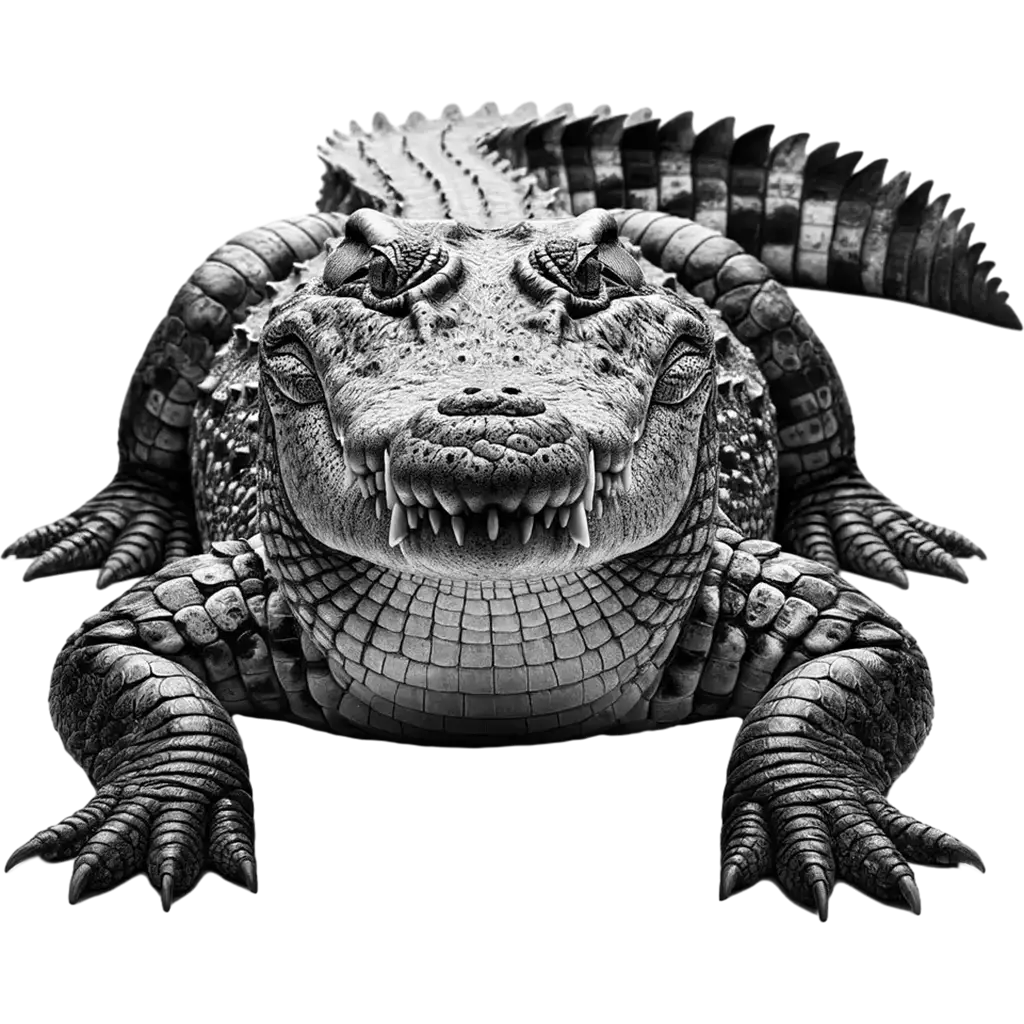
Crocodylus Palustris
Mugger Crocodile
Freshwater environments like rivers, lakes, and marshes
The Mugger Crocodile, crocodylus palustris, also known as the Marsh Crocodile, is a freshwater crocodile native to the Indian subcontinent and surrounding countries. Adults can reach lengths of up to 4 to 5 meters, making them one of the larger crocodile species. They have a broad snout and are olive-green in color, with black patches across the body and tail. The physical build of the Mugger Crocodile is robust, with powerful limbs and a tail adapted for swimming, demonstrating their prowess both in water and on land.
| Population: | Listed as Vulnerable due to habitat loss and poaching |
| Generation Length: | 15-20 years |
| Average Weight: | 200-450 kg |
| Average Length: | 3-5 meters |
| Lifespan: | Up to 65 years in the wild |
| Diet: | Carnivorous, with adaptable feeding habits based on available prey |
| Conservation Status: | Vulnerable (VU) |
Mugger Crocodiles inhabit a variety of freshwater habitats, including rivers, lakes, marshes, and artificial reservoirs. They are known for their adaptability to changing water levels and can often be found basking on riverbanks or mudflats. Muggers are social crocodiles, exhibiting complex behaviors such as basking in groups and communicating through vocalizations. They play a crucial role in their ecosystems, controlling fish populations and facilitating nutrient cycling.
The diet of the Mugger Crocodile is diverse, consisting mainly of fish, reptiles, birds, and mammals. They are ambush predators, lying in wait for prey to come close before launching a swift attack. This varied diet reflects their opportunistic feeding habits and their role as apex predators within their aquatic ecosystems.
Reproduction in Mugger Crocodiles involves nest building by the female, who lays 10 to 48 eggs in a hole dug in sandy or muddy banks. The nests are then covered, and the female often guards them until the eggs hatch after about 55 to 75 days. The young crocodiles are independent from birth but remain vulnerable to predators, including other crocodiles.
The population of the Mugger Crocodile is considered vulnerable, with threats including habitat destruction, pollution, and entanglement in fishing gear. Conservation efforts are underway to protect their habitats, reduce human-crocodile conflict, and implement breeding programs to support their populations. These efforts are crucial for the survival of this ancient species, which has roamed the earth for millions of years.
Classifications
The Key Attributes
Features
- Movement:
Swimming, crawling
- Territorial Behavior:
Solitary, with males being particularly territorial during the breeding season
- Speed:
Can move quickly in water and on land over short distances
- Diet:
Carnivore
- Physical Features:
- Robust body with a broad snout
- Heavy, armored scales with osteoderms
- Powerful jaws with conical teeth
- Strong, muscular tail for swimming
- Primary Senses:
- Sight
- Hearing
- Smell
- Vibration detection
Understanding Habitat and Range
Geography
- Habitat:
Freshwater environments like rivers, lakes, and marshes
- Migration Patterns:
Non-migratory, but may move locally due to water level changes
- Geographical Range:
Indian subcontinent, including parts of India, Sri Lanka, Pakistan, Nepal, and Bangladesh
- Climate Preferences:
Prefers tropical and subtropical climates
Navigating the Wilderness
In the wild
- Predators:
Humans are the main threat; few natural predators for adults
- Prey:
Variety of prey including fish, birds, reptiles, and small to medium-sized mammals
- Feeding Behavior:
Ambush predator, feeding on fish, reptiles, birds, and mammals
- Diet:
Carnivorous, with adaptable feeding habits based on available prey
- Defensive Mechanisms:
- Camouflage and stealth for ambush hunting
- Powerful bite and quick reflexes for capturing prey and defense
- Preferred Food Sources:
- Aquatic and riparian zones rich in wildlife
Insights Into Reproduction
Mating
- Mating System:
Polygynous, with dominant males controlling breeding territories
- Number of Offspring:
10-48 eggs per clutch
- Incubation Period:
About 55-75 days
- Parental Involvement:
- Females guard the nests and assist hatchlings to reach water
Youngsters Section
Mugger Crocodile
Fun Fact
The mugger crocodile has one of the most powerful bites in the animal kingdom, exerting immense force.
These crocodiles are skilled ambush predators, often waiting motionless in water for prey. Found mainly in freshwater habitats, they can also adapt to saltwater. Muggers play a crucial role in their ecosystem by controlling fish populations and maintaining the balance.
Download word search puzzles
Word Search Puzzles
Check Out Other Reptiles
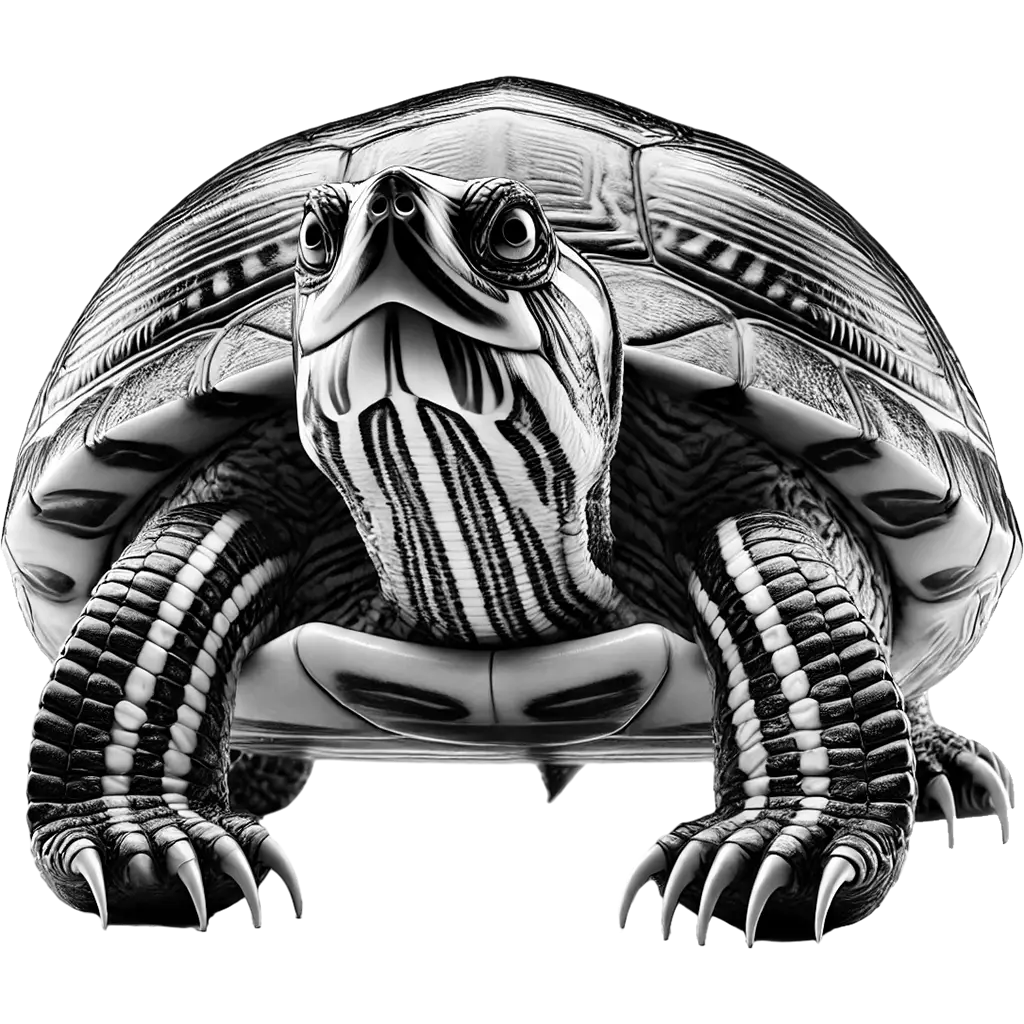
The Yellow-bellied Slider is a medium-sized freshwater turtle, easily recognized by its smooth, domed carapace colored in dark greens and browns, and its striking, bright yellow plastron that stands out when basking. Its streamlined body, webbed feet, and slightly elongated head are perfectly adapted for an aquatic lifestyle. The overall
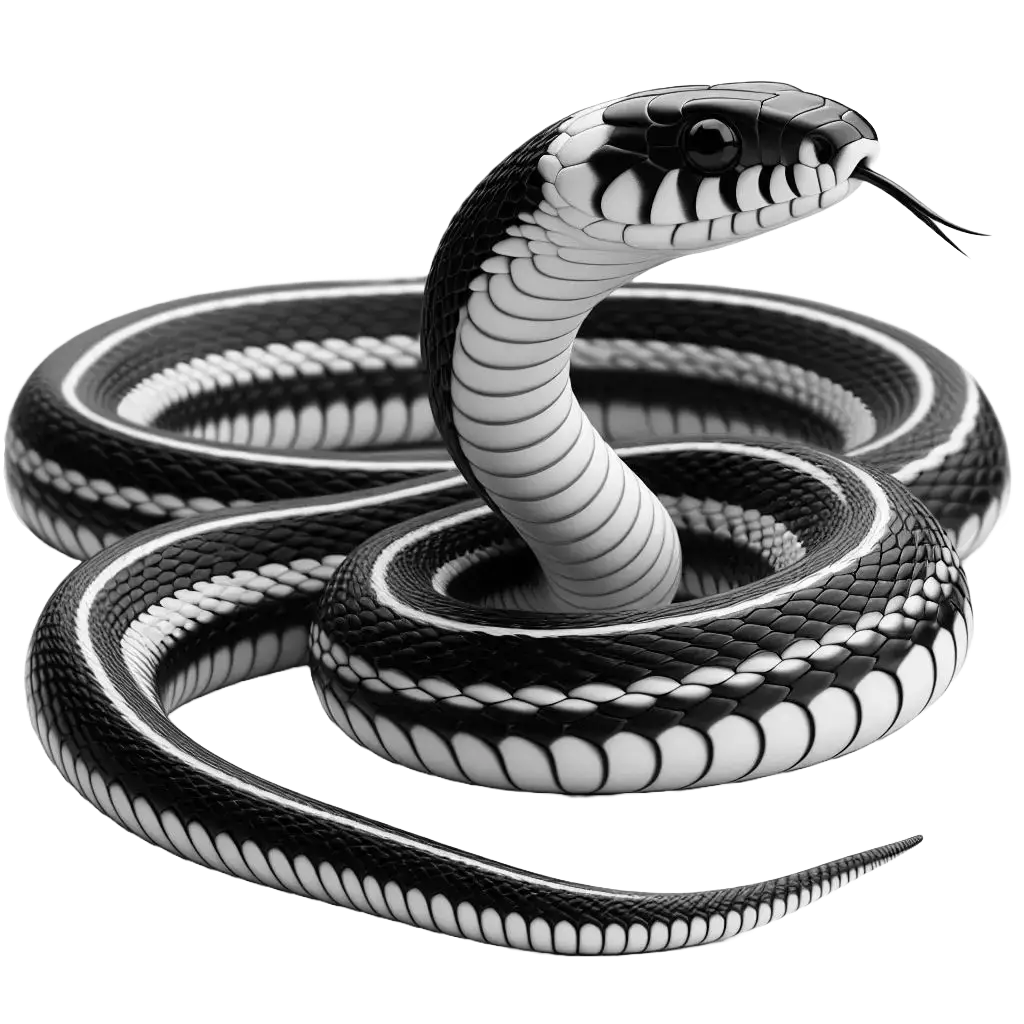
The Four-Lined Snake, elaphe quatuorlineata, is one of the largest European snake species, known for its distinctive pattern and coloration. Adults can reach impressive lengths of up to 2 meters (about 6.5 feet), making them formidable predators in their natural habitats. Their name derives from the four dark stripes that
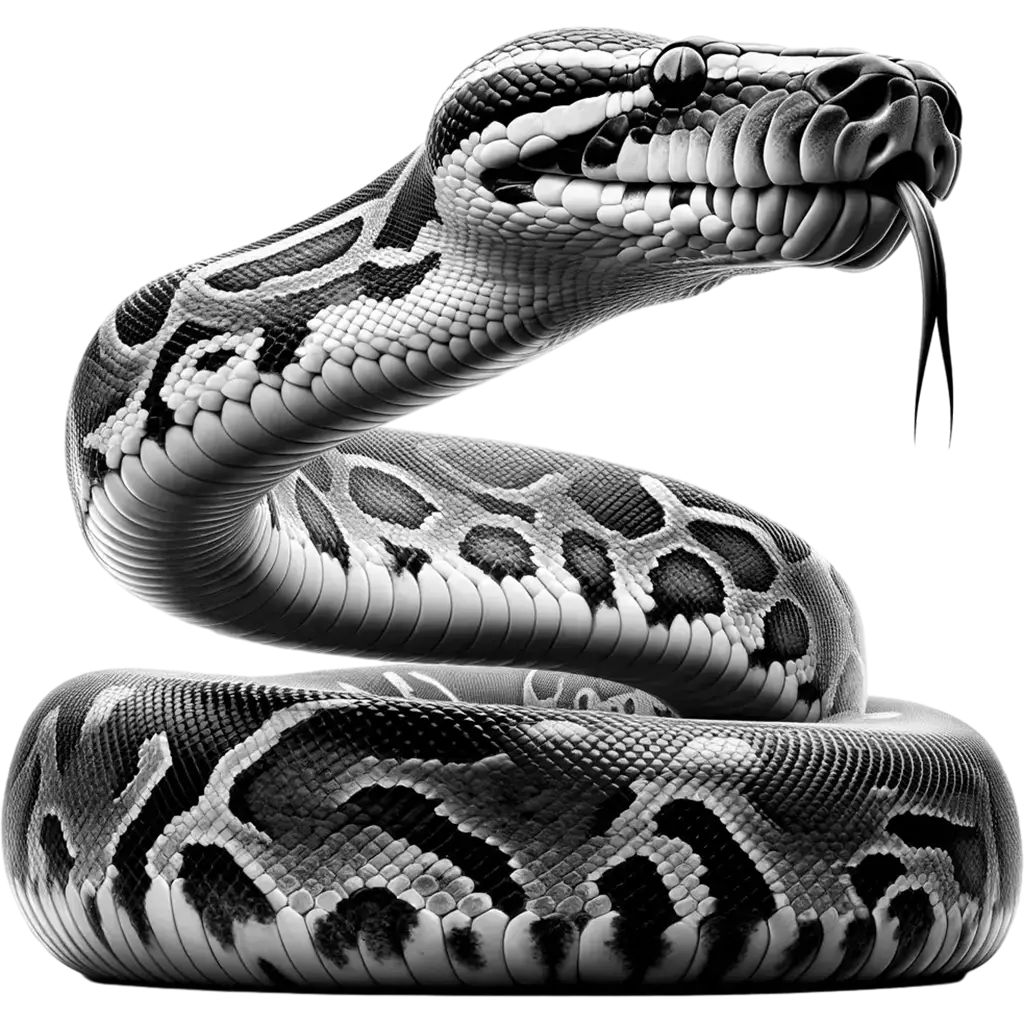
The African Rock Python, Python sebae, is a large, non-venomous snake native to sub-Saharan Africa. It is one of the largest snake species on the continent, with adults commonly reaching lengths of 3 to 4.5 meters, and some exceptional individuals exceeding 6 meters. Their skin is thick and covered in
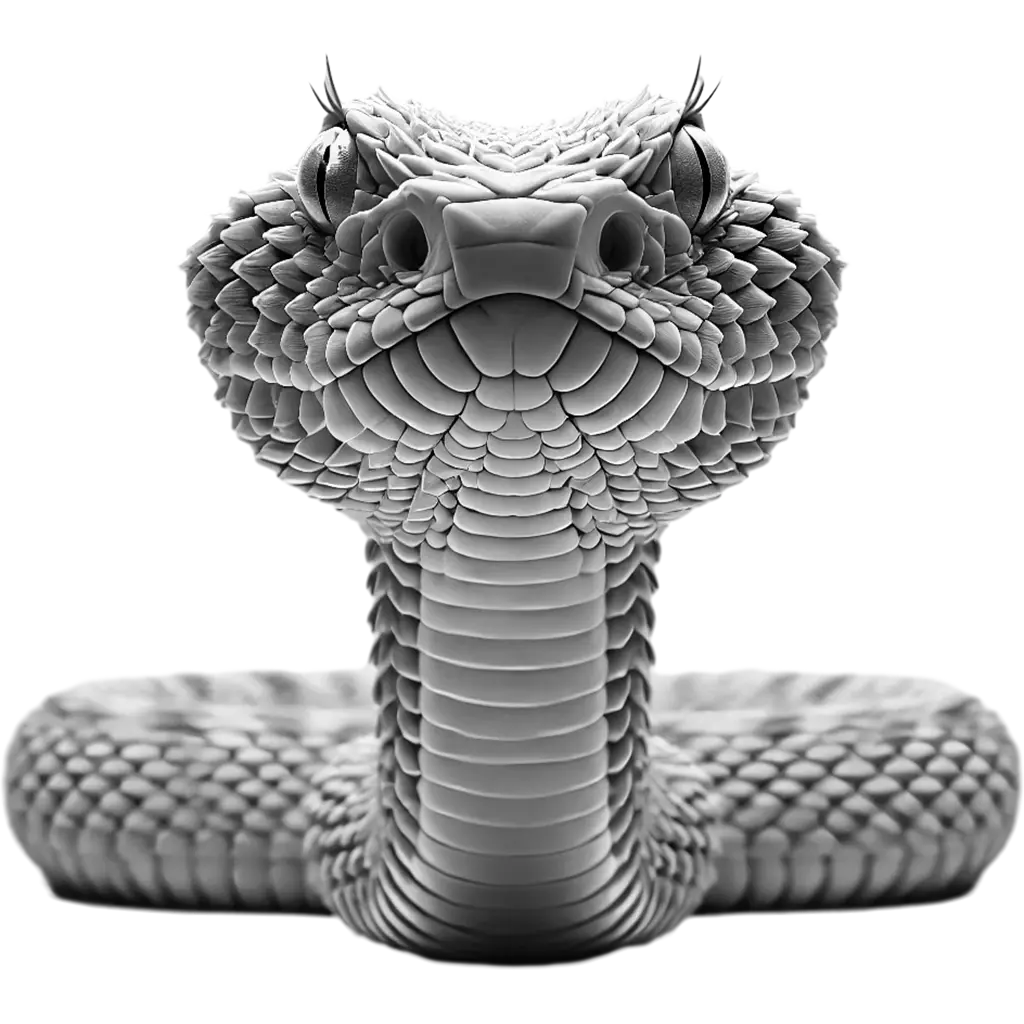
Bothriechis schlegelii, known as the Eyelash Viper, exhibits a striking appearance with its slender, elongated body and vibrant coloration. Its most distinctive feature is the raised supraocular scales that resemble delicate eyelashes framing its intense, vertical pupils. The snake's body displays a mosaic of vivid greens, browns, or yellows accented