
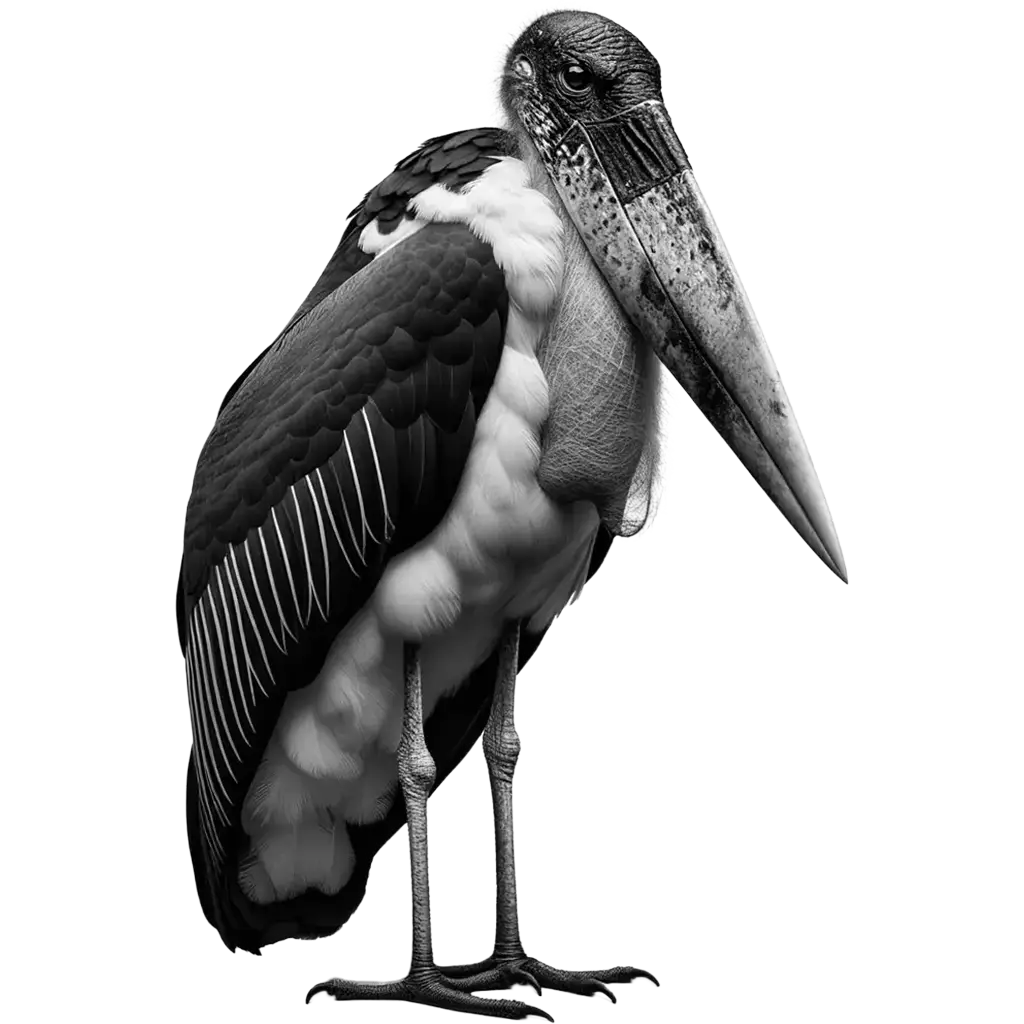
Leptoptilos Crumenifer
Marabou Stork
Savannas, wetlands, and other areas close to water, often near human settlements
The Marabou Stork, leptoptilos crumenifer, is a large wading bird native to sub-Saharan Africa, easily identifiable by its imposing size, bald head, and neck, and a distinctive inflatable throat pouch. Standing up to 150 cm tall with a wingspan reaching over 2.5 meters, it is among the largest flying birds. The body is primarily covered in white feathers, contrasting with its dark wings and back. The legs are long and grey, adapted for wading through shallow waters. This species' somewhat ungainly appearance on the ground belies its grace in flight, where it utilizes thermal updrafts to soar effortlessly.
| Population: | Listed as Least Concern, but dependent on wetland habitats which are under threat |
| Generation Length: | 10-15 years |
| Average Weight: | 4.5-9 kg |
| Average Length: | 120-150 cm, with a wingspan of 210-250 cm |
| Lifespan: | Up to 25 years in the wild |
| Diet: | Omnivorous with a strong preference for carrion |
| Conservation Status: | Least Concern (LC) |
Marabou Storks are highly adaptable, inhabiting a variety of ecosystems including savannas, wetlands, and urban areas. They are often seen scavenging near human habitations, taking advantage of slaughterhouses, landfills, and fishing villages to find food. Despite their somewhat morose appearance, Marabou Storks are social birds, gathering in large colonies for breeding and roosting. Their presence is an indicator of the health of their ecosystem, as they help in cleaning up carcasses and organic waste.
The diet of the Marabou Stork is exceptionally varied, encompassing carrion, fish, insects, rodents, and even small reptiles and birds. This opportunistic feeding behavior allows them to thrive in a wide range of conditions and contributes to their role as natural sanitation workers, preventing the spread of disease by consuming dead animal matter.
Reproduction involves the construction of large stick nests in trees or on cliffs, where the female lays 2 to 3 eggs. Both parents share in incubation and feeding the chicks, which are altricial at birth but grow quickly, fledging within a few months. The breeding season is timed to coincide with the dry season, ensuring that food is plentiful for the growing chicks.
The population of the Marabou Stork is currently considered stable, though they face threats from habitat destruction and pollution. Conservation efforts focus on preserving wetland habitats and ensuring sustainable urban waste management to support healthy populations. The Marabou Stork's role in the ecosystem underscores the importance of biodiversity and the interconnectedness of species within African landscapes.
Classifications
The Key Attributes
Features
- Movement:
Flying, walking
- Territorial Behavior:
Somewhat territorial, especially during breeding season
- Speed:
Not specifically quantified; capable of soaring and gliding on thermal currents for long periods
- Diet:
Carnivore and scavenger
- Physical Features:
- Large size with a massive wingspan
- Bare head and neck with a white underbelly and black back and wings
- Long legs and a large bill for scavenging
- A pendulous throat pouch used in thermal regulation and as part of courtship display
- Primary Senses:
- Sight
- Smell
Understanding Habitat and Range
Geography
- Habitat:
Savannas, wetlands, and other areas close to water, often near human settlements
- Migration Patterns:
Non-migratory, but can travel large distances in search of food
- Geographical Range:
Sub-Saharan Africa, from Senegal and Sudan to South Africa
- Climate Preferences:
Prefers hot climates, often found in arid to semi-arid regions
Navigating the Wilderness
In the wild
- Predators:
Few natural predators due to their size; eggs and young may be preyed upon by other large birds and mammals
- Prey:
Wide range of food items from carrion and small vertebrates to large insects
- Feeding Behavior:
Feeds on carrion, fish, insects, small mammals, and occasionally human refuse
- Diet:
Omnivorous with a strong preference for carrion
- Defensive Mechanisms:
- Size and strength to fend off competitors at food sources
- Flight to escape threats
- Preferred Food Sources:
- Carrion, open landfills, and fishing grounds
Insights Into Reproduction
Mating
- Mating System:
Monogamous
- Number of Offspring:
2-3 eggs
- Incubation Period:
About 30 days
- Parental Involvement:
- Both parents share in incubating the eggs and feeding the chicks
Youngsters Section
Marabou Stork
Fun Fact
The Marabou Stork is known for its large size and bald head, often likened to a vulture.
These storks are scavengers and play a crucial role in ecosystems by cleaning up carcasses. They have a wingspan reaching up to 12 feet, making them one of the largest flying birds. Despite their ungainly appearance on land, they are graceful in flight.

Download word search puzzles
Word Search Puzzles
Check Out Other Birds
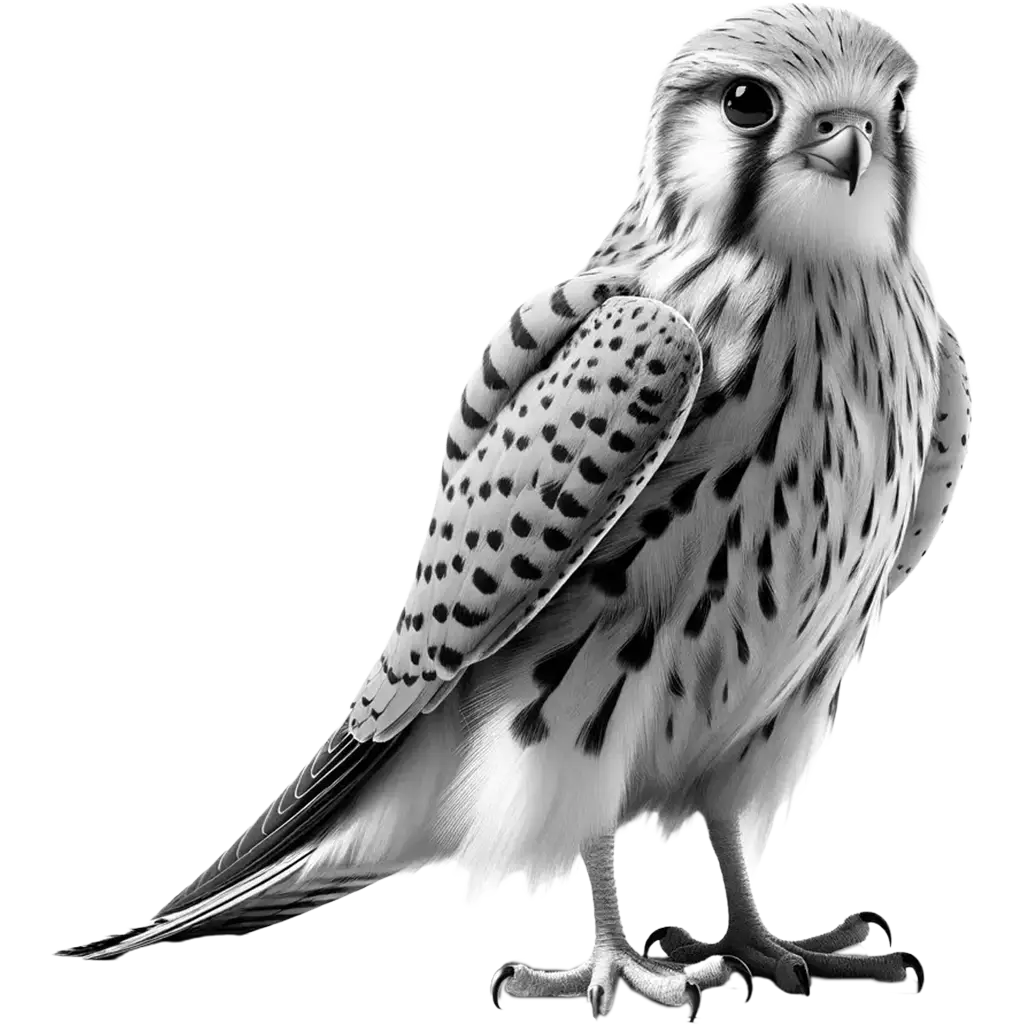
The Common Kestrel, falco tinnunculus, is a small yet highly adaptable bird of prey, known for its distinctive hovering flight and keen hunting skills. It measures about 34 to 38 cm in length, with a wingspan ranging from 70 to 80 cm, and weighs between 150 to 200 grams. The
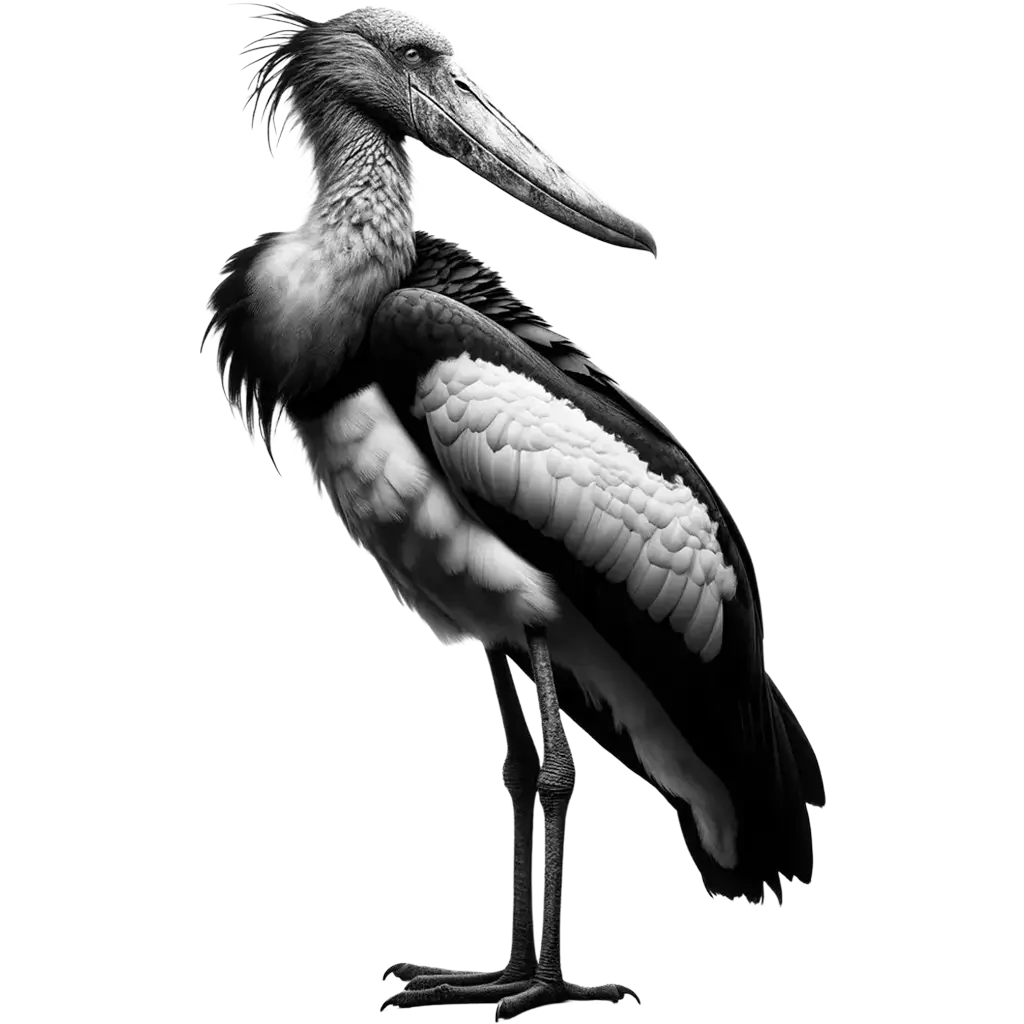
The Greater Adjutant, leptoptilos dubius, is a large stork standing at an impressive height of up to 1.5 meters with a wingspan reaching 2.5 meters. Its appearance is distinctive with a bald head and neck, a heavy bill, and a predominantly dark grey plumage, except for the white underparts. The
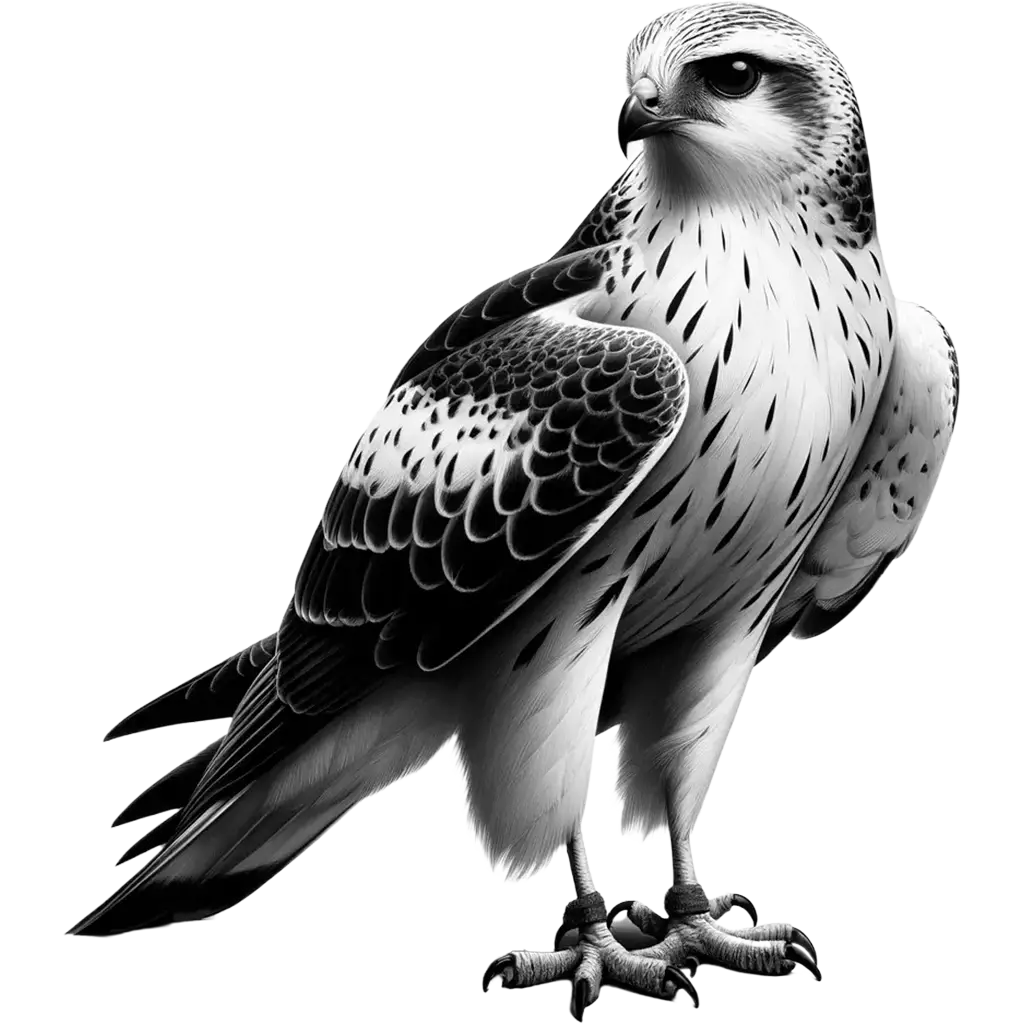
The Long-Winged Harrier, circus buffoni, is a distinctive bird of prey known for its slender frame, long wings, and tail which facilitate its prowess in flight. Males typically exhibit a striking gray and white plumage with black wingtips, while females and juveniles are primarily brown with streaked underparts. This species
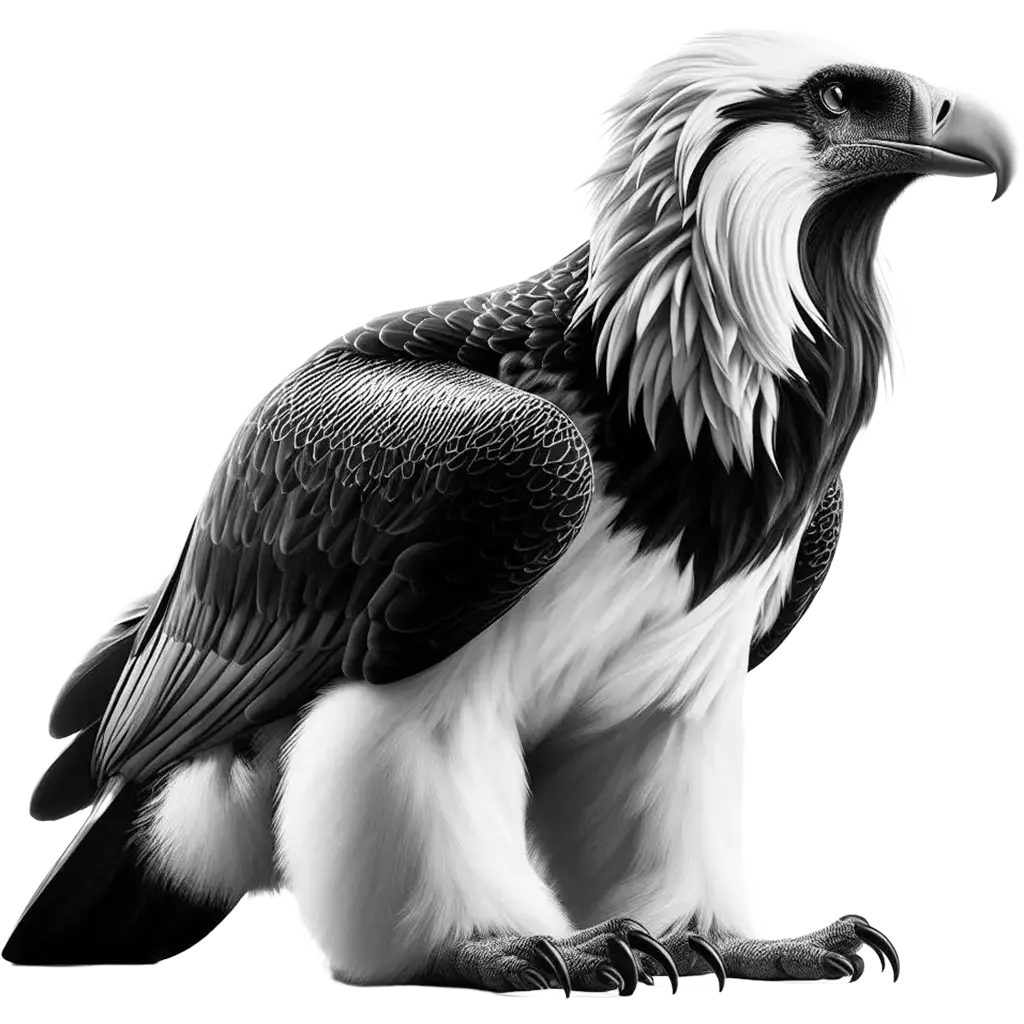
The Bearded Vulture, gypaetus barbatus, is a distinctive bird of prey, known for its striking appearance and unique dietary habits. This vulture has a wingspan of 2.3 to 2.8 meters (7.5 to 9.2 feet), making it one of the largest raptors. Its appearance is notable for the feathered neck ruff,