
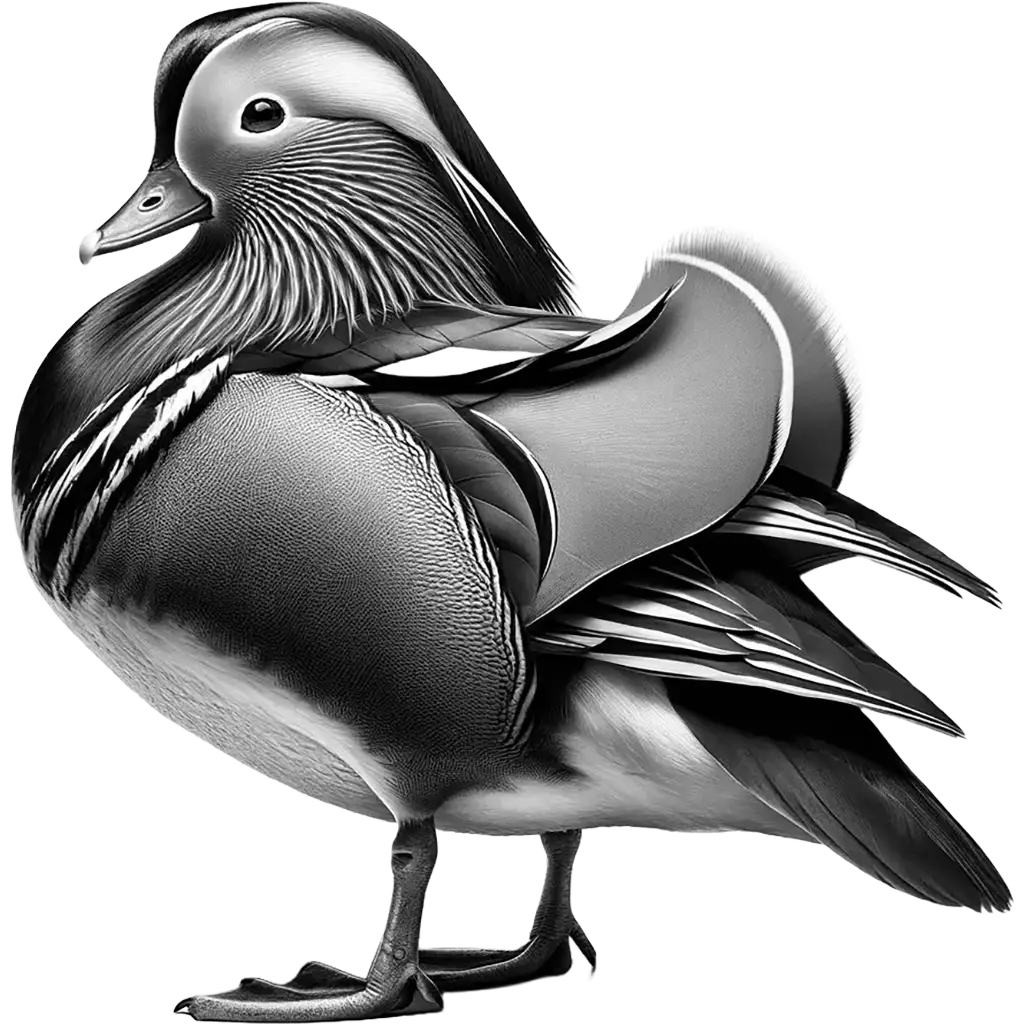
Aix Galericulata
Mandarin Duck
Woodland ponds, lakes, rivers, and marshes with dense vegetation
The Mandarin Duck, aix galericulata, is a small, strikingly colored waterfowl native to East Asia. The male, known for its vibrant plumage during the breeding season, displays an array of colors including metallic greens, blues, and oranges, complemented by distinctive white eye-stripes and a reddish face. The female is more subdued in color, with mottled brown feathers, offering excellent camouflage. Both sexes have a sleek body shape, measuring about 41 to 49 cm in length, and feature a distinctive sail-like crest of feathers on their backs. Despite their bright colors, these ducks can blend seamlessly into their surroundings.
| Population: | Listed as Least Concern, though populations are decreasing in some areas due to habitat loss |
| Generation Length: | 2-3 years |
| Average Weight: | 400-700 grams |
| Average Length: | 41-49 cm |
| Lifespan: | 5-6 years in the wild, longer in captivity |
| Diet: | Varied diet including aquatic vegetation, seeds, small fish, and insects |
| Conservation Status: | Least Concern (LC) |
Mandarin Ducks prefer quiet, secluded woodland ponds, lakes, and rivers, surrounded by dense vegetation. They are perching ducks, often found in trees near water, where they nest in hollows. These ducks are known for their strong pair bonds, with mating pairs often staying together for multiple breeding seasons. They are shy and elusive, preferring to avoid human interaction, making them a challenge to observe in the wild.
Their diet is omnivorous, consisting of seeds, nuts, plants, insects, and small fish. They forage in the water by dabbling, not diving, and can also feed on land, showcasing their adaptability in feeding habits. This varied diet supports their health and breeding capabilities, making them versatile inhabitants of their ecosystems.
Reproduction in Mandarin Ducks is notable for the male's involvement in mate selection and defense. The female lays 9 to 12 eggs in tree nests, which she incubates alone. The ducklings are precocial and leave the nest within hours of hatching to follow their mother to water, where they begin to feed themselves.
The population of the Mandarin Duck is considered stable in its native range, though it faces threats from habitat loss and degradation. In some areas, they are also prized for their beauty and captured for the pet trade. Conservation efforts focus on protecting their natural habitats and monitoring populations to ensure their continued survival. Outside their native range, Mandarin Ducks have been introduced in various locations, where they are admired for their extraordinary beauty.
Classifications
The Key Attributes
Features
- Movement:
Flying, swimming, walking
- Territorial Behavior:
Somewhat territorial during breeding season
- Speed:
Not specifically quantified; known for agile flight and good swimming ability
- Diet:
Omnivore
- Physical Features:
- Colorful plumage, especially in males, with distinctive orange sails on the back
- Females are mottled brown and white for camouflage
- Short bill and medium-sized, streamlined body
- Strong, fast wingbeats during flight
- Primary Senses:
- Sight
- Hearing
Understanding Habitat and Range
Geography
- Habitat:
Woodland ponds, lakes, rivers, and marshes with dense vegetation
- Migration Patterns:
Partially migratory, depending on the region
- Geographical Range:
Native to East Asia, including China, Japan, and Russia; introduced populations in Western Europe and North America
- Climate Preferences:
Temperate and subtropical regions, with adaptations for cold temperatures in winter
Navigating the Wilderness
In the wild
- Predators:
Birds of prey, foxes, and large fish may prey on eggs and ducklings
- Prey:
Aquatic plants, seeds, small fish, and insects
- Feeding Behavior:
Dabbles and up-ends in water for plant food, and forages on land for seeds and insects
- Diet:
Varied diet including aquatic vegetation, seeds, small fish, and insects
- Defensive Mechanisms:
- Flight to escape predators
- Camouflage among vegetation
- Nesting in tree holes to protect eggs from predators
- Preferred Food Sources:
- Rivers and lakes rich in aquatic vegetation and small invertebrates
Insights Into Reproduction
Mating
- Mating System:
Monogamous
- Number of Offspring:
6-12 eggs per clutch
- Incubation Period:
About 28-30 days
- Parental Involvement:
- Females primarily incubate eggs and care for the ducklings, while males guard the territory
Youngsters Section
Mandarin Duck
Fun Fact
The mandarin duck is renowned for its vibrant and elaborate plumage, especially in males.
These ducks are native to East Asia but have been introduced to various parts of Europe. Males display bright colors to attract females during mating season, including orange "sails" on their backs and striking blue-green head feathers. They prefer wooded areas near water bodies.

Download word search puzzles
Word Search Puzzles


Check Out Other Birds
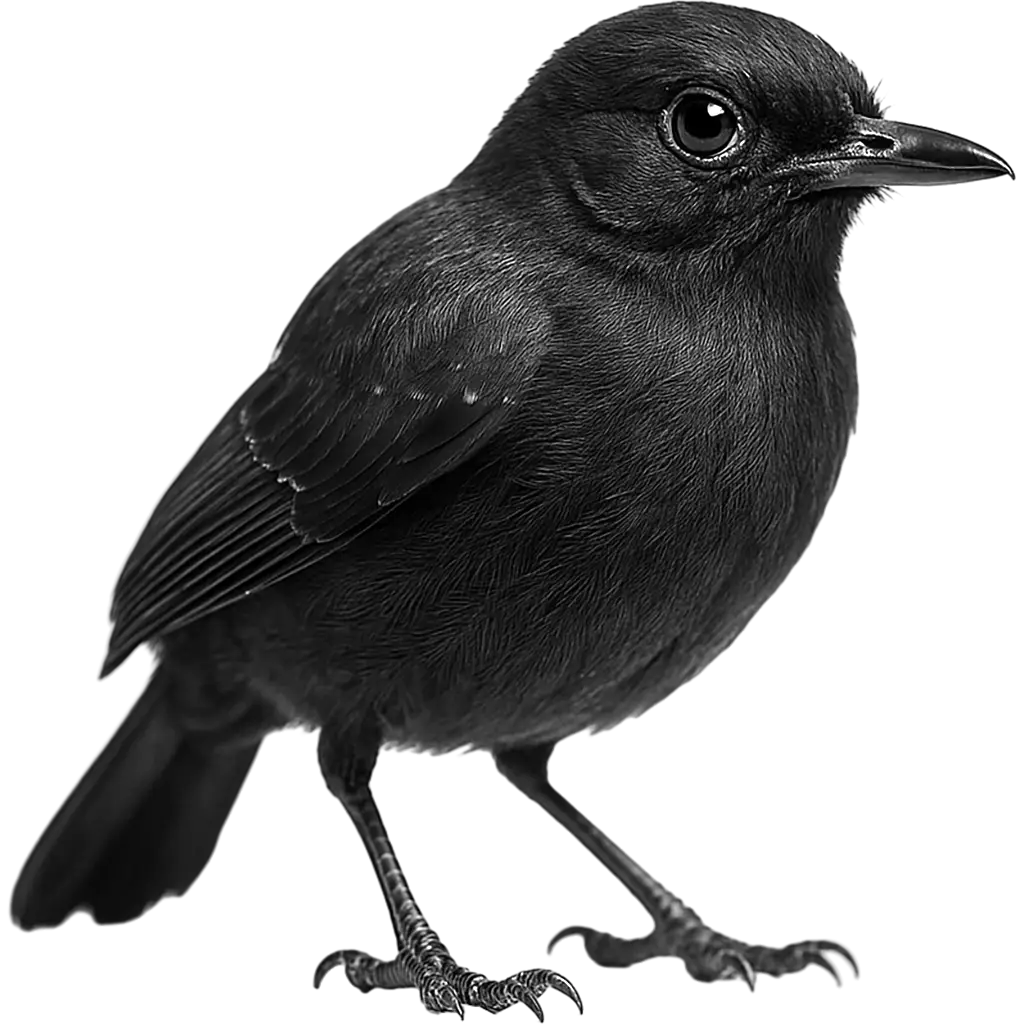
The Dusky Antbird has a modest yet distinctive appearance with muted dark plumage that blends seamlessly into the dappled shadows of the rainforest understory. Its rounded head, small sharp beak, and subtle eye-ring create a gentle expression, while a short tail and compact body enhance its agile silhouette. Soft, earthy
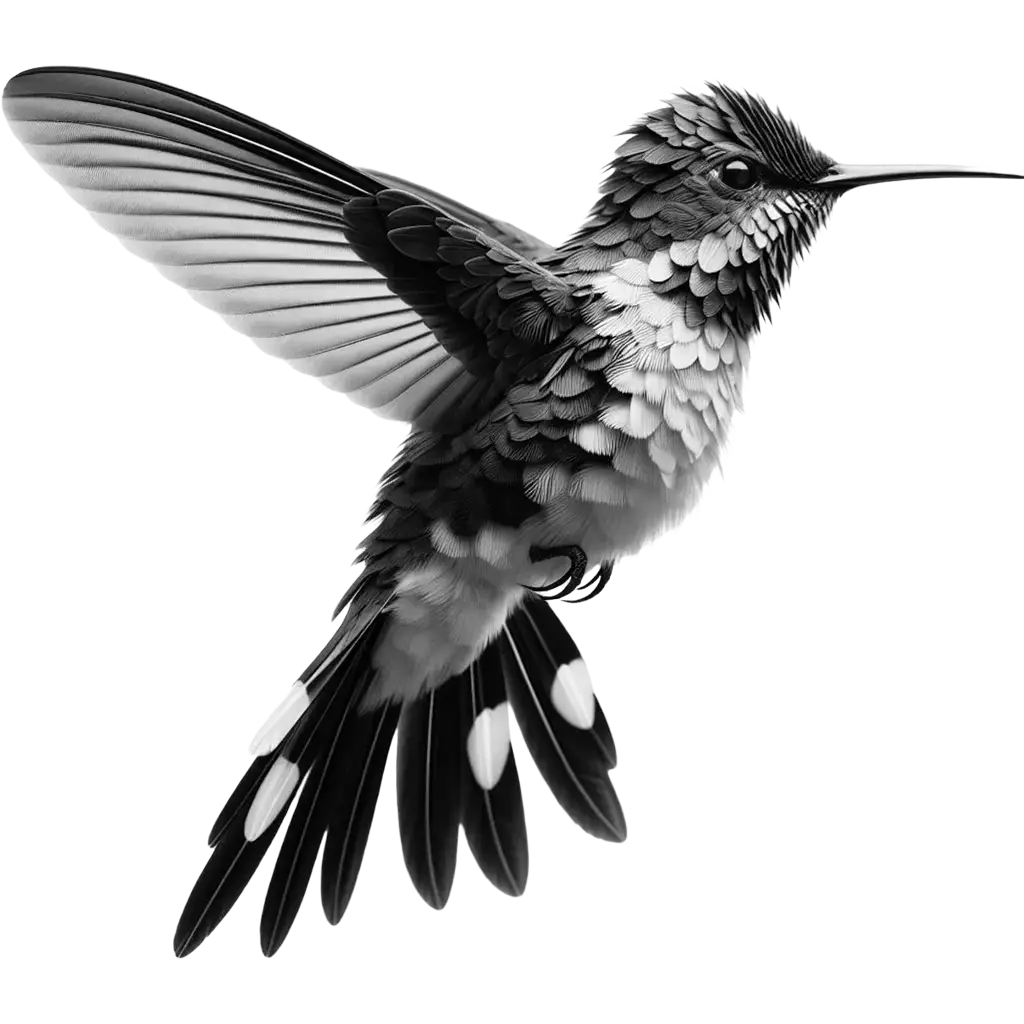
The Bee Hummingbird, Mellisuga helenae, holds the title of the world's smallest bird, native to Cuba and the Isla de la Juventud. Adults measure a mere 5 to 6 centimeters (2 to 2.4 inches) in length, including the beak and tail, and weigh approximately 1.6 to 2 grams (0.056 to
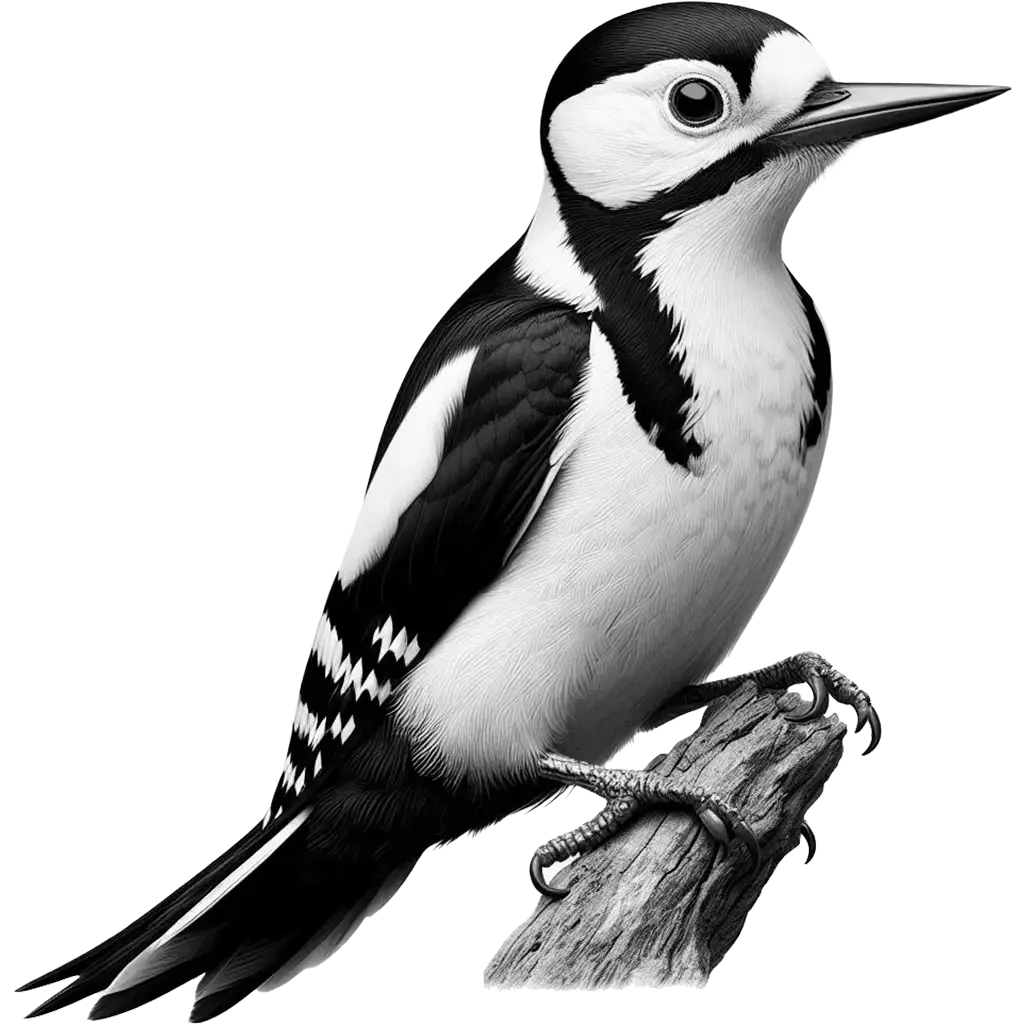
The European Green Woodpecker, picus viridis, is a large, vibrant bird native to the broadleaf forests across Europe and parts of western Asia. This species is distinguished by its bright green plumage, contrasting with a red crown in males and a black moustachial stripe, which is red in males and
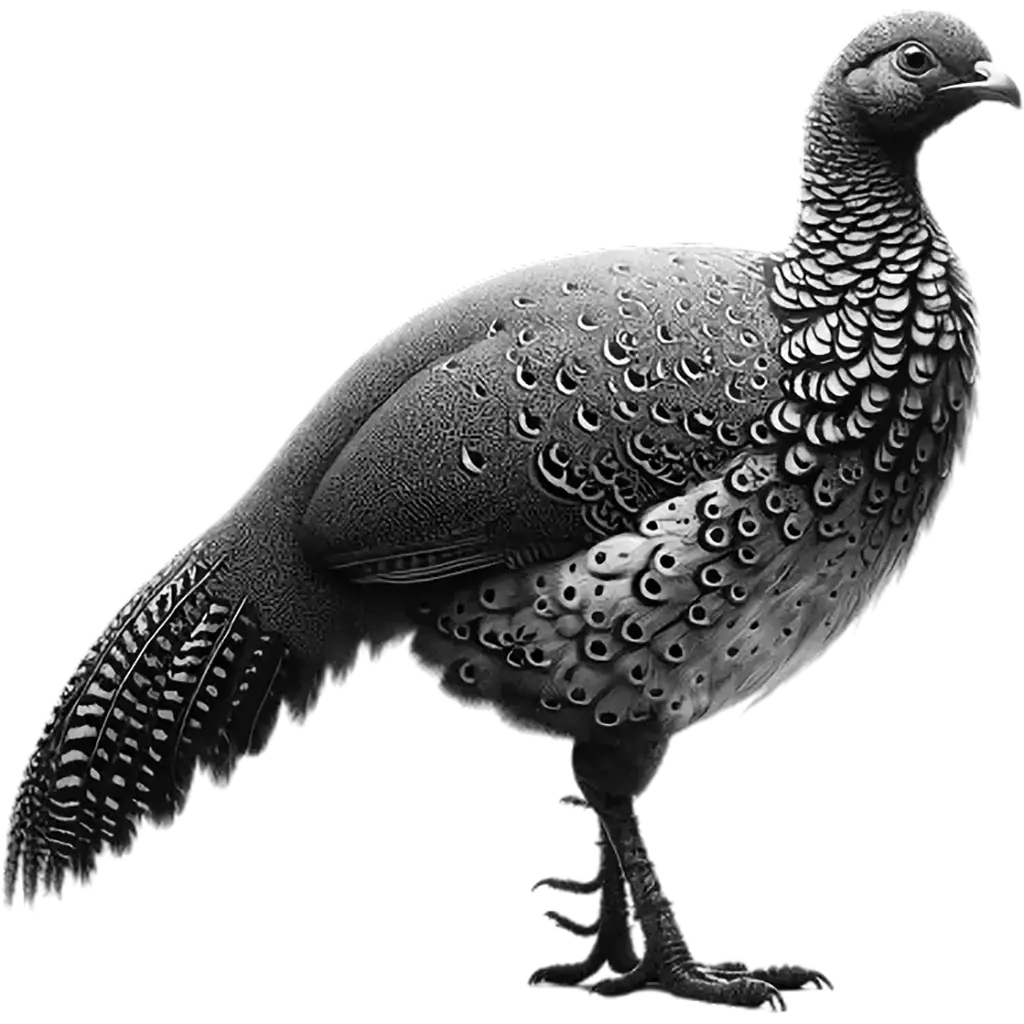
The Malayan Peacock-Pheasant, polyplectron malacense, is a stunning bird species native to the forests of Peninsular Malaysia. Characterized by its relatively small size, with males reaching about 50 to 65 cm in length including the tail, and weighing approximately 450 to 700 grams. The males are particularly noted for their