

Fregata Magnificens
Magnificent Frigatebird
Tropical and subtropical oceans, nesting on islands
The Magnificent Frigatebird, fregata magnificens, is a large seabird known for its striking appearance and remarkable flying ability. Adults can reach a wingspan of up to 2.3 meters, making them one of the largest species within the frigatebird family. They are characterized by their long, slender wings and deeply forked tails. Males are distinguished by their glossy black plumage and a striking red gular sac, which they inflate during courtship displays. Females are slightly larger and have a white breast and lower neck sides, with a blue eye ring.
| Population: | Listed as Least Concern, but specific populations may be under threat |
| Generation Length: | Approximately 10 years |
| Average Weight: | 1.0-1.5 kg |
| Average Length: | 89-114 cm with a wingspan of 215-244 cm |
| Lifespan: | Up to 25 years in the wild |
| Diet: | Piscivorous, with opportunistic feeding behavior including kleptoparasitism |
| Conservation Status: | Least Concern (LC) |
Found across tropical and subtropical oceans, the Magnificent Frigatebird prefers the warm waters of the Caribbean Sea, the Atlantic coast of North and South America, and the Pacific coast from California to South America. They are rarely seen on land and spend most of their lives flying over the ocean, capable of staying aloft for weeks by riding thermals. Their nesting sites are located on remote islands, where colonies can be found in low trees or on the ground.
The diet of the Magnificent Frigatebird mainly consists of fish and squid, which they skillfully snatch from the ocean surface or steal from other birds in mid-air, a behavior known as kleptoparasitism. This opportunistic feeding strategy allows them to expend minimal energy for maximum nutritional gain.
Reproduction involves elaborate aerial displays by males, who inflate their red gular sacs and vibrate their wings to attract females. Once a pair is formed, they build a nest together in which the female lays a single egg. Both parents share the responsibility of incubating the egg and feeding the chick, which is dependent on them for up to six months.
The population of the Magnificent Frigatebird is considered to be of least concern by conservation standards, though they are susceptible to the impacts of climate change and habitat destruction, particularly on their breeding islands. Efforts to protect their nesting sites are crucial for the preservation of this species, whose majestic presence enhances the biodiversity of tropical marine ecosystems.
Classifications
The Key Attributes
Features
- Movement:
Flying, soaring
- Territorial Behavior:
Non-territorial; often found in large breeding colonies
- Speed:
Capable of gliding for hours without flapping wings
- Diet:
Carnivore
- Physical Features:
- Long, narrow wings and deeply forked tail
- Males have a distinctive red gular sac which is inflated during courtship
- Females are slightly larger and have a white breast and belly
- Hooked beak for catching fish and squid
- Primary Senses:
- Sight
Understanding Habitat and Range
Geography
- Habitat:
Tropical and subtropical oceans, nesting on islands
- Migration Patterns:
Some populations are migratory, moving with oceanic currents and food availability
- Geographical Range:
Coastal regions of the tropical Atlantic, Pacific, and Indian Oceans
- Climate Preferences:
Prefers warm oceanic regions
Navigating the Wilderness
In the wild
- Predators:
Few natural predators; eggs and young are at risk from other birds and mammals
- Prey:
Fish, squid, and jellyfish
- Feeding Behavior:
Feeds on fish and squid, often stealing from other seabirds (kleptoparasitism)
- Diet:
Piscivorous, with opportunistic feeding behavior including kleptoparasitism
- Defensive Mechanisms:
- Agile flight to escape predators and chase down prey or other birds for food stealing
- Preferred Food Sources:
- Open ocean, often near upwellings or where schools of fish are near the surface
Insights Into Reproduction
Mating
- Mating System:
Monogamous with long-term pair bonds
- Number of Offspring:
Usually one chick
- Incubation Period:
Around 55 days
- Parental Involvement:
- Both parents share in feeding and raising the chick, though the male contributes less as the chick ages
Youngsters Section
Magnificent Frigatebird
Fun Fact
The magnificent frigatebird is known for its impressive aerial skills and distinctive red throat pouch.
Males inflate their bright red throat pouch to attract females during the breeding season. They are also masterful flyers, capable of staying aloft for weeks. These birds often steal food from other seabirds mid-air, showcasing their agility and opportunistic nature in the skies.

Download word search puzzles
Word Search Puzzles


Check Out Other Birds
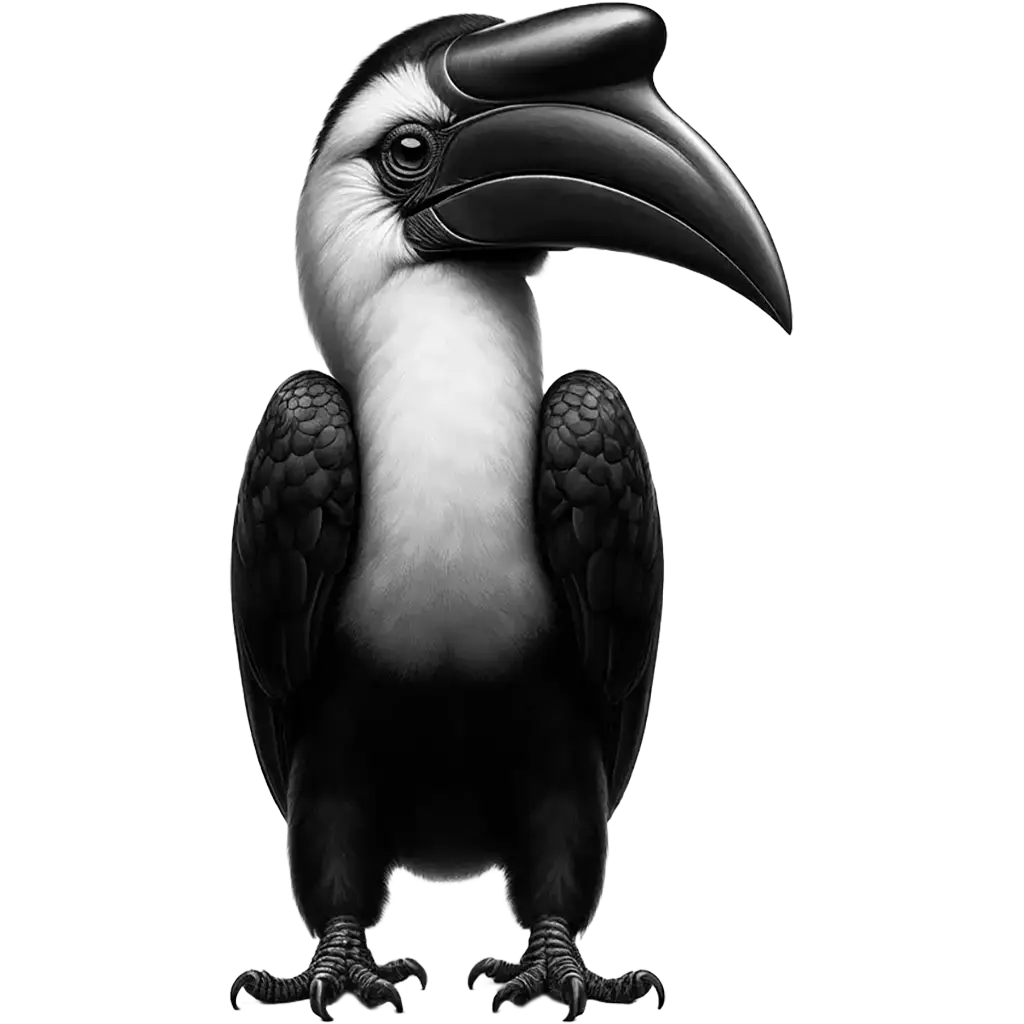
The Helmeted Hornbill, rhinoplax vigil, is a large, distinctive bird found in the rainforests of Southeast Asia, from Thailand and Malaysia to Borneo and Sumatra. This remarkable species is known for its large, solid casque atop its bill, used in aerial jousts among males. The bird measures approximately 110 to
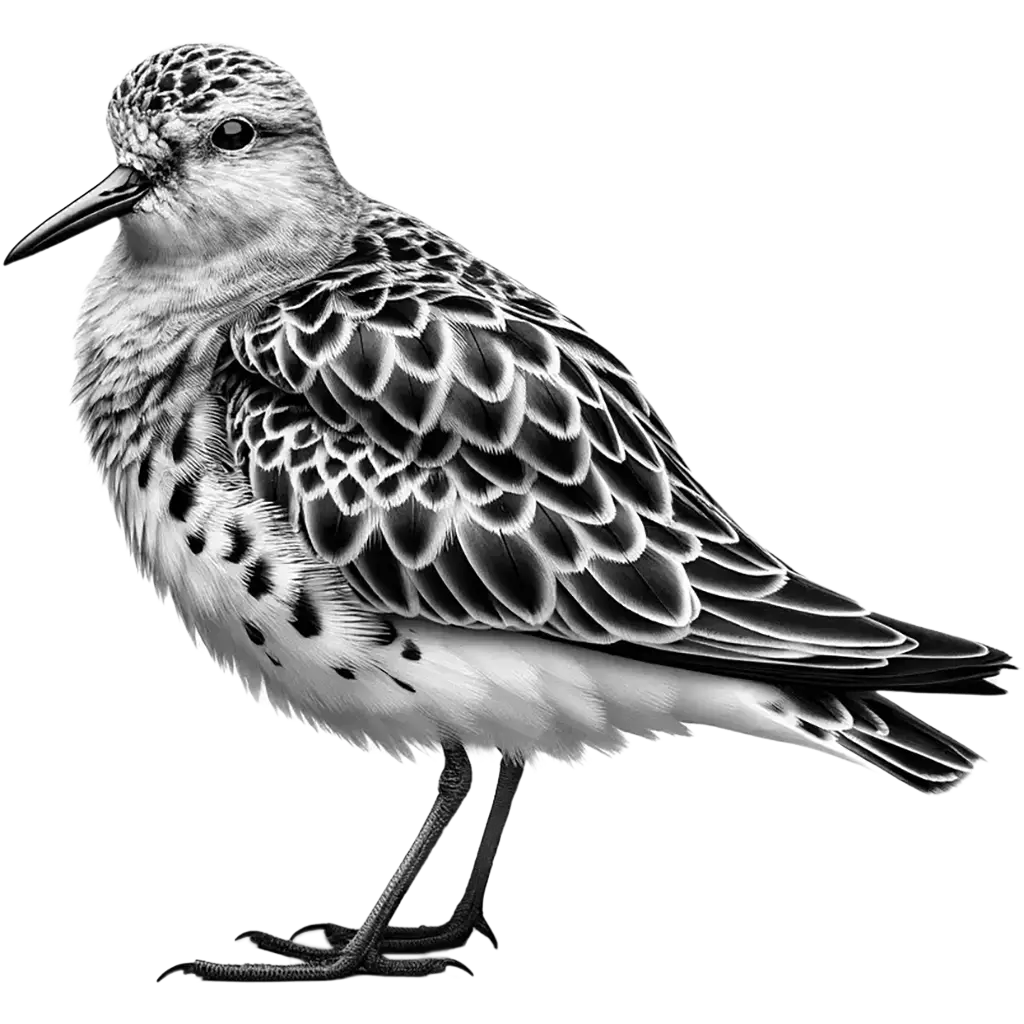
The Ruff, calidris pugnax, is a medium-sized wading bird known for its remarkable breeding plumage and unique courtship behavior. Males, during the breeding season, display an array of ornate and colorful collars and head tufts, ranging from white and black to shades of orange, blue, and green. These 'Ruffs' are

The Silvery Pigeon, columba argentina, is a rare and elusive bird species primarily found in the islands of Indonesia and parts of Malaysia. This medium-sized pigeon exhibits a distinctive plumage, predominantly silvery-grey with darker grey wings and a white underbelly, making it one of the more striking pigeon species in

The Greater Scaup, aythya marila, is a medium-sized diving duck known for its circumpolar distribution, breeding in the northernmost reaches of Europe, Asia, and North America, and wintering further south in coastal bays, estuaries, and inland lakes. Males are recognizable by their dark, iridescent green heads, bright yellow eyes, and