
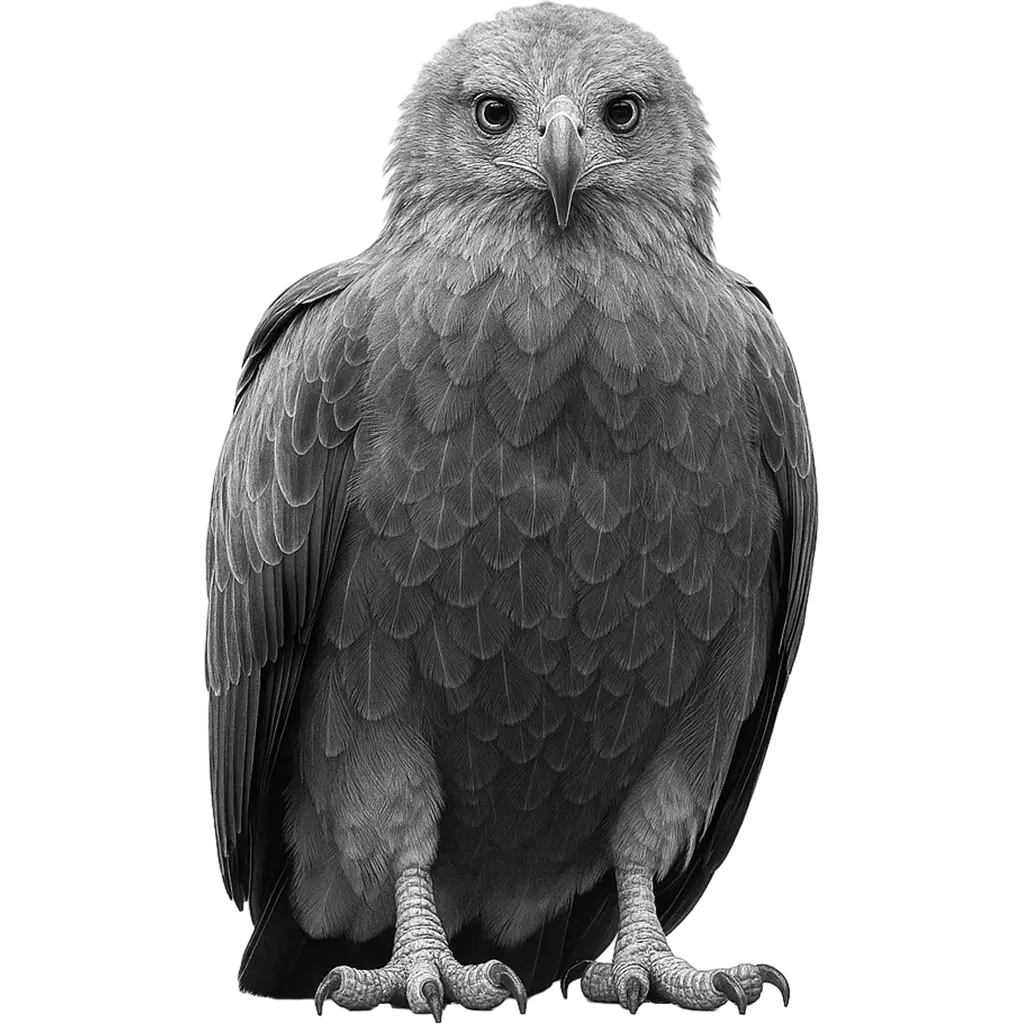
Icthyophaga Humilis
Lesser Fish Eagle
Hill streams, rivers, lakes, and wetlands
The Lesser Fish Eagle is a medium-sized raptor measuring approximately 55 to 65 centimeters in body length, with a wingspan of 120 to 160 centimeters. Its upperparts are gray-brown, contrasting with a white throat, breast, belly, and thighs. The head is relatively small with a short, rounded tail and a long, thick neck. It has a strongly hooked dark bill and powerful, featherless legs equipped with curved talons. Juveniles resemble adults but possess brown eyes instead of the adult's yellow eyes.
| Population: | 1,000-10,000 individuals across its range, with declines from habitat loss and pollution |
| Generation Length: | 10 years |
| Average Weight: | 780-785 g |
| Average Length: | 55-65 cm |
| Lifespan: | Approximately 12-15 years in the wild |
| Diet: | Primarily fish, snatched from water surfaces from perches along streams and rivers |
| Conservation Status: | Near Threatened (NT) |
The Lesser Fish Eagle is diurnal and typically solitary outside of breeding season, often seen perched silently above fast-flowing streams and rivers. It occupies riverine forests, hill streams, and wetlands, using several habitual perches to hunt and rest. From dawn to dusk, it vigilantly scans water surfaces for moving fish, remaining motionless until a target appears. When disturbed, it takes flight in slow, deliberate wing beats before settling on a nearby branch. Although non-migratory, some populations may shift locally with water level changes. Juveniles disperse after fledging to establish feeding territories, and individuals often show strong site fidelity to favored hunting spots.
The diet of the Lesser Fish Eagle consists almost entirely of live fish captured from freshwater habitats. Using keen vision, it spots fish from perches and then executes a steep plunge toward the water, extending talons forward to snatch prey without landing. Typical prey includes small carp, catfish, and barbs averaging 100 to 300 grams in size, though larger specimens are taken when available. After capture, fish are carried to a perch and torn apart with the powerful bill. Occasional supplementation with amphibians and crustaceans occurs when fish availability is low, and seasonal shifts in river flow influence hunting techniques and perch selection. Nutritionally, the high protein and fat content of fish supports energy demands for flight, thermoregulation, and reproduction.
Breeding begins in spring, around March to June, when monogamous pairs perform courtship displays including aerial duets and calling flights. Nests are constructed of sticks and greenery on sturdy branches near water. After laying two to four eggs, the female primarily incubates while the male provides food. Both parents participate in feeding and guarding the hatchlings. Chicks fledge after approximately eight weeks but remain under parental care for several more weeks until fully independent.
Global population estimates range from one thousand to ten thousand individuals, with numbers declining due to deforestation, river modification, and pollution. Populations are patchily distributed across the Himalayan foothills, Southeast Asia, and the Malay Archipelago. Local conservation efforts include habitat protection, community-based monitoring, and pollution control. Despite a declining trend, some populations appear stable in protected areas. Continued surveys are needed to track trends and guide conservation planning for this Near Threatened species.
Classifications
The Key Attributes
Features
- Movement:
Flight
- Territorial Behavior:
Territorial, especially near feeding sites
- Speed:
Moderate
- Diet:
Carnivore
- Physical Features:
- Gray-brown upperparts
- White throat, breast, belly, and thighs
- Short rounded tail
- Hooked dark bill
- Featherless legs with curved talons
- Primary Senses:
- Sight
- Hearing
Understanding Habitat and Range
Geography
- Habitat:
Hill streams, rivers, lakes, and wetlands
- Migration Patterns:
Non-migratory
- Geographical Range:
Himalayan foothills of South Asia east to Southeast Asia and the Malay Archipelago
- Climate Preferences:
Tropical and subtropical climates
Navigating the Wilderness
In the wild
- Predators:
Humans, larger raptors
- Prey:
Fish
- Feeding Behavior:
Perch-hunting from overhanging branches above water
- Diet:
Primarily fish, snatched from water surfaces from perches along streams and rivers
- Defensive Mechanisms:
- Camouflage
- Rapid flight
- Preferred Food Sources:
- Fish
Insights Into Reproduction
Mating
- Mating System:
Monogamous
- Number of Offspring:
2-4 eggs per clutch
- Incubation Period:
Unknown
- Parental Involvement:
- Both parents build nests
- Both parents feed and guard chicks
Youngsters Section
Lesser Fish Eagle
Fun Fact
Lesser Fish Eagles often switch among multiple perches during a single feeding session to optimize their view and hunting success.
They can snatch fish without landing on water, relying on specialized spicules on their toes to grip slippery prey. These eagles have been observed perching on streambed rocks at elevations up to 2,400 meters, demonstrating remarkable adaptability to high-altitude riverine environments.

Download word search puzzles
Word Search Puzzles


Check Out Other Birds

The Great Horned Owl, Bubo virginianus, is a majestic and powerful bird of prey, easily recognized by its distinctive ear tufts or 'horns,' which are actually feathers that aid in its camouflage. This owl has a robust body, with females typically larger than males, measuring up to 55 cm in

The Greater Roadrunner, geococcyx californianus, is a large, ground-dwelling bird, iconic of the American Southwest. Measuring up to 60 cm in length and weighing around 300 to 500 grams, it is most recognizable by its long, lean frame, streaked brown and white plumage, and distinctive crest of feathers atop its

The Great Spotted Cuckoo, clamator glandarius, is a distinctive bird known for its striking appearance and brood parasitism behavior. Adults typically measure 35 to 40 cm in length, making them one of the larger species within the cuckoo family. They boast a predominantly grey body, with a long, dark tail
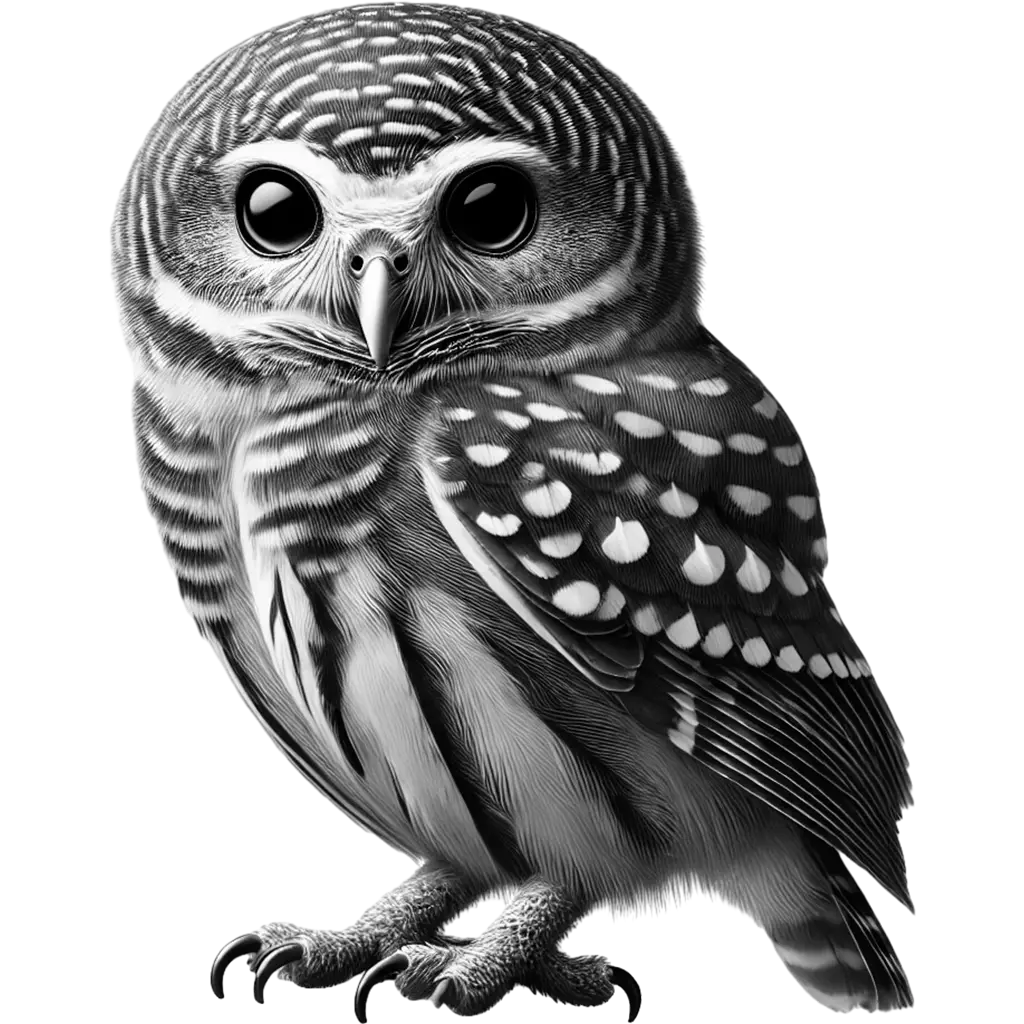
The Jungle Owlet is a small, stocky owl measuring approximately 21 to 23 centimeters in length. It features a rounded head without ear tufts and bright yellow eyes. Its plumage is finely barred with brown and white, and it has distinctive white patches on the chin, upper breast, and abdomen.