
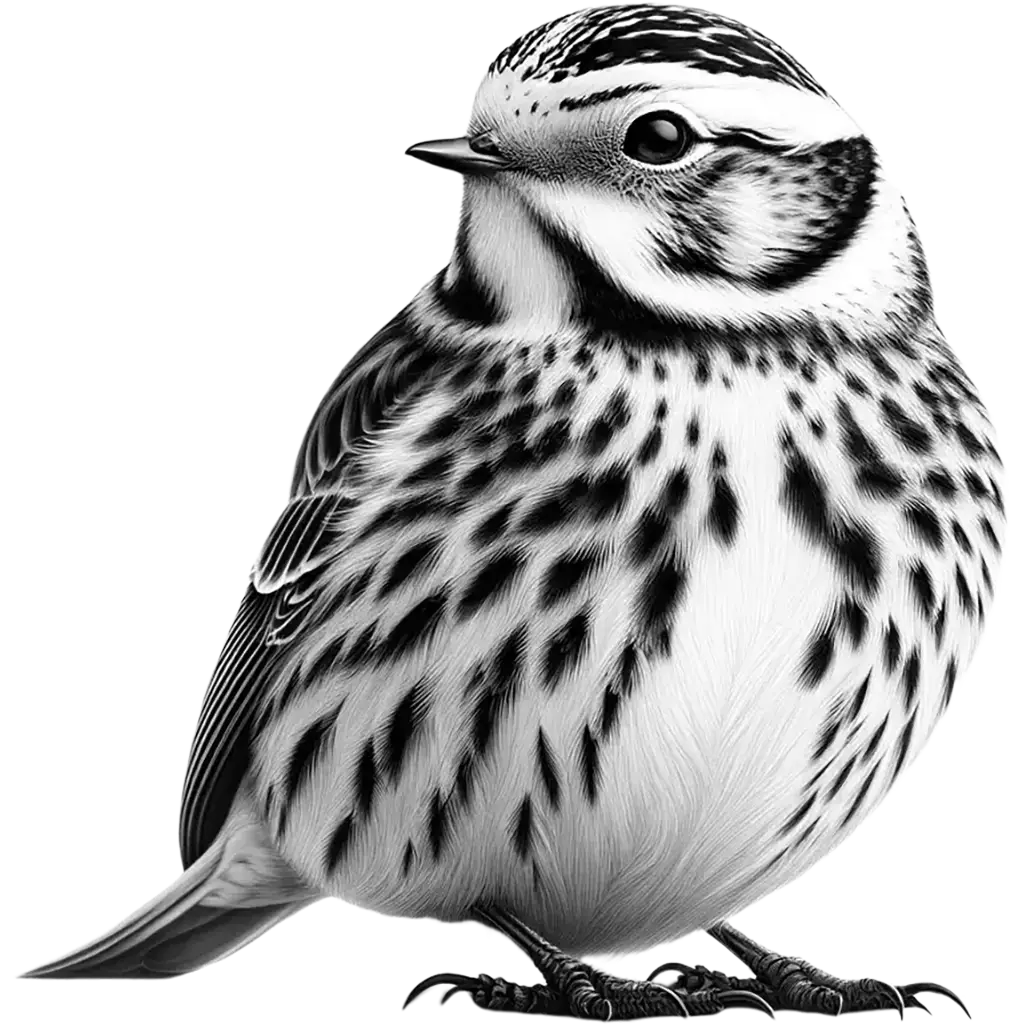
Calcarius Lapponicus
Lapland Longspur
Breeds in Arctic tundra and moorlands; winters in open fields, grasslands, and coastal areas across a broad range
The Lapland Longspur, calcarius lapponicus, is a small, hardy bird known for its distinctive plumage and far-reaching migrations. This species exhibits a remarkable adaptation to cold environments, breeding in the Arctic tundra of North America, Europe, and Asia, and wintering in temperate and even subtropical regions. Adults typically measure about 14 to 16 cm in length, with a wingspan of 23 to 26 cm. Males in breeding plumage are particularly striking, with black faces and throats, rust-colored napes, and white bellies, while females and non-breeding males have more subdued colors, featuring mainly brown and buff tones to blend into their surroundings.
| Population: | Widespread and abundant; not currently considered threatened |
| Generation Length: | 3-4 years |
| Average Weight: | 20-30 grams |
| Average Length: | 14-16 cm |
| Lifespan: | Up to 5-7 years in the wild |
| Diet: | Varies with season; primarily seeds in winter and insects during breeding season |
| Conservation Status: | Least Concern (LC) |
Lapland Longspurs are ground-nesting birds, laying their eggs in shallow depressions lined with grasses and feathers. Their habitat in the breeding season is characterized by open tundra with low vegetation, where they feed on seeds and insects. The ability to thrive in such harsh conditions is testament to their resilience and specialized adaptations.
The diet of the Lapland Longspur shifts seasonally; during the breeding season, it primarily consists of insects, providing the high protein content necessary for chick development. In winter, they switch to seeds and other plant material, often foraging in flocks in agricultural fields and grasslands. This flexibility in diet allows them to exploit a wide range of habitats throughout the year.
Reproduction in Lapland Longspurs is timed with the short Arctic summer, maximizing the availability of insect prey for their offspring. Females lay 3 to 5 eggs per clutch, with both parents sharing the duties of incubation and chick-rearing. The nest, hidden among tundra vegetation, helps protect the young from predators.
The population of the Lapland Longspur is considered stable, though it faces potential threats from climate change, which could alter their breeding and wintering habitats. The species' extensive range and adaptability have so far helped it maintain healthy numbers. Conservation efforts focus on monitoring population trends and ensuring the preservation of critical habitats across its migratory path. The Lapland Longspur's annual migrations are a remarkable natural phenomenon, highlighting the interconnectedness of ecosystems across continents.
Classifications
The Key Attributes
Features
- Movement:
Flying, walking, and hopping
- Territorial Behavior:
Somewhat territorial during breeding season, but forms large flocks in winter
- Speed:
Not specifically quantified; capable of long migratory flights
- Diet:
Omnivore
- Physical Features:
- Small, sparrow-sized bird with a stout body
- In breeding plumage, males display a striking black face, chest, and throat with a white eyestripe and a rusty nape
- Females and non-breeding males have more subdued colors
- Short, conical bill adapted for seed-eating, but also consumes insects during the breeding season
- Primary Senses:
- Sight
- Hearing
Understanding Habitat and Range
Geography
- Habitat:
Breeds in Arctic tundra and moorlands; winters in open fields, grasslands, and coastal areas across a broad range
- Migration Patterns:
Highly migratory, breeding in the high Arctic and wintering in temperate to subarctic regions of Europe, Asia, and North America
- Geographical Range:
Circumpolar distribution for breeding; wintering ranges extend south through Europe, Asia, and North America
- Climate Preferences:
Prefers cold, open habitats with low vegetation during breeding; more varied open habitats in winter
Navigating the Wilderness
In the wild
- Predators:
Birds of prey and Arctic foxes
- Prey:
Seeds, insects
- Feeding Behavior:
Feeds on seeds and insects; diet varies seasonally with more insects consumed during the breeding season
- Diet:
Varies with season; primarily seeds in winter and insects during breeding season
- Defensive Mechanisms:
- Forming large flocks in winter for protection
- Cryptic coloration blends into tundra and winter landscapes
- Preferred Food Sources:
- Tundra insects and arctic flora during breeding
- Seeds and waste grains in open fields during winter
Insights Into Reproduction
Mating
- Mating System:
Monogamous
- Number of Offspring:
4-6 eggs per clutch
- Incubation Period:
About 10-14 days
- Parental Involvement:
- Both parents participate in feeding and protecting the nestlings
Youngsters Section
Lapland Longspur
Fun Fact
The Lapland Longspur is a small songbird often found in the Arctic during breeding season.
Known for their striking plumage, they migrate south in winter, forming large flocks. They feed primarily on seeds but switch to insects during breeding for protein. Their melodious song is a familiar sound across the tundra.

Download word search puzzles
Word Search Puzzles


Check Out Other Birds

The Bee Hummingbird, Mellisuga helenae, holds the title of the world's smallest bird, native to Cuba and the Isla de la Juventud. Adults measure a mere 5 to 6 centimeters (2 to 2.4 inches) in length, including the beak and tail, and weigh approximately 1.6 to 2 grams (0.056 to

The Spotted Nutcracker, nucifraga caryocatactes, is a robust bird species belonging to the crow family, Corvidae, known for its distinctive spotted plumage and strong bill. Adults typically measure about 32 to 38 cm in length, with a wingspan of approximately 49 to 53 cm. Their plumage is primarily chocolate brown,

The Marabou Stork, leptoptilos crumenifer, is a large wading bird native to sub-Saharan Africa, easily identifiable by its imposing size, bald head, and neck, and a distinctive inflatable throat pouch. Standing up to 150 cm tall with a wingspan reaching over 2.5 meters, it is among the largest flying birds.

The Silvery Pigeon, columba argentina, is a rare and elusive bird species primarily found in the islands of Indonesia and parts of Malaysia. This medium-sized pigeon exhibits a distinctive plumage, predominantly silvery-grey with darker grey wings and a white underbelly, making it one of the more striking pigeon species in