
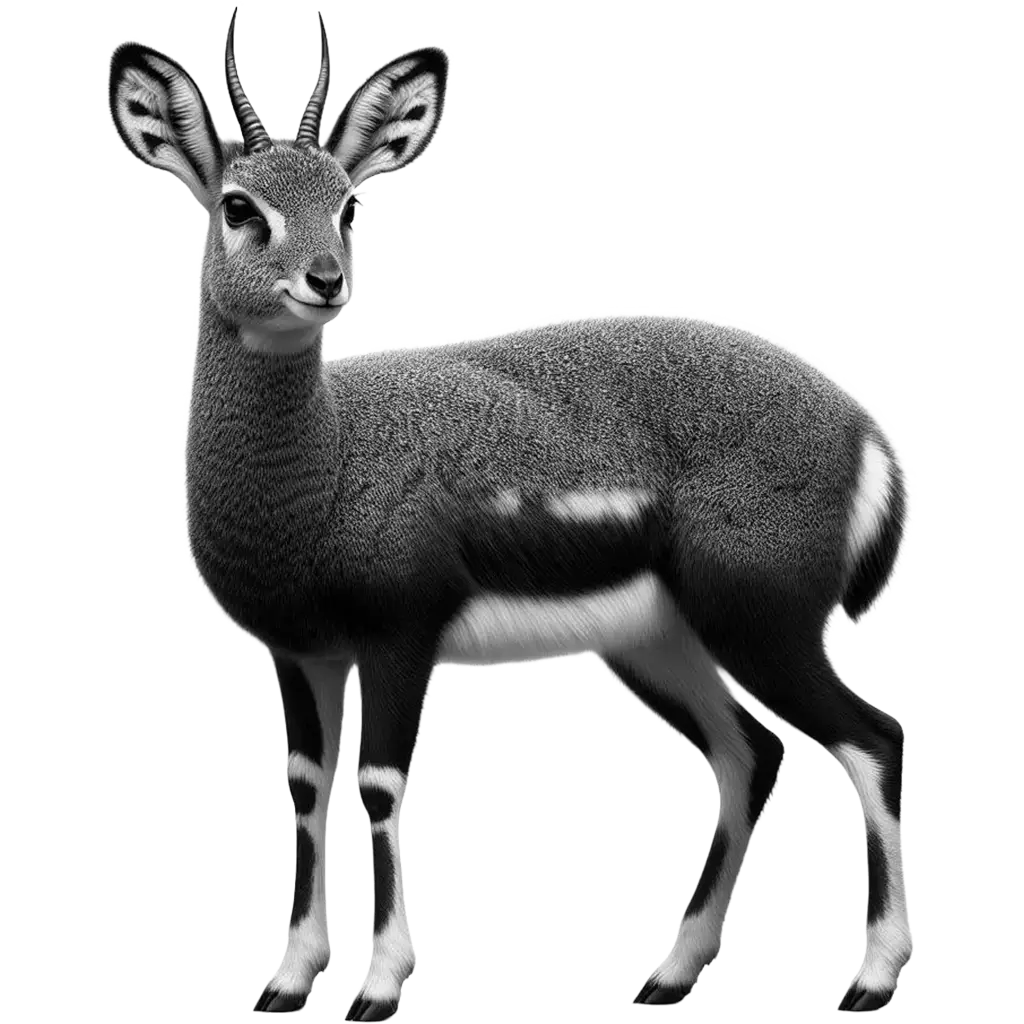
Oreotragus Oreotragus
Klipspringer
Rocky outcrops and mountains
The Klipspringer, oreotragus oreotragus, is a small, robust antelope native to the rocky terrains of eastern and southern Africa. Standing about 50 to 60 cm (20 to 24 inches) at the shoulder, Klipspringers weigh between 8 to 18 kg (18 to 40 pounds). They are characterized by their unique coat, which is coarse and feels almost like bristles, providing excellent camouflage against the rocky backgrounds of their habitat. The coat color can vary from yellowish gray to reddish-brown. Notably, Klipspringers stand on the tips of their hooves, a feature that, combined with their compact, rounded bodies, enables remarkable agility on steep, rocky outcrops.
| Population: | Listed as Least Concern, but populations are fragmented and some are decreasing |
| Generation Length: | 5-6 years |
| Average Weight: | 8-18 kg |
| Average Length: | Body length: 75-115 cm, Height at shoulder: 43-60 cm |
| Lifespan: | Up to 15 years in the wild |
| Diet: | Leaves, shoots, fruits, and flowers |
| Conservation Status: | Least Concern (LC) |
Klipspringers are monogamous, with pairs forming strong, lifelong bonds. They are territorial animals, with pairs marking and defending their territory against intruders. These antelopes are predominantly nocturnal or crepuscular, feeding during the cooler parts of the day. Their diet consists mainly of leaves, flowers, and young shoots, which they browse from the sparse vegetation available in their rocky environments.
The Klipspringer's specialized hooves are adapted for an exceptional grip on steep, rocky surfaces, allowing them to leap between rocks and ledges with ease. This agility not only aids in foraging but also provides a crucial defense mechanism against predators. Their ability to access food sources in seemingly inaccessible areas and to escape predators by jumping across precipices makes them well-suited to their rugged habitats.
Reproduction in Klipspringers involves a gestation period of about six to seven months, after which a single calf is born. The calf is well-hidden by its mother in rocky crevices to protect it from predators. Klipspringer calves are precocial, able to stand and move around shortly after birth, but they remain hidden for several weeks, relying on their mother's milk before gradually starting to browse.
The population of the Klipspringer is considered stable across much of its range, although it faces threats from habitat loss and hunting in some areas. Their presence is a good indicator of the health of the rocky ecosystems they inhabit. Conservation efforts aimed at protecting their habitats and regulating hunting are crucial for ensuring the continued survival of this unique species. The Klipspringer's adaptability to harsh, rocky environments highlights the incredible diversity and specialization of antelope species in Africa.
Classifications
The Key Attributes
Features
- Movement:
Jumping, climbing
- Territorial Behavior:
Pairs are territorial
- Speed:
Not specifically quantified; highly agile and capable of making significant leaps between rocks
- Diet:
Herbivore
- Physical Features:
- Small, sturdy body
- Coat is coarse and varies from yellowish gray to reddish brown
- Short, rounded horns in males
- Specialized hooves for gripping in rocky environments
- Primary Senses:
- Sight
- Hearing
- Smell
Understanding Habitat and Range
Geography
- Habitat:
Rocky outcrops and mountains
- Migration Patterns:
Non-migratory, but may move locally in search of food
- Geographical Range:
Widely distributed in sub-Saharan Africa, from Ethiopia and Eritrea in the north to South Africa in the south
- Climate Preferences:
Adaptable to various climates within its rocky habitat
Navigating the Wilderness
In the wild
- Predators:
Main predators include leopards, eagles, and hyenas
- Prey:
Not applicable
- Feeding Behavior:
Browsers, feeding on a variety of plants, leaves, and flowers, often feeding at night to avoid heat
- Diet:
Leaves, shoots, fruits, and flowers
- Defensive Mechanisms:
- Agility and ability to quickly jump between rocks and steep terrains
- Cryptic coloration blends into the rocky environment
- Preferred Food Sources:
- Diverse vegetation found in and around rocky outcrops
Insights Into Reproduction
Mating
- Mating System:
Monogamous
- Number of Offspring:
Usually one offspring
- Gestation Period:
About 7 months
- Parental Involvement:
- Both parents participate in rearing the young, with the male often standing guard
Youngsters Section
Klipspringer
Fun Fact
Klipspringers are small antelopes native to rocky terrains in eastern and southern Africa.
Their name means "rock jumper" in Afrikaans. They can leap up to 10 times their body height, using the tips of their hooves for precise landings on rocky surfaces. Their unique hooves provide excellent grip, making them agile climbers.

Download word search puzzles
Word Search Puzzles


Check Out Other Mammals

The Newfoundland Dog, known for its remarkable size, strength, and gentle disposition, is a breed that originates from the Canadian island of Newfoundland. Males typically weigh between 130 to 150 pounds, with some reaching up to 200 pounds or more, and stand 28 inches tall at the shoulder. Females are

The Golden-Mantled Ground Squirrel, Callospermophilus lateralis, is a small, robust rodent widely distributed across the forests and mountainous regions of western North America. This species is easily recognizable by its distinctive coloring: a rich brown or greyish body adorned with a bold white stripe bordered by black along each side,
The Leicester Longwool, also known as the English leicester, is a historic breed of sheep renowned for its long, lustrous wool and its significant impact on the wool industry. Originating from Leicestershire, England, in the 18th century, this breed was developed by the pioneering breeder Robert Bakewell during the British
The Cavalier King Charles Spaniel, a breed esteemed for its graceful elegance and expressive, soulful eyes, embodies the essence of a companion dog. Originating from the United Kingdom, this breed stands out with its silky, medium-length coat, which comes in four distinct color patterns: Blenheim (chestnut and white), Tricolor (black/white/tan),