
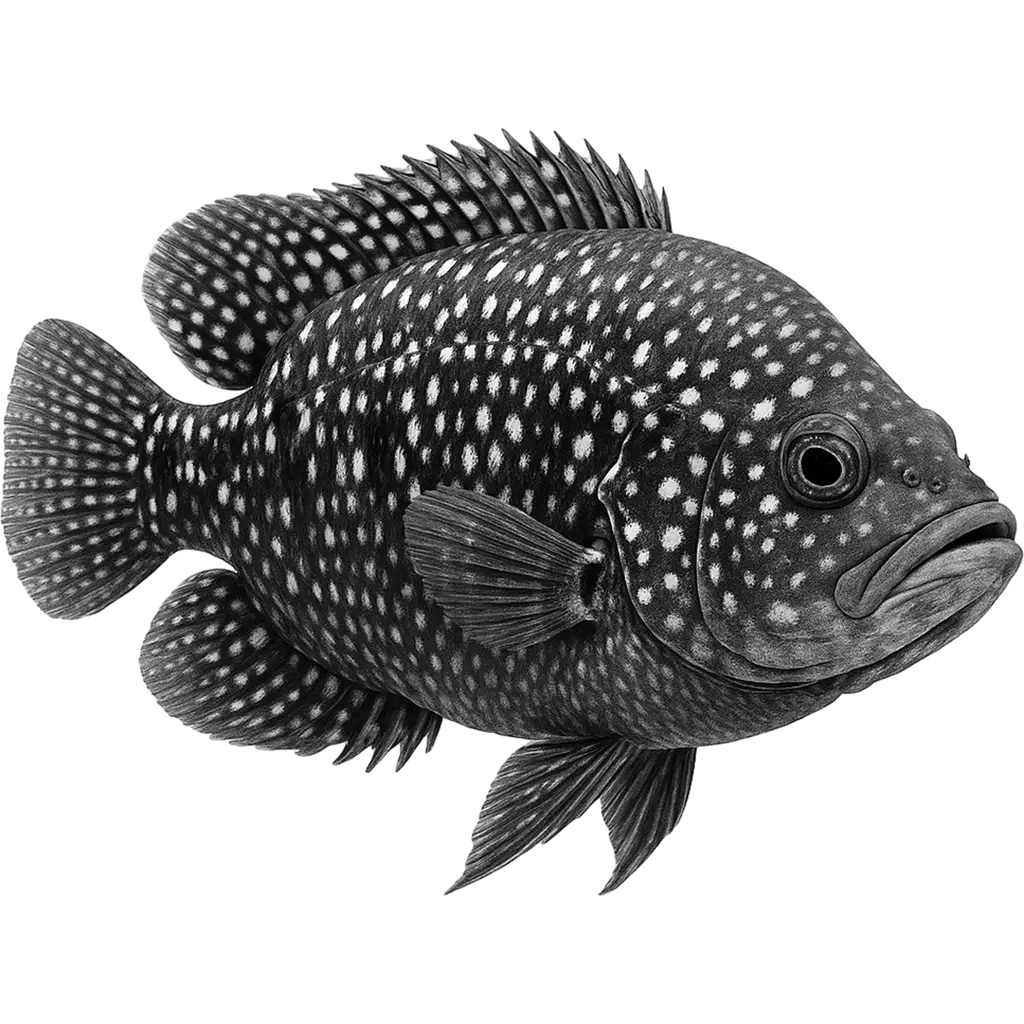
Rocio Octofasciata
Jack Dempsey
Slow-moving freshwater rivers, canals, and swamps
The Jack Dempsey is a robust, laterally compressed cichlid with a rounded body shape and strong muscular profile. Its base coloration ranges from dark olive-green to charcoal, adorned with iridescent blue, green, and gold flecks scattered along its sides and fins. Males often display brighter hues during breeding displays. The fish has large, forward-facing eyes and a slightly curved mouth lined with small, conical teeth. Its dorsal and anal fins are elongated with pointed tips, and its caudal fin is broad and rounded.
| Population: | Native populations Least Concern with stable numbers; feral populations established in US, Australia, and Thailand |
| Generation Length: | 4 years |
| Average Weight: | Not well documented |
| Average Length: | 15-25 cm |
| Lifespan: | 8-10 years in the wild, over 10 years in captivity |
| Diet: | Worms, crustaceans, insects, and small fish |
| Conservation Status: | Least Concern (LC) |
Jack Dempsey cichlids inhabit slow-moving freshwater environments such as rivers, canals, and swamps from southern Mexico through Honduras. They favor warm, murky waters with sandy or muddy substrates and abundant cover provided by rocks, roots, and submerged vegetation. These fish exhibit a bold but cautious temperament, retreating to hiding spots when threatened yet rapidly emerging to investigate novel objects. They are primarily solitary or form loose social hierarchies in large tanks, maintaining and defending territories against intruders through displays of flared fins and gill covers. Most active during dawn and dusk, they forage along mid-water columns and the bottom, using a combination of stealth and quick lunges to capture prey. In captive settings, they may recognize their owners, following movements outside the tank. Adults excavate shallow pits to establish breeding sites, exhibiting remarkable site fidelity.
Jack Dempsey fish are aggressive carnivores with a versatile feeding strategy that allows them to exploit a wide range of prey. In the wild, they consume worms, crustaceans such as shrimp and crayfish, insects, and smaller fish species. They employ suction and rapid protrusion of the mouth to capture prey, often foraging near the bottom and along submerged structures. Their robust teeth enable them to tear and crush hard-shelled prey items, while their lateral line system helps detect movement in turbid waters. In aquarium settings, they thrive on high-quality pellets, frozen or live foods, and occasional vegetable matter for color enhancement. Seasonal shifts prompt dietary adjustments; juveniles require protein-rich feeds for growth, whereas adults benefit from a balanced mix of meaty foods. Proper nutrition supports vivid coloration, strong immune function, and successful reproduction.
Breeding pairs form monogamous bonds and establish a small territory during spawning. They clean and excavate flat surfaces or pits in the substrate to lay eggs, which number between 500 and 800 per clutch. After spawning, both parents guard and fan the eggs to ensure oxygenation and protect against predators. Fry remain in close proximity to their parents, who continue to defend the territory until juveniles become free-swimming and independent.
Native populations of Jack Dempsey fish are classified as Least Concern with stable numbers across their natural range. Introduced feral populations persist in several countries, where monitoring and habitat conservation efforts help balance ecological impacts.
Classifications
The Key Attributes
Features
- Movement:
Swimming
- Territorial Behavior:
Highly territorial
- Speed:
Moderate
- Diet:
Carnivore
- Physical Features:
- Iridescent blue-green and gold flecks on dark body
- Laterally compressed, rounded shape
- Elongated dorsal and anal fins
- Large forward-facing eyes
- Primary Senses:
- Sight
- Lateral line
Understanding Habitat and Range
Geography
- Habitat:
Slow-moving freshwater rivers, canals, and swamps
- Migration Patterns:
Non-migratory
- Geographical Range:
Southern Mexico to Honduras; introduced in US, Australia, and Thailand
- Climate Preferences:
Tropical climates
Navigating the Wilderness
In the wild
- Predators:
Larger fish, birds of prey
- Prey:
Worms, crustaceans, insects, and small fish
- Feeding Behavior:
Opportunistic bottom and mid-water foraging
- Diet:
Worms, crustaceans, insects, and small fish
- Defensive Mechanisms:
- Aggressive displays
- Color change
- Quick escape dives
- Preferred Food Sources:
- Worms
- Crustaceans
- Insects
- Small fish
Insights Into Reproduction
Mating
- Mating System:
Monogamous, biparental care
- Number of Offspring:
500-800 eggs per clutch
- Incubation Period:
Eggs hatch in 3-4 days
- Parental Involvement:
- Both parents guard and fan eggs
- Parents care for fry until free-swimming
Youngsters Section
Jack Dempsey
Fun Fact
Jack Dempsey fish are named for their aggressive behavior and facial features reminiscent of the 1920s boxer Jack Dempsey.
These cichlids exhibit remarkable parental care uncommon among fish, with both parents guarding and fanning up to 800 eggs. They can change coloration rapidly based on mood, becoming darker when threatened or during courtship displays. Wild individuals have been recorded digging nests up to 60 cm in diameter, moving substantial substrate with their mouths and fins.

Download word search puzzles
Word Search Puzzles


Check Out Other Fish
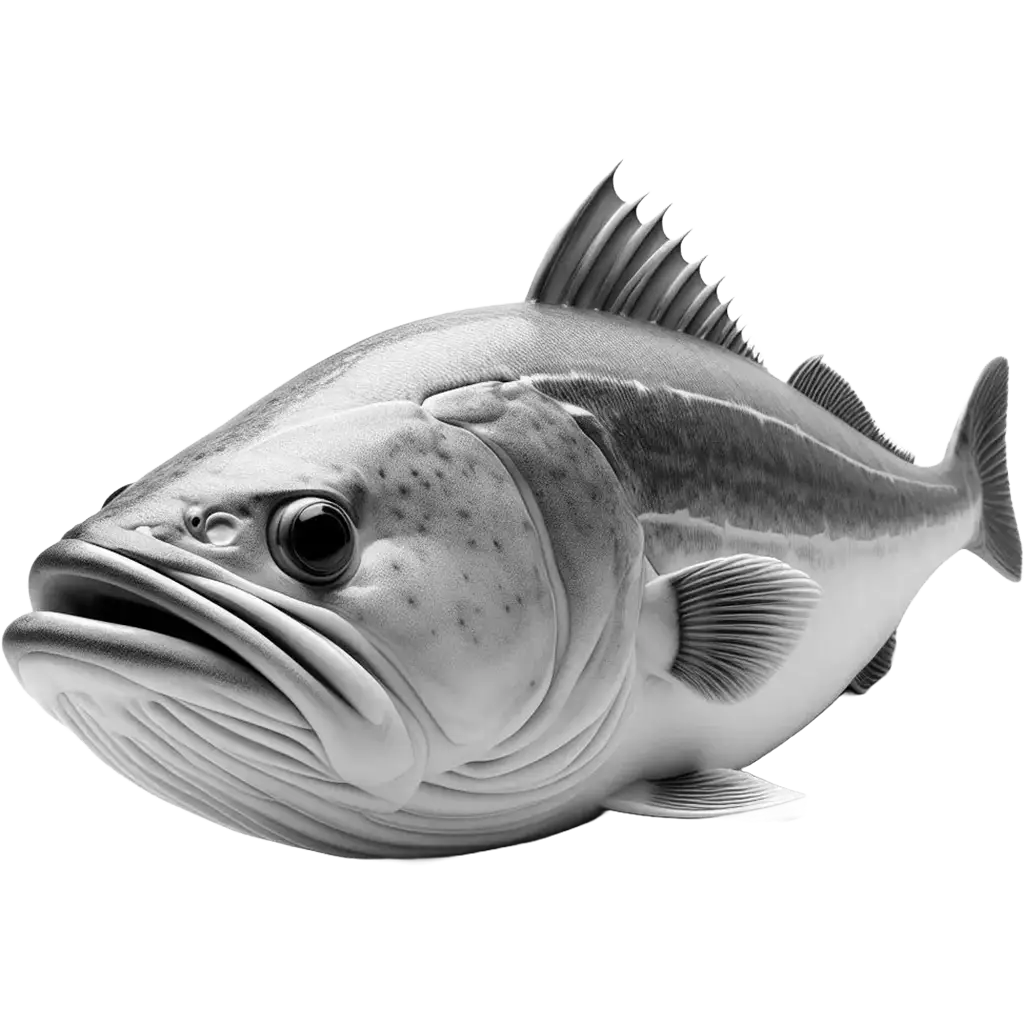
The Haddock, melanogrammus aeglefinus, is a key species in the North Atlantic fishery, widely distributed across the cold and temperate waters of the North Atlantic Ocean. This medium-sized fish typically measures between 30 to 80 centimeters (12 to 31 inches) in length and can weigh up to 1.5 kilograms (3.3
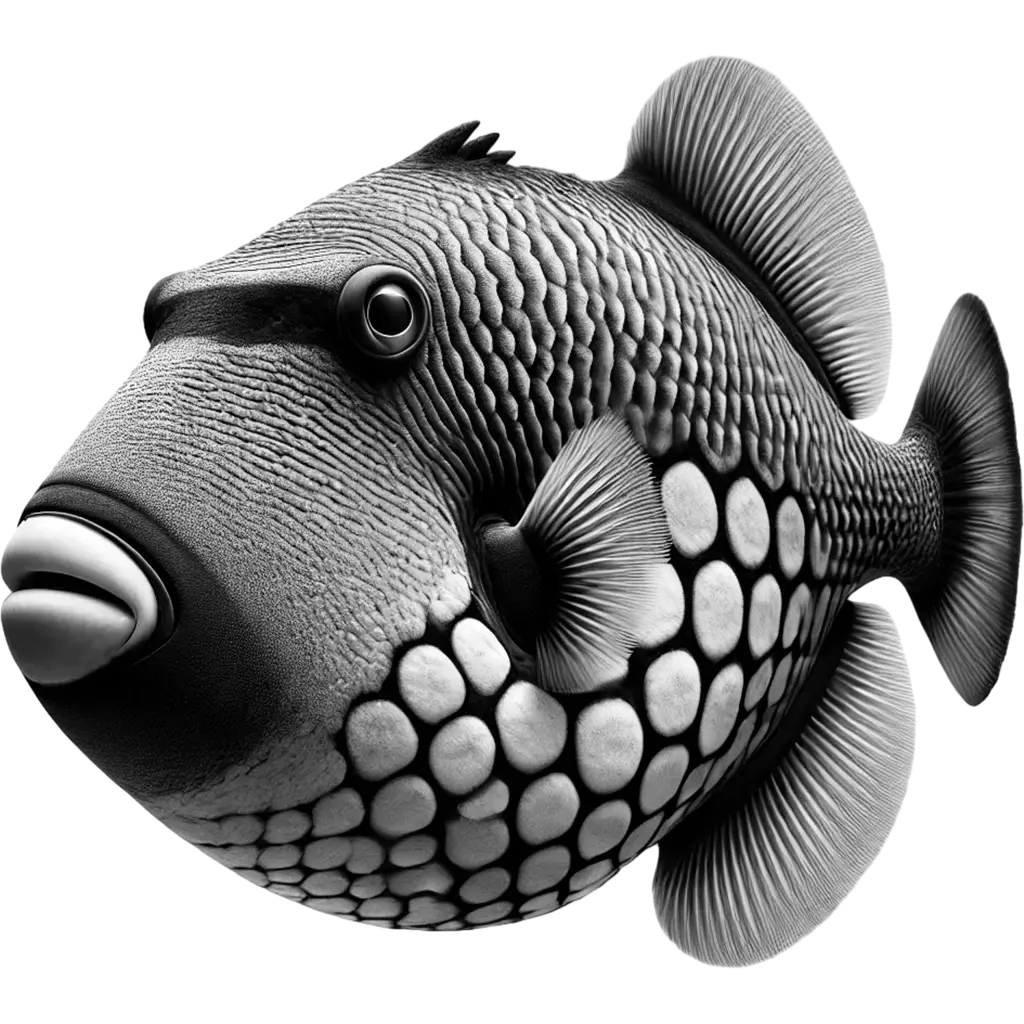
The Blackbelly Triggerfish exhibits a robust, laterally compressed body adorned with striking patterns and a distinctive black belly contrasting with vibrant hues on its fins and upper body. Its rough, textured skin and prominent dorsal 'trigger' spines not only define its appearance but also serve as a defense mechanism. With
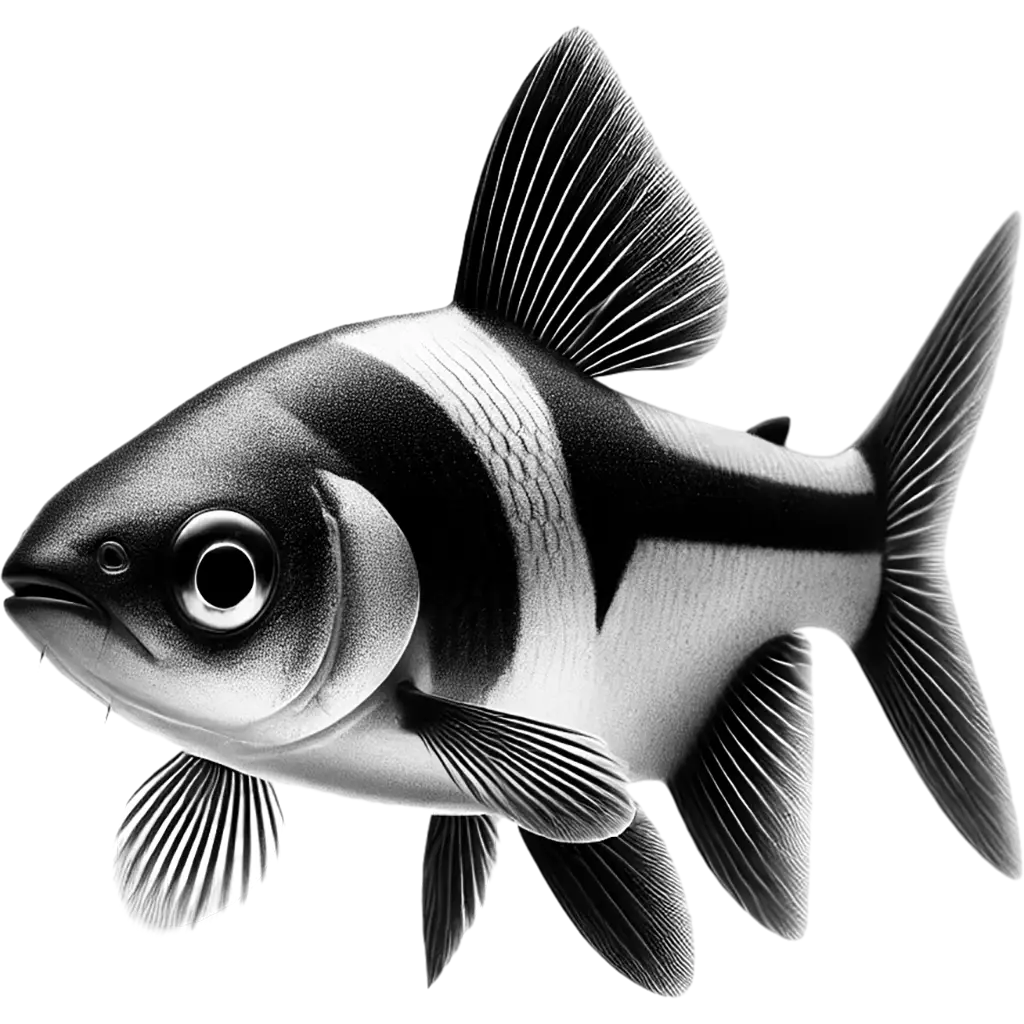
The Harlequin Rasbora is a small, vibrant freshwater fish, reaching up to 4.5 centimeters in length and weighing around 2 grams. Its body exhibits a striking orange-pink hue, complemented by a distinctive black triangular patch covering the posterior half, tapering towards the caudal peduncle. The fins are subtly tinted red,
The False Scad is a moderately large marine fish, reaching up to 60 cm in length and weighing up to 1 kg, though more commonly around 35 cm. It has an elongate, slightly compressed body with a bluish-green to olive green-brown back and a silvery white underside. A narrow yellow