
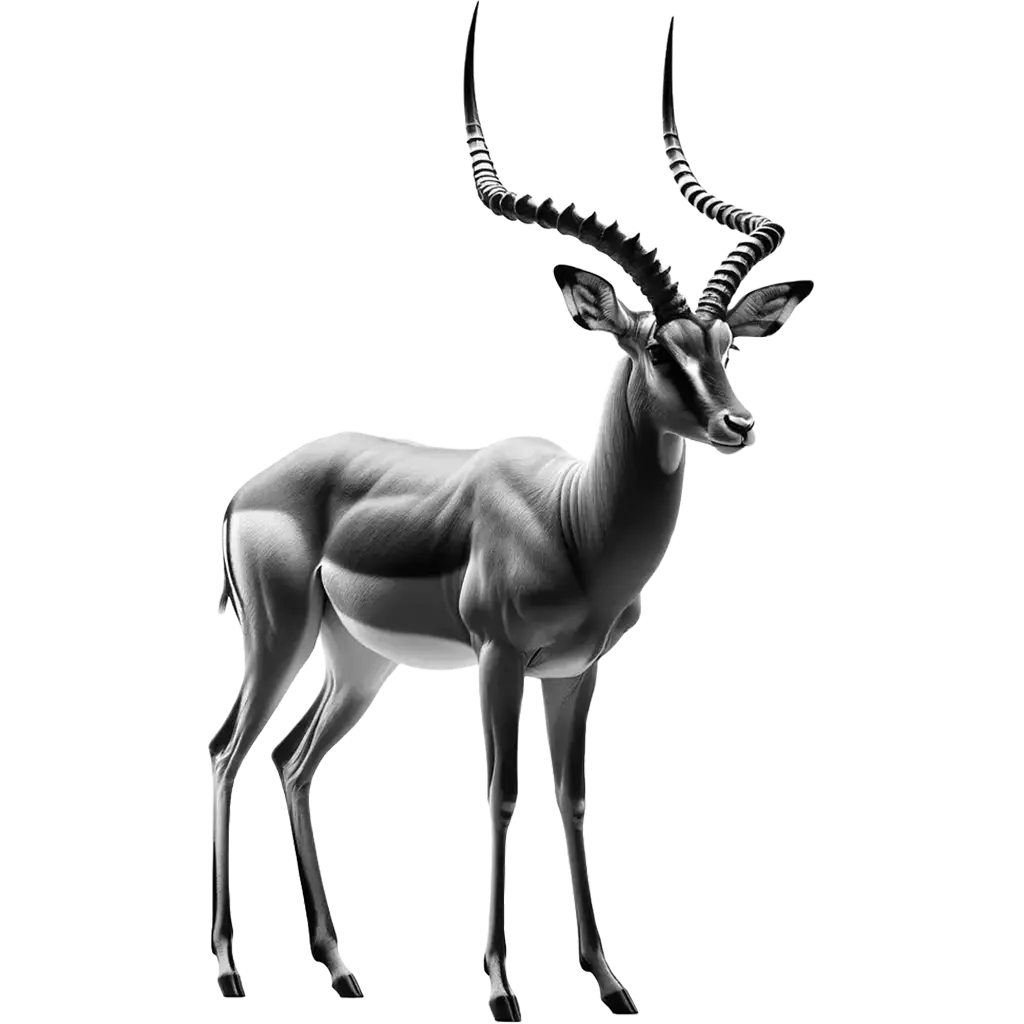
Aepyceros Melampus
Impala
Savannas, woodlands, and sometimes the edges of forests
The Impala, aepyceros melampus, is a graceful and agile antelope found across the savannas and woodlands of eastern and southern Africa. Characterized by its slender, athletic build, the Impala has a glossy, reddish-brown coat, with lighter flanks and a distinctive white underbelly. Males boast impressive lyre-shaped horns, which can grow up to 90 cm in length, used in territorial battles and defense against predators. Adults typically weigh between 40 to 75 kg, with a shoulder height of about 75 to 95 cm, making them one of the more medium-sized antelopes in their habitat.
| Population: | Widespread and abundant, but local populations may face habitat loss and hunting |
| Generation Length: | 5 years |
| Average Weight: | 40-60 kg for males, 30-50 kg for females |
| Average Length: | 120-150 cm in length, with a tail of 30-45 cm |
| Lifespan: | 12-15 years in the wild |
| Diet: | Primarily grasses, also browses on shrubs and trees when grass is scarce |
| Conservation Status: | Least Concern (LC) |
Impalas are highly social creatures, living in two types of groups: bachelor herds and female herds with their young, led by a dominant male. These antelopes are known for their incredible agility, able to leap up to 3 meters high and 10 meters long when running from predators. Their social structure and behavior vary seasonally, with males becoming territorial and forming harems during the breeding season, known as the rut.
The diet of the Impala primarily consists of grasses, but they are adaptable feeders, also consuming leaves, shoots, and fruits depending on the season. This mixed feeding strategy allows them to thrive in a variety of habitats and conditions, playing a crucial role in their ecosystem as both prey for predators and as a grazer that helps in the maintenance of healthy grasslands.
Reproduction in Impalas is highly seasonal, with the rut occurring during the wet season when food is abundant. During this time, males engage in fierce competitions for control of harems, using their horns in combat. Females give birth to a single calf after a gestation period of about six to seven months, usually at the start of the wet season when conditions are optimal for survival.
The population of the Impala is currently stable in well-managed conservation areas and national parks, but they face threats from habitat loss, competition with livestock, and poaching outside protected areas. Their adaptability to different environments has helped their numbers remain robust in certain areas, but ongoing conservation efforts are crucial to ensuring their continued survival and the preservation of the biodiversity of African savannas.
Classifications
The Key Attributes
Features
- Movement:
Running, jumping
- Territorial Behavior:
Males are territorial during the breeding season
- Speed:
Capable of speeds up to 90 km/h
- Diet:
Herbivore, feeding on grasses and leaves
- Physical Features:
- Sleek body with reddish-brown fur
- White underbelly
- Distinctive black markings on the rump, tail, and legs
- Males have lyre-shaped horns
- Primary Senses:
- Sight
- Hearing
- Smell
Understanding Habitat and Range
Geography
- Habitat:
Savannas, woodlands, and sometimes the edges of forests
- Migration Patterns:
Nomadic within their home range, depending on the availability of food and water
- Geographical Range:
Sub-Saharan Africa, from Senegal to Somalia and south to South Africa
- Climate Preferences:
Prefers environments with a mix of open land and cover
Navigating the Wilderness
In the wild
- Predators:
Lions, leopards, cheetahs, wild dogs, and hyenas
- Prey:
Not applicable
- Feeding Behavior:
Grazes during the cooler parts of the day, early morning and late afternoon; browses during the dry season
- Diet:
Primarily grasses, also browses on shrubs and trees when grass is scarce
- Defensive Mechanisms:
- Stotting (high jumping) to display fitness and possibly deter predators
- Agile, capable of sudden sharp turns while running
- Group living for increased vigilance
- Preferred Food Sources:
- Green grass in wet seasons
- Leaves and shoots during the dry season
Insights Into Reproduction
Mating
- Mating System:
Polygynous, with males defending territories to attract females
- Number of Offspring:
Usually one calf, rarely twins
- Gestation Period:
About 6.5 months
- Parental Involvement:
- Females are solely responsible for rearing the young
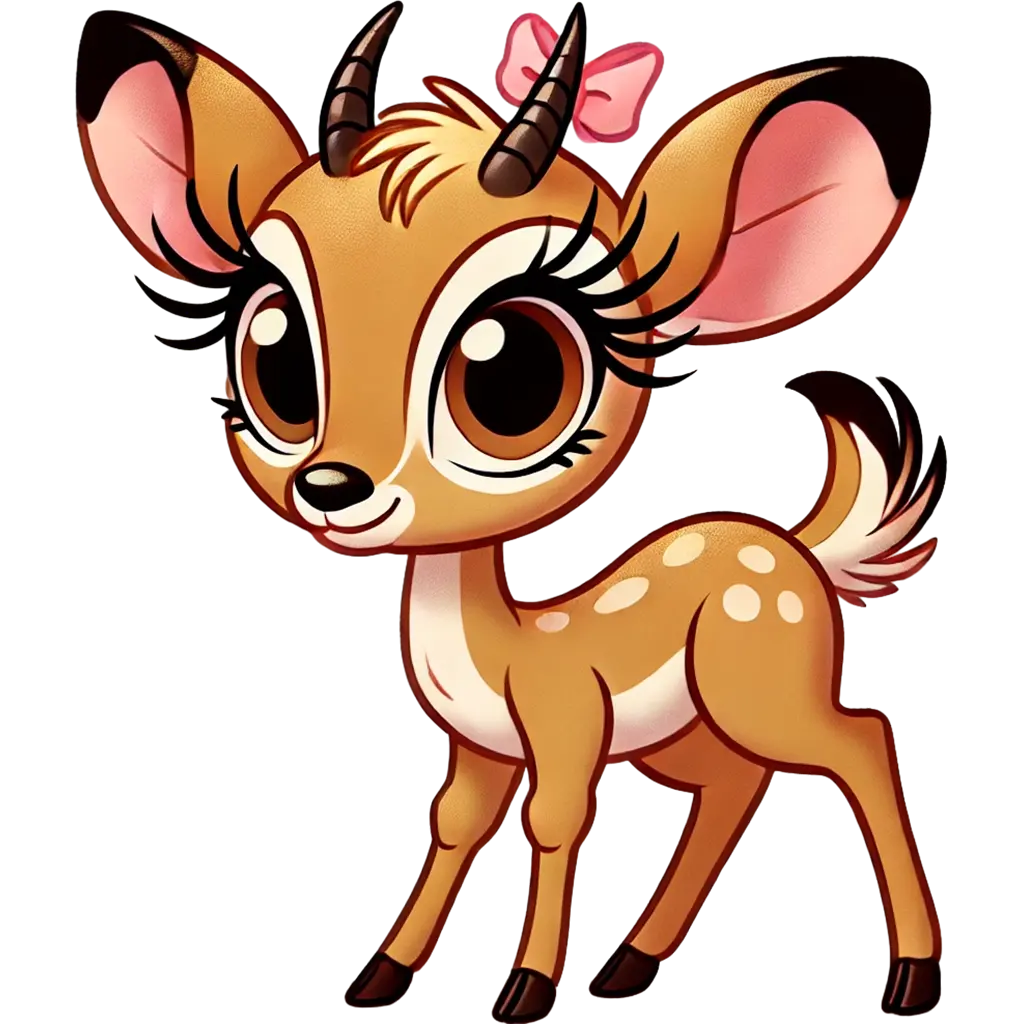
Youngsters Section
Impala
Fun Fact
Impalas are known for their incredible leaping ability, capable of jumping up to 10 feet high and 33 feet long.
This agility helps them evade predators swiftly. Living in mixed herds, impalas use their speed and impressive jumps as a key defense mechanism. They are also known for their "stotting" behavior, where they leap into the air with all four legs off the ground, confusing predators and signaling strength.

Download word search puzzles
Word Search Puzzles

Check Out Other Mammals

The American Black Bear is a medium-sized bear native to North America, known for its versatile coat colors ranging from black to brown, cinnamon, and even white in rare cases. Males are typically larger than females, with an average weight of 60 to 300 kg. They have a stocky build,

The wisent is a majestic, massive bovine with a robust body, shaggy mane, and distinctive hump, displaying a rugged blend of dark brown and gray fur that offers camouflage in mixed woodlands. Its deep-set eyes and broad, muscular build emphasize both power and grace, making it a striking emblem of
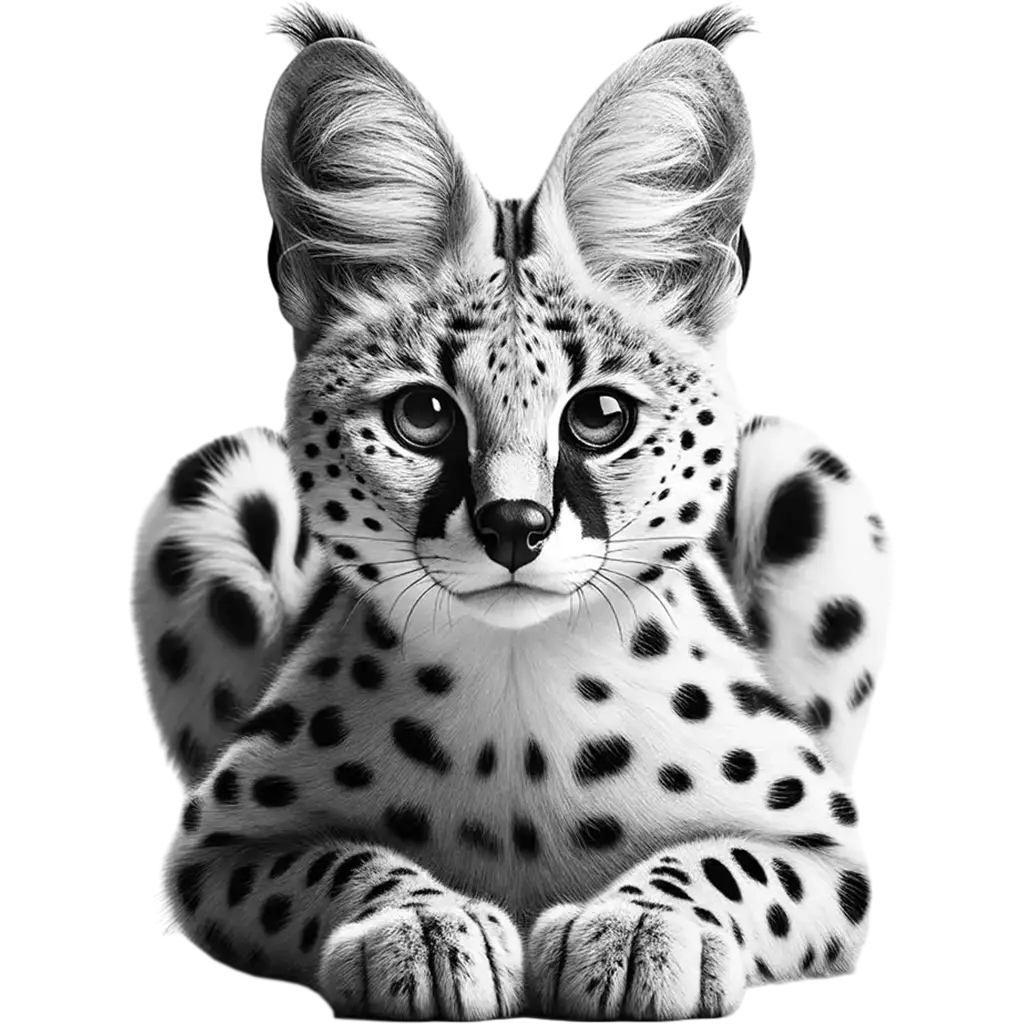
The Serval, leptailurus Serval, is a medium-sized African wild cat known for its distinctive physical characteristics and hunting prowess. Adults can stand up to 60 cm at the shoulder and weigh between 9 to 18 kg. The Serval is characterized by its slender build, long legs, and large ears, which

Lundomys molitor is a medium-sized rodent with a robust body, well-adapted to its forested environment. Its dense, coarse fur ranges from muted brown to soft grey, blending seamlessly with the woodland floor. The creature sports large, expressive eyes and long, sensitive whiskers that accentuate its alert nature. Its slightly elongated