
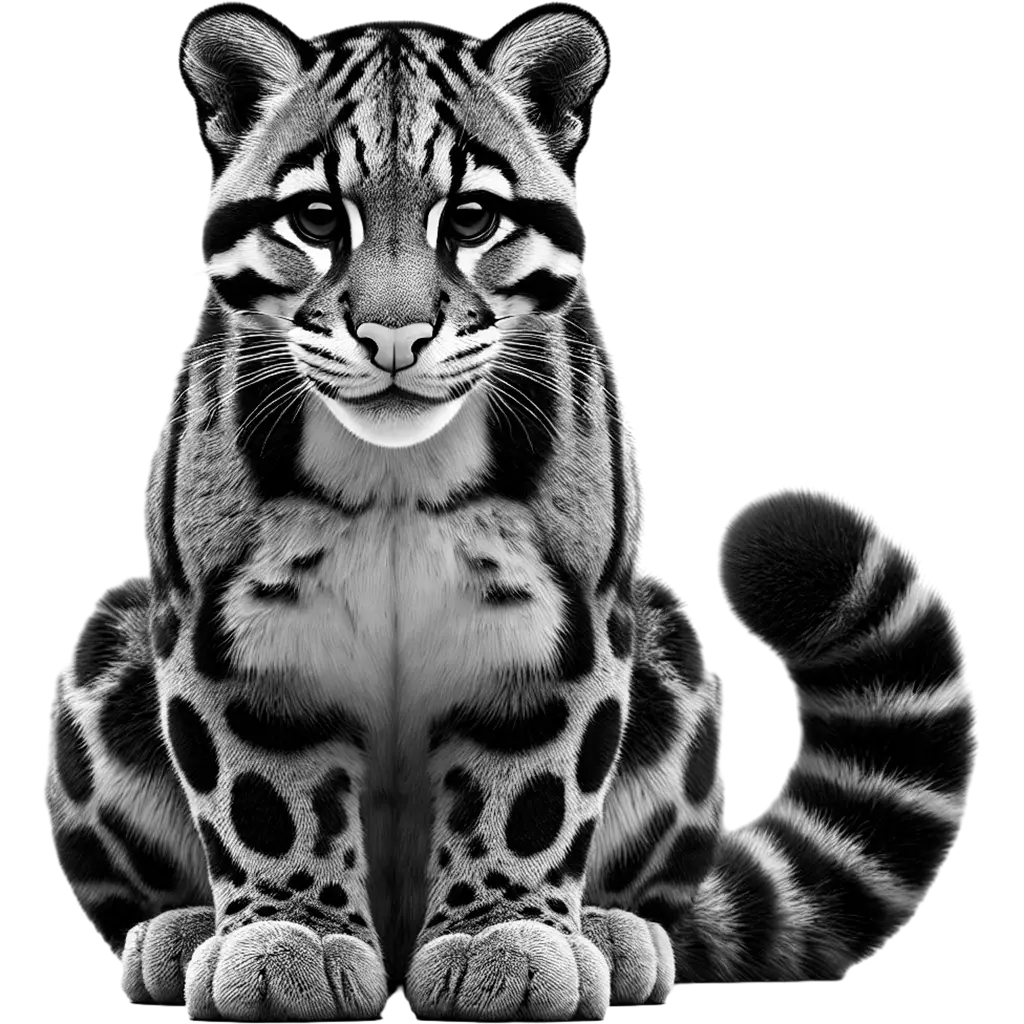
Neofelis Nebulosa
Clouded Leopard
Dense tropical and subtropical forests
Neofelis nebulosa, the Clouded Leopard, is a medium-sized wild cat with a sleek, muscular body and a long tail that aids in balance during arboreal pursuits. Its coat features unique, cloud-like markings on a pale background, which serve as natural camouflage in the dappled light of dense forests. With a rounded head, large canine teeth, and piercing eyes, this elusive predator is both elegant and formidable in appearance.
| Population: | They are confined to fragmented forests in Southeast Asia, with declining numbers due to habitat loss and poaching |
| Generation Length: | Approximately 8-10 years |
| Average Weight: | Typically 11-23 kg |
| Average Length: | Approximately 1.2-1.5 meters (including tail) |
| Lifespan: | Approximately 12-15 years in the wild; up to 20 years in captivity |
| Diet: | Carnivorous |
| Conservation Status: | Vulnerable (VU) |
Predominantly solitary, clouded leopards lead secretive lives in the tropical and subtropical forests of Southeast Asia. They are primarily active during twilight and night, moving silently through the understory and climbing trees with remarkable agility. Their elusive behavior and cautious movements help them avoid detection by both prey and potential threats, ensuring survival in their fragmented habitats.
As carnivorous hunters, clouded leopards rely on stealth and strength to capture medium-sized prey, including ungulates and primates. They use their powerful jaws and sharp canines to deliver decisive bites, often ambushing their quarry from elevated positions in the trees. This effective hunting strategy not only fulfills their nutritional needs but also maintains a balance within the forest ecosystem by regulating prey populations.
During the mating season, brief and subtle encounters occur as males and females communicate through soft vocalizations and scent markings. These short-lived interactions are sufficient to ensure genetic diversity, after which the female cares for her lone cub with dedicated maternal attention until it is ready to fend for itself.
Due to extensive habitat loss, poaching, and human encroachment, wild populations of clouded leopards are now limited to isolated forest fragments. Despite their resilience, their numbers remain low, making targeted conservation and habitat restoration efforts critical for the species' continued survival.
Classifications
The Key Attributes
Features
- Movement:
Clouded leopards move with a graceful, deliberate gait on the forest floor and are also excellent climbers, capable of scaling trees with agility to ambush prey.
- Territorial Behavior:
These elusive cats are highly solitary, maintaining broad, overlapping home ranges and using scent marking and soft vocalizations to communicate with conspecifics.
- Speed:
They generally move at a moderate pace but can burst into rapid, explosive sprints when stalking or evading threats.
- Diet:
Primarily carnivorous, clouded leopards prey on medium-sized ungulates, primates, and other forest mammals, using stealth and powerful canines to secure their meals.
- Physical Features:
- Sleek, muscular body with a relatively short, powerful build
- Distinctive cloud-like markings across a pale, creamy coat
- Large, rounded head with prominent, canine teeth and piercing eyes
- Long tail that aids in balance during arboreal pursuits
- Primary Senses:
- Sight
- Hearing
- Smell
Understanding Habitat and Range
Geography
- Habitat:
Dense tropical and subtropical forests
- Migration Patterns:
Non-migratory; they make local movements in response to prey availability and seasonal changes.
- Geographical Range:
Their range is restricted to parts of Southeast Asia, including regions in the forests of Myanmar, Thailand, Malaysia, and Indonesia.
- Climate Preferences:
They prefer humid, warm climates with high rainfall and complex forest structures.
Navigating the Wilderness
In the wild
- Predators:
Adult clouded leopards have few natural predators, though juveniles may fall prey to large raptors and carnivorous mammals.
- Prey:
Their primary prey includes medium-sized ungulates, primates, and other forest mammals, although they may also target birds and small reptiles.
- Feeding Behavior:
They use a combination of stealth and arboreal ambush tactics to approach and capture prey, often waiting motionless in trees or dense undergrowth until an opportunity arises.
- Diet:
Carnivorous
- Defensive Mechanisms:
- Their cryptic coat provides excellent camouflage in the dappled forest light
- Rapid, powerful strikes and climbing ability help them escape danger
- Preferred Food Sources:
- Medium-sized forest mammals, particularly those that frequent the understory
Insights Into Reproduction
Mating
- Mating System:
Clouded leopards are solitary outside the breeding season; brief encounters occur during courtship in which both males and females exchange subtle vocalizations and scent signals.
- Number of Offspring:
Typically one cub per litter, though occasionally twins may occur under optimal conditions.
- Incubation Period:
Gestation lasts approximately 90-95 days, leading to the birth of usually a single cub per reproductive cycle.
- Parental Involvement:
- Females provide full parental care, nurturing and protecting the cub until it becomes independent.
Youngsters Section
Clouded Leopard
Fun Fact
The clouded leopard is a mysterious and stunning big cat with a beautiful coat covered in cloud-like patterns!
These leopards are known for their powerful limbs and sharp claws, which help them climb high up into the forest canopy to hunt. Their clouded fur helps them blend into the shadows, making them nearly invisible to prey. With their wide range of vocal sounds, clouded leopards are also experts at communicating in the wild.

Download word search puzzles
Word Search Puzzles
Check Out Other Mammals
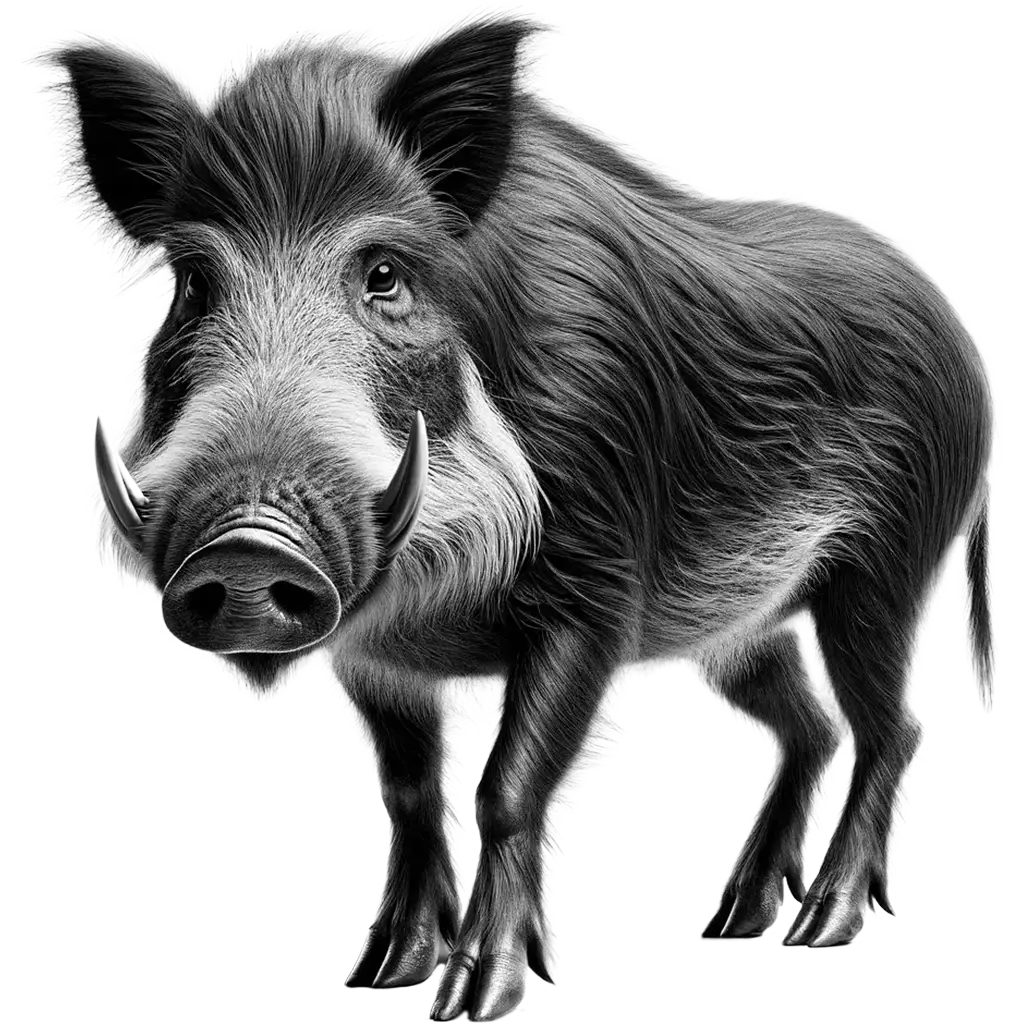
The Wild Boar, sus scrofa, is a large, robust animal characterized by its thick, bristly coat, ranging in color from dark grey to brown or black. Males are distinguished by their larger size and prominent tusks, which protrude from the sides of their mouth and curve upwards. These tusks, along
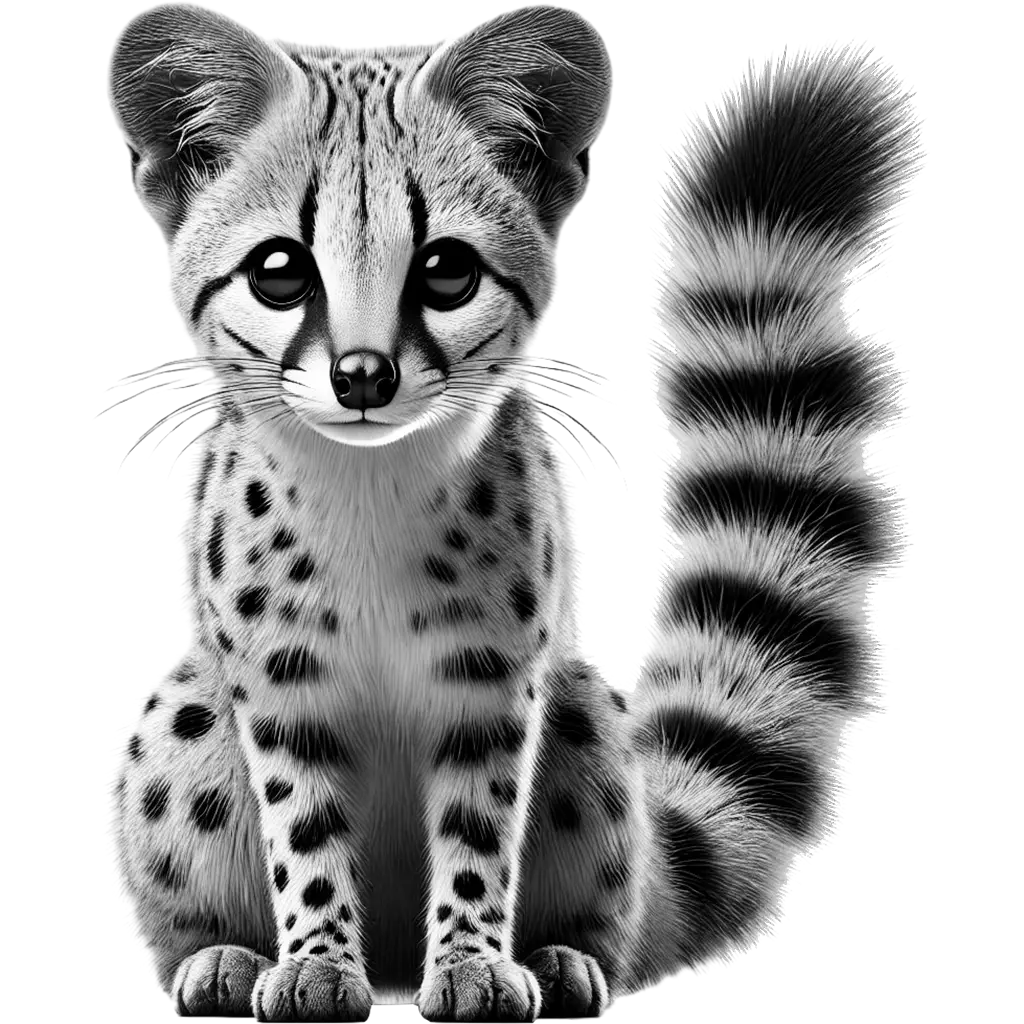
The Zanzibar Servaline Genet is a small, elegant mammal with a slender, elongated body covered in soft, spotted fur that blends muted grays and browns. Its distinctive stripes along the back and legs, paired with a narrow, pointed snout and large, alert eyes, create an appearance that is both graceful
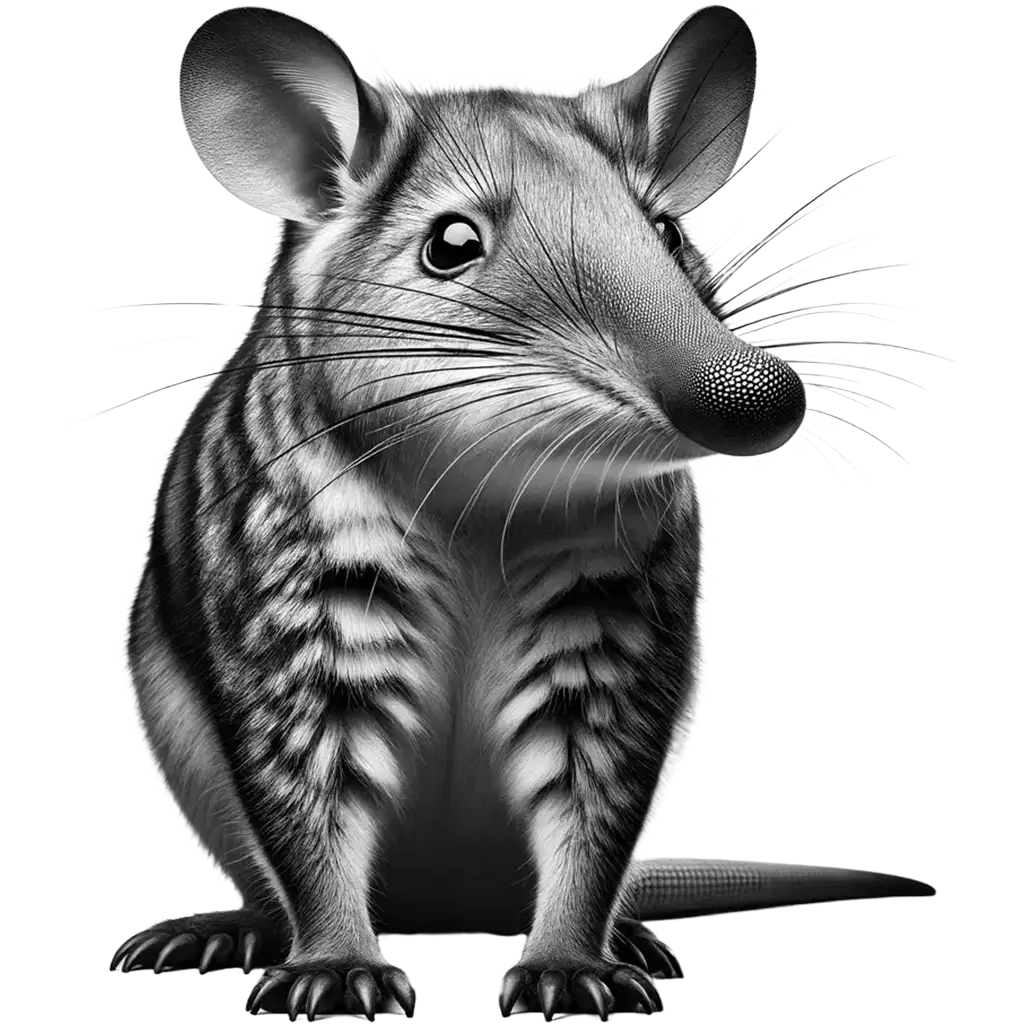
The Long-Nosed Bandicoot, perameles nasuta, is a small marsupial native to eastern Australia, distinguished by its elongated snout and hunched back. This nocturnal creature has coarse, grey-brown fur, with a lighter underside, and measures about 31 to 43 cm in length, including a thin, sparsely furred tail that adds another
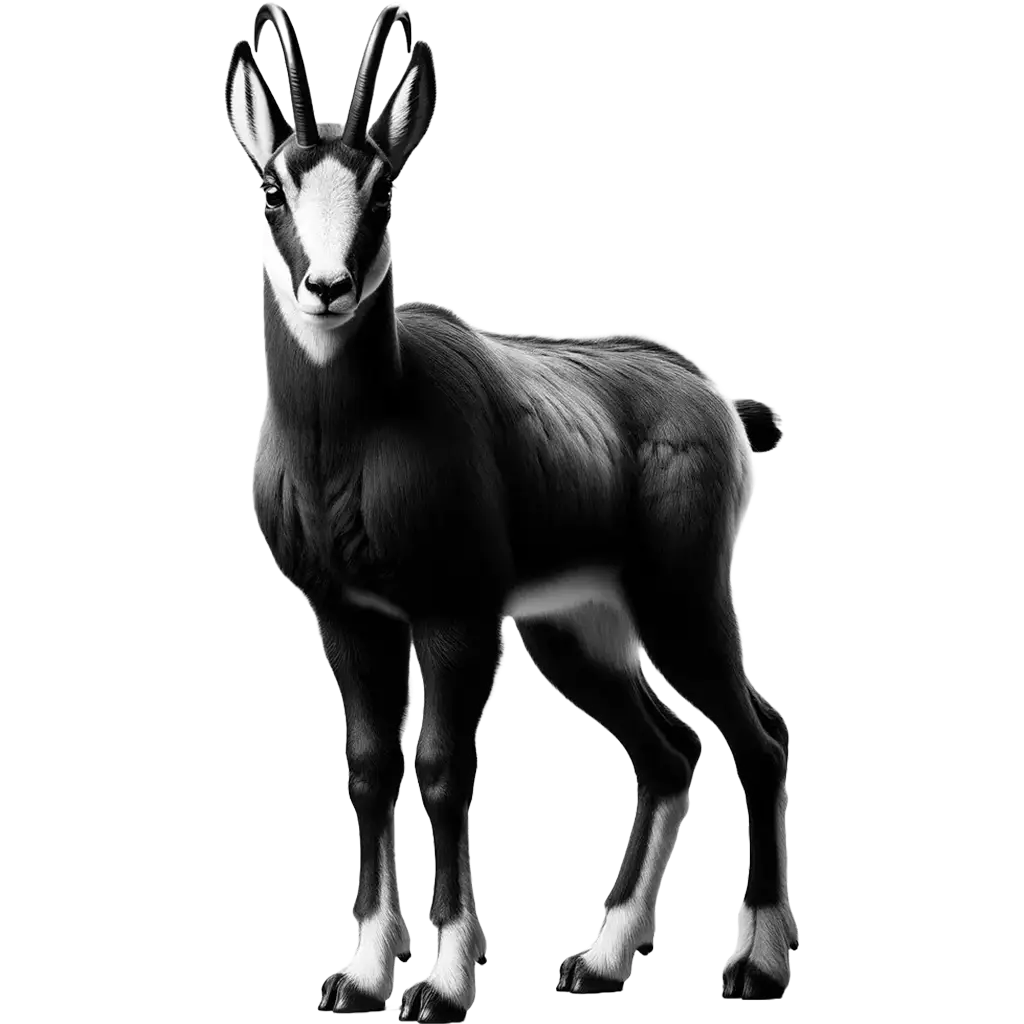
The Chamois, rupicapra rupicapra, is a nimble and hardy mountain-dwelling ungulate found across the rugged terrains of Europe's mountain ranges, including the Alps, Carpathians, Tatra, and Balkans. This species is renowned for its agility and ability to navigate steep, rocky slopes with ease. Adult Chamois have a distinctive appearance with