
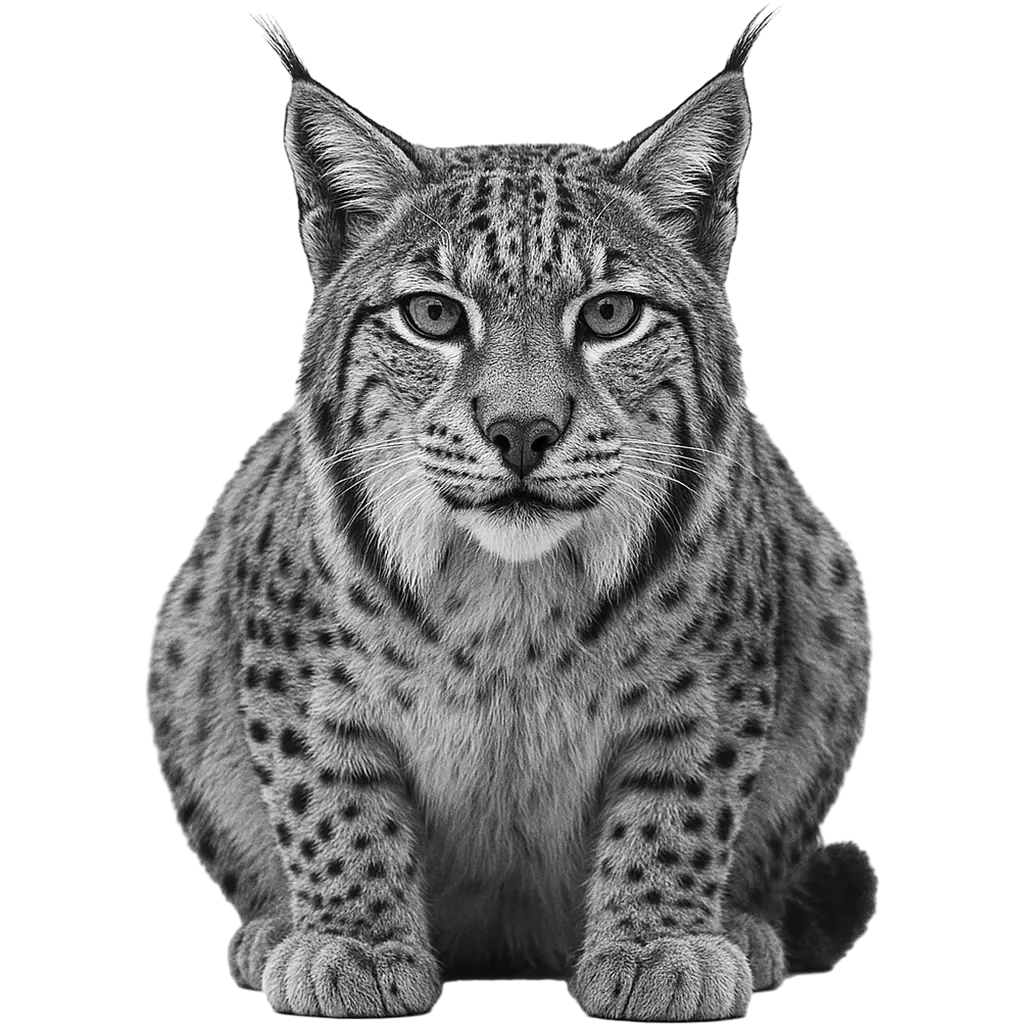
Lynx Pardinus
Iberian Lynx
Mediterranean scrubland and open woodlands with dense understory
The Iberian Lynx is a medium-sized wildcat standing roughly 60 centimeters at the shoulder and measuring between 85 and 110 centimeters in body length, excluding a short 12 to 30 centimeter tail. Its dense, spotted tawny coat provides effective camouflage in scrubland, with larger spots on the back and smaller ones along the flanks. Distinctive black tufts of fur project from its ears and a pronounced facial ruff frames bright amber eyes. Powerful limbs and retractable claws adorn strong paws for stalking and pouncing.
| Population: | Over 2,000 individuals as of 2023, following successful captive breeding and habitat restoration efforts |
| Generation Length: | 3.5 years |
| Average Weight: | 9.3-12.8 kg |
| Average Length: | 85-110 cm (body), 12-30 cm (tail) |
| Lifespan: | 10-13 years in the wild, up to 15 years in captivity |
| Diet: | Primarily rabbits, supplemented by partridges, rodents, and young ungulates |
| Conservation Status: | Vulnerable (VU) |
The Iberian Lynx tends to lead a solitary life, occupying territories ranging from ten to twenty square kilometers in Mediterranean scrub and open woodland. Each individual marks its domain with scent from interdigital glands and occasional scrapes on trees. Although largely crepuscular and nocturnal, these felids may hunt at dawn and dusk or rest in dense cover during midday heat. They communicate through soft vocalizations, including meows and purr-like sounds, and through visual signals like tail flicks. Subadult lynx disperse in search of unoccupied territories, sometimes traveling dozens of kilometers to find suitable habitat. Home ranges avoid overlap among adults of the same sex but may overlap between males and females, often facilitating encounters during the brief annual breeding season.
The Iberian Lynx has a highly specialized carnivorous diet, depending primarily on European rabbits, which account for approximately seventy-five percent of its intake. Adults typically require one rabbit per day to meet energy demands, while lactating females may consume up to three rabbits daily to nourish growing kittens. During periods of low rabbit density, lynx will opportunistically hunt alternative prey, including red-legged partridges, rodents such as voles and mice, and occasionally young ungulates like fawn deer. They employ stealth hunting strategies, stalking within a few meters before launching a rapid pounce. Nutritionally, rabbits provide a balanced source of protein, fat, and essential micronutrients, supporting muscle development and thermoregulation. Seasonal fluctuations in prey abundance drive dietary flexibility, with increased reliance on small mammals and birds when rabbits are scarce.
During the December to February breeding season, males patrol and scent-mark large territories, occasionally mating with multiple females. Courtship involves vocalizations and scent cues, with brief chases and rubbing behaviors. After mating, females undergo a 60 to 70 day gestation before giving birth to one to four kittens, usually two or three. Kittens are born altricial and remain in hidden dens, cared for solely by the mother until independence.
Once reduced to fewer than one hundred individuals in the early twenty-first century, the Iberian Lynx population has rebounded through captive breeding and habitat restoration programs. As of 2023, over two thousand individuals roam restored territories in Spain and Portugal. Despite this recovery, ongoing threats such as habitat fragmentation, vehicle collisions, and disease outbreaks in rabbit populations continue to challenge long-term stability and require sustained conservation efforts.
Classifications
The Key Attributes
Features
- Movement:
Quadrupedal
- Territorial Behavior:
Territorial, especially during breeding season
- Speed:
Up to 80 km/h
- Diet:
Carnivore
- Physical Features:
- Spotted tawny coat
- Distinctive ear tufts
- Short black‑tipped tail
- Powerful legs with retractable claws
- Primary Senses:
- Sight
- Hearing
- Smell
Understanding Habitat and Range
Geography
- Habitat:
Mediterranean scrubland and open woodlands with dense understory
- Migration Patterns:
Non-migratory
- Geographical Range:
Iberian Peninsula (southern Spain and Portugal)
- Climate Preferences:
Mediterranean climates
Navigating the Wilderness
In the wild
- Predators:
Humans (poaching, vehicle collisions), golden eagles (kittens)
- Prey:
European rabbit, supplemented by partridges, rodents, and young ungulates
- Feeding Behavior:
Solitary ambush predator, hunts mainly at dawn and dusk
- Diet:
Primarily rabbits, supplemented by partridges, rodents, and young ungulates
- Defensive Mechanisms:
- Camouflage
- Quick bursts of speed
- Retreat into dense cover
- Preferred Food Sources:
- European rabbits
- Red‑legged partridges
- Rodents
Insights Into Reproduction
Mating
- Mating System:
Polygynous
- Number of Offspring:
1-4 kittens per litter
- Gestation Period:
60-70 days
- Parental Involvement:
- Female solely cares for kittens
Youngsters Section
Iberian Lynx
Fun Fact
Iberian Lynxes are the smallest of the four lynx species.
They rely on European rabbits for over 75% of their diet, catching around 1,000 rabbits per year. Through intensive conservation efforts including captive breeding and habitat restoration, their numbers have recovered from fewer than 100 individuals in 2002 to over 2,000 today.

Download word search puzzles
Word Search Puzzles

Check Out Other Mammals

The Mastiff, known for its immense size and gentle demeanor, is one of the oldest and most majestic breeds of dogs. Characterized by a massive head, broad skull, and a well-defined stop, the Mastiff's appearance exudes power and nobility. Their coat, which can be fawn, apricot, or brindle, is complemented

The Newfoundland Dog, known for its remarkable size, strength, and gentle disposition, is a breed that originates from the Canadian island of Newfoundland. Males typically weigh between 130 to 150 pounds, with some reaching up to 200 pounds or more, and stand 28 inches tall at the shoulder. Females are
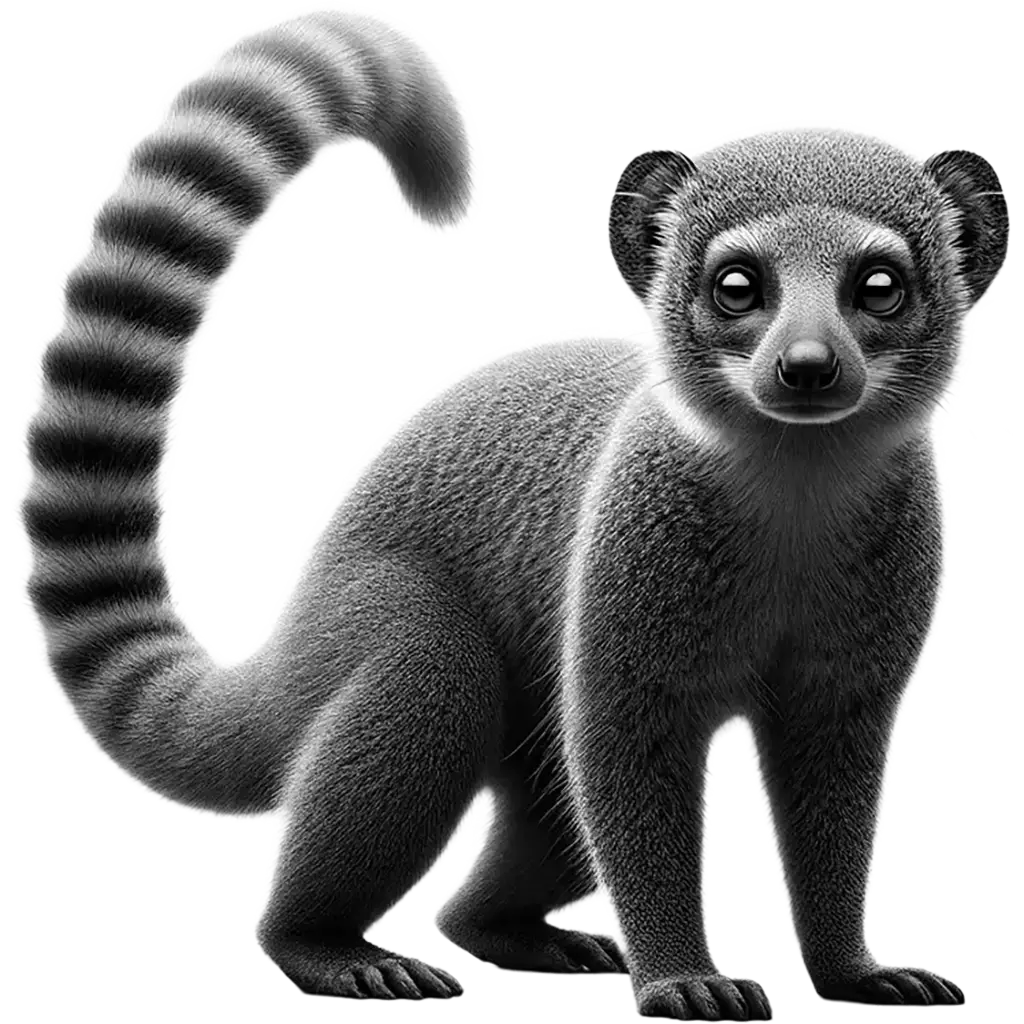
The Mongoose Lemur, eulemur mongoz, is a small to medium-sized primate endemic to Madagascar and the Comoros Islands, notable for its distinctive appearance and social behavior. Males and females exhibit sexual dimorphism in their fur coloration: males have grey-brown fur with a reddish crown, while females are predominantly grey with
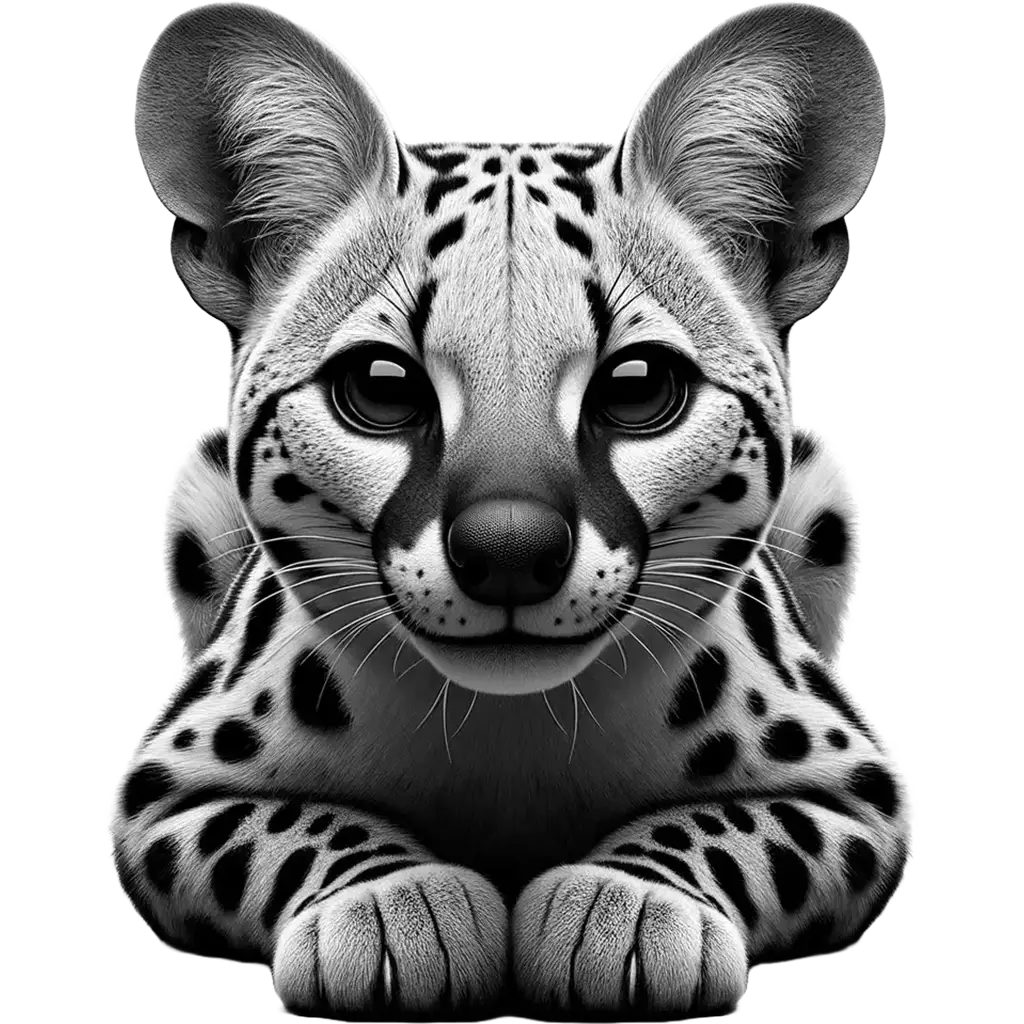
The Common Genet, genetta genetta, is a slender, cat-like mammal, part of the Viverridae family, which also includes civets and mongooses. Characterized by its striking coat pattern, it has a pale, yellowish-grey fur with a series of black stripes running down its back and rows of spots on its sides,