
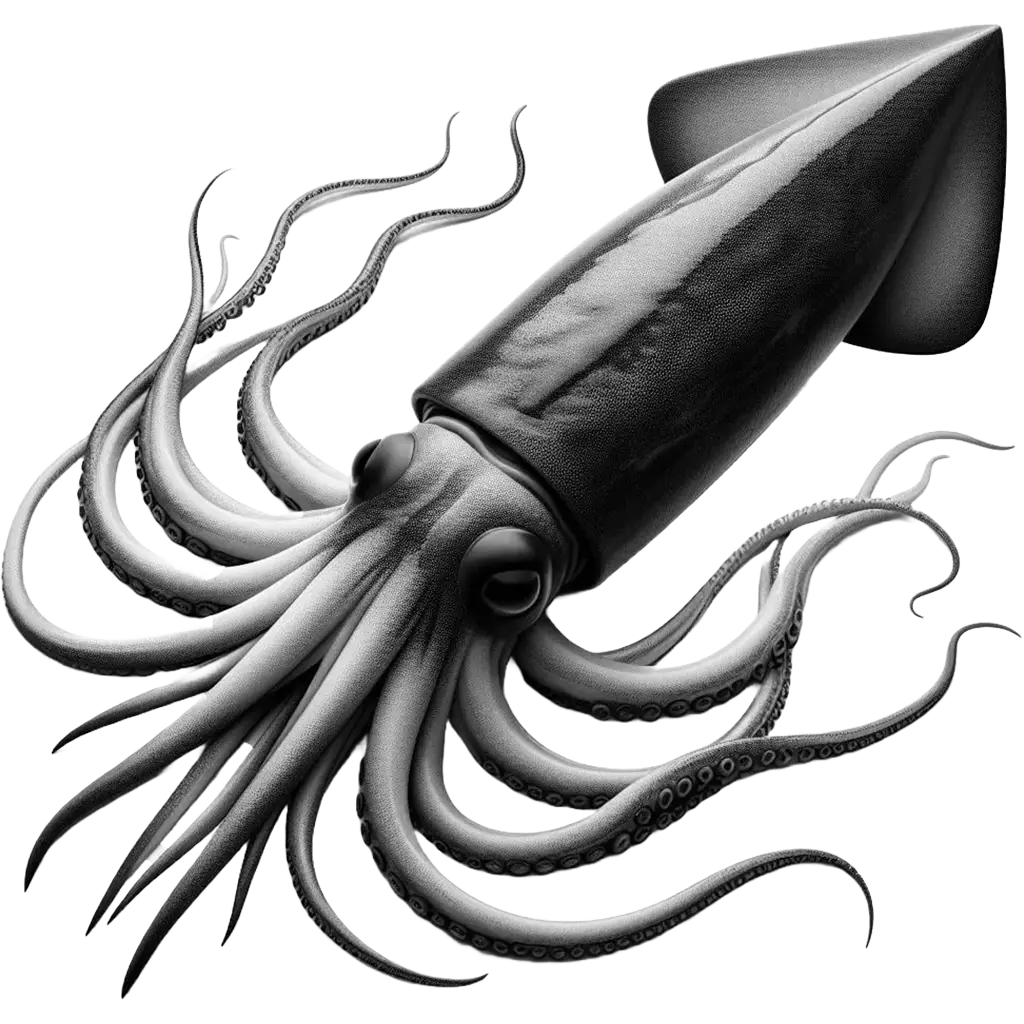
Architeuthis Dux
Giant Squid
Deep-sea environments worldwide
The Giant Squid, architeuthis dux, is a deep-sea dwelling cephalopod known for its immense size and elusive nature. It is one of the largest living organisms, with the largest specimens measuring up to 13 meters (43 feet) in length, including their tentacles. The body of the Giant Squid, or mantle, can be over 2 meters (6.6 feet) long, with eyes as large as dinner plates, among the largest eyes in the animal kingdom. Their eight arms and two longer feeding tentacles are equipped with suction cups lined with serrated rings, which they use to capture prey.
| Population: | Not precisely quantified due to the deep-sea habitat and elusive nature |
| Generation Length: | 3-5 years |
| Average Weight: | Up to 275 kg |
| Average Length: | Females can reach lengths of up to 13 meters (including tentacles), males are slightly smaller |
| Lifespan: | Estimated to be around 5 years |
| Diet: | Fish and squid |
| Conservation Status: | Least Concern (LC) |
Giant Squids inhabit the deep oceans, ranging from the North Atlantic to the South Pacific, dwelling at depths of up to 1,000 meters (3,300 feet) or more. Their habitat is cold, dark, and high-pressure environments far below the ocean's surface, making direct observations and studies of these creatures exceedingly rare. They are believed to be solitary hunters, primarily feeding on deep-sea fish and other squid species.
The diet of the Giant Squid is largely unknown but is thought to include deep-sea fish and other smaller squid species. They capture prey using their two long tentacles, then use their eight arms to hold and consume their catch. The beak-like mouth of the Giant Squid, capable of shredding its prey, is a testament to its predatory lifestyle.
Reproduction in Giant Squids remains a mystery, with very little known about their mating habits, gestation period, or lifecycle. The majority of what is known comes from specimens washed ashore or captured in deep-sea nets. It is believed that females lay eggs in the deep sea, but the specifics of their reproductive biology are still largely speculative.
The Giant Squid is not currently listed as an endangered species, primarily due to the lack of data on their population numbers and deep-sea habitat. However, their existence highlights the vast unknowns of the ocean's depths and the need for continued exploration and conservation of marine ecosystems. The Giant Squid remains a subject of maritime lore and scientific fascination, representing one of the most mysterious creatures of the deep ocean.
Classifications
The Key Attributes
Features
- Movement:
Swimming, jet propulsion
- Territorial Behavior:
Solitary
- Speed:
Capable of quick bursts of speed using jet propulsion
- Diet:
Carnivore
- Physical Features:
- Large eyes
- Eight arms and two longer feeding tentacles
- Beak-like mouth
- Siphon for jet propulsion
- Primary Senses:
- Sight
- Touch
- Chemical sensing
Understanding Habitat and Range
Geography
- Habitat:
Deep-sea environments worldwide
- Migration Patterns:
Not well documented; believed to inhabit deep oceanic waters and come closer to the surface at night
- Geographical Range:
Global distribution in deep oceans
- Climate Preferences:
Adaptable to various oceanic climates, primarily cold, deep-sea environments
Navigating the Wilderness
In the wild
- Predators:
Primarily sperm whales
- Prey:
Deep-sea fish, other species of squid
- Feeding Behavior:
Uses its tentacles to capture prey, including fish and other squid
- Diet:
Fish and squid
- Defensive Mechanisms:
- Camouflage
- Ink expulsion as a distraction
- Speed and agility in water
- Preferred Food Sources:
- Deep-sea fish
- Other squids
Insights Into Reproduction
Mating
- Mating System:
Not well understood due to the rarity of observations
- Number of Offspring:
Believed to lay thousands of eggs
- Incubation Period:
Not documented
- Parental Involvement:
- No parental care post-spawning; eggs are left to develop independently
Youngsters Section
Giant Squid
Fun Fact
Giant squids have the largest eyes in the animal kingdom, measuring up to 10 inches in diameter.
These massive eyes help them detect faint light in the deep ocean, aiding in spotting predators like sperm whales. The large eyes capture more light, allowing the squid to see bioluminescent organisms, which can indicate the presence of other creatures.

Download word search puzzles
Word Search Puzzles


Check Out Other Invertebrates

The Common Starfish, asterias rubens, is a widely recognized marine invertebrate found across the North Atlantic, from the Arctic Ocean to the Mediterranean Sea. This species typically exhibits five arms radiating from a central disc, though specimens with more arms can occasionally be found. The Common Starfish can reach a
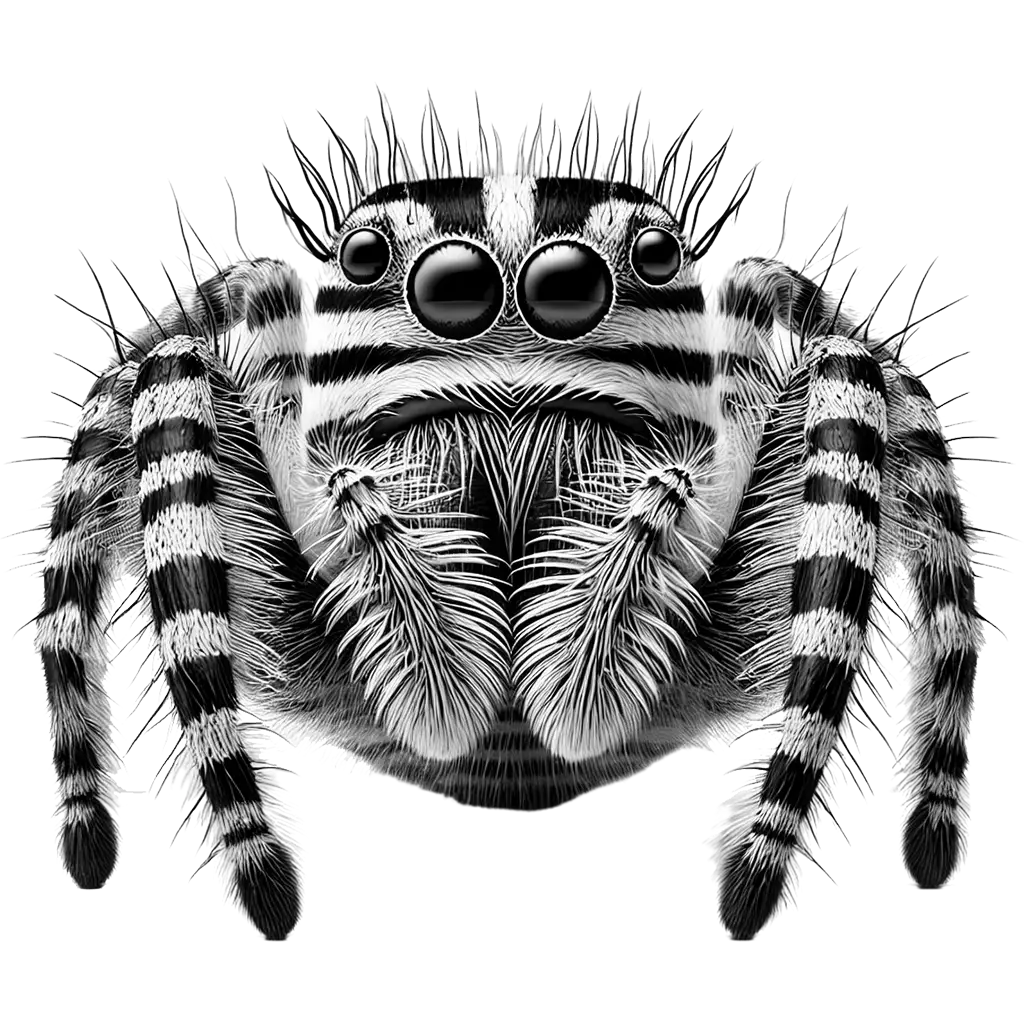
The Zebra Spider is a small, agile jumping spider characterized by its distinctive black and white striped pattern that resembles zebra markings. Its compact body, long spindly legs, and large forward-facing eyes give it an alert and inquisitive appearance, perfectly adapted for active hunting on walls and windows in both

The Common Octopus, octopus vulgaris, is a highly intelligent and adaptable cephalopod found in a variety of marine environments around the world, from tropical waters to temperate seas. This species is characterized by its bulbous head, eight long arms lined with suction cups, and a mantle that can dramatically alter
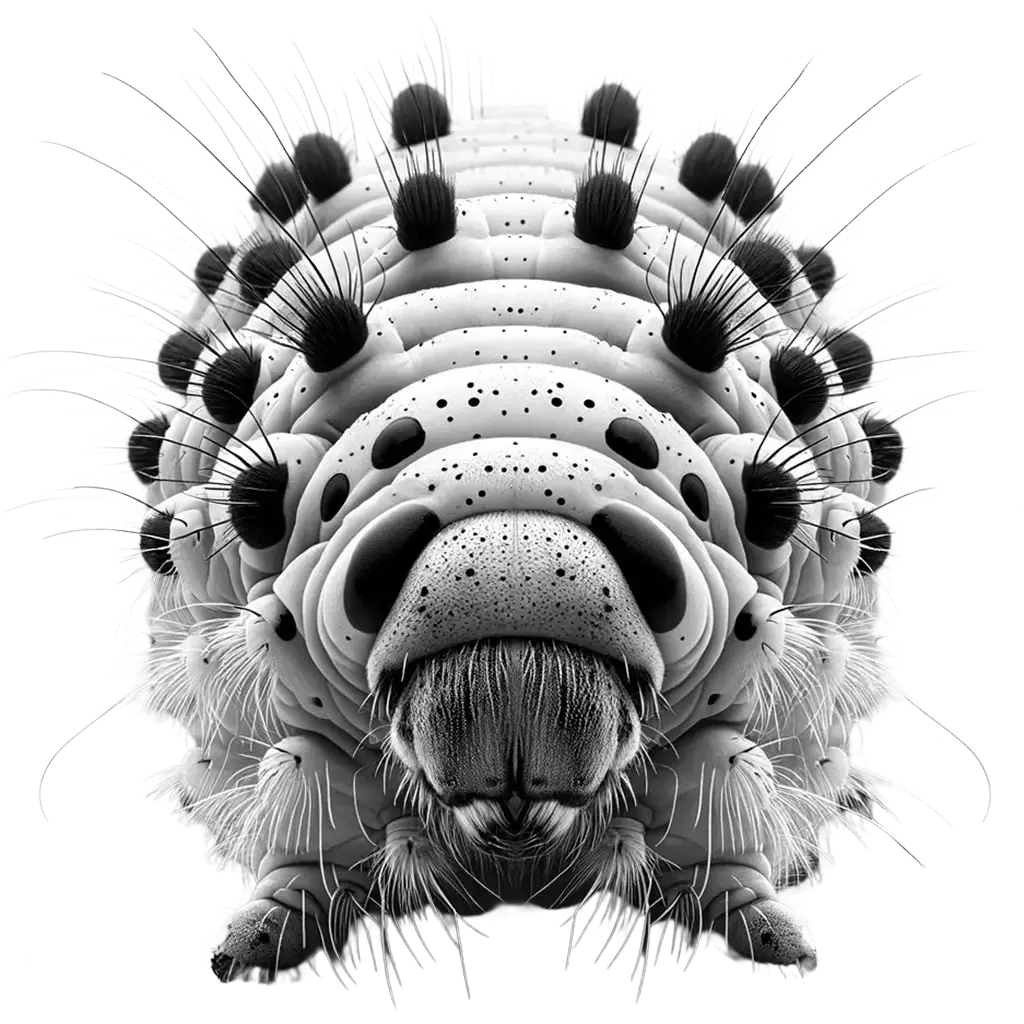
The Luna moth, actias luna, is a mesmerizing nocturnal moth known for its striking beauty and large size, with a wingspan of up to 114 mm (4.5 inches). Its pale green wings are edged with a transparent, yellowish border and adorned with eyespots to deter predators. The long, tapering hindwings