
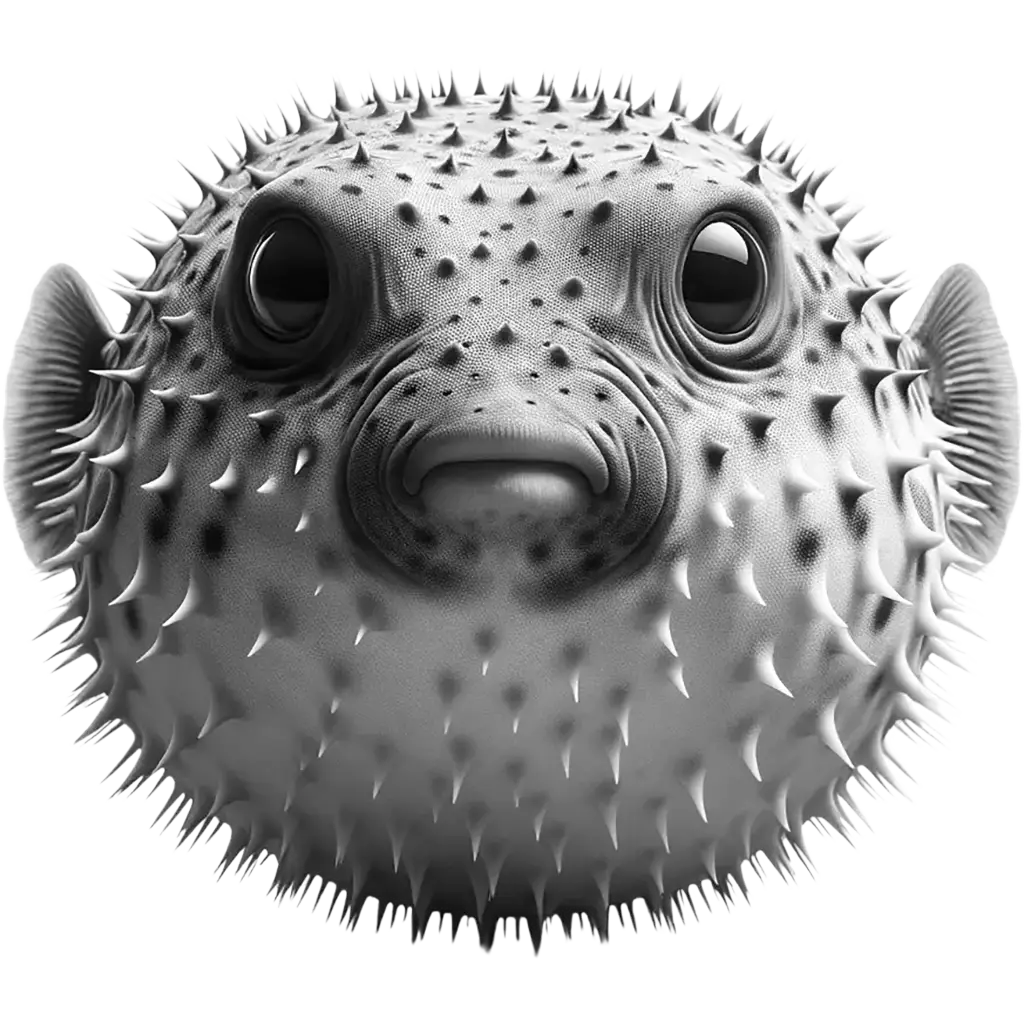
Tetraodon Lineatus
Fahaka Pufferfish
Freshwater rivers, lakes, and floodplains
The Fahaka Pufferfish, tetraodon lineatus, also known as the Nile Puffer, is a freshwater species distinguished by its striking appearance and intriguing behavior. This robust fish can grow up to 45 cm (18 inches) in length, showcasing a body covered in intricate patterns of yellow and dark lines that provide camouflage among riverbeds and vegetation. The Fahaka Puffer's most notable feature is its ability to inflate its body dramatically as a defense mechanism against predators, making it appear much larger and more formidable.
| Population: | Not listed as endangered, but vulnerable to habitat changes and pollution |
| Generation Length: | 3-5 years |
| Average Weight: | 1-1.5 kg |
| Average Length: | Up to 45 cm |
| Lifespan: | Up to 10 years in captivity; lifespan in the wild is less documented |
| Diet: | Molluscivore and piscivore |
| Conservation Status: | Least Concern (LC) |
Native to the Nile River and other freshwater habitats across Africa, the Fahaka Pufferfish thrives in environments with abundant vegetation and slow-moving waters. It exhibits a solitary nature, often displaying territorial behavior towards other fish. This species is known for its intelligence and curiosity, frequently interacting with its environment and even recognizing its human caregivers.
The diet of the Fahaka Pufferfish is carnivorous, primarily feeding on mollusks, crustaceans, and smaller fish. Its strong, beak-like teeth are specially adapted to crack open hard-shelled prey. In captivity, it's crucial to provide a diet that includes hard-shelled foods to maintain the health of their teeth, which continuously grow throughout their life.
Reproduction in the Fahaka Pufferfish is not well documented in the wild, but in captivity, breeding is rare and challenging. The process involves elaborate courtship displays, with the male often creating nests to entice a female. Successful breeding requires specific water conditions and a large, stress-free environment to mimic their natural habitats.
The population status of the Fahaka Pufferfish is not well established, but it faces threats from habitat loss and pollution in its natural range. Their unique appearance and behaviors make them popular in the aquarium trade, which also poses a risk to wild populations if not managed sustainably. Conservation efforts are needed to ensure the protection of their natural habitats and to promote responsible trade practices. The Fahaka Pufferfish's distinct characteristics and ecological role underscore the importance of biodiversity and the need for conservation in freshwater ecosystems.
Classifications
The Key Attributes
Features
- Movement:
Swimming
- Territorial Behavior:
Highly territorial and aggressive
- Speed:
Not specifically quantified; known for bursts of speed when threatened
- Diet:
Carnivore
- Physical Features:
- Large, robust body with a bulbous head
- Distinctive dark bands across the body and yellow to golden background color
- Capable of inflating its body as a defense mechanism
- Sharp, beak-like teeth for crushing hard-shelled prey
- Primary Senses:
- Sight
- Taste
- Touch
Understanding Habitat and Range
Geography
- Habitat:
Freshwater rivers, lakes, and floodplains
- Migration Patterns:
Non-migratory, but may move locally depending on water levels and temperature
- Geographical Range:
Nile River, Lake Chad, Senegal River, and other freshwater systems in Africa
- Climate Preferences:
Tropical freshwater environments
Navigating the Wilderness
In the wild
- Predators:
Larger fish and crocodiles
- Prey:
Snails, bivalves, crustaceans, and small fish
- Feeding Behavior:
Feeds on mollusks, crustaceans, and sometimes smaller fish, using its powerful beak to crush shells and exoskeletons
- Diet:
Molluscivore and piscivore
- Defensive Mechanisms:
- Inflation to deter predators
- Releasing toxins when stressed or threatened
- Aggressive and territorial behavior to defend its space
- Preferred Food Sources:
- Riverbeds and water bodies rich in mollusk and crustacean populations
Insights Into Reproduction
Mating
- Mating System:
Monogamous or polygynous
- Number of Offspring:
Lays hundreds of eggs during spawning season
- Incubation Period:
Eggs hatch within a week after being laid
- Parental Involvement:
- Guarding of eggs by at least one parent until they hatch
Youngsters Section
Fahaka Pufferfish
Fun Fact
Fahaka Pufferfish are known for their ability to inflate their bodies significantly when threatened.
This defensive mechanism, involving the intake of water or air, makes them appear larger to predators. Native to the Nile, these fish are also recognized for their vibrant patterns and colors. They are carnivorous and have strong beaks to crush shells.

Download word search puzzles
Word Search Puzzles


Check Out Other Fish
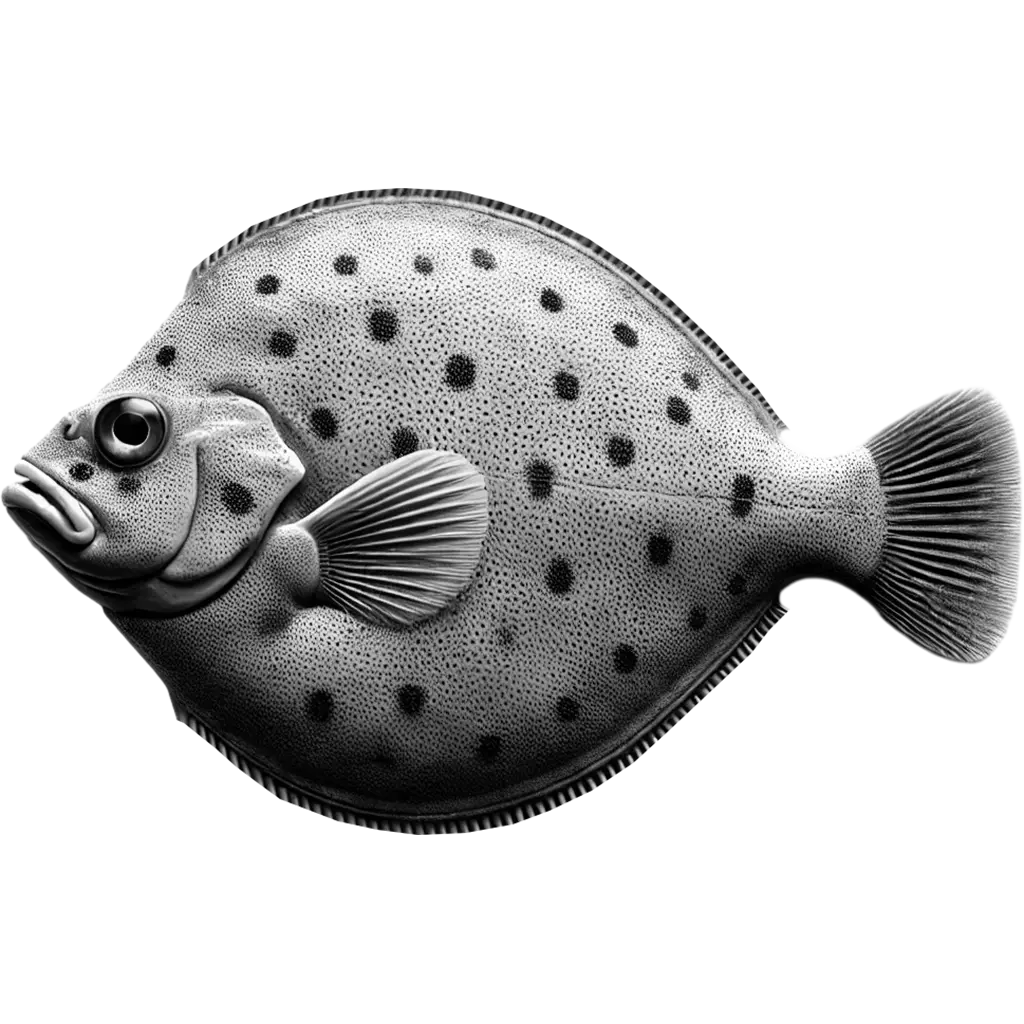
The Egyptian Sole is a flatfish species characterized by its oval-shaped, dorsoventrally flattened body. The upper side displays a greyish-brown coloration with four wide olive-colored saddles, while the underside is white. A distinctive black blotch marks the pectoral fin on the eyed side. Adults can reach up to 65 cm
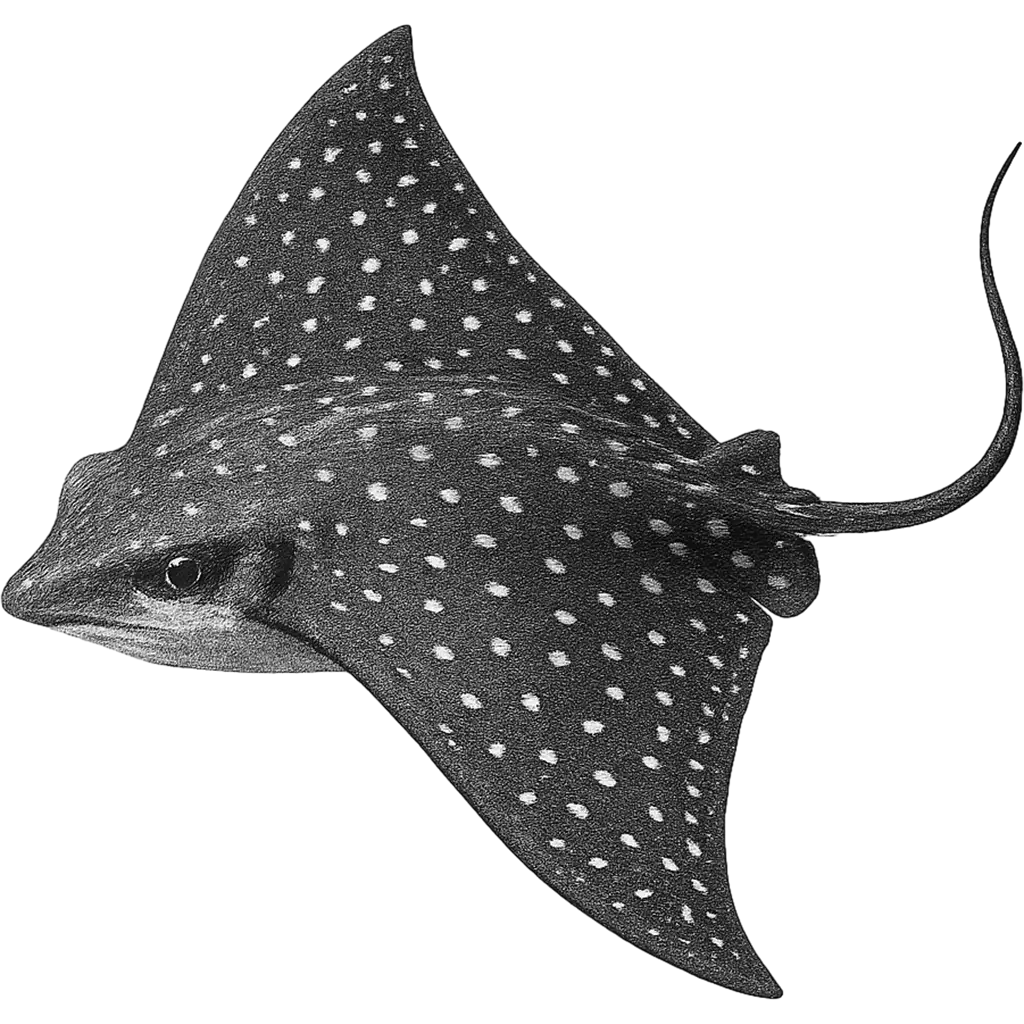
The Spotted Eagle Ray has a flattened, diamond-shaped pectoral disc measuring up to 1.8 meters across, tapering to a slender, whip-like tail. Its dorsal surface is dark blue to black, adorned with numerous bright white or yellowish spots and rings that provide camouflage against the sea floor. The head features
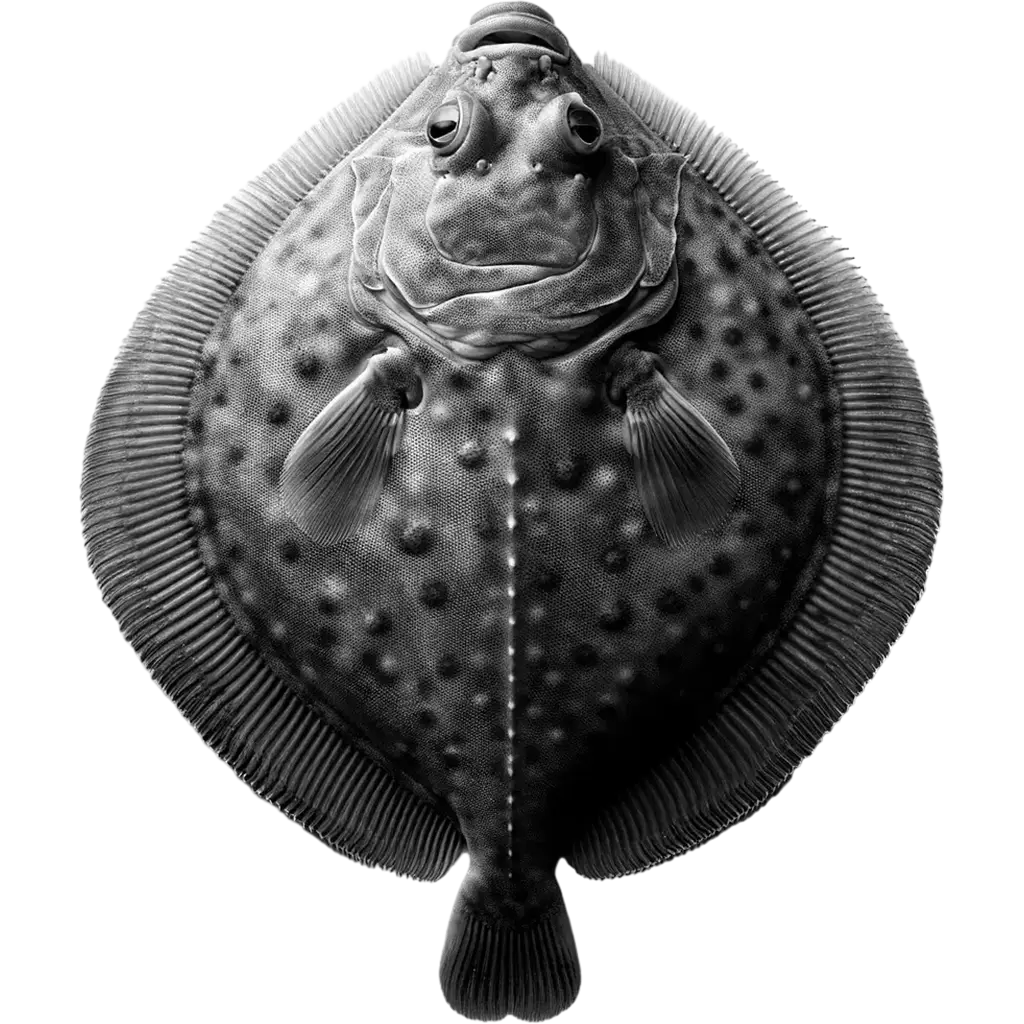
The European Plaice, pleuronectes platessa, is a flatfish species renowned for its distinctive appearance and significant value to commercial fisheries. This species has a smooth, oval body that is adapted to lie flat on the seabed, with both eyes located on its right side. The skin is dark green to
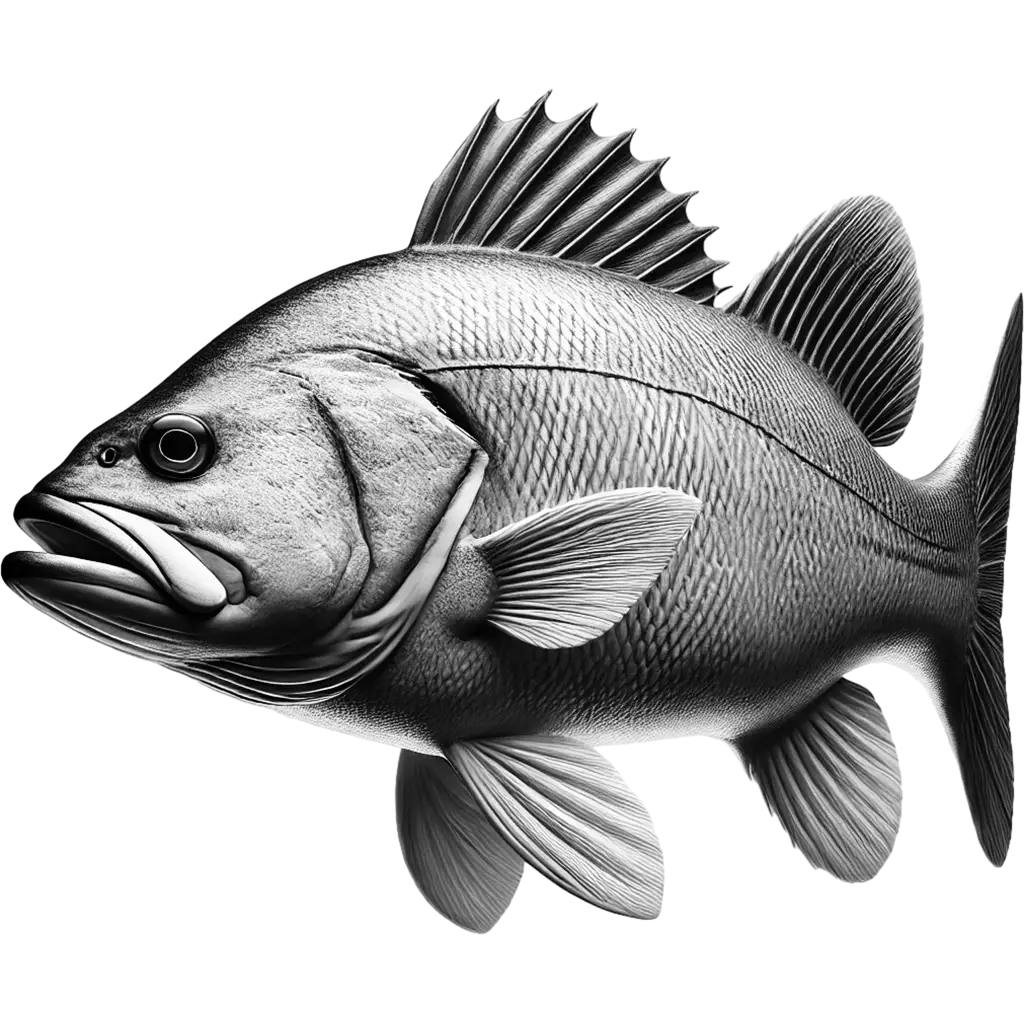
White seabass exhibit a sleek, elongated body with a metallic silver sheen that shimmers under sunlight. Their streamlined profile features a moderately large head, a slightly upturned mouth, and subtle dark markings along the lateral line. The well-proportioned fins and alert eyes contribute to an appearance that is both elegant