
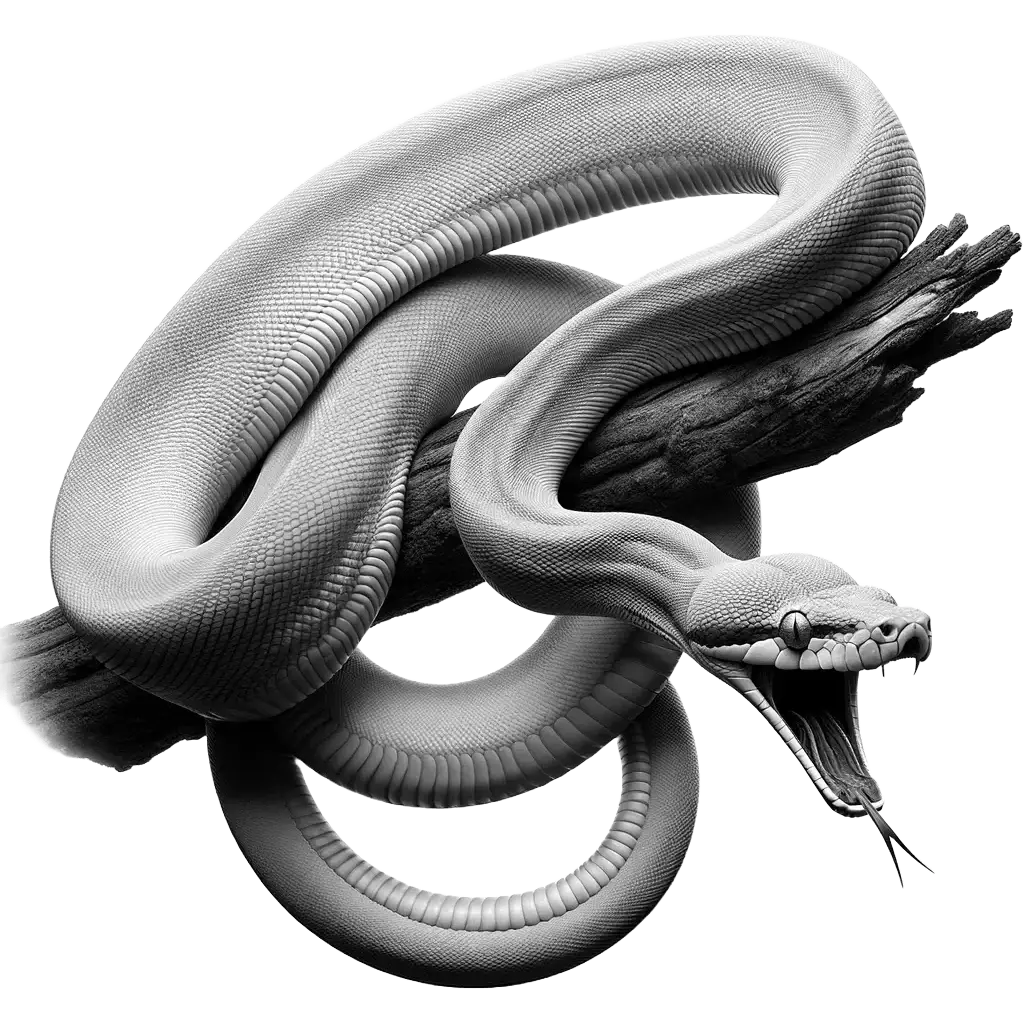
Corallus Caninus
Emerald Tree Boa
Tropical rainforests, primarily arboreal in the canopy
The Emerald Tree Boa, corallus caninus, is a striking non-venomous snake known for its vibrant green color and distinctive white markings along its body. Adults can reach lengths of up to 2 meters, with females generally larger than males. This species is characterized by its slender body, prehensile tail, and large, heat-sensitive pits located between the scales on its lips, which are used to detect warm-blooded prey in the darkness of the night. The emerald green coloration serves as excellent camouflage among the foliage of its rainforest habitat, while the white markings vary from individual to individual, ranging from spots to stripes or even a combination of both.
| Population: | Not fully assessed, but not currently considered at risk |
| Generation Length: | 4-5 years |
| Average Weight: | 1.5-2.5 kg |
| Average Length: | 1.5-2 meters |
| Lifespan: | 15-20 years in the wild |
| Diet: | Arboreal carnivore, specializing in tree-dwelling and flying prey |
| Conservation Status: | Least Concern (LC) |
Native to the Amazon Basin in South America, the Emerald Tree Boa inhabits dense, tropical rainforests where humidity levels are high. It is an arboreal species, spending most of its life in the canopy, rarely descending to the ground. This lifestyle is facilitated by its prehensile tail, which allows the boa to secure itself to branches while reaching out to ambush prey.
The diet of the Emerald Tree Boa primarily consists of small mammals and birds, which it captures by hanging in a characteristic 'S' shaped coil from branches and striking with precision. After securing its prey with sharp teeth, it constricts until the prey succumbs. The boa's method of hunting highlights its adaptation to a life spent in the trees, relying on stealth and the element of surprise.
Reproduction in Emerald Tree Boas is ovoviviparous, with females giving birth to live young every two to three years. Litters can range from 5 to 15 neonates, which are born a striking reddish-brown color, undergoing a dramatic color change to green within the first year of life. This fascinating transformation is thought to be an adaptation to their changing habitat preferences as they grow.
The population of the Emerald Tree Boa is not well-documented, but it is not currently considered to be at risk. However, habitat destruction and the illegal pet trade pose potential threats to their populations. Conservation efforts are focused on habitat protection and regulating trade to ensure the survival of this remarkable species in the wild.
Classifications
The Key Attributes
Features
- Movement:
Climbing, constricting
- Territorial Behavior:
Solitary and territorial
- Speed:
Slow-moving, relying on stealth and ambush
- Diet:
Carnivore
- Physical Features:
- Bright green color with white or yellowish bands
- Strong prehensile tail for gripping branches
- Heat-sensing pits on the snout to detect warm-blooded prey
- Long, slender body with a distinctive triangular head
- Primary Senses:
- Thermal detection
- Sight
- Smell
Understanding Habitat and Range
Geography
- Habitat:
Tropical rainforests, primarily arboreal in the canopy
- Migration Patterns:
Sedentary, with limited home range in dense forest canopy
- Geographical Range:
South America, primarily found in the Amazon Basin
- Climate Preferences:
Prefers warm, humid tropical environments
Navigating the Wilderness
In the wild
- Predators:
Birds of prey, larger snakes, and mammals
- Prey:
Rodents, small birds, and occasionally bats
- Feeding Behavior:
Ambush predator, primarily preying on small mammals and birds
- Diet:
Arboreal carnivore, specializing in tree-dwelling and flying prey
- Defensive Mechanisms:
- Camouflage within the forest canopy
- Constriction to subdue prey
- Biting as a last resort defense
- Preferred Food Sources:
- Tree-dwelling mammals and birds within the rainforest canopy
Insights Into Reproduction
Mating
- Mating System:
Polygynous
- Number of Offspring:
6-14 live young
- Gestation Period:
About 6-7 months
- Parental Involvement:
- Female may stay with the young until their first shedding, providing some protection
Youngsters Section
Emerald Tree Boa
Fun Fact
The emerald tree boa is known for its striking green color and white zigzag patterns.
This snake relies on its camouflage to hunt birds and small mammals in the Amazon rainforest. Despite its name, it is not venomous but uses its strong muscles to constrict prey. Its unique color helps it blend with the canopy.

Download word search puzzles
Word Search Puzzles

Check Out Other Reptiles

The King Cobra, ophiophagus hannah, stands as the world's longest venomous snake, with adults typically reaching 3 to 4 meters in length, though specimens exceeding 5 meters have been recorded. Its skin color varies from dark olive to black, with light yellow bands crossing over the body, providing camouflage in
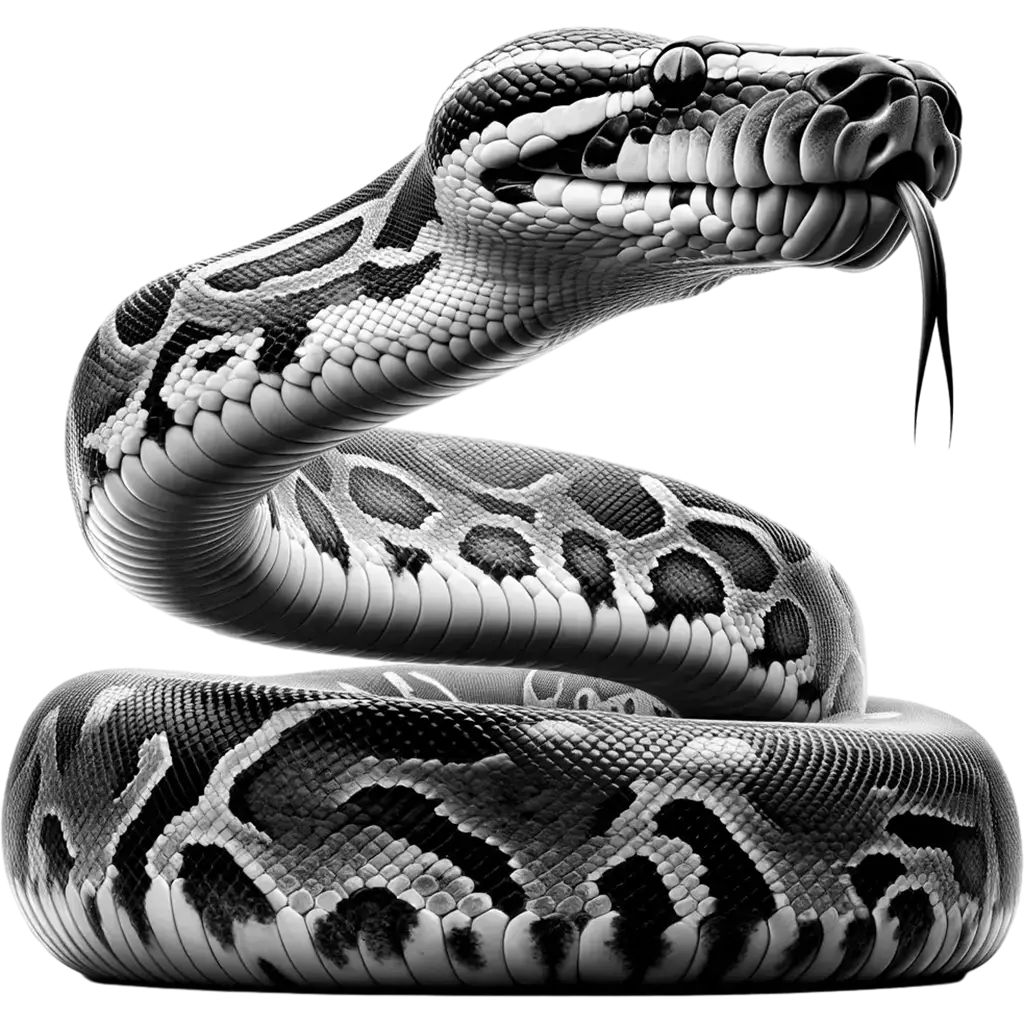
The African Rock Python, Python sebae, is a large, non-venomous snake native to sub-Saharan Africa. It is one of the largest snake species on the continent, with adults commonly reaching lengths of 3 to 4.5 meters, and some exceptional individuals exceeding 6 meters. Their skin is thick and covered in
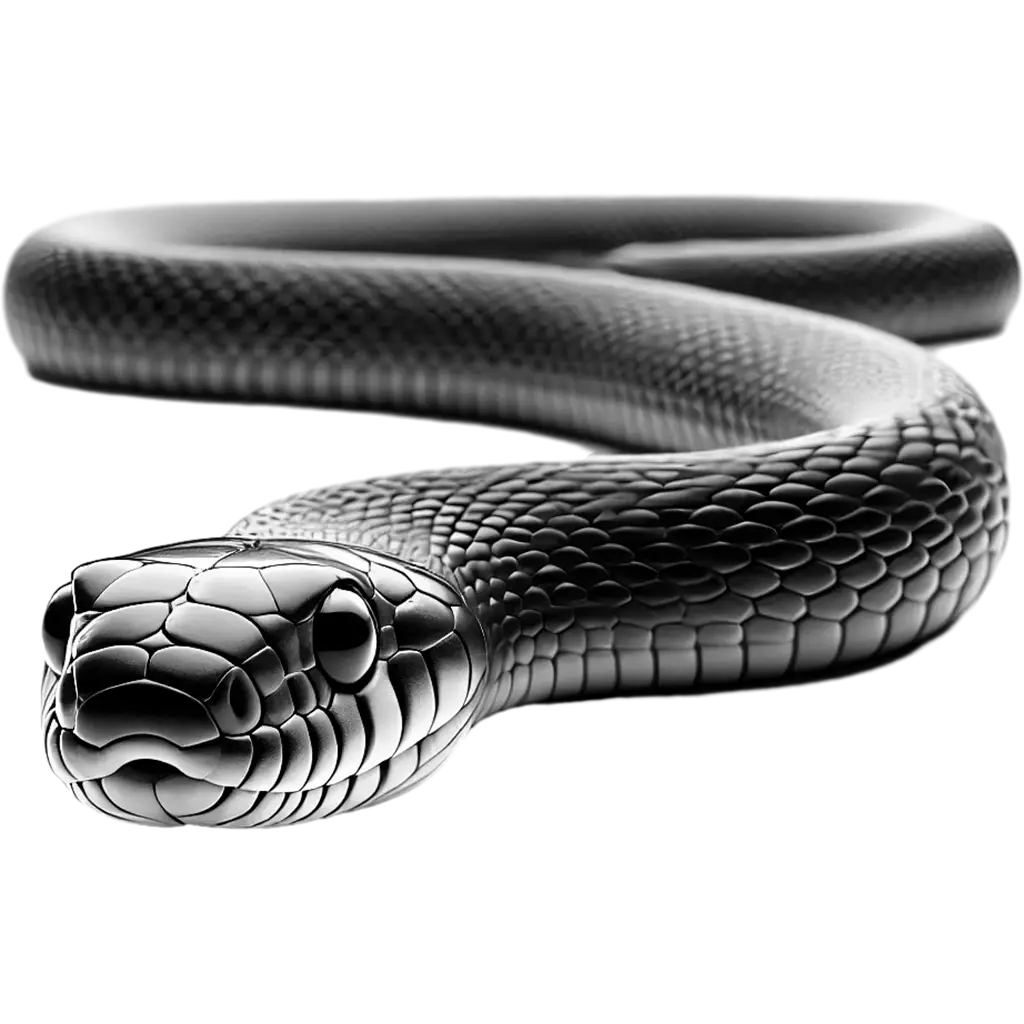
The Short-nosed Snake is a slender reptile defined by its unusually short, blunt snout and smooth, dark scales that provide exceptional camouflage among rocky outcrops. Its streamlined, agile body is perfectly adapted for a life in harsh, arid landscapes, making it appear both cryptic and striking in appearance. Active primarily

The Saltwater Crocodile, crocodylus porosus, is the largest of all living reptiles, as well as the largest terrestrial and riparian predator in the world. Males of this species can reach lengths of more than 6 meters (20 feet), with exceptional individuals exceeding 7 meters (23 feet) and weighing over 1,000