
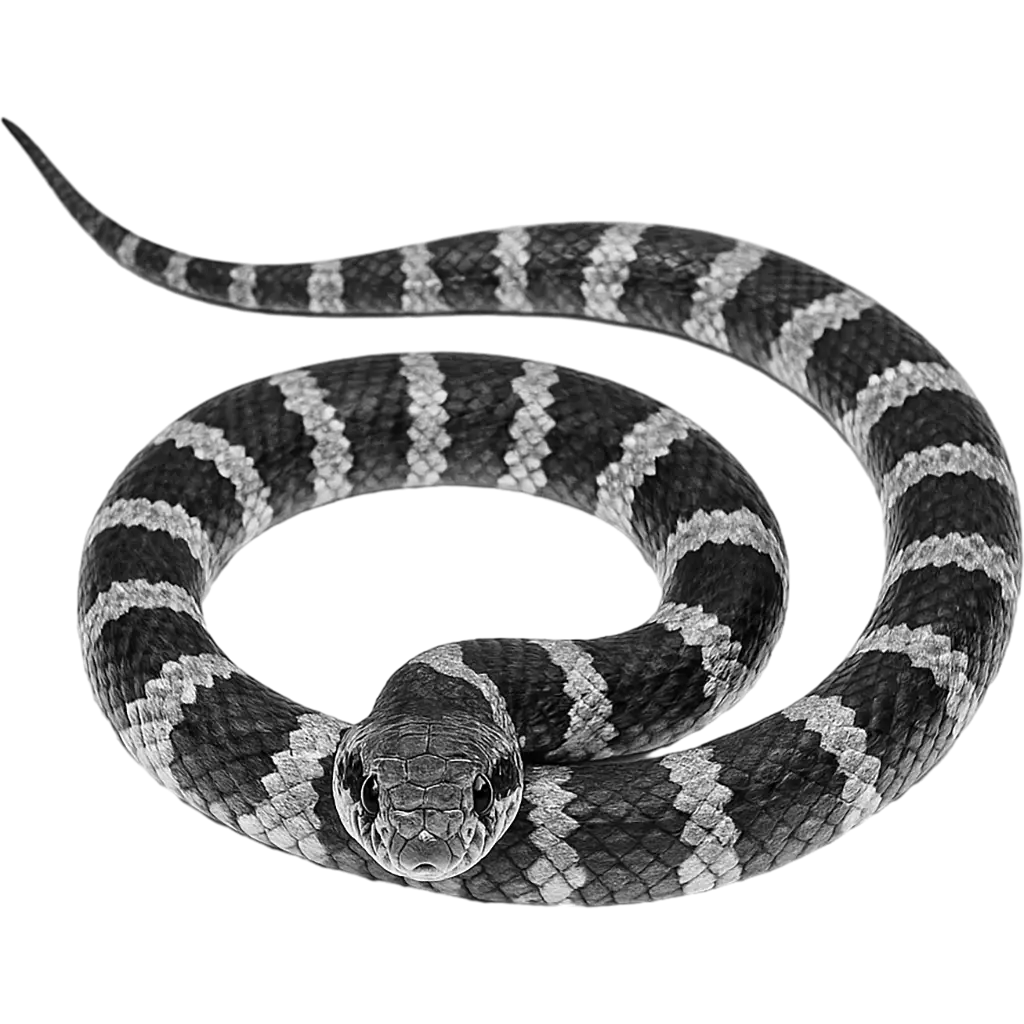
Lampropeltis Triangulum Triangulum
Eastern Milk Snake
Woodlands, farmlands, and grasslands
The Eastern Milk Snake boasts a sleek, elongated body adorned with bold, contrasting bands of red, black, and cream. Its smooth, glossy scales reflect light as it glides effortlessly over varied terrains, and its triangular head merges seamlessly with a slender, sinuous form. The natural banding not only adds striking visual appeal but also serves as an effective camouflage in its environment.
| Population: | Widespread and abundant across its range; populations remain stable |
| Generation Length: | 3-4 years |
| Average Weight: | 300-500 g |
| Average Length: | 90-150 cm |
| Lifespan: | 10-12 years in the wild, up to 15 years in captivity |
| Diet: | Small rodents, lizards, and eggs |
| Conservation Status: | Least Concern (LC) |
The Eastern Milk Snake is diurnal and highly active, often seen basking on rocks and tree stumps in search of warmth and prey. It roams a variety of habitats from woodlands to farmlands, moving with a quiet, methodical grace. Adaptable and alert, this snake uses its acute senses to navigate complex terrains and avoid potential threats. Its solitary nature is balanced by territorial behaviors that ensure sufficient resources for survival.
This snake's diet centers on small rodents, lizards, and eggs, which it captures with precision and constriction. Employing a combination of stealth and rapid striking ability, it secures its meal before beginning the digestion process that efficiently extracts vital proteins and nutrients. Its predatory habits are essential for controlling small animal populations in its ecosystem.
During the breeding season, Eastern Milk Snakes engage in brief but essential mating encounters. Males exhibit subtle undulations and vibrational cues to attract receptive females. Courtship involves tail intertwining and gentle contact that facilitates the exchange of sperm, ensuring genetic diversity and successful reproduction.
Observations indicate that Eastern Milk Snakes maintain healthy populations across diverse regions. Although threats like habitat loss and road mortality exist, their adaptive behavior and broad ecological tolerance support stable numbers and ongoing resilience in the wild.
Classifications
The Key Attributes
Features
- Movement:
Slithering
- Territorial Behavior:
Largely solitary with defined home ranges
- Speed:
Moderate
- Diet:
Carnivorous
- Physical Features:
- Banded pattern in red, black, and cream
- Smooth, glossy scales
- Elongated, slender body
- Triangular head
- Primary Senses:
- Sight
- Smell
- Taste
Understanding Habitat and Range
Geography
- Habitat:
Woodlands, farmlands, and grasslands
- Migration Patterns:
Non-migratory with local dispersal
- Geographical Range:
Eastern regions of North America
- Climate Preferences:
Temperate; favors areas with ample basking sites
Navigating the Wilderness
In the wild
- Predators:
Birds of prey, larger snakes, and mammals
- Prey:
Small rodents, lizards, and eggs
- Feeding Behavior:
Ambush predator using stealth and constriction
- Diet:
Small rodents, lizards, and eggs
- Defensive Mechanisms:
- Camouflage
- Constricting bite
- Hissing to deter threats
- Preferred Food Sources:
- Rodents
- Lizards
- Eggs
Insights Into Reproduction
Mating
- Mating System:
Polygynous
- Number of Offspring:
6-12 eggs per clutch
- Incubation Period:
Approximately 60 days
- Parental Involvement:
- No parental care; eggs are left to incubate and hatch naturally
Youngsters Section
Eastern Milk Snake
Fun Fact
Eastern Milk Snakes are renowned for their distinctive banded patterns and agile, graceful movements.
They play an important role in controlling rodent populations, and their adaptive nature allows them to thrive in diverse environments, making them a fascinating subject for herpetologists and wildlife enthusiasts alike.

Download word search puzzles
Word Search Puzzles
Check Out Other Reptiles
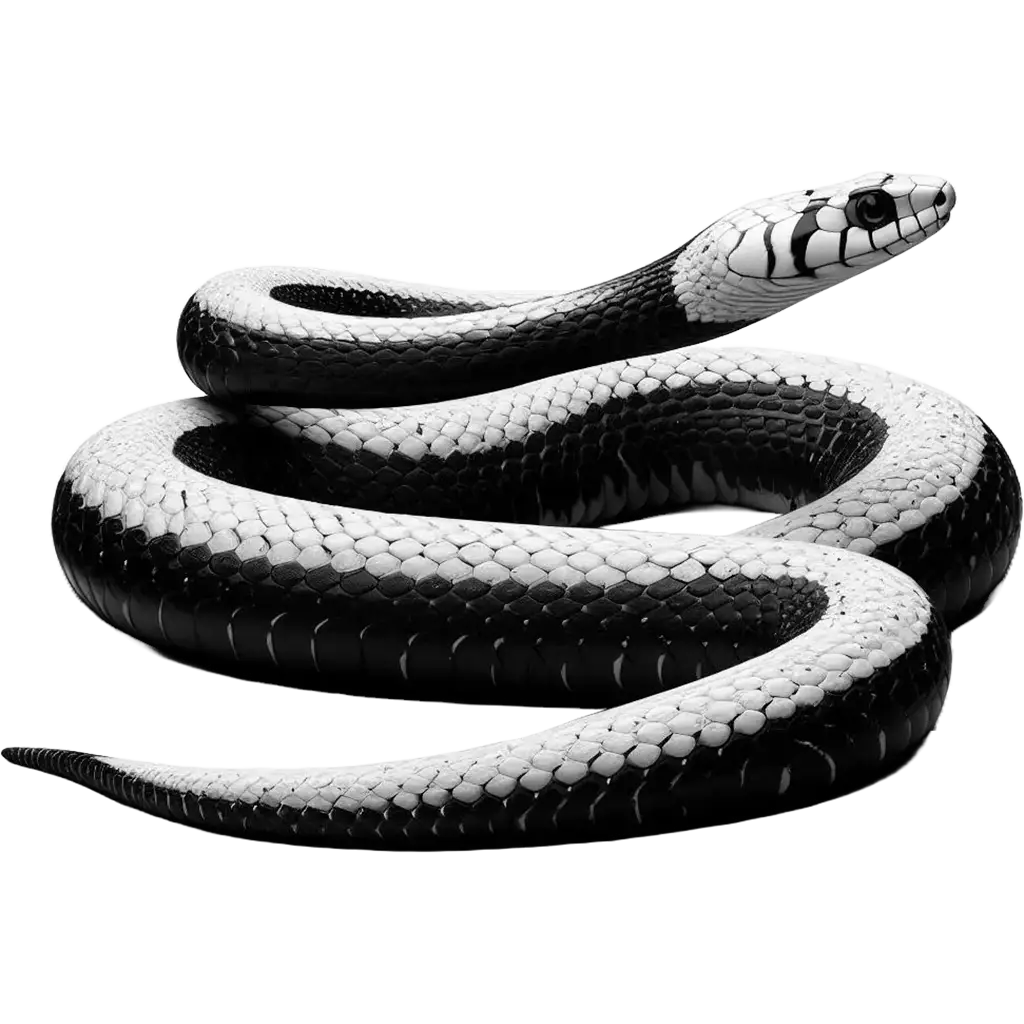
The Eastern Coral Snake, micrurus fulvius, is a highly venomous snake native to the southeastern United States. Characterized by its distinctive color pattern of black, yellow, and red bands, this slender snake can reach lengths of up to 30 inches (76 cm), though most are smaller. The vivid bands serve
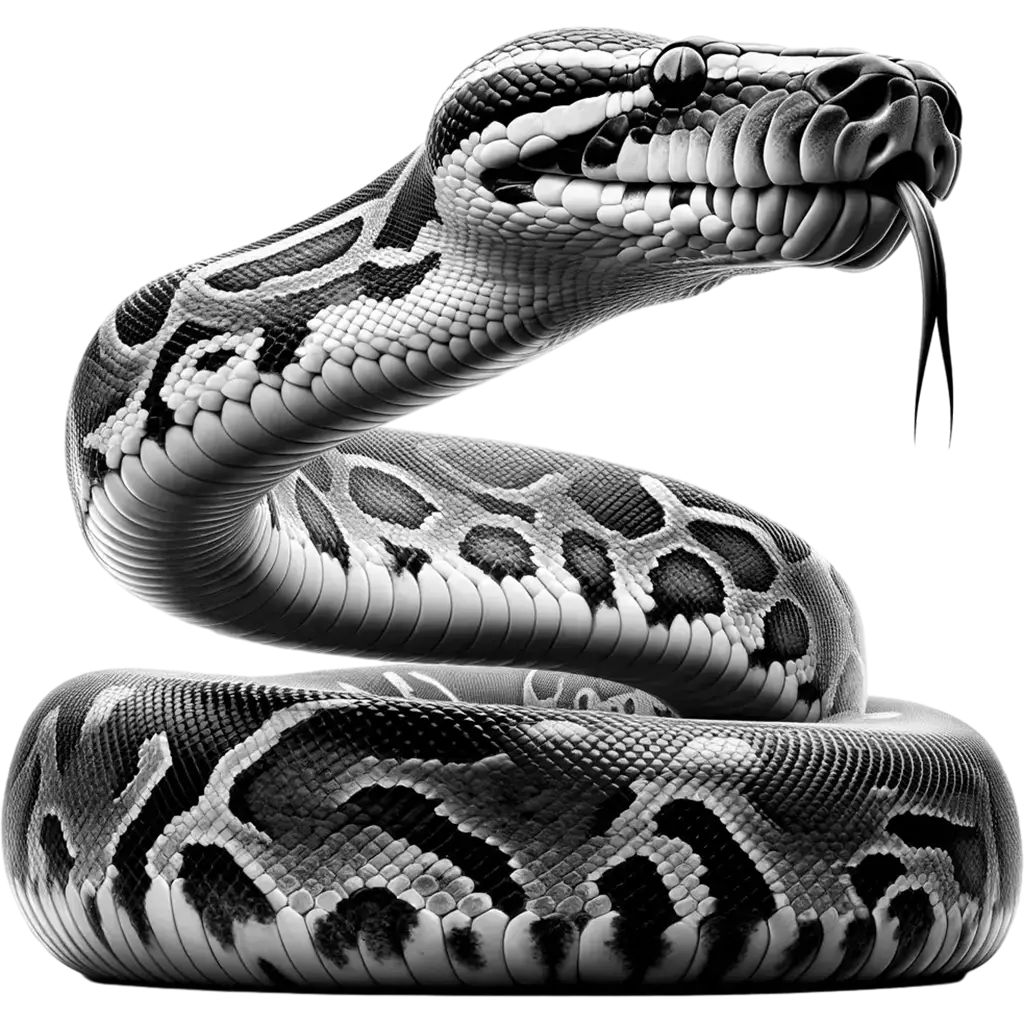
The African Rock Python, Python sebae, is a large, non-venomous snake native to sub-Saharan Africa. It is one of the largest snake species on the continent, with adults commonly reaching lengths of 3 to 4.5 meters, and some exceptional individuals exceeding 6 meters. Their skin is thick and covered in
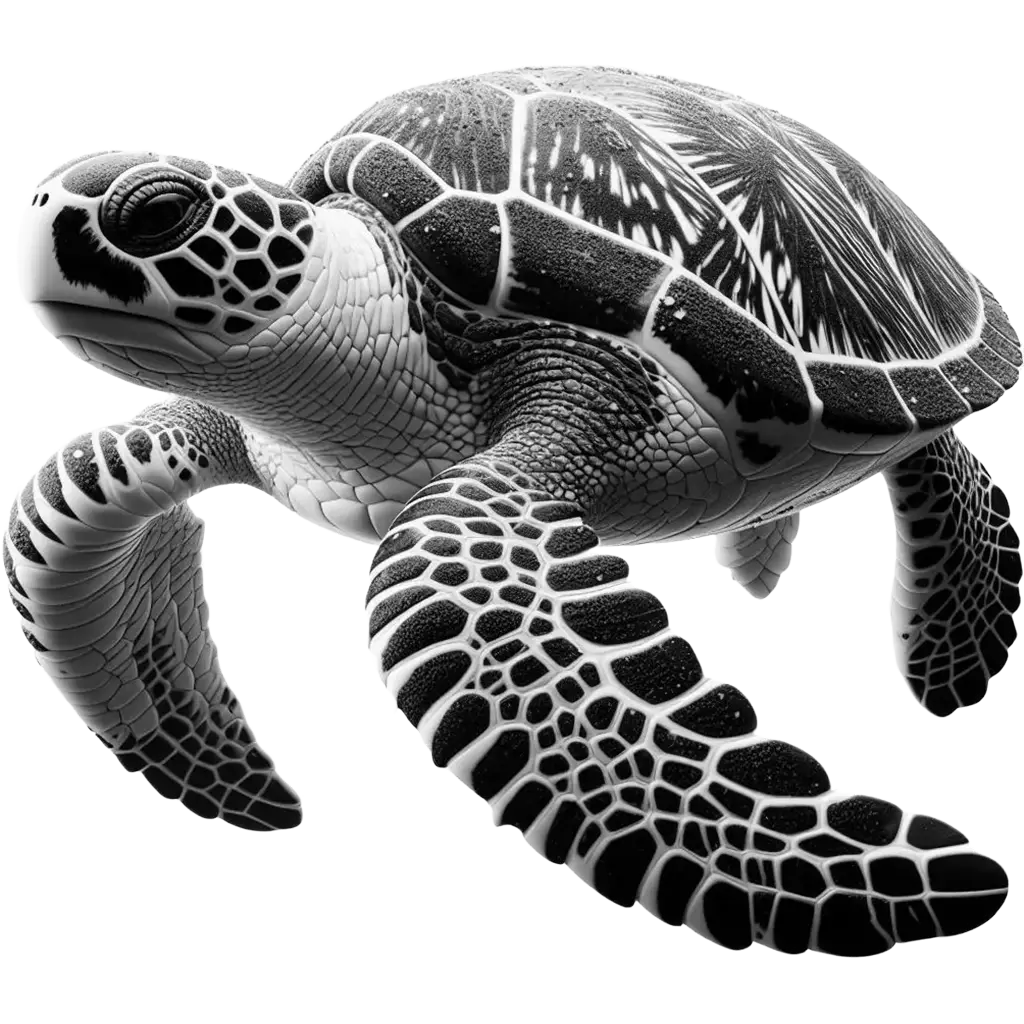
The Leatherback Sea Turtle, dermochelys coriacea, stands out as the largest of all living turtles and is the only existing species in the genus Dermochelys. Unlike other sea turtles, the Leatherback lacks a hard, bony shell and instead boasts a flexible, rubbery skin overlaying bony plates, with distinctive longitudinal ridges
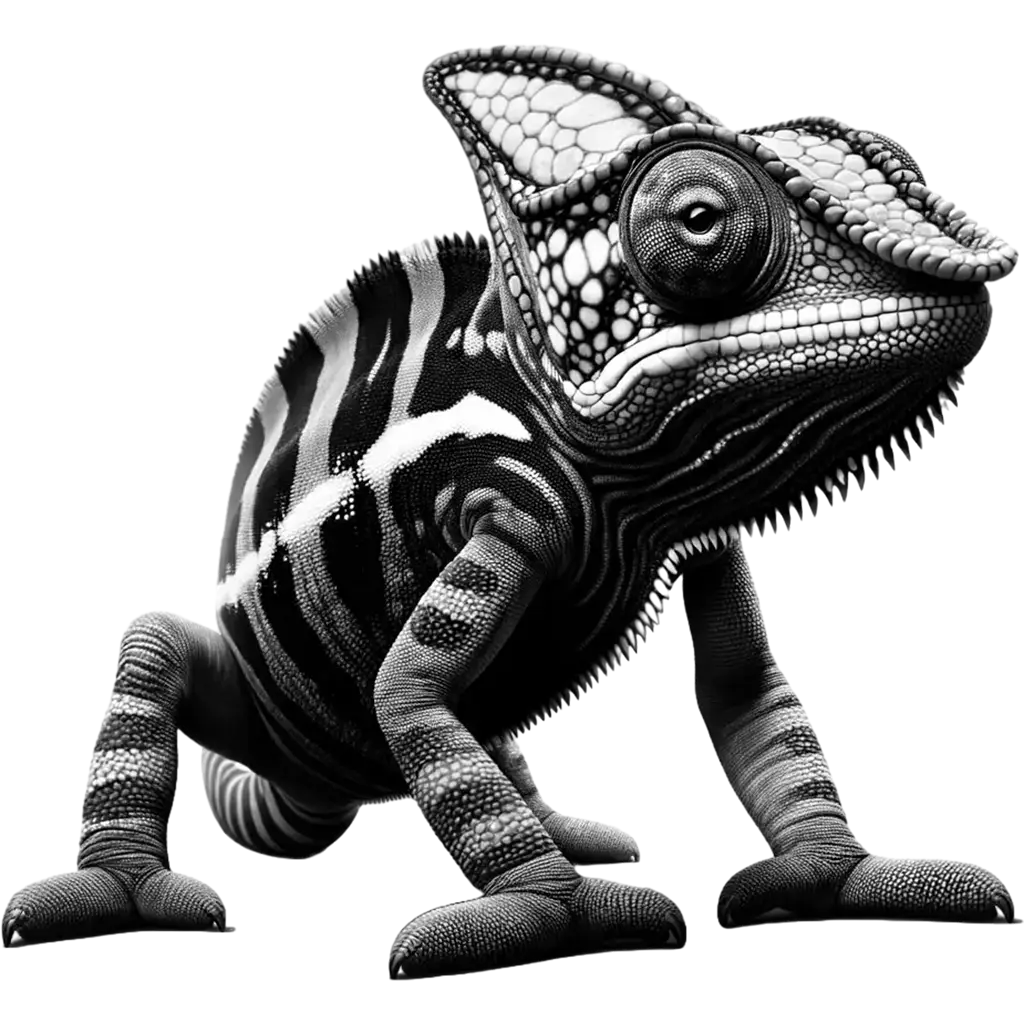
The Namaqua Chameleon, chamaeleo namaquensis, is a distinctive species of chameleon found primarily in the arid regions of southern Africa, including the Namib Desert. This species is particularly notable for its large size, with adults reaching up to 25 cm in length, making it one of the larger chameleon species.