
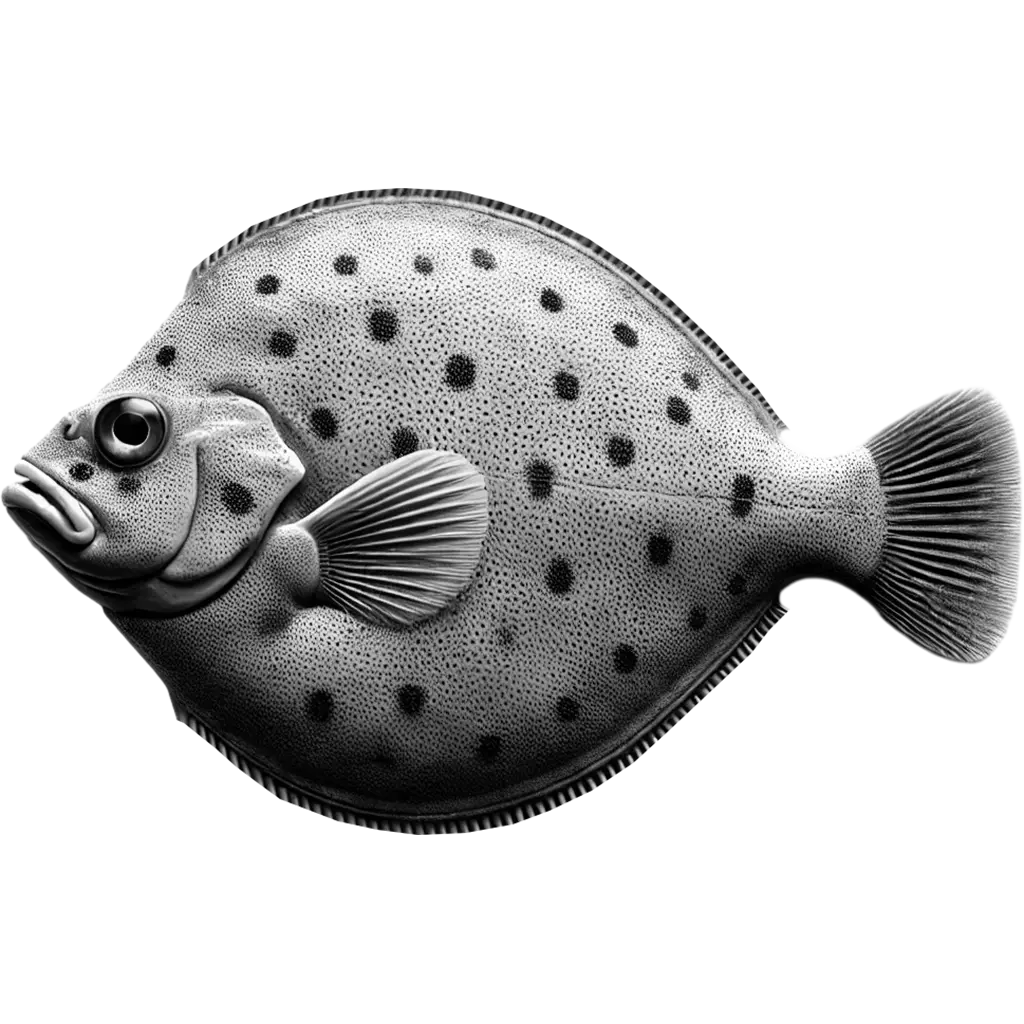
Solea Aegyptiaca
Egyptian Sole
Soft mud and sand substrates in coastal and littoral waters, including brackish lagoons
The Egyptian Sole is a flatfish species characterized by its oval-shaped, dorsoventrally flattened body. The upper side displays a greyish-brown coloration with four wide olive-colored saddles, while the underside is white. A distinctive black blotch marks the pectoral fin on the eyed side. Adults can reach up to 65 cm in length. This morphology allows the fish to blend seamlessly with the seabed, aiding in both predation and protection from predators.
| Population: | Stable; classified as Least Concern by the IUCN |
| Generation Length: | Approximately 2.6 years |
| Average Weight: | 300-500 grams |
| Average Length: | Up to 65 cm |
| Lifespan: | Up to 4 years |
| Diet: | Carnivorous, focusing on bottom-dwelling invertebrates |
| Conservation Status: | Least Concern (LC) |
Inhabiting soft mud and sand substrates, the Egyptian Sole is found in coastal and littoral zones, including brackish lagoons. Its range extends throughout the Mediterranean Sea, from Tunisia to Egypt, and includes the Suez Canal and the southern Adriatic Sea. Recently, it has been recorded in the Gulf of Suez in the Red Sea, indicating a possible range expansion. This species prefers subtropical climates and is typically found at depths ranging from 1 to 100 meters.
As a nocturnal predator, the Egyptian Sole feeds on benthic invertebrates, including cnidarians, polychaete worms, and bivalves. It employs a benthic feeding strategy, lying in wait on the seabed and using its camouflaged appearance to ambush unsuspecting prey. This diet plays a crucial role in controlling the population of these invertebrates, thus maintaining the ecological balance of its habitat.
Specific details about the reproductive behavior of the Egyptian Sole are limited. However, it is known that spawning occurs in the southern Mediterranean during late autumn and winter. Females reach sexual maturity at around 15 cm in length and can produce up to 38,000 eggs. Further research is needed to fully understand their mating systems and parental involvement.
The population of the Egyptian Sole is currently stable, and it is classified as Least Concern by the IUCN. However, it faces threats from overfishing, habitat degradation, and pollution. In Egypt, this species holds significant commercial value and has been successfully bred in aquaculture. Conservation efforts are essential to ensure the sustainability of both wild and farmed populations, as well as the health of their natural habitats.
Classifications
The Key Attributes
Features
- Movement:
Demersal; resides on or near the seabed
- Territorial Behavior:
Not specified
- Speed:
Not specified
- Diet:
Carnivore
- Physical Features:
- Flat, oval-shaped body
- Greyish-brown upper side with four wide olive-colored saddles
- White underside
- Black blotch on the pectoral fin of the eyed side
- Primary Senses:
- Sight
Understanding Habitat and Range
Geography
- Habitat:
Soft mud and sand substrates in coastal and littoral waters, including brackish lagoons
- Migration Patterns:
Non-migratory
- Geographical Range:
Mediterranean Sea, from Tunisia to Egypt; Suez Canal; southern Adriatic Sea; recently recorded in the Gulf of Suez, Red Sea
- Climate Preferences:
Subtropical
Navigating the Wilderness
In the wild
- Predators:
Not specified
- Prey:
Benthic invertebrates such as cnidarians, polychaete worms, and bivalves
- Feeding Behavior:
Benthic feeder, primarily active at night
- Diet:
Carnivorous, focusing on bottom-dwelling invertebrates
- Defensive Mechanisms:
- Camouflage with the seabed
- Preferred Food Sources:
- Polychaete worms
- Bivalves
- Cnidarians
Insights Into Reproduction
Mating
- Mating System:
Not specified
- Number of Offspring:
Not specified
- Incubation Period:
Not specified
- Parental Involvement:
- Not specified
Youngsters Section
Egyptian Sole
Fun Fact
The Egyptian Sole has recently expanded its range into the Red Sea, a phenomenon known as anti-Lessepsian migration.
This migration is unusual, as it involves species moving from the Mediterranean Sea into the Red Sea, contrary to the more common Lessepsian migration in the opposite direction. This expansion highlights the species' adaptability to new environments.

Download word search puzzles
Word Search Puzzles

Check Out Other Fish
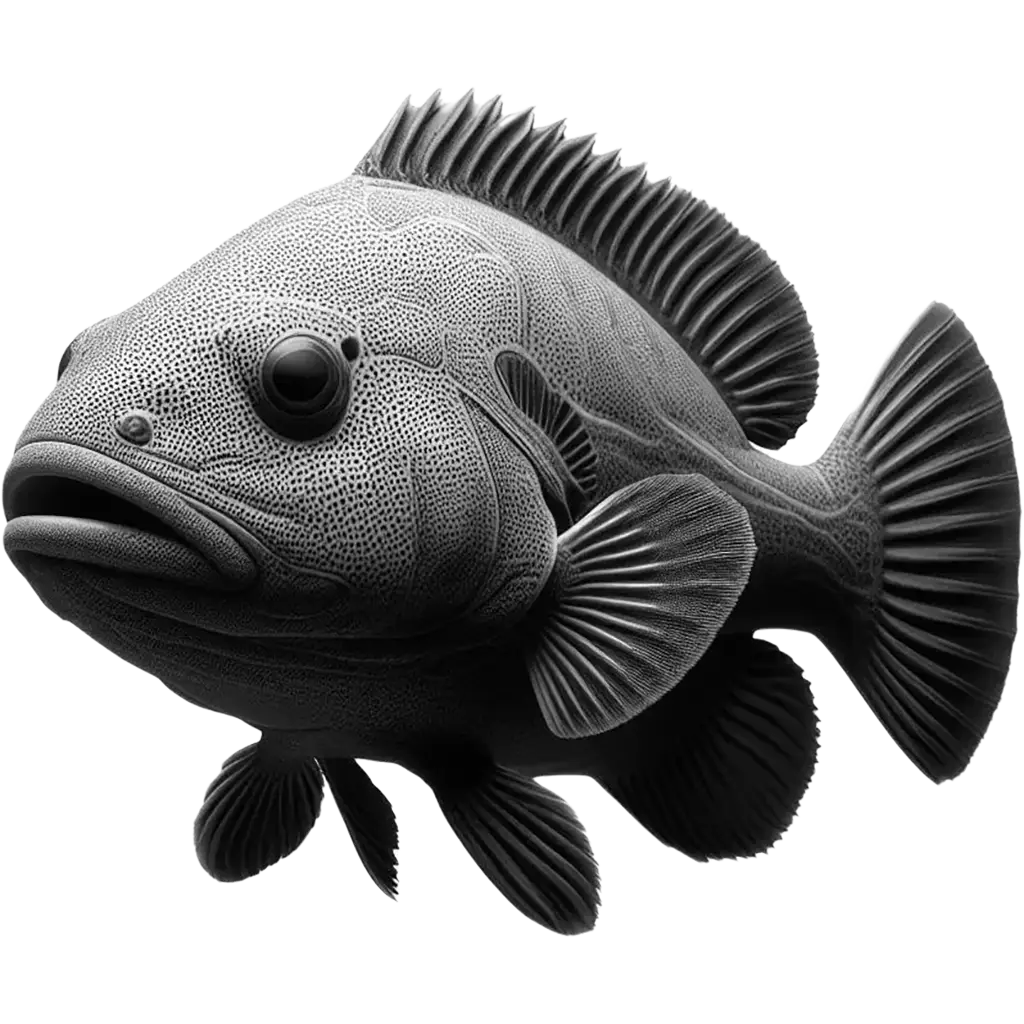
The Doctor Fish, garra rufa, is a small species of freshwater fish native to river basins in the Middle East, particularly found in Turkey, Syria, Iraq, and Iran. This species is renowned for its unique behavior of feeding on dead or diseased skin from the feet and body of humans,
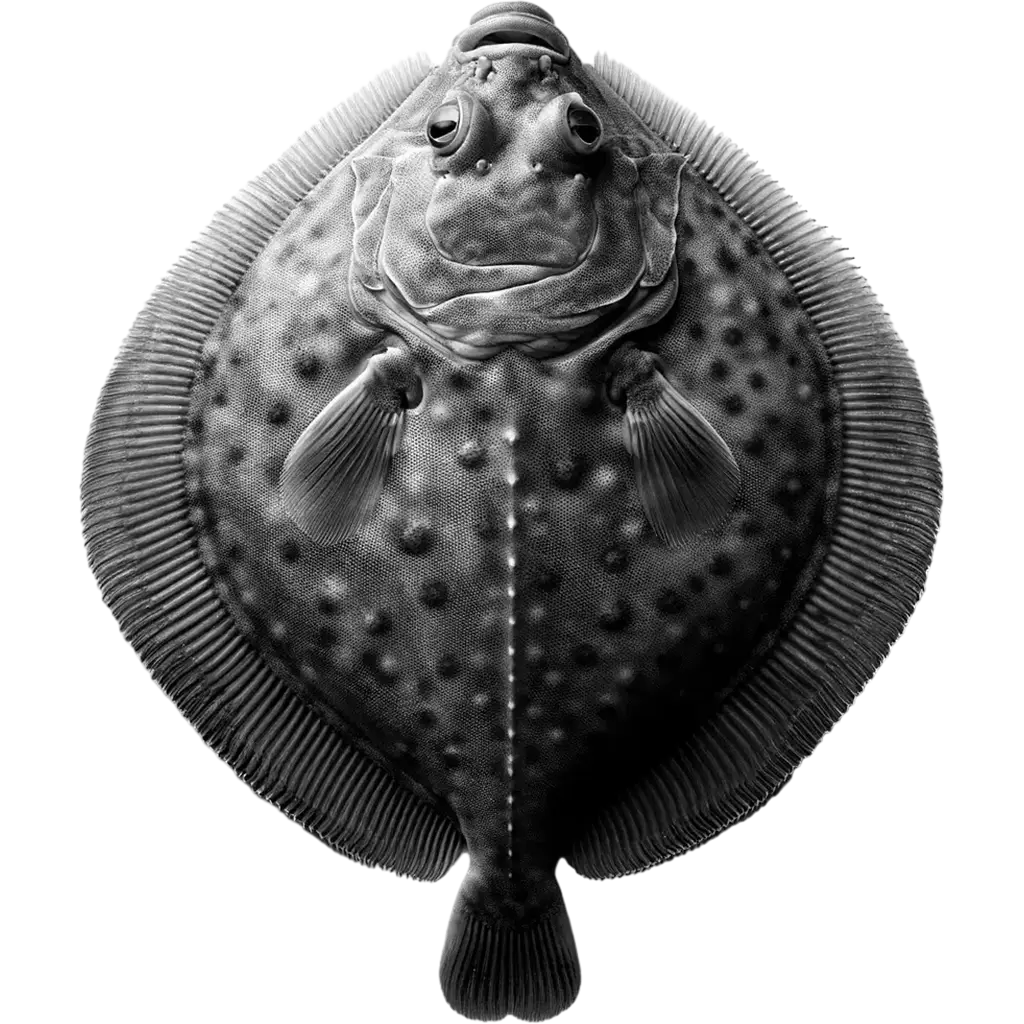
The European Plaice, pleuronectes platessa, is a flatfish species renowned for its distinctive appearance and significant value to commercial fisheries. This species has a smooth, oval body that is adapted to lie flat on the seabed, with both eyes located on its right side. The skin is dark green to
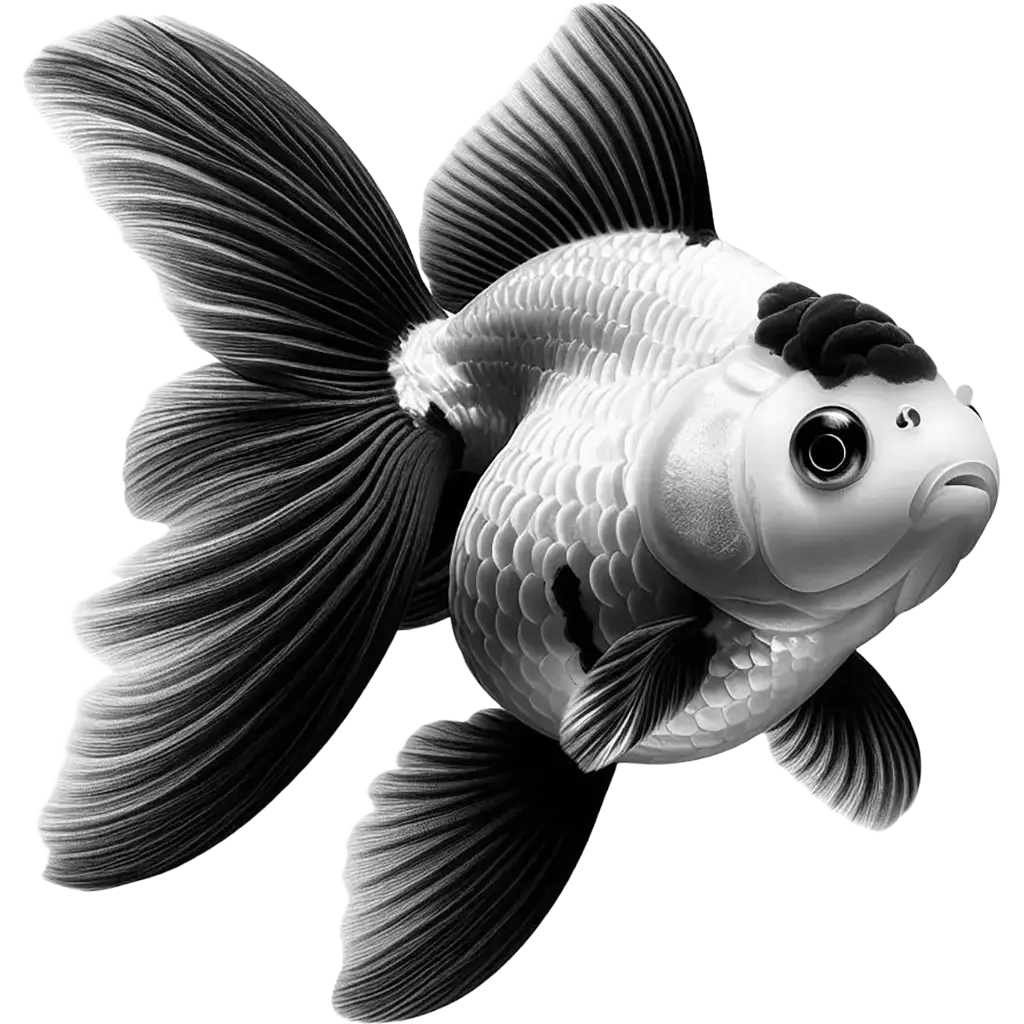
The Goldfish, carassius auratus, is a popular and recognizable freshwater fish, cherished for its vibrant hues ranging from gold to orange, white, black, and even blue. Adult Goldfish can vary greatly in size, from a few inches to over a foot in length, depending on the breed and living conditions.
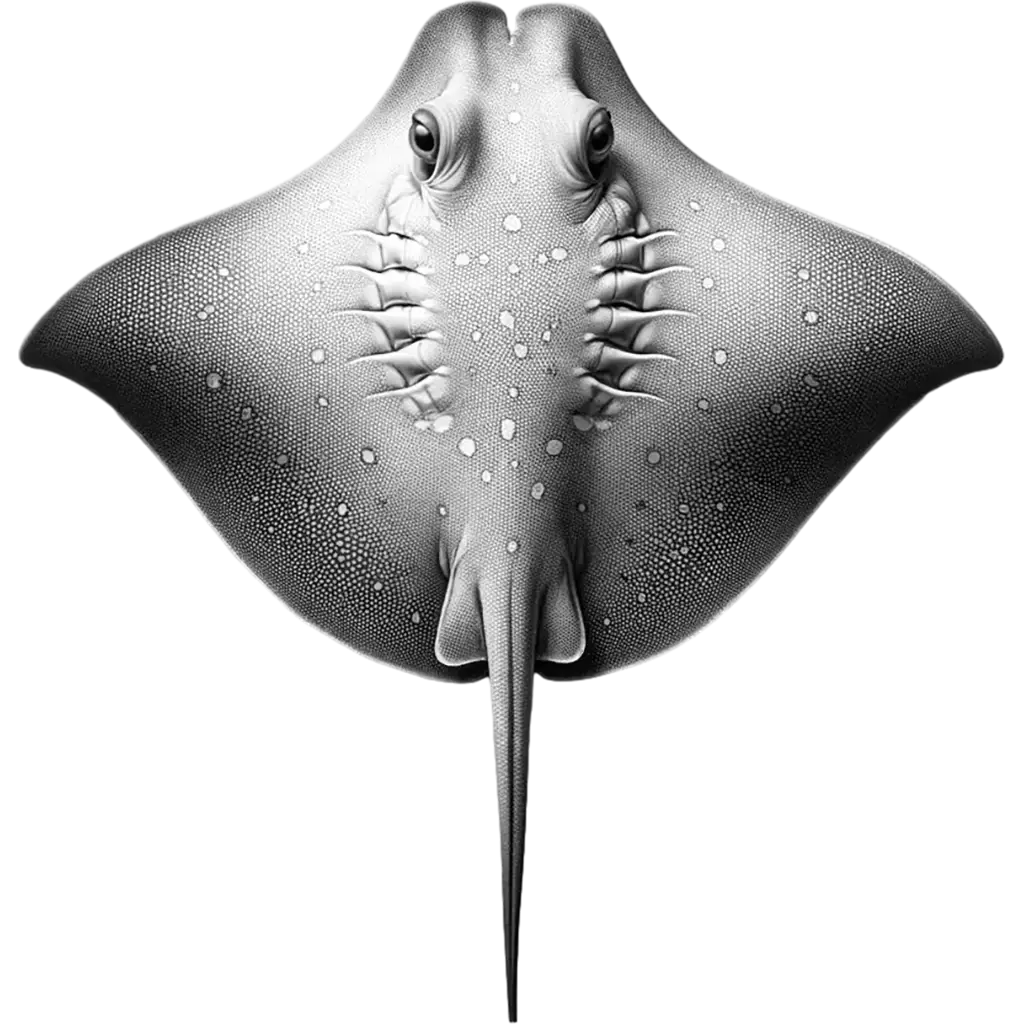
The Thornback Ray, raja clavata, is a species of cartilaginous fish in the family Rajidae, commonly found in the coastal waters of Europe and the Mediterranean Sea. This ray is easily recognizable by its kite-shaped body, which can grow up to 1 meter in length, and its dorsal surface covered