
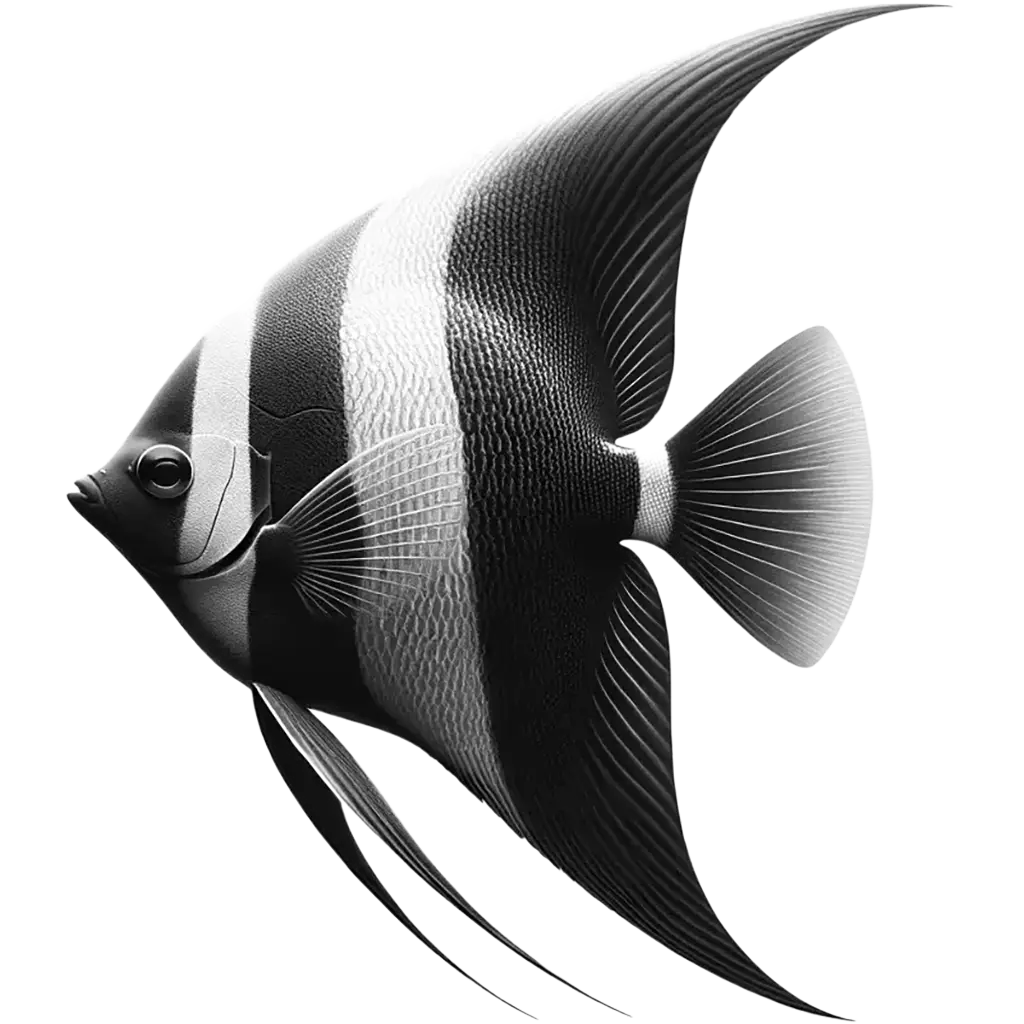
Pterophyllum Altum
Deep Angelfish
Freshwater environments, primarily in deep river channels and floodplains
The Deep Angelfish, pterophyllum altum, also known as the Altum Angelfish, is a striking freshwater fish native to the Orinoco and Amazon basins of South America. It is the largest species within the Pterophyllum genus, with adults capable of reaching up to 18 cm in height and 15 cm in length. Characterized by its majestic, elongated fins and slender body, the Altum Angelfish displays a captivating coloration of silver with brown or black vertical stripes, enhancing its presence in the aquatic environment.
| Population: | Not fully assessed, but popular in the aquarium trade |
| Generation Length: | 3-4 years |
| Average Weight: | Not typically recorded due to small size |
| Average Length: | Up to 18 cm in height |
| Lifespan: | 10-15 years in captivity |
| Diet: | Omnivorous, with a diet that includes a variety of food sources found in their natural habitat |
| Conservation Status: | Not Evaluated (NE) |
The natural habitats of the Deep Angelfish are slow-moving, clear water rivers and floodplain areas where dense vegetation provides shelter and breeding sites. These conditions are essential for their survival, offering protection from predators and a rich source of food. Altum Angelfishes are known for their shy and peaceful demeanor, thriving in well-planted aquariums that mimic their natural environment.
The diet of the Deep Angelfish in the wild consists predominantly of small crustaceans, insect larvae, and other tiny aquatic organisms. In captivity, they adapt well to a variety of foods, including flakes, frozen, and live foods, highlighting their omnivorous nature. Proper nutrition is vital for maintaining their health and vibrant coloration.
Reproduction among Deep Angelfish involves complex courtship behaviors, with pairs forming strong bonds. They are known to clean a vertical surface, such as a leaf or aquarium glass, where the female lays eggs that the male then fertilizes. Both parents exhibit protective behaviors, guarding the eggs and, later, the fry from potential threats.
The population of the Deep Angelfish in the wild faces challenges from habitat destruction and pollution. While not currently listed as endangered, their reliance on specific habitat conditions makes them vulnerable to environmental changes. In the aquarium trade, the Altum Angelfish is highly prized for its beauty and grace, contributing to its popularity among enthusiasts. Conservation efforts and sustainable aquarium trade practices are essential to ensure the preservation of this magnificent species in the wild and in captivity.
Classifications
The Key Attributes
Features
- Movement:
Swimming
- Territorial Behavior:
Can be territorial, especially during breeding
- Speed:
Graceful and slow-moving
- Diet:
Omnivore
- Physical Features:
- Tall, thin body with long dorsal and anal fins
- Distinctive vertical black stripes on the body
- Rounded, laterally compressed body shape
- Long, trailing pelvic fins
- Primary Senses:
- Sight
- Tactile
Understanding Habitat and Range
Geography
- Habitat:
Freshwater environments, primarily in deep river channels and floodplains
- Migration Patterns:
Sedentary, with movements influenced by water levels and breeding seasons
- Geographical Range:
Native to the Orinoco and Amazon River basins in South America
- Climate Preferences:
Prefers warm, soft, acidic water conditions
Navigating the Wilderness
In the wild
- Predators:
Larger fish, birds, and aquatic mammals
- Prey:
Small invertebrates, detritus, and plant matter
- Feeding Behavior:
Feeds on a mix of animal and plant materials, including insects, small crustaceans, and vegetation
- Diet:
Omnivorous, with a diet that includes a variety of food sources found in their natural habitat
- Defensive Mechanisms:
- Camouflage with vertical stripes to blend with aquatic vegetation
- Agile swimming to evade predators
- Preferred Food Sources:
- Areas rich in vegetation and small aquatic organisms
Insights Into Reproduction
Mating
- Mating System:
Monogamous, forming pairs during breeding season
- Number of Offspring:
Hundreds of eggs, depending on conditions
- Incubation Period:
Eggs hatch within a week after laying
- Parental Involvement:
- Both parents protect and care for the eggs and fry
Youngsters Section
Deep Angelfish
Fun Fact
Deep Angelfish are stunning freshwater fish known for their tall, elegant fins and unique shape.
They originate from the Amazon Basin and thrive in slow-moving waters. These fish can reach heights of up to 15 inches and are known for their peaceful nature. They are popular in aquariums due to their striking appearance.

Download word search puzzles
Word Search Puzzles


Check Out Other Fish
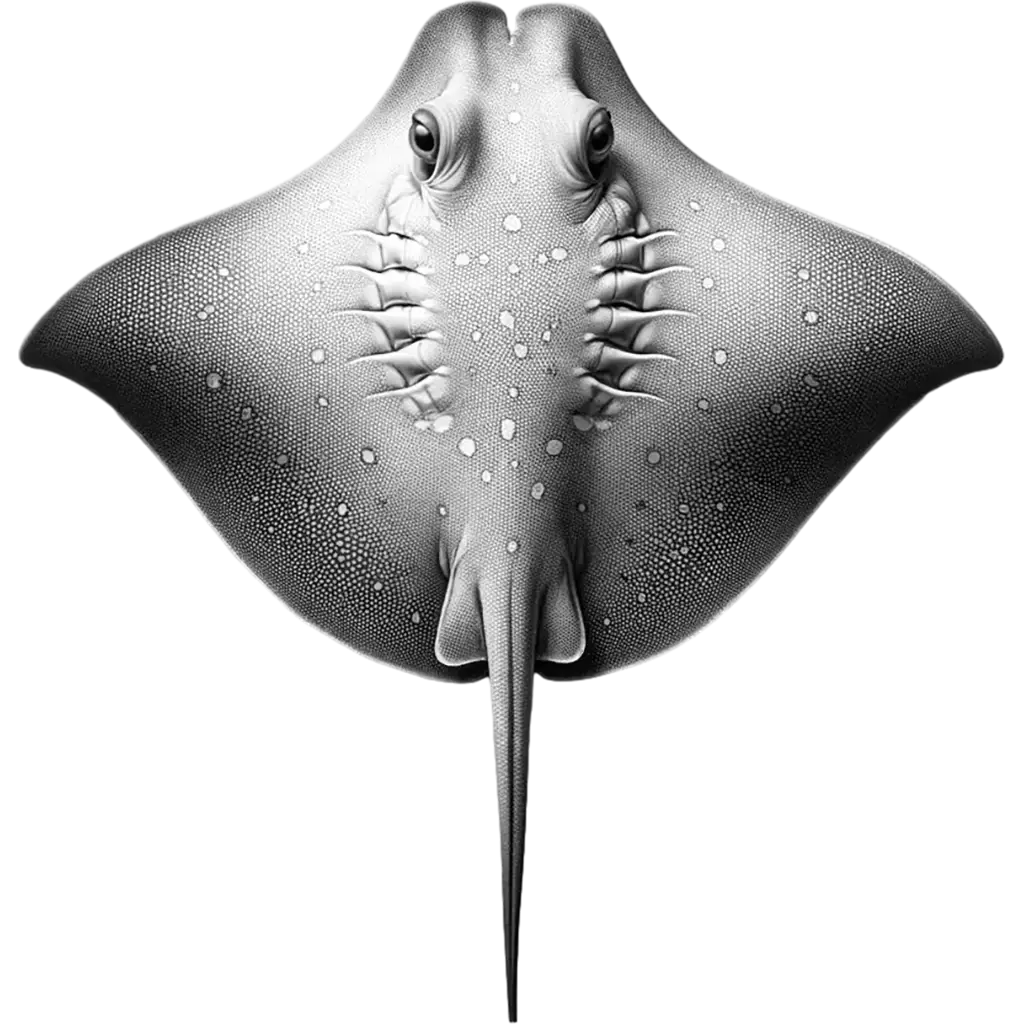
The Thornback Ray, raja clavata, is a species of cartilaginous fish in the family Rajidae, commonly found in the coastal waters of Europe and the Mediterranean Sea. This ray is easily recognizable by its kite-shaped body, which can grow up to 1 meter in length, and its dorsal surface covered
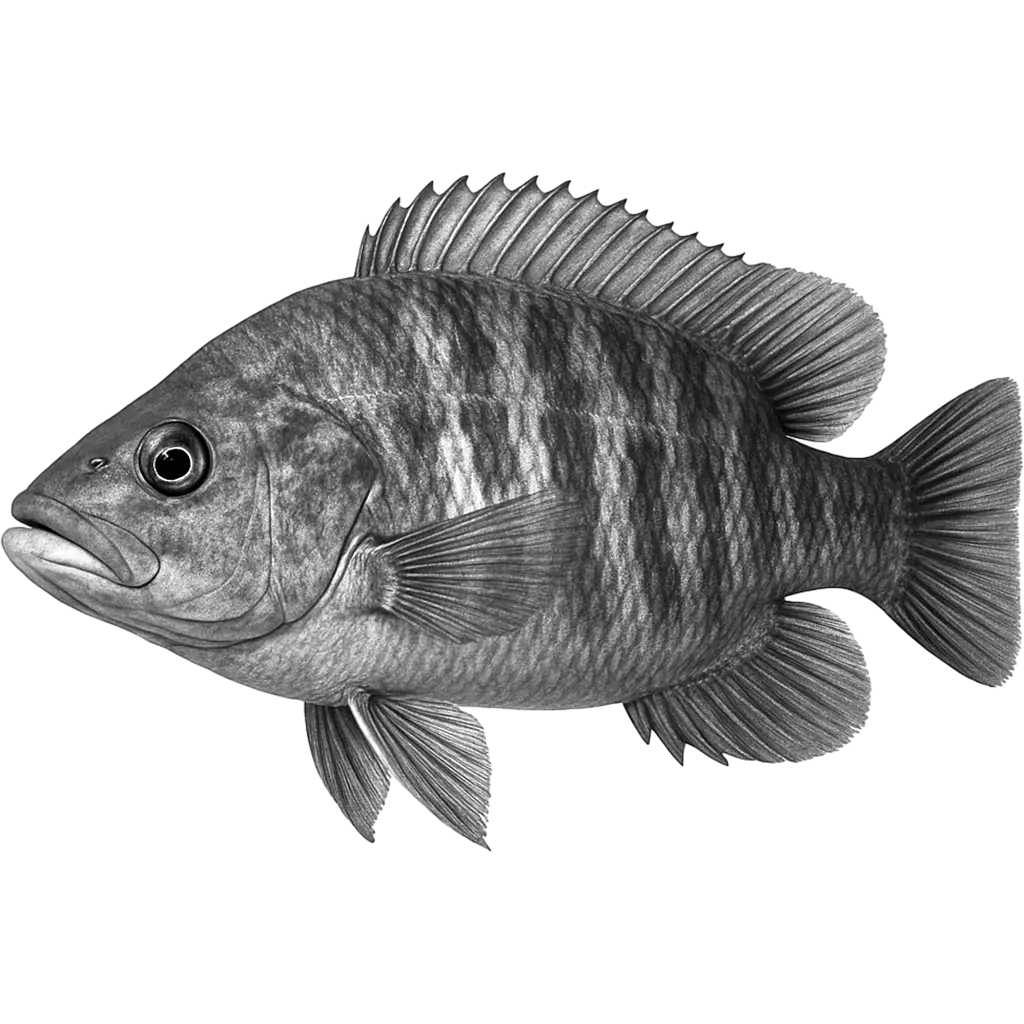
The Giant Cichlid exhibits a striking, robust body with a laterally compressed shape and a broad, powerful head. Its skin displays a mottled blend of deep blue and grey hues, accentuating the pronounced curvature of its streamlined form. Large, expressive eyes and a fierce, angular snout add to its imposing
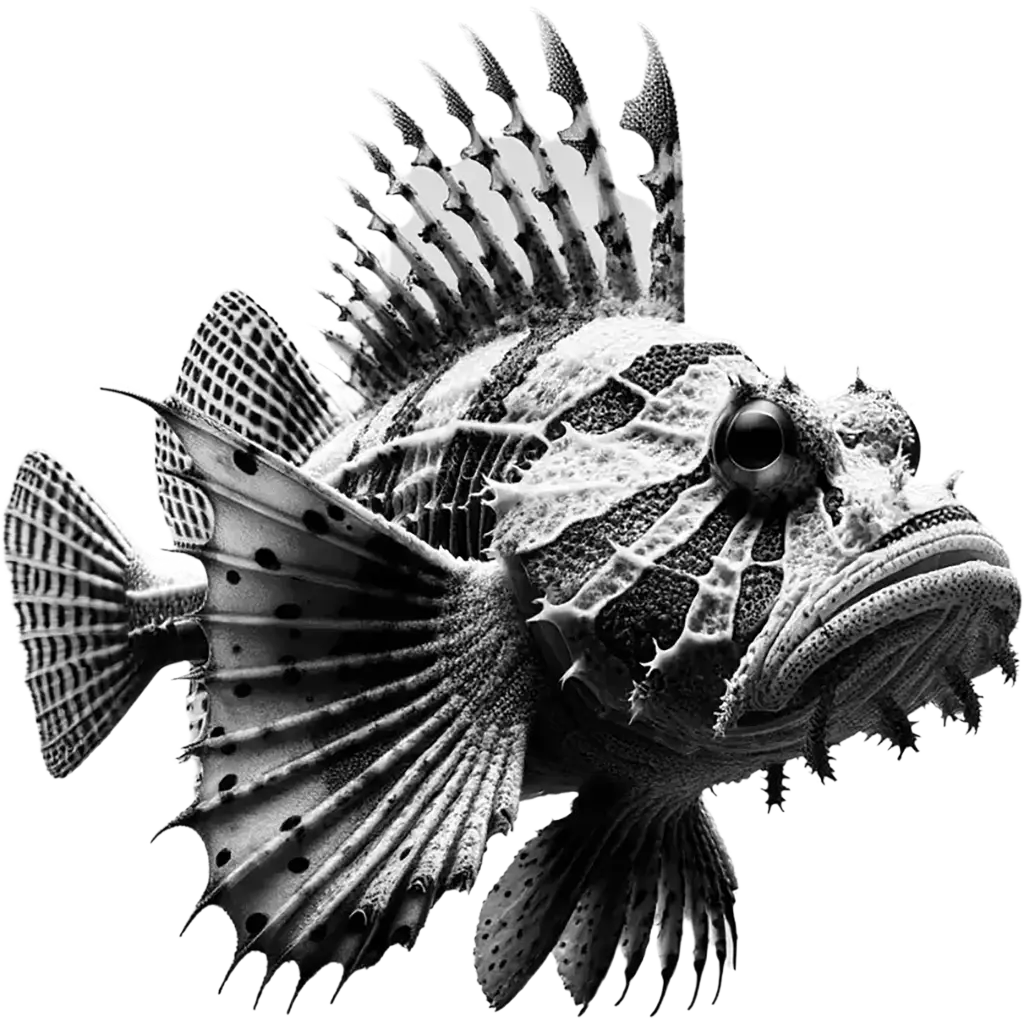
The Red Scorpionfish, pontinus furcirhinus, is a marine species known for its distinctive appearance and potent venom. Found in the deep waters of the Atlantic Ocean, including the Gulf of Mexico and the Caribbean Sea, this fish typically inhabits rocky bottoms and coral reefs at depths ranging from 100 to
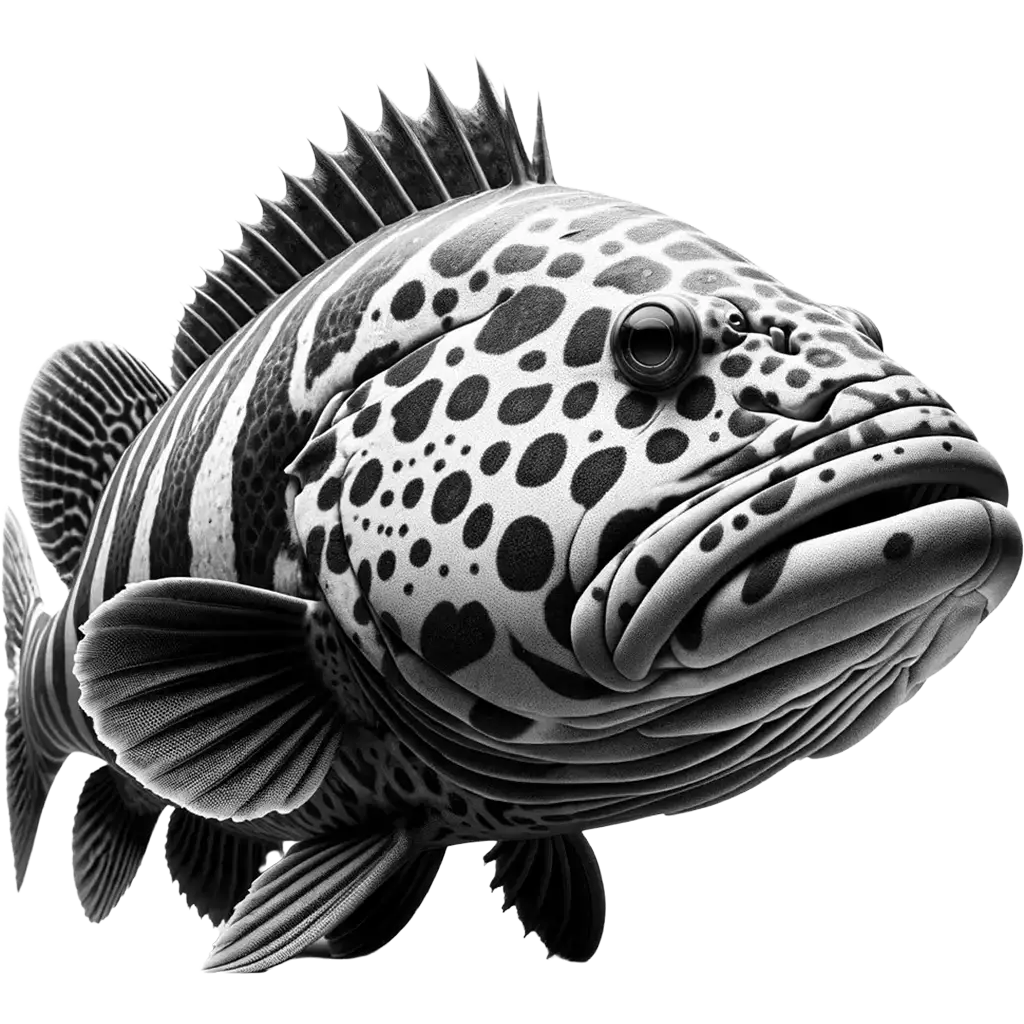
The Humpback Grouper, cromileptes altivelis, also known as the panther grouper or barramundi cod, is a distinctive species of marine fish, notable for its unique body shape and striking appearance. This species has a high, rounded profile that gives the adult fish a humpbacked appearance, from which its common name