

Pan Troglodytes
Chimpanzee
Tropical forests, woodlands, and grasslands adjacent to forests
The Chimpanzee, pan troglodytes, is a highly intelligent primate that shares up to 98% of its DNA with humans, making it our closest living relative in the animal kingdom. Native to the forests and savannas of sub-Saharan Africa, Chimpanzees exhibit remarkable diversity across their range, with four recognized subspecies. Adult Chimpanzees typically weigh between 40 to 70 kilograms, with males generally larger than females. They have robust bodies covered in black hair, long arms that extend beyond their knees, and opposable thumbs that allow for the use of tools and complex interactions with their environment.
| Population: | Estimated to be between 170,000 and 300,000 individuals |
| Generation Length: | 25 years |
| Average Weight: | Male: 40-70 kg, Female: 32-50 kg |
| Average Length: | Male: 63-94 cm, Female: slightly smaller |
| Lifespan: | 40-50 years in the wild, up to 60 years in captivity |
| Diet: | Primarily frugivorous but also consumes a wide variety of other plant and animal foods |
| Conservation Status: | Endangered (EN) |
Chimpanzees are known for their complex social structures, living in communities that can consist of up to 150 individuals, although they often travel and forage in smaller, more manageable groups. These communities are fission-fusion societies, where the composition of the foraging groups changes over time. Such social dynamics require Chimpanzees to have excellent memory and problem-solving abilities to maintain relationships and navigate their social hierarchy. Their communication includes a wide range of vocalizations, gestures, and facial expressions.
The diet of the Chimpanzee is omnivorous, consisting primarily of fruits, nuts, seeds, leaves, and occasionally insects and small animals. They are particularly adept at using tools, such as sticks to extract termites from mounds, and rocks to crack open nuts. This adaptability in foraging behavior highlights their intelligence and ability to exploit a variety of food sources in their environment.
Reproduction in Chimpanzees is not seasonal, with females giving birth at any time of the year after a gestation period of about eight months. Mothers have a close bond with their offspring, who are dependent on them for the first few years of life. Young Chimpanzees learn social skills, tool use, and foraging techniques through observation and imitation of adults, underscoring the importance of social learning in their development.
The Chimpanzee is currently listed as Endangered by the IUCN, with populations declining due to habitat destruction, poaching, and disease. Conservation efforts are focused on protecting their natural habitats, enforcing laws against hunting and trade, and research to better understand their needs and behaviors. The survival of the Chimpanzee is crucial for biodiversity conservation in Africa, as their presence signifies healthy forests and ecosystems. Their complex social structures and behaviors also provide valuable insights into the evolution of human sociality and cognition.
Classifications
The Key Attributes
Features
- Movement:
Quadrupedal knuckle-walking, arboreal climbing
- Territorial Behavior:
Highly social, living in communities with complex hierarchies
- Speed:
Not specifically quantified; agile both in trees and on the ground
- Diet:
Omnivore
- Physical Features:
- Dark hair
- Bare face, fingers, toes, palms, and soles
- Protruding ears
- Primary Senses:
- Sight
- Hearing
- Touch
- Smell
Understanding Habitat and Range
Geography
- Habitat:
Tropical forests, woodlands, and grasslands adjacent to forests
- Migration Patterns:
Non-migratory, but communities have defined home ranges that they defend
- Geographical Range:
Sub-Saharan Africa, with populations spread across a range of countries
- Climate Preferences:
Tropical climates
Navigating the Wilderness
In the wild
- Predators:
Leopards, lions, and humans
- Prey:
Fruits, nuts, seeds, insects, small vertebrates
- Feeding Behavior:
Daytime foraging for fruits, leaves, nuts, seeds, honey, insects, and occasionally hunt small animals
- Diet:
Primarily frugivorous but also consumes a wide variety of other plant and animal foods
- Defensive Mechanisms:
- Strength in numbers
- Use of tools for defense and obtaining food
- Intimidation displays
- Preferred Food Sources:
- Fruits
- Nuts
- Seeds
- Insects
- Small vertebrates
Insights Into Reproduction
Mating
- Mating System:
Promiscuous
- Number of Offspring:
1 offspring
- Gestation Period:
Approximately 8 months
- Parental Involvement:
- Primarily maternal care; mothers are assisted by other females within the community
Youngsters Section
Chimpanzee
Fun Fact
Chimpanzees share about 98% of their DNA with humans, making them our closest living relatives.
These intelligent primates use tools, such as sticks to fish for termites, showcasing problem-solving skills. They communicate through vocalizations, facial expressions, and gestures, exhibiting complex social behaviors. Chimpanzees live in communities led by dominant males, often forming strong family bonds.

Download word search puzzles
Word Search Puzzles


Check Out Other Mammals
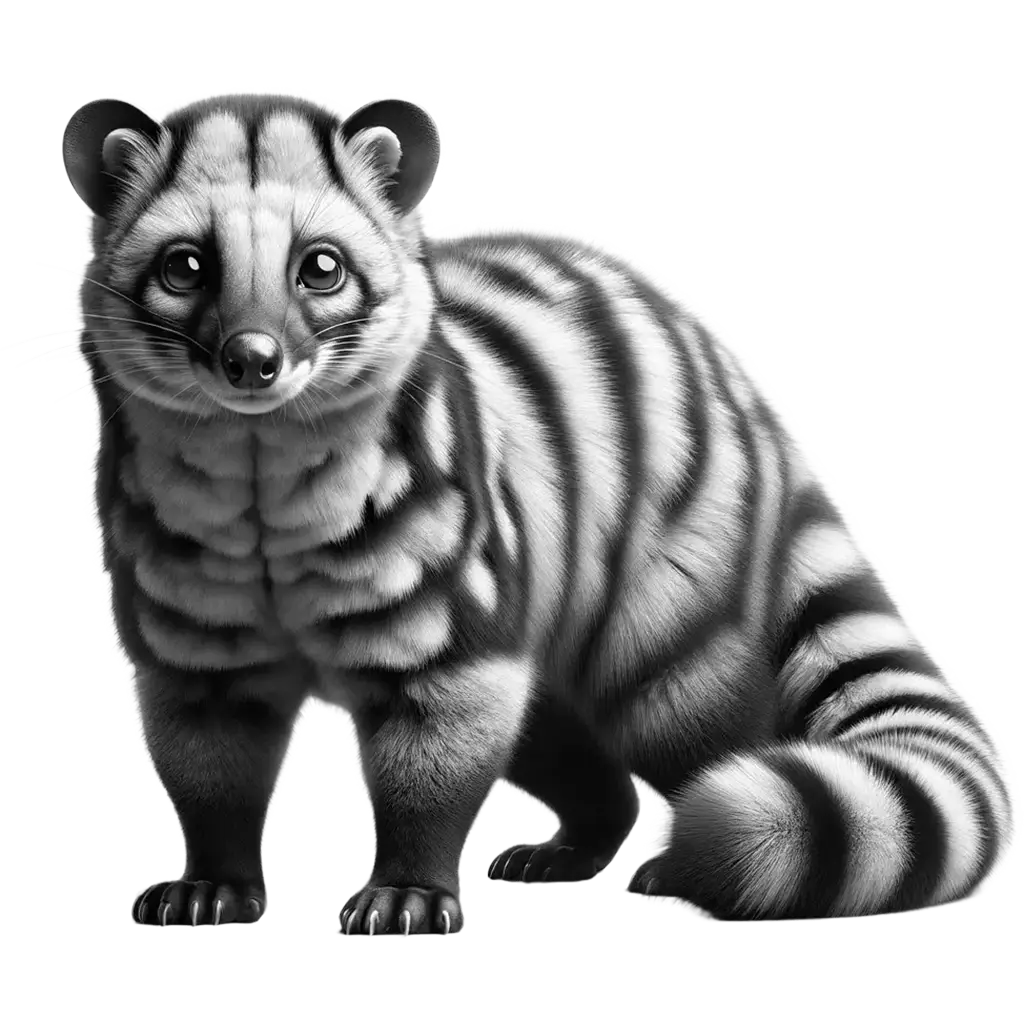
The Banded Palm Civet, hemigalus derbyanus, is a small, nocturnal mammal unique to the dense tropical forests of Southeast Asia, including Malaysia, Indonesia, and Thailand. Characterized by its striking appearance, this civet has a slender body measuring 41 to 53 cm in length, with a tail almost equal in length,
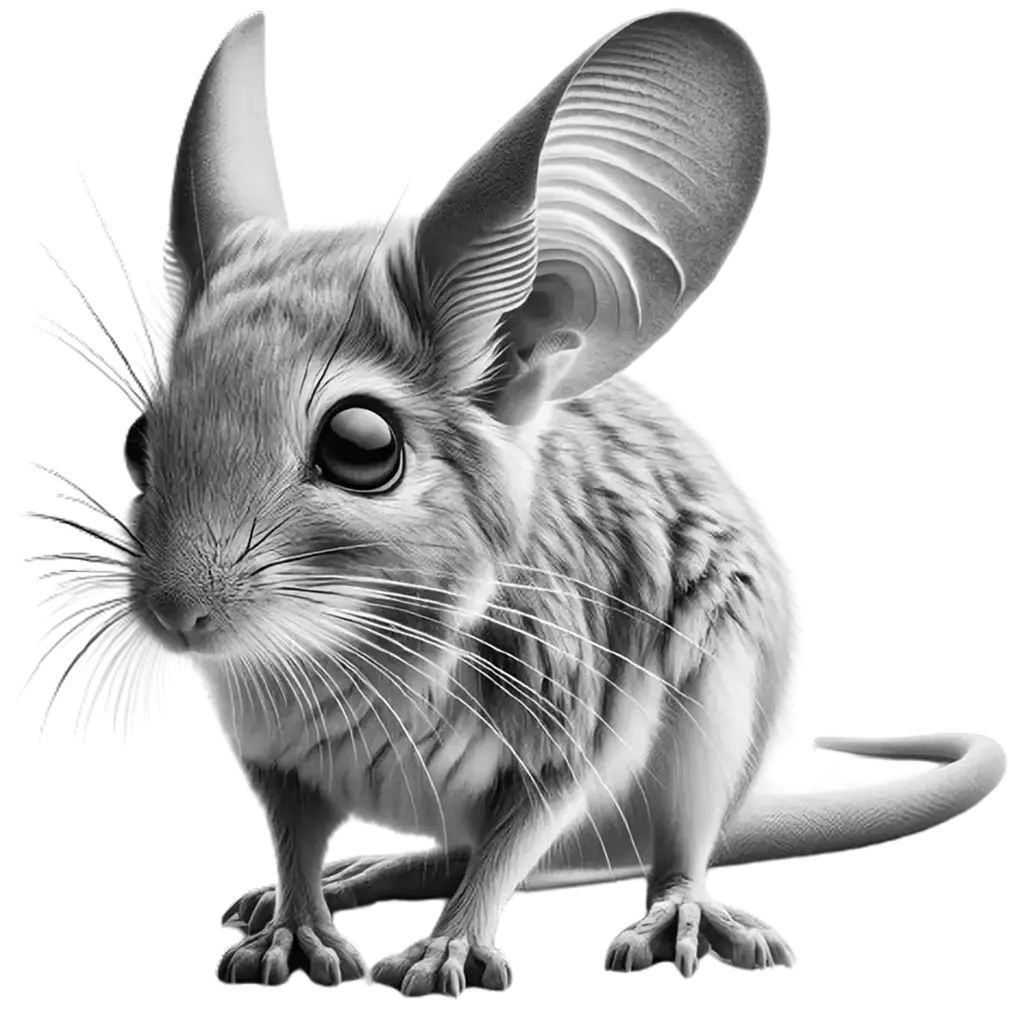
Williams's Jerboa, scarturus williamsi, is a small, nocturnal rodent known for its distinctive long hind legs and short forelimbs, enabling it to leap significant distances, much like a kangaroo. This adaptation is crucial for escaping predators and traversing its desert habitat. Its coat is typically sandy or pale brown, blending

The Common Marmoset, callithrix jacchus, is a small, vivacious primate native to the northeastern regions of Brazil. Characterized by its diminutive size, adults typically weigh between 150 to 400 grams and measure around 18 to 28 centimeters in body length, with a tail that can extend up to 25 to

The Bactrian Camel, camelus bactrianus, is a large, even-toed ungulate native to the steppes of Central Asia. Distinguished by its two humps, in contrast to the single-humped dromedary camel, Bactrian Camels are well adapted to life in harsh desert and mountainous environments. Adults can weigh between 300 to 1,000 kg