
Genetta Thierryi
Hausa Genet
Savannahs, woodlands, and forested areas
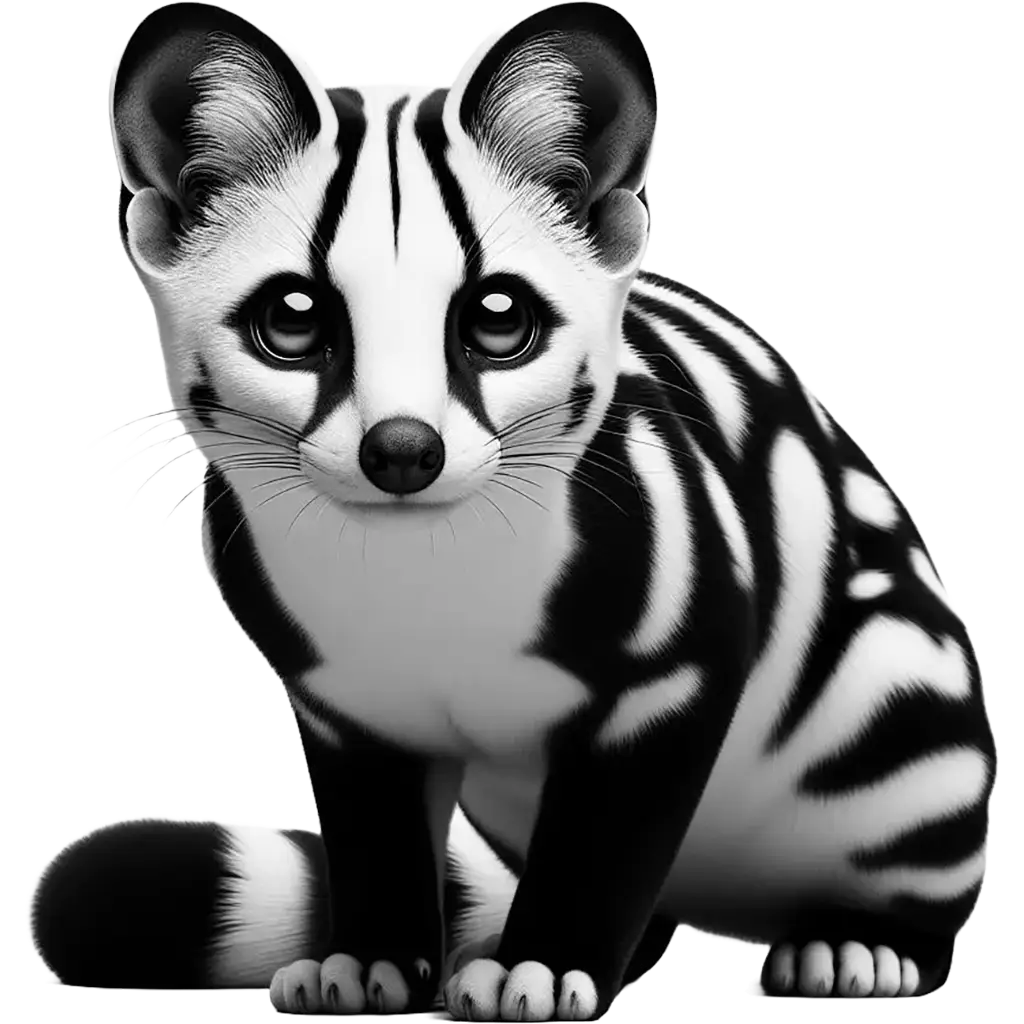
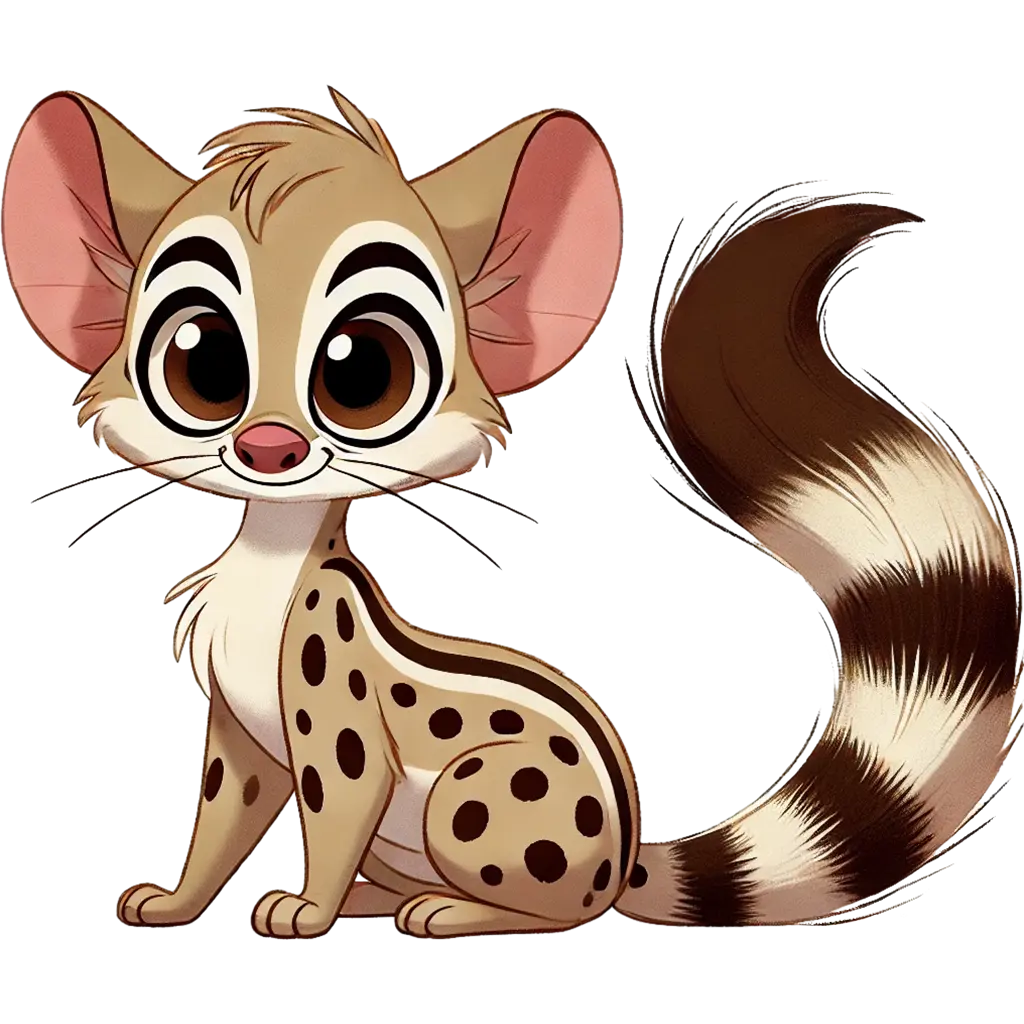
The Hausa Genet, Genetta thierryi, is a small, elusive carnivore native to West Africa, with its range extending from Senegal to Nigeria. This species is one of the lesser-known members of the Viverridae family, which includes genets and civets. Adult Hausa Genets typically measure between 40 to 46 centimeters (15.7 to 18.1 inches) in body length, with a tail almost equal in length, and weigh around 1 to 2 kilograms (2.2 to 4.4 pounds). They are characterized by their slender bodies, short legs, and distinctive coat pattern, featuring a grayish-brown background with rows of dark spots and a black stripe running along the spine.
| Population: | Not well-documented; lacks detailed population studies but is not currently listed as endangered |
| Generation Length: | 3-4 years |
| Average Weight: | 1.4-2 kg |
| Average Length: | Body length: 40-46 cm, Tail length: 40-47 cm |
| Lifespan: | Up to 10 years in the wild, potentially longer in captivity |
| Diet: | Small vertebrates and invertebrates |
| Conservation Status: | Least Concern (LC) |
Hausa Genets inhabit a variety of environments, including savannas, woodlands, and forests, where they are well-adapted to a nocturnal lifestyle. They are primarily ground-dwelling but can climb trees when threatened or in search of food. These genets are solitary and secretive, making them difficult to observe in the wild.
The diet of the Hausa Genet consists mainly of small mammals, birds, insects, and occasionally fruits. Their varied diet reflects their opportunistic feeding behavior, allowing them to adapt to the availability of prey in their habitat.
Little is known about the reproduction of the Hausa Genet in the wild, but it is believed to follow similar patterns to other genet species, with females giving birth to one to three offspring after a gestation period of several months. The young are born in hidden locations, such as burrows or dense vegetation, and are cared for by the mother until they are independent.
The Hausa Genet is currently classified as Least Concern by the IUCN, although its population is not well-documented. Threats to this species include habitat loss due to agricultural expansion, hunting for bushmeat, and persecution due to perceived competition for poultry. Conservation efforts for the Hausa Genet are limited but include habitat protection and raising awareness about the species to reduce hunting pressure. The preservation of the Hausa Genet and its habitat is crucial for maintaining biodiversity in West African ecosystems.
Classifications
The Key Attributes
Features
- Movement:
Quadrupedal, climbing
- Territorial Behavior:
Solitary and territorial
- Speed:
Not quantified; agile climbers and quick on the ground
- Diet:
Carnivore
- Physical Features:
- Spotted coat with a distinctive pattern
- Long, bushy tail
- Slender body with short legs
- Sharp, retractable claws for climbing
- Primary Senses:
- Sight
- Hearing
- Smell
Understanding Habitat and Range
Geography
- Habitat:
Savannahs, woodlands, and forested areas
- Migration Patterns:
Non-migratory, but individuals may roam within their territories
- Geographical Range:
West Africa, particularly in countries like Senegal, Mali, Niger, and Nigeria
- Climate Preferences:
Prefers warm climates with available cover and water sources
Navigating the Wilderness
In the wild
- Predators:
Larger carnivores and birds of prey
- Prey:
Rodents, small birds, insects
- Feeding Behavior:
Nocturnal hunter, preying on small mammals, birds, and insects
- Diet:
Small vertebrates and invertebrates
- Defensive Mechanisms:
- Climbing to evade predators
- Camouflage in their environment
- Agility and stealth when hunting or avoiding threats
- Preferred Food Sources:
- Rodents
- Small birds
- Insects
Insights Into Reproduction
Mating
- Mating System:
Not well-documented, but likely polygynous
- Number of Offspring:
2-3 young per litter
- Gestation Period:
Approximately 2-3 months
- Parental Involvement:
- Females likely provide all care for the young, including feeding and protection
Youngsters Section
Hausa Genet
Fun Fact
Hausa genets are agile and elusive creatures primarily found in West African savannas and woodlands.
These small carnivorous mammals possess retractable claws and long tails, aiding their climbing ability. Nocturnal by nature, they feed on small animals, insects, and fruits. Their unique spotted coat provides excellent camouflage, helping them evade predators while foraging in their diverse habitats.

Download word search puzzles
Word Search Puzzles

Check Out Other Mammals
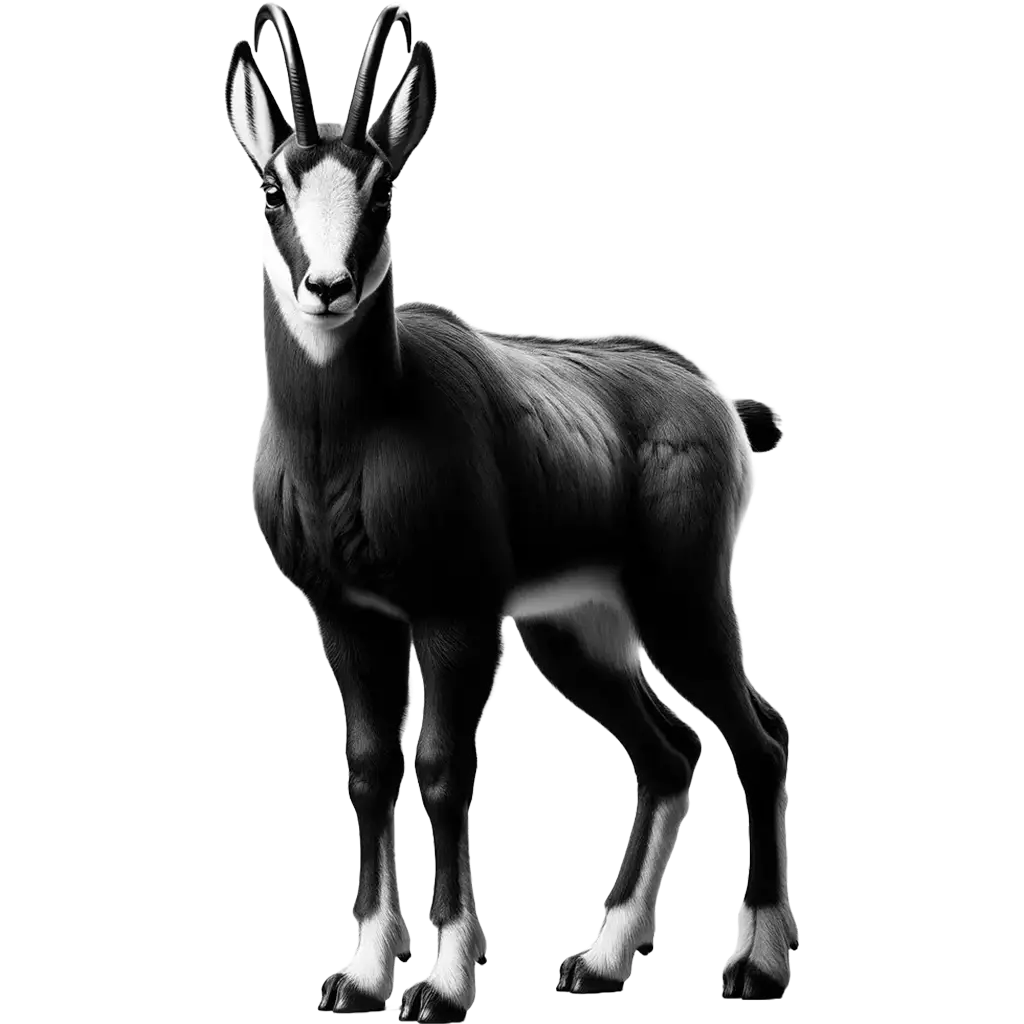
The Chamois, rupicapra rupicapra, is a nimble and hardy mountain-dwelling ungulate found across the rugged terrains of Europe's mountain ranges, including the Alps, Carpathians, Tatra, and Balkans. This species is renowned for its agility and ability to navigate steep, rocky slopes with ease. Adult Chamois have a distinctive appearance with

The Donkey, equus africanus asinus, is a domesticated member of the horse family, Equidae. Originating from the African wild ass, Donkeys have been used by humans for millennia, serving primarily as working animals due to their strength, endurance, and ability to carry heavy loads. Adult Donkeys vary greatly in size,

The Daurian Pika, ochotona dauurica, is a small, herbivorous mammal belonging to the pika family, which resides predominantly in the steppe regions of Mongolia, parts of Russia, and northern China. This species is characterized by its compact body, rounded ears, and absence of a visible tail, typical of pikas. Adult

The Alpaca, lama pacos, is a domesticated species of South American camelid, closely related to the llama. Alpacas are renowned for their soft, luxurious fleece, which comes in a variety of shades, including white, black, brown, and gray, allowing for over 22 recognized colors in total. Standing at an average