
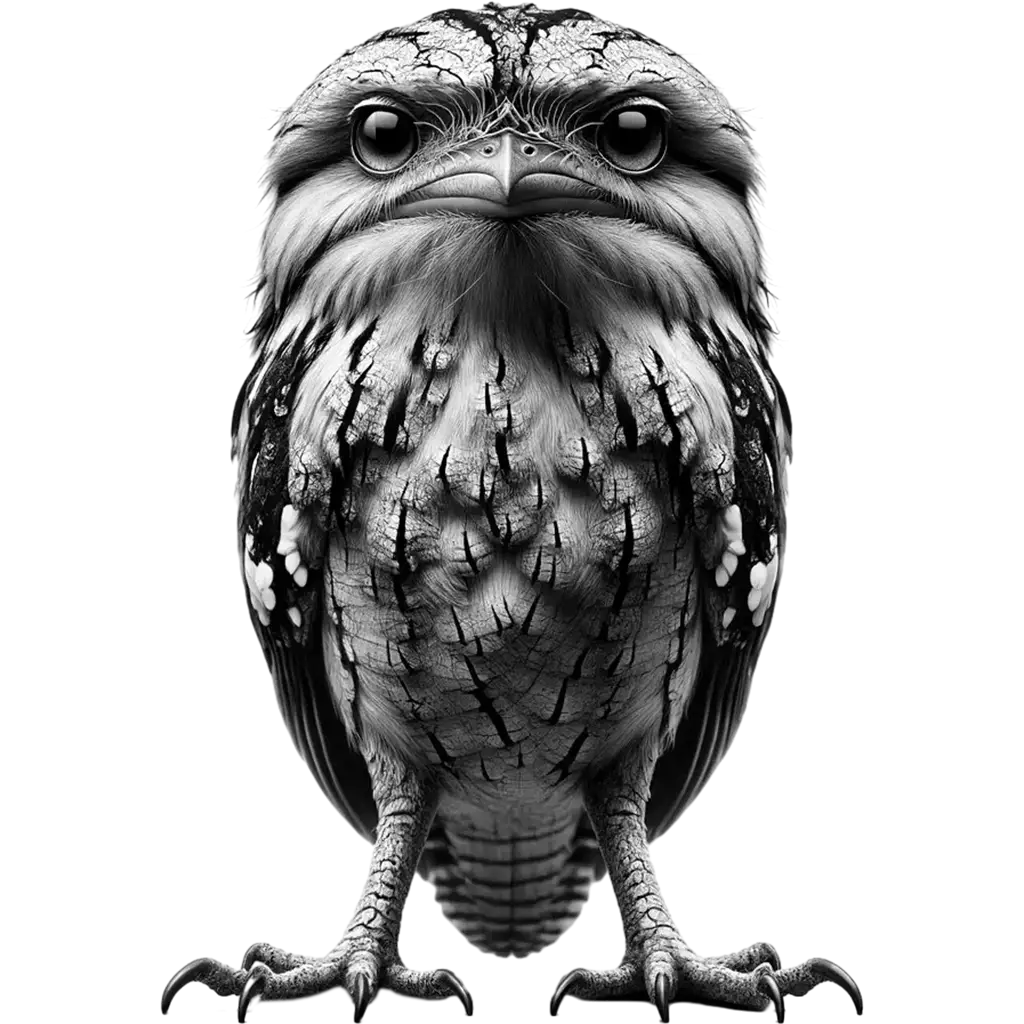
Podargus Strigoides
Tawny Frogmouth
Forests, woodlands, scrublands, and urban parks across Australia
The Tawny Frogmouth, podargus strigoides, is a distinctive bird native to Australia, recognized for its stocky build, large head, and wide, frog-like mouth. Measuring 34 to 53 cm in length and weighing between 157 to 555 grams, they exhibit sexual dimorphism, with females generally being larger than males. Their plumage is a mix of gray, brown, and white, mottled and streaked to mimic the bark of trees, providing exceptional camouflage. The Tawny Frogmouth is often mistaken for an owl due to its nocturnal habits and similar resting posture, but it lacks the strong talons and beak of owls.
| Population: | Listed as Least Concern, with stable populations |
| Generation Length: | 4-5 years |
| Average Weight: | 200-600 grams |
| Average Length: | 34-53 cm |
| Lifespan: | 10-15 years in the wild |
| Diet: | Primarily insectivorous, but will take a variety of small animals |
| Conservation Status: | Least Concern (LC) |
Tawny Frogmouths are found throughout mainland Australia and Tasmania, inhabiting a wide range of environments from arid areas to forests and suburban gardens. They are sedentary birds, remaining in the same area as long as food is abundant. By day, they perch motionless on tree branches, blending in with their surroundings to avoid predators. At night, they become more active, hunting for food.
Their diet primarily consists of nocturnal insects, spiders, worms, and occasionally small mammals, reptiles, and birds. They hunt from a perch, pouncing on prey on the ground with their wide beak. This diet makes them valuable for natural pest control in their habitats.
Reproduction in Tawny Frogmouths involves monogamous pairs that often remain together for life. They nest in trees, using sticks to form a simple platform where the female lays 1 to 3 eggs. Both parents share incubation duties and the care of the chicks, which are born with a sparse covering of down and rely on their parents for warmth and food.
The population of the Tawny Frogmouth is considered stable, although they face threats from vehicle collisions, predation by cats and foxes, and secondary poisoning from pest control substances. Conservation efforts are focused on habitat preservation and raising awareness about the dangers of pesticide use, ensuring the continued survival of this unique and beloved Australian bird.
Classifications
The Key Attributes
Features
- Movement:
Flying, perching
- Territorial Behavior:
Monogamous and territorial
- Speed:
Not known for fast flight; more adapted for stealth and sitting still
- Diet:
Carnivore
- Physical Features:
- Stocky body with a broad, rounded head
- Large, forward-facing eyes with excellent night vision
- Mottled plumage that mimics tree bark
- Wide beak resembling a frog's mouth, used for catching insects and small animals
- Primary Senses:
- Sight
- Hearing
Understanding Habitat and Range
Geography
- Habitat:
Forests, woodlands, scrublands, and urban parks across Australia
- Migration Patterns:
Sedentary, with little movement away from their established territories
- Geographical Range:
Throughout Australia, including Tasmania
- Climate Preferences:
Adaptable to various climates, from arid areas to tropical forests
Navigating the Wilderness
In the wild
- Predators:
Large birds of prey, cats, foxes
- Prey:
Insects, small mammals, reptiles, and frogs
- Feeding Behavior:
Nocturnal hunter, preying on insects, spiders, worms, and small vertebrates
- Diet:
Primarily insectivorous, but will take a variety of small animals
- Defensive Mechanisms:
- Camouflage to avoid detection
- Remaining motionless when threatened
- Preferred Food Sources:
- Areas rich in insect life and suitable hunting perches
Insights Into Reproduction
Mating
- Mating System:
Monogamous, often forming lifelong pair bonds
- Number of Offspring:
2-3 eggs
- Incubation Period:
About 30 days
- Parental Involvement:
- Both parents incubate the eggs and feed the young
Youngsters Section
Tawny Frogmouth
Fun Fact
Tawny Frogmouths are often mistaken for owls due to their nocturnal habits and similar appearance.
They are actually more closely related to nightjars. Their excellent camouflage helps them blend with tree bark, making them hard to spot. During the day, they sit still, resembling broken branches, to avoid predators.

Download word search puzzles
Word Search Puzzles
Check Out Other Birds
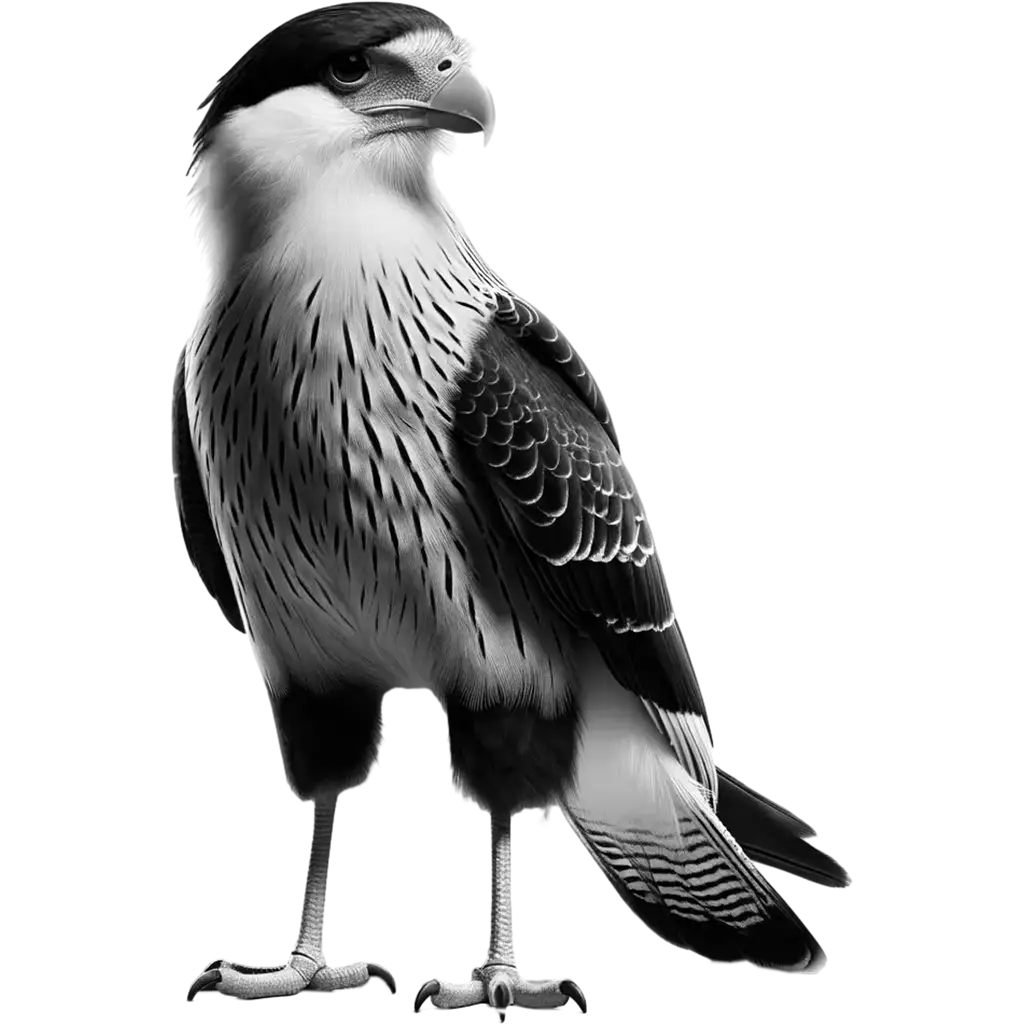
The Chimango Caracara, milvago chimango, is a small raptor found widely across southern South America, including Argentina, Chile, Uruguay, Paraguay, and the southern regions of Brazil. This bird of prey is part of the Falconidae family and is known for its adaptability to various environments, including open grasslands, agricultural areas,
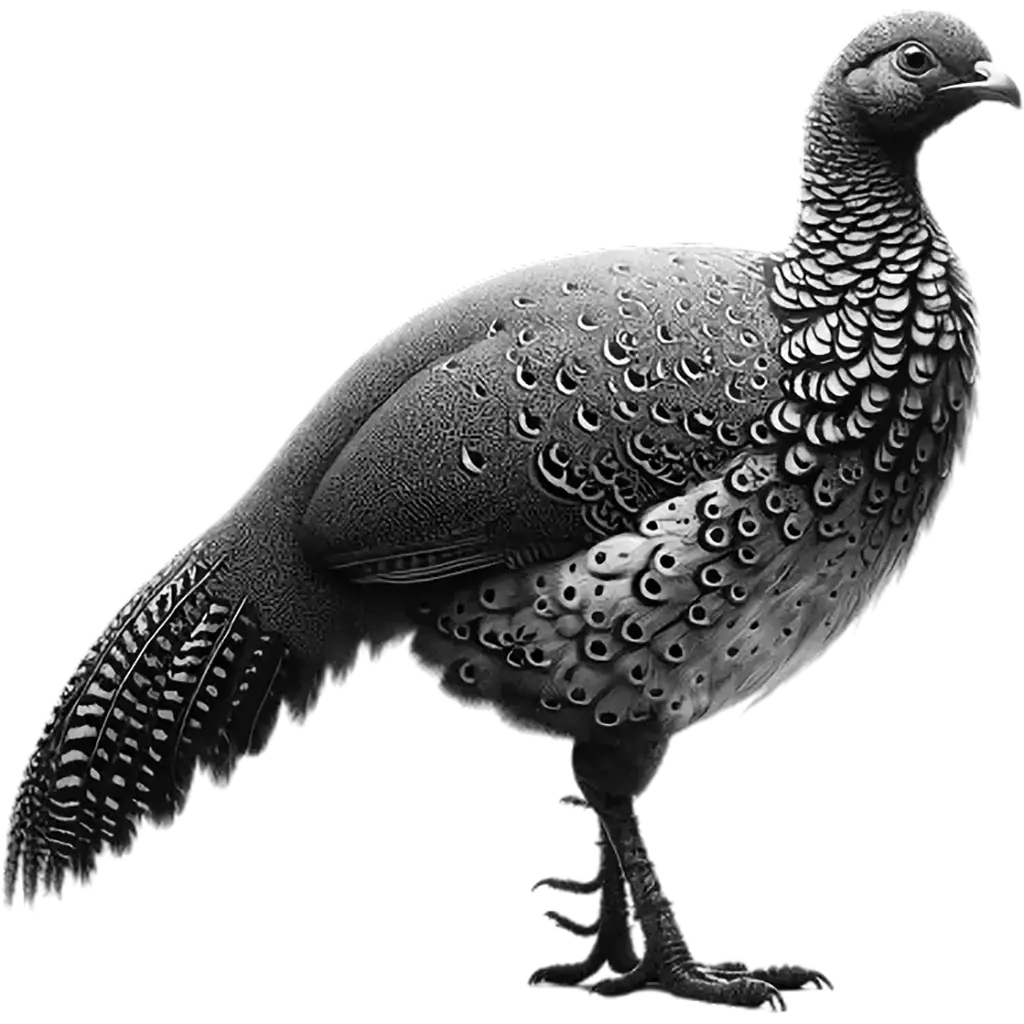
The Malayan Peacock-Pheasant, polyplectron malacense, is a stunning bird species native to the forests of Peninsular Malaysia. Characterized by its relatively small size, with males reaching about 50 to 65 cm in length including the tail, and weighing approximately 450 to 700 grams. The males are particularly noted for their

Spix's Macaw, cyanopsitta spixii, is a critically endangered bird species, once native to the riparian woodlands along the Rio São Francisco in northeastern Brazil. This small macaw, measuring about 55 to 57 cm in length, is notable for its striking blue plumage, with a lighter grey-blue head and vivid blue
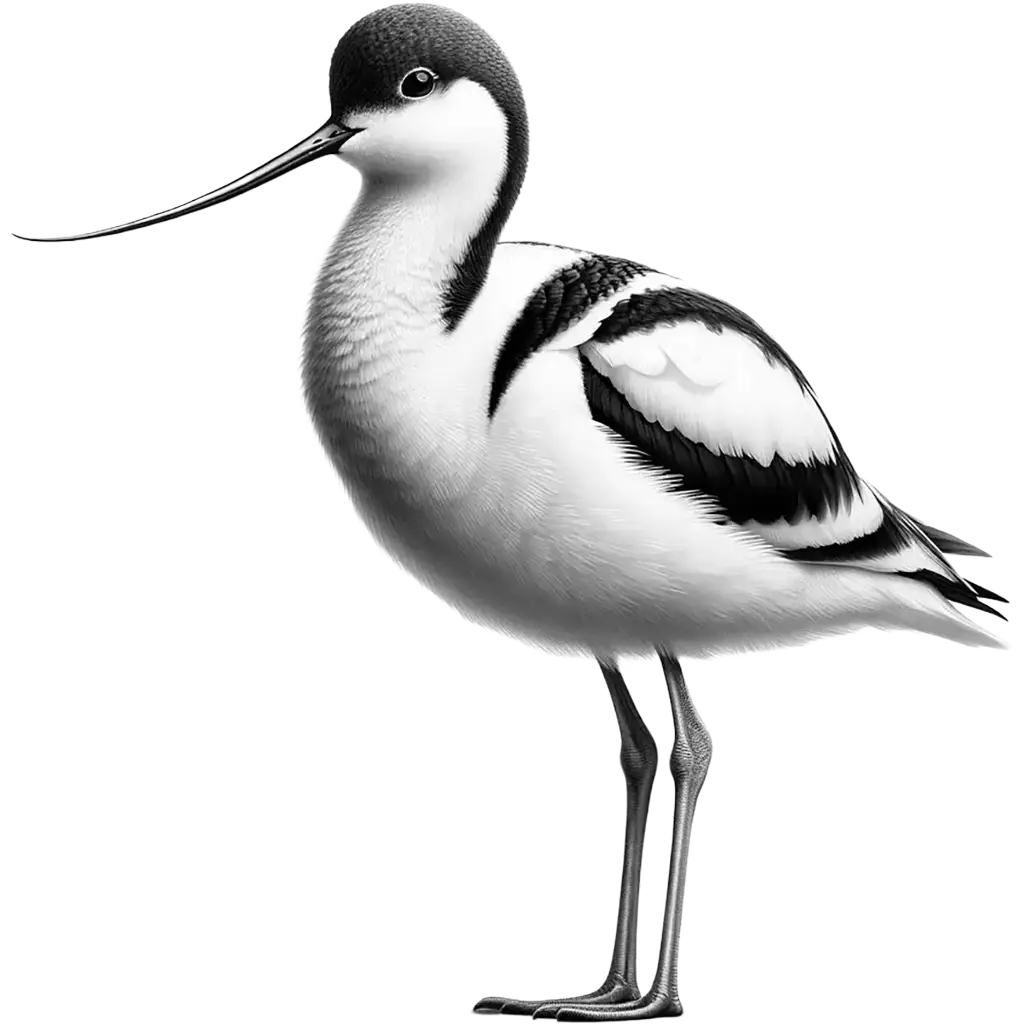
The Pied Avocet, recurvirostra avosetta, is a striking wading bird known for its elegant black and white plumage and distinctive upcurved bill. This bird typically measures about 42 to 45 cm in length, with a wingspan of 77 to 85 cm. Its long, thin legs are a pale blue, complementing