
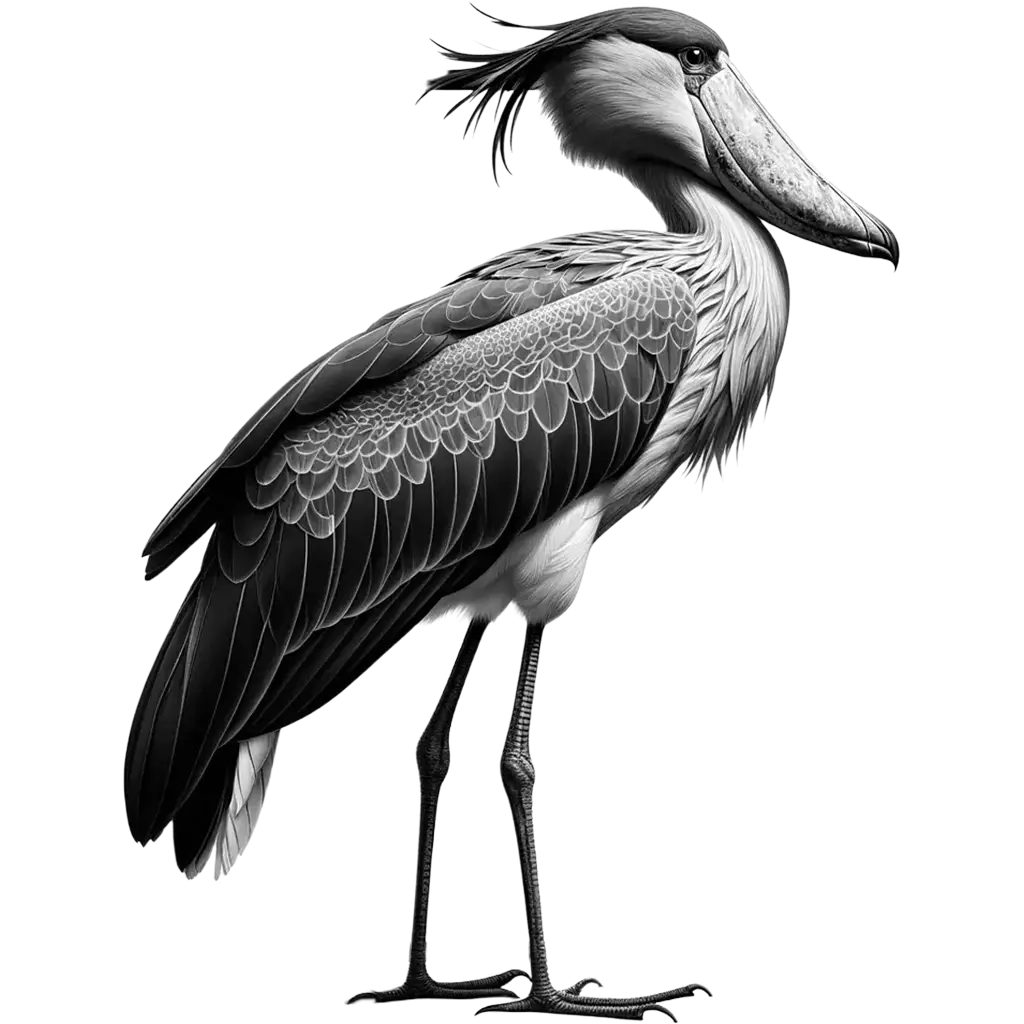
Balaeniceps Rex
Shoebill
Freshwater swamps, marshes, and wetlands
The Shoebill, balaeniceps rex, is a large, prehistoric-looking bird native to the freshwater swamps of central tropical Africa. Known for its massive, shoe-shaped bill, which can grow up to 24 cm in length, the Shoebill stands approximately 110 to 140 cm tall and exhibits a wingspan of about 230 to 260 cm. Its plumage is a slate gray color, providing camouflage in its reed-filled habitat, while its piercing yellow eyes add to its striking appearance. Despite its somewhat stork-like build, the Shoebill is more closely related to pelicans.
| Population: | Listed as Vulnerable, with decreasing populations |
| Generation Length: | 10 years |
| Average Weight: | 4-7 kg |
| Average Length: | 110-140 cm |
| Lifespan: | Up to 35 years in the wild |
| Diet: | Specialized feeder, mainly piscivorous |
| Conservation Status: | Vulnerable (VU) |
Inhabiting extensive marshes in countries such as Uganda, Sudan, Zambia, and the Democratic Republic of the Congo, the Shoebill prefers areas with dense papyrus and reed beds. It thrives in environments that offer a mix of shallow water for hunting and dense vegetation for nesting. The Shoebill leads a solitary or occasionally paired life, characterized by its silent demeanor and statue-like stillness as it waits for prey.
The diet of the Shoebill is predominantly piscivorous, with a preference for lungfish, catfish, and eels, which it hunts in the shallow waters of its habitat. Its hunting method is patient; the Shoebill stands motionless before striking swiftly to snatch its prey with its large bill. The strength of its bill also allows it to tackle sizable fish and even snakes.
Reproduction for the Shoebill involves the construction of a large nest in dense wetland vegetation, where the female typically lays 1 to 3 eggs. Both parents share the responsibility of incubation, which lasts about 30 days. The chicks are altricial at birth, requiring several months of care before fledging, during which time they are vulnerable to predation and flooding.
The population of the Shoebill is classified as Vulnerable, with estimates suggesting fewer than 10,000 mature individuals remaining in the wild. Threats to its survival include habitat destruction due to agricultural expansion, hunting, and the pet trade. Conservation efforts are focused on protecting wetland habitats, enforcing hunting regulations, and raising awareness about the species' plight to ensure the survival of this remarkable bird.
Classifications
The Key Attributes
Features
- Movement:
Walking, flying
- Territorial Behavior:
Solitary or in pairs, highly territorial
- Speed:
Not known for speed; more for stealth and stalking prey
- Diet:
Carnivore
- Physical Features:
- Large bird with a massive shoe-shaped bill
- Long legs for wading
- Greyish plumage with a slight blue tinge
- Broad wings for flying
- Primary Senses:
- Sight
- Hearing
Understanding Habitat and Range
Geography
- Habitat:
Freshwater swamps, marshes, and wetlands
- Migration Patterns:
Mostly sedentary, with some local movements
- Geographical Range:
Central-eastern Africa, especially in South Sudan, Uganda, Zambia, and the Democratic Republic of Congo
- Climate Preferences:
Prefers tropical, swampy environments
Navigating the Wilderness
In the wild
- Predators:
Few natural predators due to its size and powerful bill
- Prey:
Mainly large fish like lungfish and catfish, also amphibians and small reptiles
- Feeding Behavior:
Stalks and ambushes prey, primarily feeding on fish, frogs, and small aquatic animals
- Diet:
Specialized feeder, mainly piscivorous
- Defensive Mechanisms:
- Uses its size and powerful bill to deter predators
- Stands still for long periods to avoid detection
- Preferred Food Sources:
- Shallow waters with abundant fish and aquatic life
Insights Into Reproduction
Mating
- Mating System:
Monogamous
- Number of Offspring:
1-3 eggs
- Incubation Period:
About 30 days
- Parental Involvement:
- Both parents build the nest, incubate the eggs, and feed the young
Youngsters Section
Shoebill
Fun Fact
The shoebill is known for its shoe-shaped bill and unique hunting technique in swamps.
These birds can stand motionless for hours, waiting for prey like fish and frogs. When they spot a target, they lunge with incredible speed and precision, using their large bills to capture and swallow prey whole. This patient hunting style makes them effective predators in their wetland habitats.

Download word search puzzles
Word Search Puzzles
Check Out Other Birds
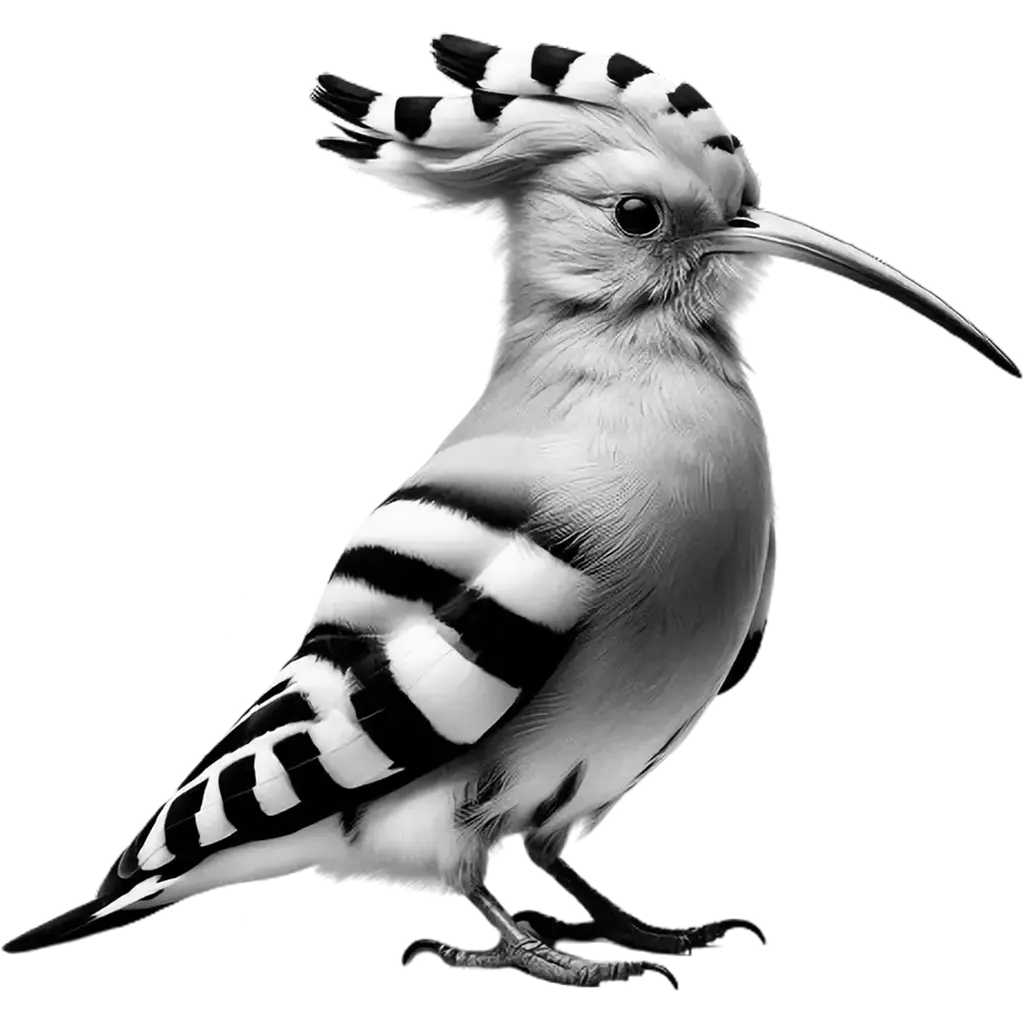
The White-Headed Wood Hoopoe, phoeniculus bollei, is a distinctive bird species primarily found in the forests and woodlands of Central and East Africa. This bird is known for its striking appearance, featuring a long, curved beak, a glossy blue-black plumage, and a prominent white head and chest, which contrast sharply

The European Honey Buzzard, pernis apivorus, is a medium-sized bird of prey, distinguished by its striking appearance and specialized diet. Adults typically feature a broad range of plumage variations, from light to dark morphs, but generally have a grayish-brown body, with paler underparts and a distinctive head pattern resembling a
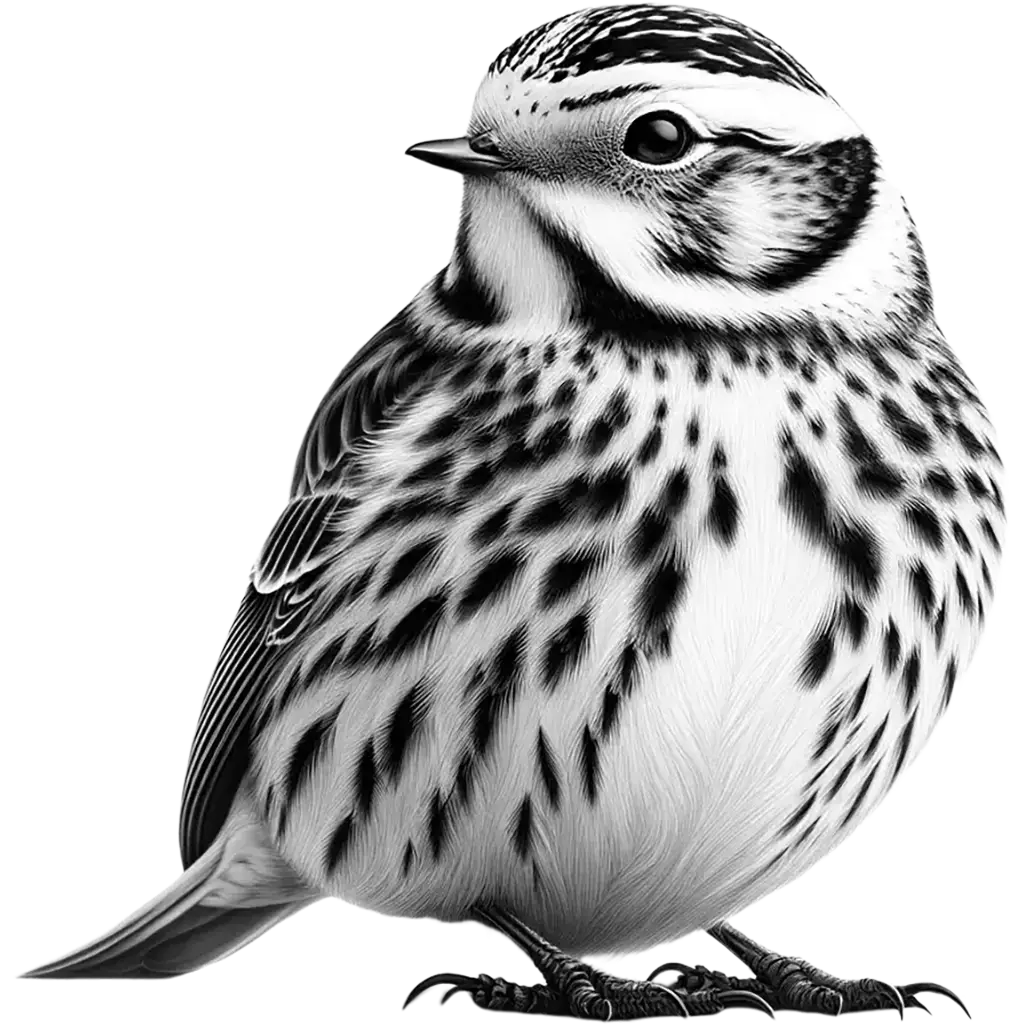
The Lapland Longspur, calcarius lapponicus, is a small, hardy bird known for its distinctive plumage and far-reaching migrations. This species exhibits a remarkable adaptation to cold environments, breeding in the Arctic tundra of North America, Europe, and Asia, and wintering in temperate and even subtropical regions. Adults typically measure about
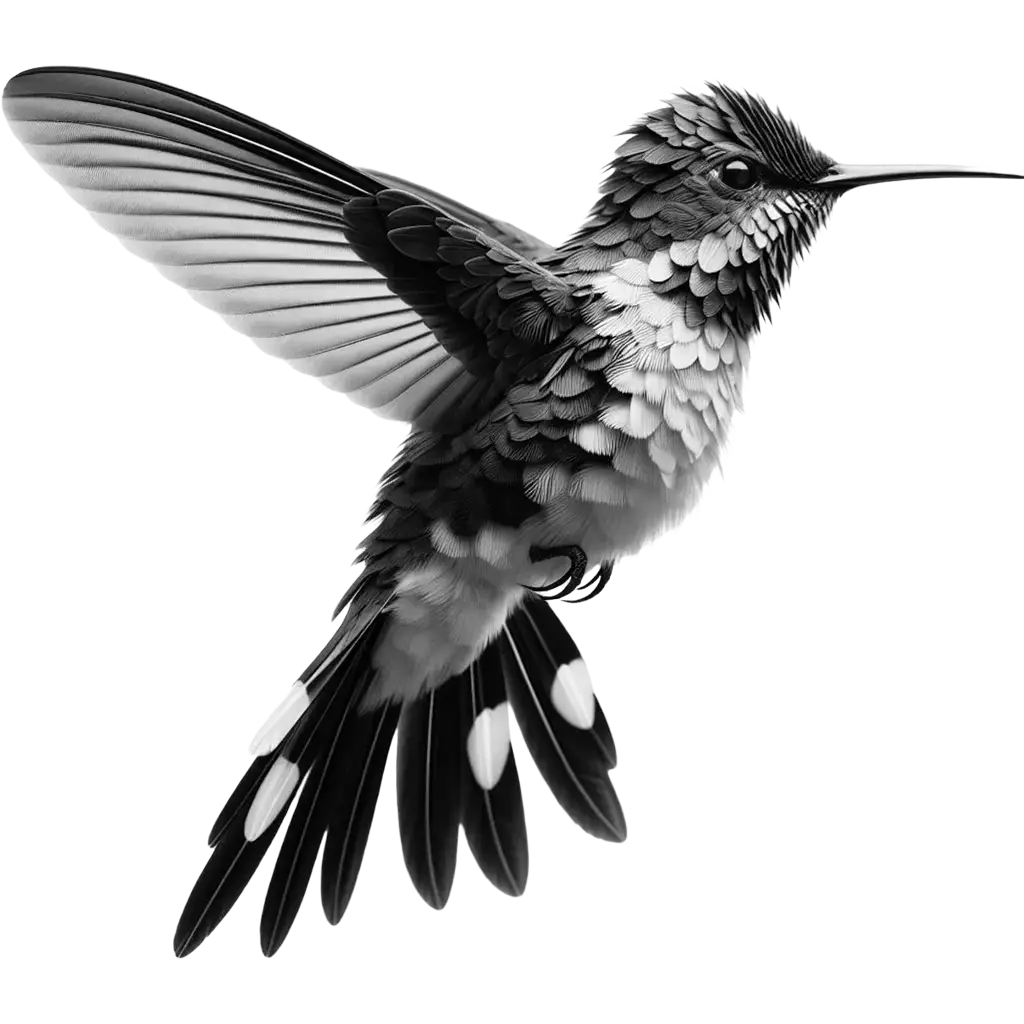
The Bee Hummingbird, Mellisuga helenae, holds the title of the world's smallest bird, native to Cuba and the Isla de la Juventud. Adults measure a mere 5 to 6 centimeters (2 to 2.4 inches) in length, including the beak and tail, and weigh approximately 1.6 to 2 grams (0.056 to