
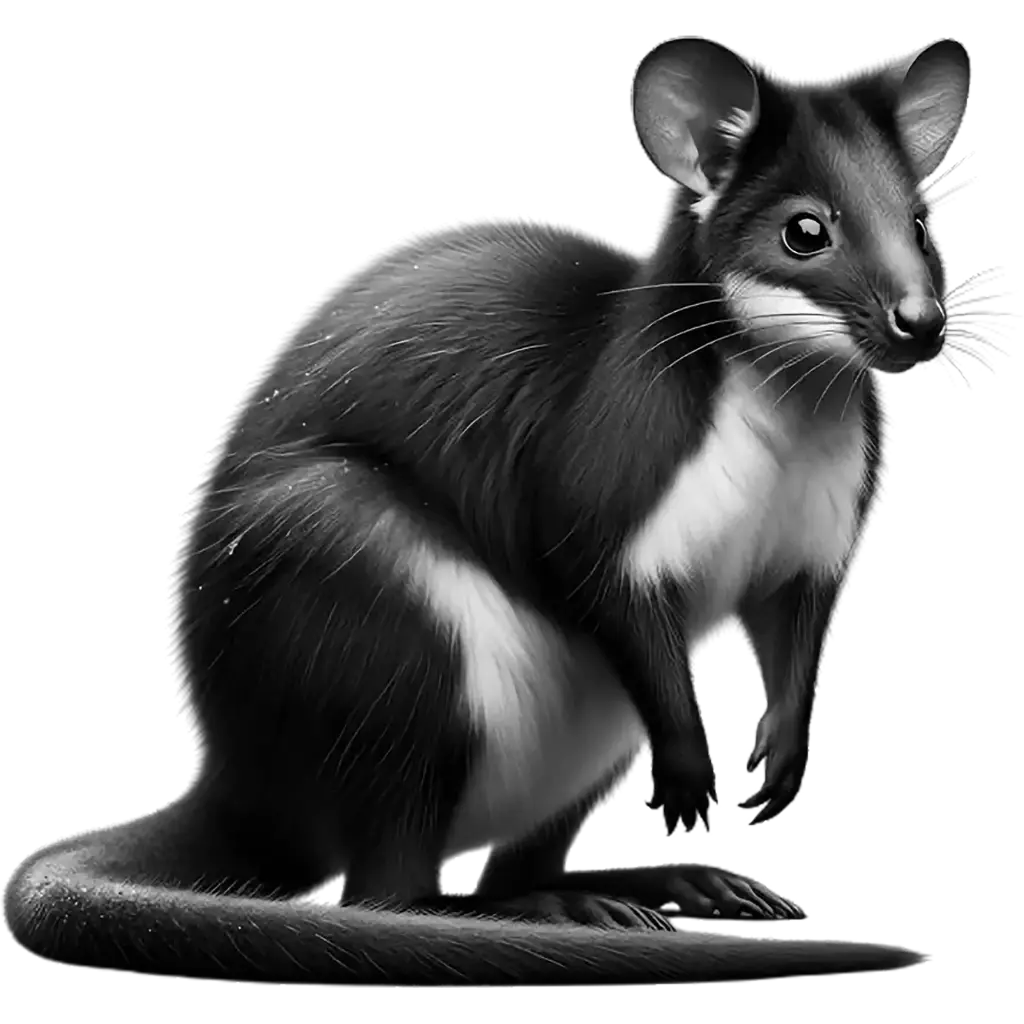
Hypsiprymnodon Moschatus
Musky Rat-Kangaroo
Tropical rainforests, dense wet undergrowth
The Musky Rat-Kangaroo, hypsiprymnodon moschatus, is a unique and diminutive marsupial, residing in the dense, wet tropical rainforests of northeastern Queensland, Australia. This species stands out as the smallest and most primitive of the kangaroo family, with adults measuring about 23 to 34 cm in length, including the tail, and weighing around 530 grams. Its compact, stocky body is covered in a thick, brown fur, with a lighter underbelly, and it possesses a short, hairless tail used for balance rather than hopping. Unlike its larger kangaroo relatives, the Musky Rat-Kangaroo is a quadrupedal hopper, moving through the forest floor's dense underbrush with agility.
| Population: | Listed as Least Concern, but habitat-specific and could be vulnerable to habitat loss |
| Generation Length: | 2-3 years |
| Average Weight: | 400-700 grams |
| Average Length: | Body length: 20-30 cm; Tail length: 15-25 cm |
| Lifespan: | Unknown, but other small marsupials typically live 6-8 years |
| Diet: | Primarily frugivorous but also consumes small animals and insects |
| Conservation Status: | Least Concern (LC) |
Musky Rat-Kangaroos are diurnal, spending their days foraging for food on the forest floor. They have a specialized diet, feeding on fallen fruits, seeds, insects, and small invertebrates. This diet places them as important seed dispersers within their ecosystem, contributing to the health and regeneration of their rainforest habitat.
The reproductive behavior of the Musky Rat-Kangaroo involves a polygynous mating system, where males may mate with multiple females. Females can give birth to up to two offspring annually, following a gestation period of about 21 days. The young are then carried in the mother's pouch for approximately 21 weeks, where they continue to develop and grow.
Despite their small size, Musky Rat-Kangaroos play a significant role in their ecosystem as seed dispersers and as part of the food web. Their presence indicates a healthy, undisturbed rainforest environment, as they are sensitive to habitat changes and fragmentation.
The population of the Musky Rat-Kangaroo is currently considered stable within its limited range, but it faces threats from habitat destruction, climate change, and invasive species. Conservation efforts are focused on protecting the tropical rainforest habitats of northeastern Queensland through national parks and reserves. These efforts are crucial for preserving the biodiversity of the region, including the unique Musky Rat-Kangaroo, which represents an important link to the evolutionary history of marsupials in Australia.
Classifications
The Key Attributes
Features
- Movement:
Hopping, walking
- Territorial Behavior:
Solitary or seen in small family groups
- Speed:
Not particularly fast; more adapted for foraging in underbrush
- Diet:
Omnivore
- Physical Features:
- Small, compact body with a relatively long tail
- Strong hind legs for hopping but also moves quadrupedally
- Short snout and rounded ears
- Dense fur with a reddish-brown color
- Primary Senses:
- Sight
- Hearing
- Smell
Understanding Habitat and Range
Geography
- Habitat:
Tropical rainforests, dense wet undergrowth
- Migration Patterns:
Non-migratory, with a home range of a few hectares
- Geographical Range:
Northeastern Queensland, Australia
- Climate Preferences:
Prefers humid, tropical climates
Navigating the Wilderness
In the wild
- Predators:
Snakes, birds of prey, and larger mammals
- Prey:
Fruits, seeds, insects, and small invertebrates
- Feeding Behavior:
Feeds on fruits, seeds, insects, and small invertebrates found in the leaf litter
- Diet:
Primarily frugivorous but also consumes small animals and insects
- Defensive Mechanisms:
- Camouflage in the forest floor litter
- Quick, short bursts of speed to escape predators
- Preferred Food Sources:
- Dense forest underbrush rich in fruits, seeds, and invertebrates
Insights Into Reproduction
Mating
- Mating System:
Monogamous
- Number of Offspring:
1-2 offspring
- Gestation Period:
About 21 days
- Parental Involvement:
- Females carry offspring in a pouch until weaned, with some post-weaning care
Youngsters Section
Musky Rat-Kangaroo
Fun Fact
The musky rat-kangaroo is the smallest member of the kangaroo family.
It is unique because it doesn't hop like other kangaroos. Instead, it moves with a more typical quadrupedal gait. This marsupial is found in the rainforests of northeastern Australia and is active during the day, unlike many other marsupials that are nocturnal.

Download word search puzzles
Word Search Puzzles


Check Out Other Mammals

The African Buffalo is a large, powerful herbivore native to sub-Saharan Africa. It is one of the most formidable and unpredictable animals on the continent, known for its muscular body, thick dark coat, and distinctive curved horns. Males, also known as bulls, have larger horns that fuse at the base
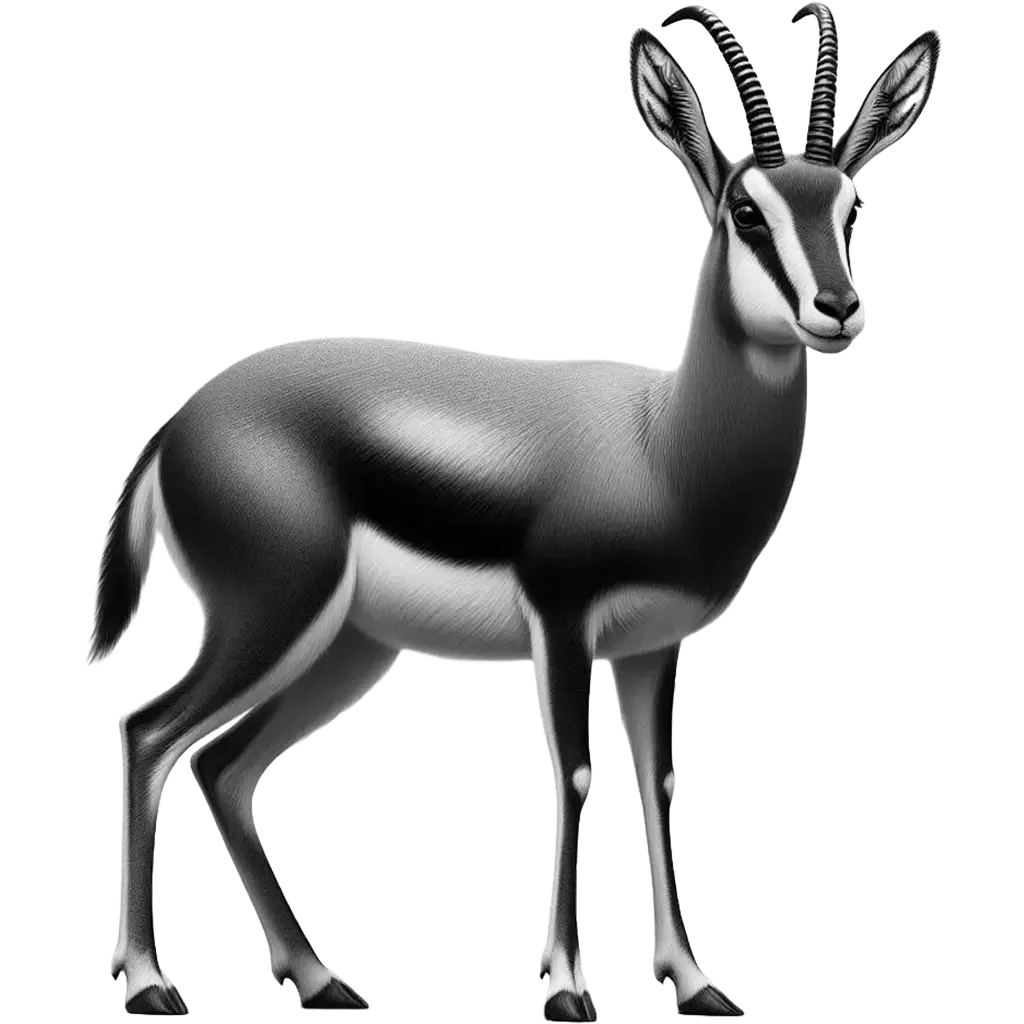
The Dorcas Gazelle, gazella dorcas, is a small and slender antelope that is well-adapted to arid environments, making its home in the deserts and savannahs of North Africa, the Middle East, and the Sahara. This species is notable for its beautiful and delicate appearance, with a light brown or sandy
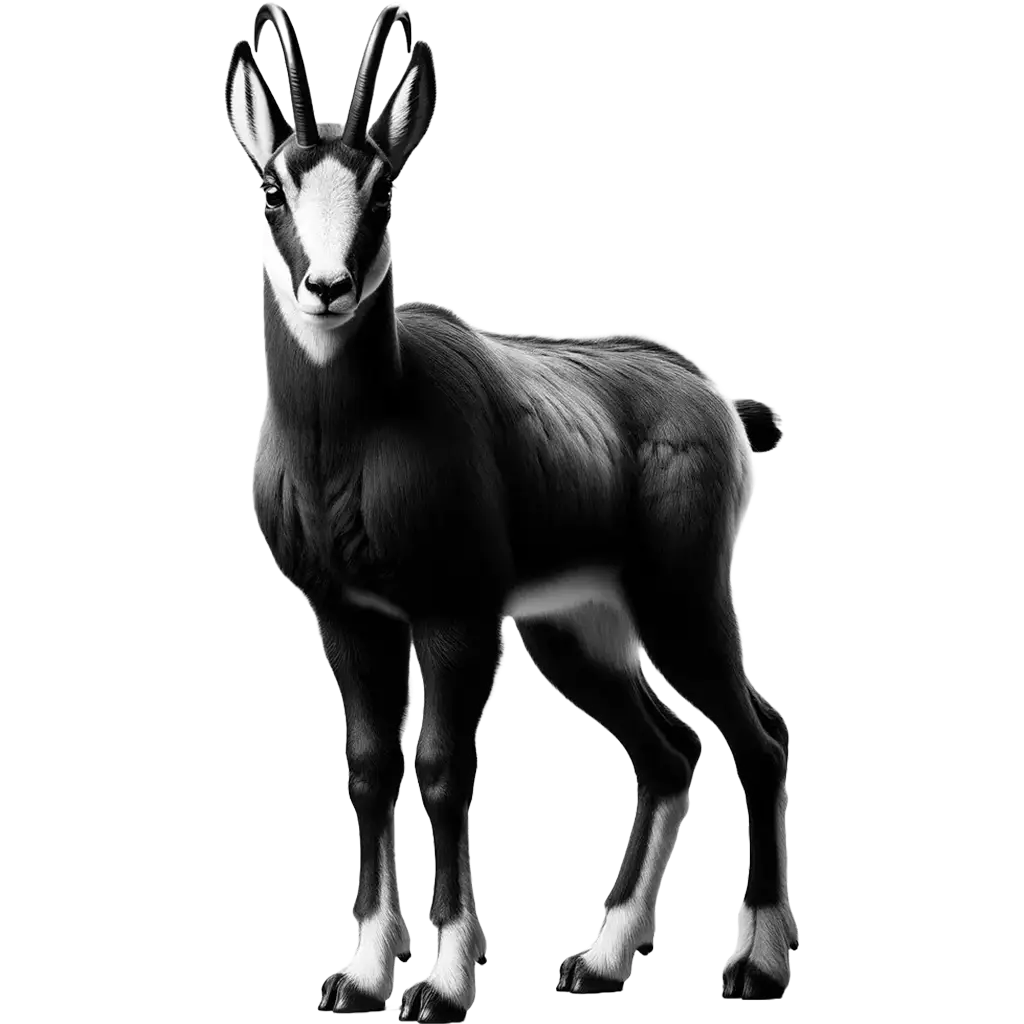
The Chamois, rupicapra rupicapra, is a nimble and hardy mountain-dwelling ungulate found across the rugged terrains of Europe's mountain ranges, including the Alps, Carpathians, Tatra, and Balkans. This species is renowned for its agility and ability to navigate steep, rocky slopes with ease. Adult Chamois have a distinctive appearance with
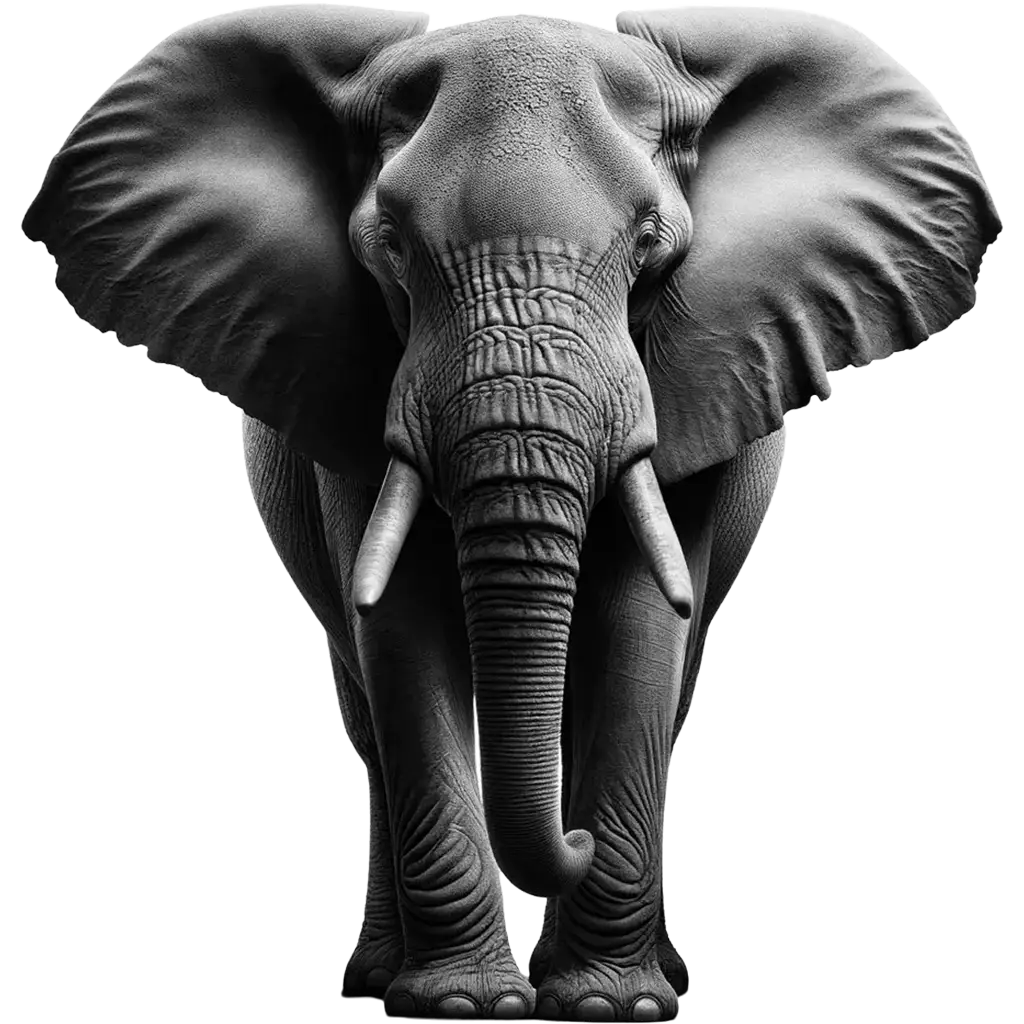
The African Forest Elephant, loxodonta cyclotis, is the smaller of the two African elephant species, distinguished by its more rounded ears and straighter tusks, which are thinner and downward pointing compared to those of its savannah cousin. Adults typically stand 2.5 meters tall at the shoulder, making them smaller than