

Tupaia Glis
Common Treeshrew
Forests, plantations, and gardens
The Common Treeshrew, tupaia glis, is a small mammal native to the dense tropical forests of Southeast Asia, including Thailand, Malaysia, and Indonesia. Resembling a squirrel in appearance, the Common Treeshrew has a slender body, measuring about 16 to 21 cm in length with a tail nearly as long, and weighs approximately 100 to 150 grams. Its coat is coarse and ranges in color from reddish-brown to gray, providing camouflage among the forest undergrowth. Notable for its sharp, pointed snout and large, forward-facing eyes, the treeshrew is an agile climber and an active forager.
| Population: | Widely distributed and relatively common, not currently considered threatened |
| Generation Length: | 2-3 years |
| Average Weight: | 160-260 grams |
| Average Length: | Body length: 16-21 cm, Tail length: 14-20 cm |
| Lifespan: | Up to 12 years in captivity; less is known about their lifespan in the wild |
| Diet: | Varied diet including both animal and plant matter |
| Conservation Status: | Least Concern (LC) |
Adapted to a life both in the trees and on the ground, the Common Treeshrew is diurnal, spending its days searching for food. It exhibits remarkable agility, darting through the forest with ease. This species is solitary or lives in small family groups, maintaining territories that they defend vigorously against intruders.
The diet of the Common Treeshrew is omnivorous, consisting of fruits, insects, and small vertebrates. This varied diet reflects its adaptability to different forest habitats and its role as both a predator of smaller animals and a seed disperser. The ability to consume a wide range of foods allows it to thrive in various ecological niches.
Reproduction in the Common Treeshrew is characterized by a relatively short gestation period of about 50 days, after which the female gives birth to one to three offspring. The young are born in a nest, which the female constructs in tree hollows or dense vegetation. Offspring develop rapidly and are weaned within a month, showcasing the species' fast growth rate.
The population status of the Common Treeshrew is currently listed as Least Concern by the IUCN, indicating that it is relatively widespread and abundant within its natural range. However, like many forest-dwelling species, it faces threats from habitat destruction and fragmentation due to logging, agriculture, and urban expansion. Conservation efforts aimed at preserving its natural habitat are crucial for ensuring the long-term survival of the Common Treeshrew and the biodiversity of Southeast Asian forests.
Classifications
The Key Attributes
Features
- Movement:
Climbing, jumping, walking
- Territorial Behavior:
Territorial, with individuals or pairs defending their territory
- Speed:
Not specifically quantified; known for quick and agile movements
- Diet:
Omnivore
- Physical Features:
- Small, slender body with a long, bushy tail
- Sharp, pointed snout and large eyes
- Brownish or grayish fur, often with a lighter underside
- Strong limbs for climbing and jumping
- Primary Senses:
- Sight
- Hearing
- Smell
Understanding Habitat and Range
Geography
- Habitat:
Forests, plantations, and gardens
- Migration Patterns:
Non-migratory
- Geographical Range:
Southeast Asia, particularly in Indonesia, Malaysia, and Thailand
- Climate Preferences:
Prefers tropical forest environments
Navigating the Wilderness
In the wild
- Predators:
Birds of prey, snakes, and larger mammals
- Prey:
Insects, small animals, and various fruits
- Feeding Behavior:
Feeds on a variety of foods including insects, fruits, and small vertebrates
- Diet:
Varied diet including both animal and plant matter
- Defensive Mechanisms:
- Agility in the trees to escape predators
- Camouflage fur helps blend into the forest environment
- Preferred Food Sources:
- Diverse sources depending on availability in their forest habitat
Insights Into Reproduction
Mating
- Mating System:
Monogamous or polygynous, depending on environmental conditions
- Number of Offspring:
1-3 offspring per litter
- Gestation Period:
About 40-50 days
- Parental Involvement:
- Females primarily care for the young, with males occasionally playing a role in defense and territory maintenance
Youngsters Section
Common Treeshrew
Fun Fact
The common treeshrew has a brain-to-body mass ratio higher than that of humans.
These small mammals, native to Southeast Asia, showcase remarkable cognitive abilities and curiosity. Contrary to its name, the common treeshrew isn't a true shrew. Its high brain-to-body mass ratio suggests advanced brain function, making it an interesting subject for neurological studies and evolutionary research.

Download word search puzzles
Word Search Puzzles


Check Out Other Mammals
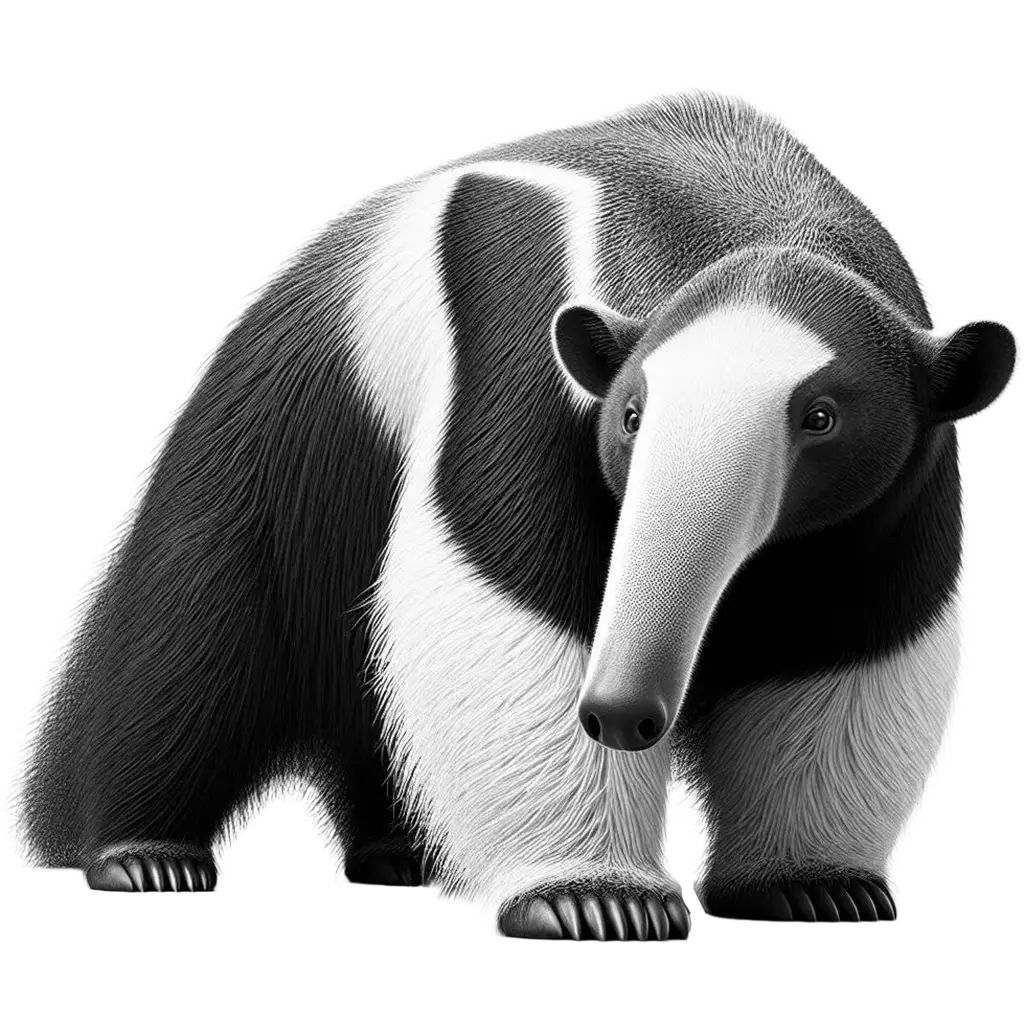
The Giant Anteater, myrmecophaga tridactyla, is an easily recognizable mammal known for its elongated snout, bushy tail, and distinctive black and white shoulder stripes. Adults can grow up to 2.1 meters (7 feet) in length, including the tail, and weigh between 18 to 39 kilograms (40 to 86 pounds). Their

The Duck-Billed Platypus, ornithorhynchus anatinus, is one of the most unusual and fascinating mammals on the planet, native to eastern Australia and Tasmania. This semi-aquatic, egg-laying mammal (monotreme) is most notable for its distinctive duck-like bill, webbed feet, and flat tail. Adults can measure between 40 to 60 centimeters in

The European Mink, mustela lutreola, is a small, semi-aquatic mammal once widespread across Europe but now among the continent's most endangered species. Characterized by its dark brown fur, paler underparts, and a distinctive white patch on the upper lip, the European Mink measures approximately 35 to 45 cm in length,

The Harbor Seal, Phoca vitulina, is a widespread species of seal found in temperate coastal waters of the Northern Hemisphere, including the North Atlantic and Pacific Oceans. Adults typically measure between 1.5 to 1.9 meters (5 to 6.25 feet) in length and weigh between 55 to 168 kilograms (120 to