
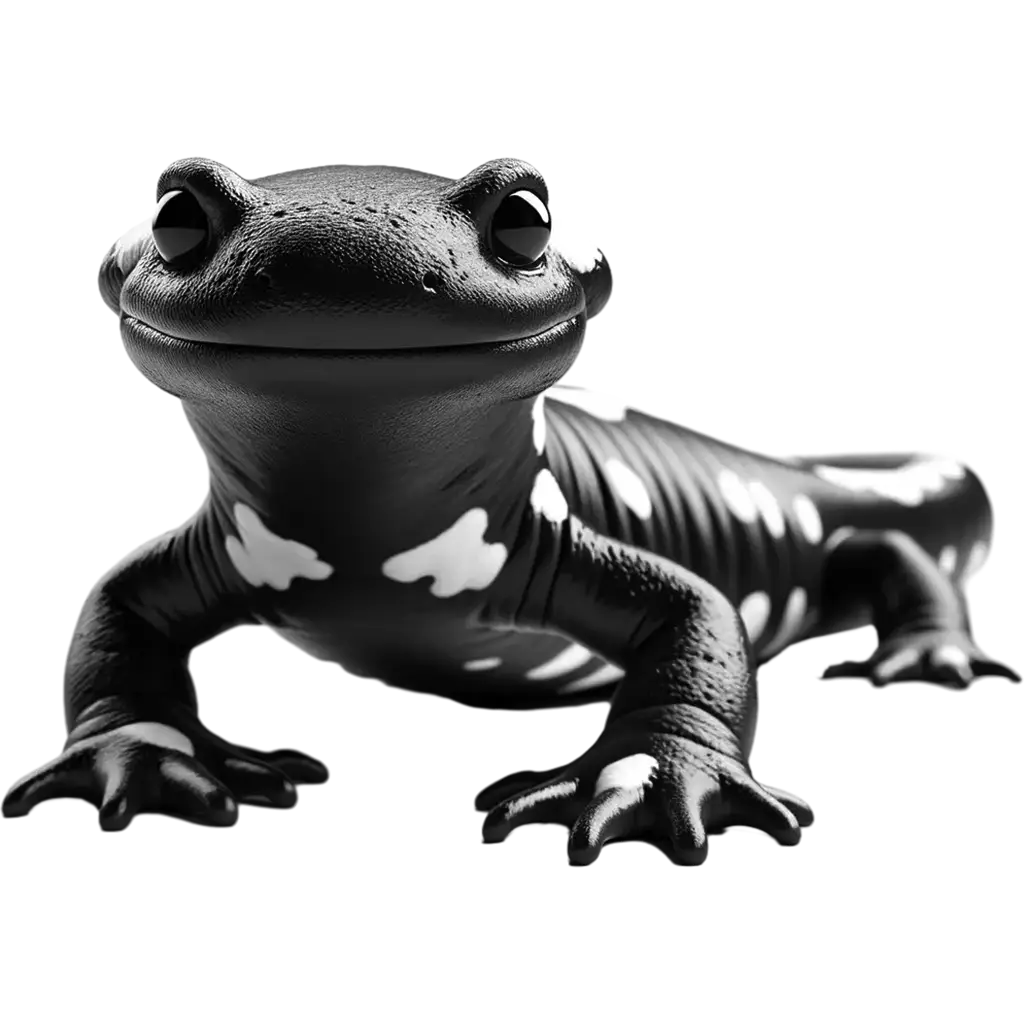
Salamandra Atra
Alpine Salamander
Mountainous, wooded regions
The Alpine Salamander, Salamandra atra, is a unique species of salamander native to the mountainous regions of central and southern Europe. Characterized by its completely black, glossy skin, this amphibian can reach up to 14 centimeters in length. Its robust body, short limbs, and distinctive yellow or white markings (in some subspecies) contrast sharply with the dark, often snow-dappled landscapes it inhabits. The Alpine Salamander's skin secretes a toxic substance as a defense mechanism against predators, making it one of the few amphibians capable of living at high altitudes, often above 1,000 meters.
| Population: | Stable |
| Generation Length: | Several years, with late sexual maturity |
| Average Weight: | 20-30 grams |
| Average Length: | 9-14 cm |
| Lifespan: | 10-15 years |
| Diet: | Small invertebrates |
| Conservation Status: | Least Concern (LC) |
The Alpine Salamander leads a secretive life, primarily nocturnal and hiding under rocks or in crevices during the day. Its habitat consists of damp, forested mountainous areas where temperatures are cool and moisture is abundant. Unlike most amphibians, it is not dependent on water bodies for its lifecycle, as it is entirely terrestrial. This salamander is highly adapted to its harsh environment, showing remarkable resilience to the cold and even snow. It feeds on a variety of small invertebrates, including insects, spiders, and worms, which it hunts at night.
Dietarily, the Alpine Salamander is insectivorous, consuming a wide range of invertebrates. Its hunting strategy is opportunistic, relying on the slow and meticulous stalking of prey, utilizing the element of surprise to capture meals. This dietary flexibility helps the salamander to thrive in its alpine environment, where food sources can be scarce and seasonal.
The mating habits of the Alpine Salamander are extraordinary, with internal fertilization occurring during the late summer months. Unlike most amphibians, it gives birth to fully developed live young, bypassing the aquatic larval stage entirely. This viviparous reproduction is a rare adaptation among amphibians, allowing the Alpine Salamander to inhabit areas devoid of standing water. Females can carry the embryos for up to three years before giving birth to one or two fully formed juveniles, ensuring their immediate survival in the cold mountain climate.
The population of the Alpine Salamander is considered stable in most of its range, but it faces threats from habitat destruction, pollution, and climate change. Its limited mobility and specialized habitat requirements make it vulnerable to environmental changes. Conservation efforts are focused on habitat protection and monitoring population trends to ensure the continued survival of this remarkable amphibian in its alpine home.
Classifications
The Key Attributes
Features
- Movement:
Crawling
- Territorial Behavior:
Territorial to some extent, particularly in males during mating season
- Speed:
Slow, precise movement
- Diet:
Carnivore
- Physical Features:
- Completely black in most populations, some have yellow spots or stripes
- Smooth, shiny skin
- Short limbs
- Tail almost as long as body
- Primary Senses:
- Sight
- Touch
- Chemical sensing
Understanding Habitat and Range
Geography
- Habitat:
Mountainous, wooded regions
- Migration Patterns:
Non-migratory, but may move to different elevations based on weather conditions
- Geographical Range:
Alpine regions across Europe, primarily in the Alps
- Climate Preferences:
Cool, humid climates, prefers areas with abundant moisture
Navigating the Wilderness
In the wild
- Predators:
Birds of prey, snakes, and small mammals
- Prey:
Insects, spiders, worms, and other small invertebrates
- Feeding Behavior:
Nocturnal hunter
- Diet:
Small invertebrates
- Defensive Mechanisms:
- Secretion of a toxic substance when threatened
- Camouflage with the dark, damp environments it inhabits
- Preferred Food Sources:
- A variety of invertebrates found in its mountain habitat
Insights Into Reproduction
Mating
- Mating System:
Viviparous reproduction (gives birth to live young)
- Number of Offspring:
Usually 2
- Gestation Period:
2-3 years, one of the longest gestation periods among vertebrates
- Parental Involvement:
- No parental involvement post-birth as offspring are fully independent
Youngsters Section
Alpine Salamander
Fun Fact
The Alpine Salamander is unique among salamanders for its live birth rather than laying eggs.
This fascinating creature can give birth to fully developed young, usually one or two at a time, after a gestation period that can last up to three years. This adaptation is particularly beneficial in its harsh alpine environment, where conditions are not suitable for eggs.

Download word search puzzles
Word Search Puzzles
Check Out Other Amphibians
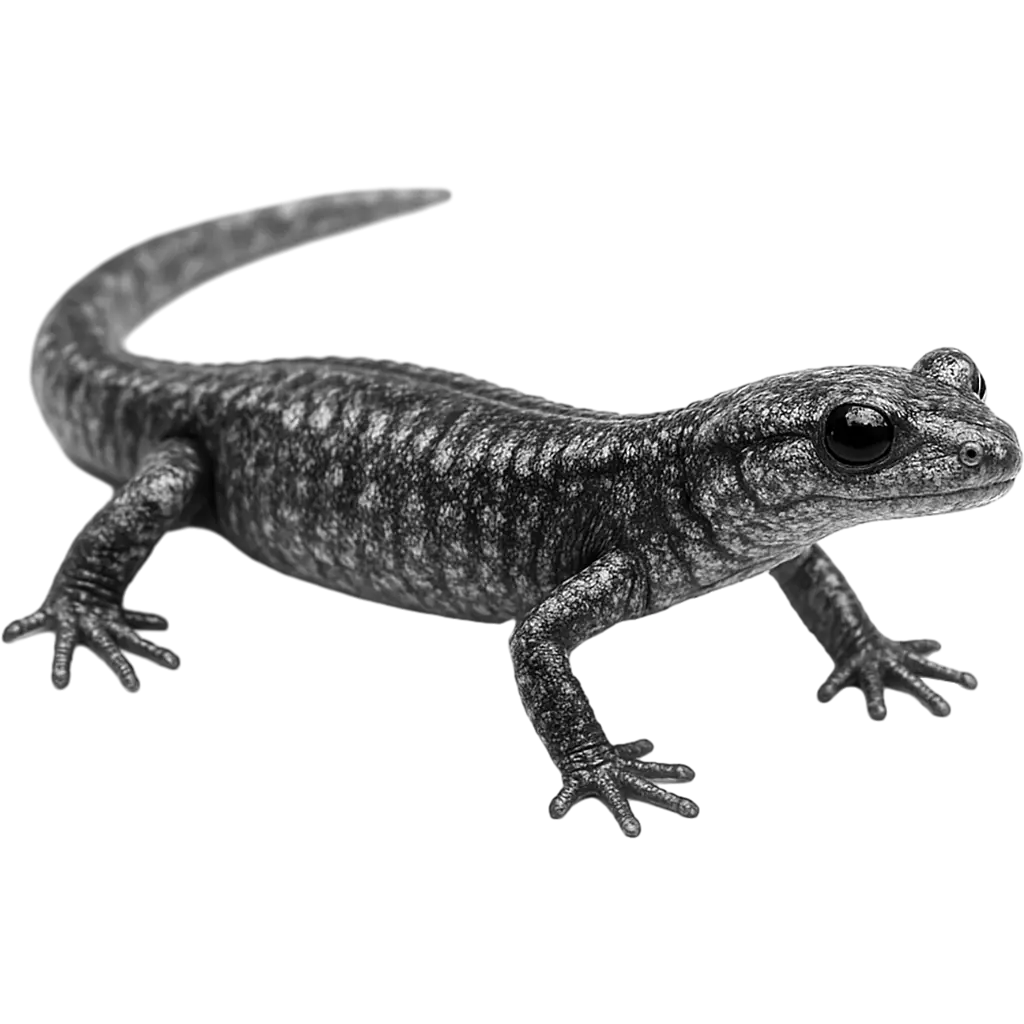
The Korean crevice salamander has a slender, elongated body measuring roughly eight to twelve centimeters in total length, including a laterally compressed tail nearly as long as its torso. Its skin is smooth and moist, colored dark brown to gray with a lighter dorsal stripe that can range from tan

The Cuban Spotted Toad is a robust amphibian with a mottled, warty skin that displays an array of brown and green spots, offering excellent camouflage against the forest floor. Its broad, rounded head and short, sturdy limbs give it a compact build, while its small, recessed eyes and subtle facial

The American Bullfrog, lithobates catesbeianus, is a large, aquatic frog native to North America and recognized for its prominent size and deep, resonant call that resembles the bellowing of a bull. Adult bullfrogs can reach lengths of up to 20 cm (8 inches) from snout to vent, making them the
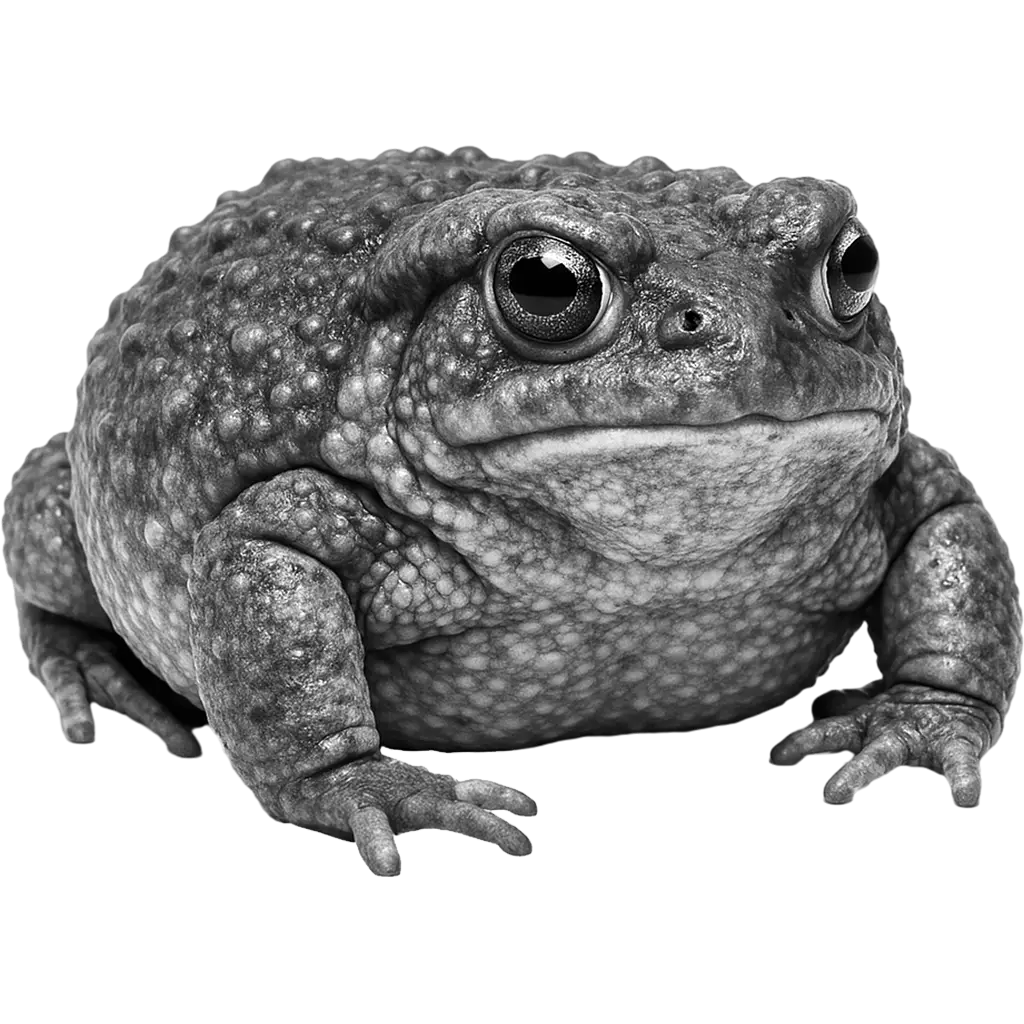
The Fat Toadlet possesses a noticeably plump body with smooth, moist skin that exhibits a subtle blend of olive and brown tones. Its large, round eyes and compact frame give it an endearing appearance while its short, sturdy limbs support rapid hops across damp surfaces. The textured skin, occasionally marked