
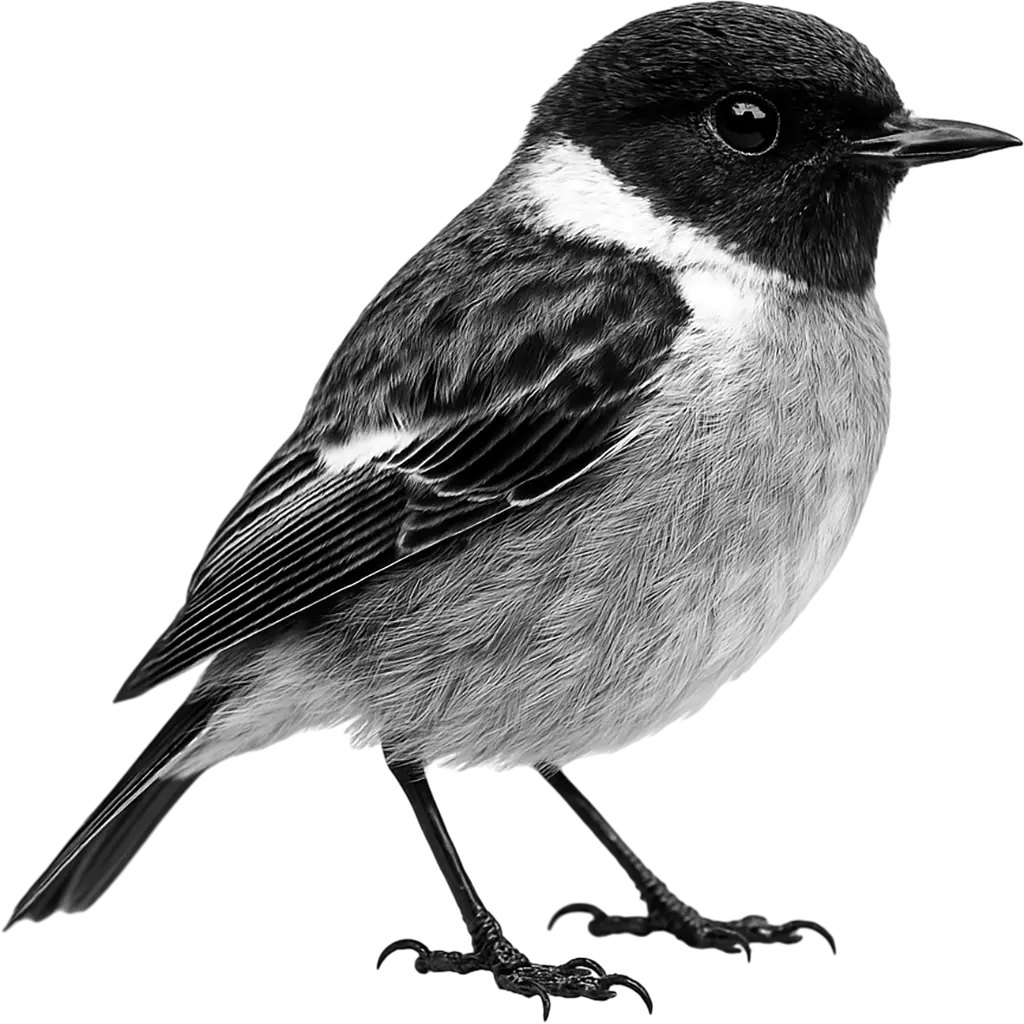
Saxicola Torquatus
African Stonechat
Inhabits open grasslands, savannas, and scrub areas in sub-Saharan Africa.
African Stonechats possess a small, compact frame adorned with muted plumage in shades of brown and gray, accentuated by subtle streaks along the wings and back. Their short tail and sharp, alert eyes, combined with a contrasting dark facial mask, give them a lively, distinctive appearance that blends naturally with open savannas and scrub environments.
| Population: | Stable in sub-Saharan grasslands; local declines due to habitat change |
| Generation Length: | 2.2 years |
| Average Weight: | Approximately 20 grams |
| Average Length: | Approximately 12-14 cm |
| Lifespan: | Approximately 3-5 years in the wild; up to 6 years in captivity |
| Diet: | Insects and seeds |
| Conservation Status: | Least Concern (LC) |
In its natural habitat, the African Stonechat is highly active and alert, spending early mornings and late afternoons perching on low shrubs and fence posts to scan its surroundings for prey. It hops energetically between perches and frequently communicates with soft vocalizations. Social behaviors are modest outside the breeding season, and individuals often forage in loose groups. Their activity adjusts with seasonal food availability, ensuring that they effectively capitalize on optimal foraging conditions in dynamic landscapes.
The diet of the African Stonechat is predominantly insectivorous, with a supplementary intake of seeds. It forages on the ground and from low branches, quickly capturing small insects such as beetles, flies, and caterpillars with sudden bursts of speed. Occasional consumption of seeds provides additional nutrients, supporting its energetic lifestyle. This versatile feeding behavior not only fulfills its dietary needs but also plays a role in seed dispersal, contributing to ecological balance in its habitat.
During the breeding season, males perform brief courtship displays by emitting soft calls and flying in short, agile dashes to attract females. Once paired, the duo constructs a modest nest where the female lays 3-4 eggs, which hatch in about 14-16 days. Both parents help protect and feed the chicks, ensuring they rapidly acquire essential survival skills.
Wild populations of African Stonechats are generally stable across sub-Saharan grasslands and savannas, though localized declines from habitat loss have been recorded. Conservation measures focusing on sustainable land use and habitat restoration are critical to maintain these birds' ecological role in their natural environments.
Classifications
The Key Attributes
Features
- Movement:
Swift and agile; hops between shrubs and perches across open grasslands and scrub.
- Territorial Behavior:
Males defend small territories with brief vocal calls in breeding season.
- Speed:
Moderate, with rapid dashes when startled.
- Diet:
Mainly insects and seeds.
- Physical Features:
- Small, compact body with muted plumage and subtle streaks
- Distinct dark facial mask with a short tail
- Delicate, pointed bill adapted for picking tiny fruits
- Primary Senses:
- Sight
- Hearing
Understanding Habitat and Range
Geography
- Habitat:
Inhabits open grasslands, savannas, and scrub areas in sub-Saharan Africa.
- Migration Patterns:
Non-migratory; local movements occur with seasonal food shifts.
- Geographical Range:
Widespread across sub-Saharan Africa.
- Climate Preferences:
Prefers warm, dry to semi-arid climates.
Navigating the Wilderness
In the wild
- Predators:
Small raptors and arboreal snakes may prey on juveniles.
- Prey:
Small insects and seeds.
- Feeding Behavior:
Forages actively by hopping among low vegetation.
- Diet:
Insects and seeds
- Defensive Mechanisms:
- Rapid, evasive flight and effective camouflage
- Preferred Food Sources:
- Local insects and seeds
Insights Into Reproduction
Mating
- Mating System:
Generally monogamous during the breeding season, with males displaying soft calls to attract females.
- Number of Offspring:
Typically 3-4 eggs per clutch.
- Incubation Period:
Eggs hatch after approximately 14-16 days.
- Parental Involvement:
- Both parents build the nest and feed the chicks until fledging.
Youngsters Section
African Stonechat
Fun Fact
African Stonechats impress with vibrant plumage and agile, darting flights.
Their soft calls and dynamic foraging help attract mates and disperse seeds, supporting healthy ecosystems in sub-Saharan regions.

Download word search puzzles
Word Search Puzzles


Check Out Other Birds
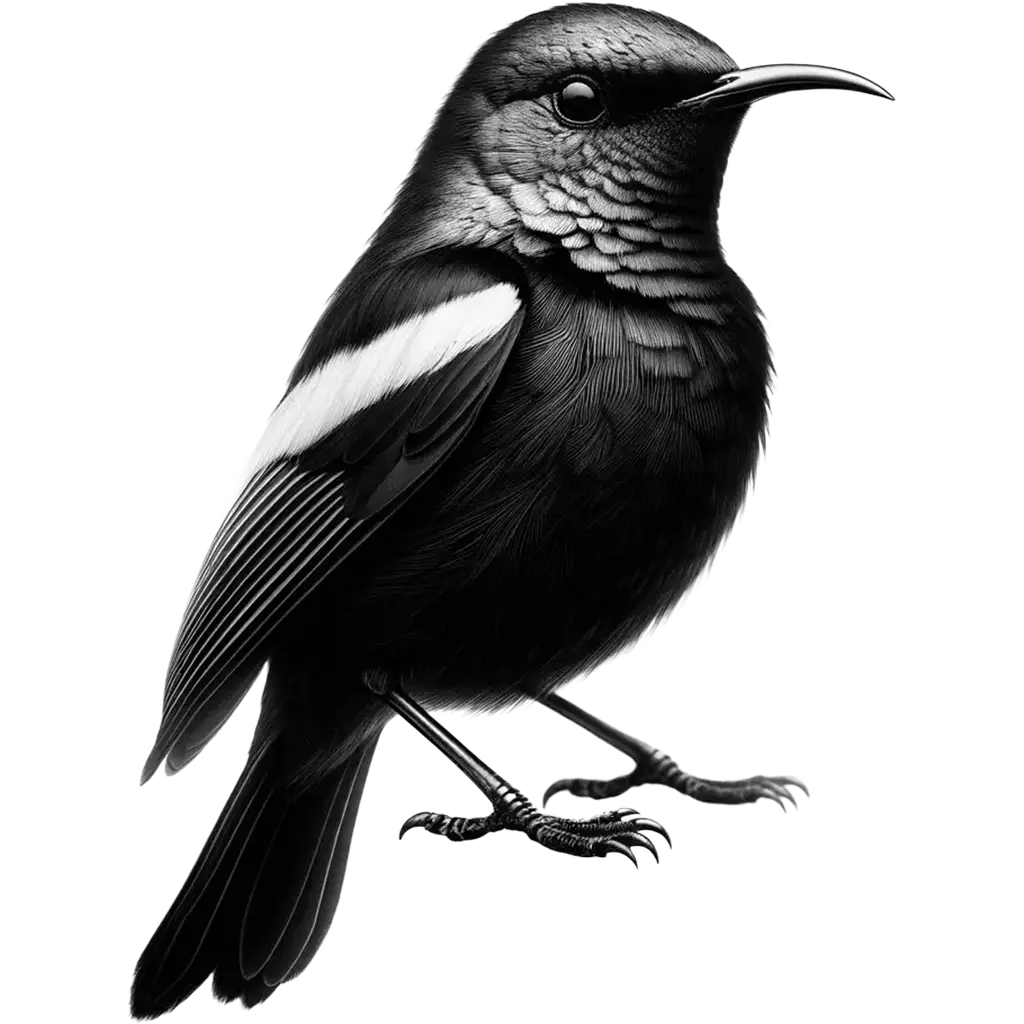
The Nile Valley Sunbird, hedydipna metallica, is a dazzling, small bird species known for its iridescent plumage and energetic behavior. Males are particularly striking, with metallic green feathers covering their head and back, contrasting beautifully with their dark, forked tails and the bright yellow underparts. Females and juveniles have a

Spix's Macaw, cyanopsitta spixii, is a critically endangered bird species, once native to the riparian woodlands along the Rio São Francisco in northeastern Brazil. This small macaw, measuring about 55 to 57 cm in length, is notable for its striking blue plumage, with a lighter grey-blue head and vivid blue

The Bee Hummingbird, Mellisuga helenae, holds the title of the world's smallest bird, native to Cuba and the Isla de la Juventud. Adults measure a mere 5 to 6 centimeters (2 to 2.4 inches) in length, including the beak and tail, and weigh approximately 1.6 to 2 grams (0.056 to

The Tawny Frogmouth, podargus strigoides, is a distinctive bird native to Australia, recognized for its stocky build, large head, and wide, frog-like mouth. Measuring 34 to 53 cm in length and weighing between 157 to 555 grams, they exhibit sexual dimorphism, with females generally being larger than males. Their plumage