
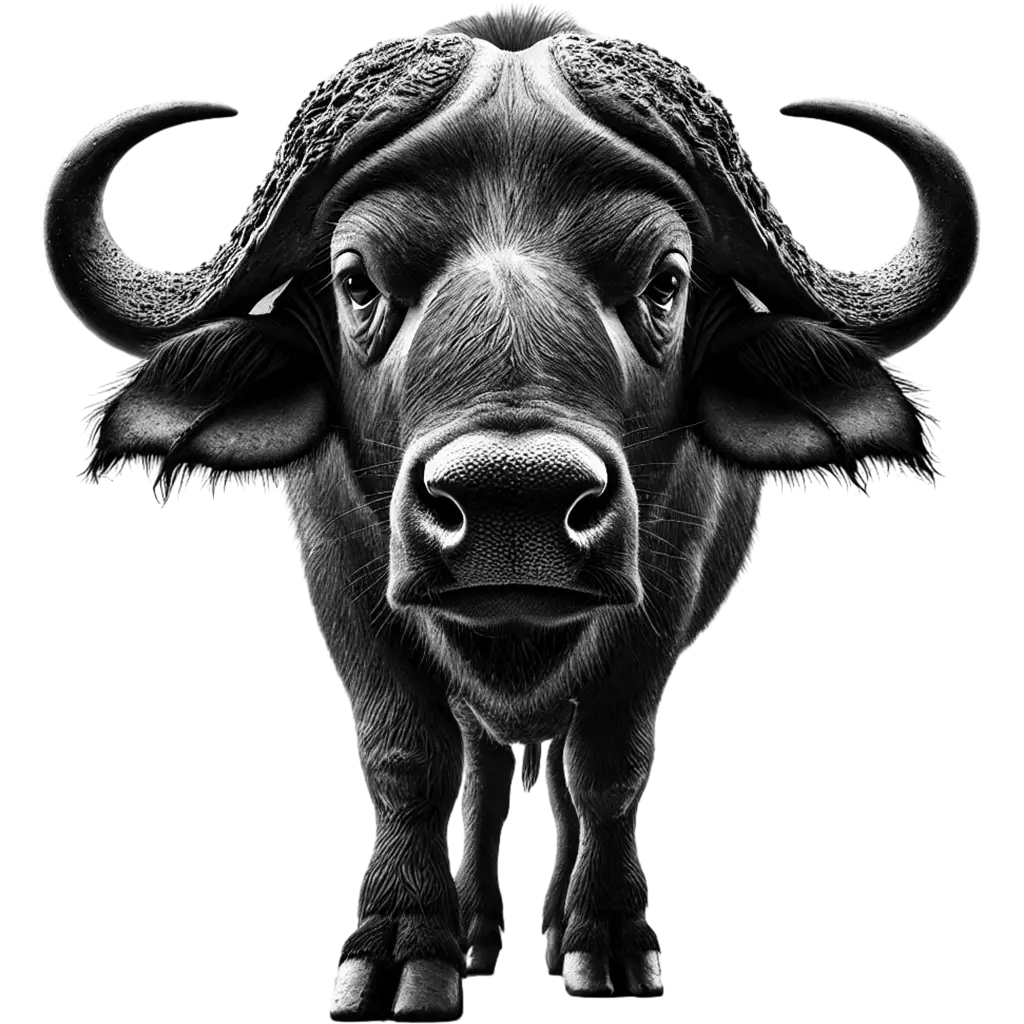
Syncerus Caffer
African Buffalo
Savannas, grasslands, wetlands, woodlands
The African Buffalo is a large, powerful herbivore native to sub-Saharan Africa. It is one of the most formidable and unpredictable animals on the continent, known for its muscular body, thick dark coat, and distinctive curved horns. Males, also known as bulls, have larger horns that fuse at the base to form a thick protective structure called a 'boss.' These animals can grow up to 3.4 meters in length and weigh between 500-900 kg, making them one of the heaviest bovids.
| Population: | Estimated 400,000 individuals |
| Generation Length: | 8-10 years |
| Average Weight: | 500-900 kg |
| Average Length: | 1.7-3.4 meters (body), 70-110 cm (tail) |
| Lifespan: | 11-22 years in the wild, up to 30 years in captivity |
| Diet: | Grasses, leaves, shrubs |
| Conservation Status: | Near Threatened (NT) |
African Buffalos are highly social and live in large herds that can number in the hundreds or even thousands. These herds provide protection against predators and are structured around dominant females and their offspring. Males often form bachelor groups when not competing for mates. The herds move seasonally in search of water and fresh grazing land, often traveling long distances to sustain themselves during the dry season.
As herbivores, African Buffalos graze mainly on grasses but will also browse on shrubs and trees when grass is scarce. They rely heavily on access to water and are often found near rivers, wetlands, or waterholes. Their powerful digestive system allows them to process coarse vegetation efficiently. Their constant grazing plays a crucial role in shaping the African savanna ecosystem, helping maintain balanced plant growth.
Mating season occurs during the rainy season when food is abundant. Dominant males compete for mating rights through displays of strength, including horn clashes. After a gestation period of 11-12 months, females give birth to a single calf, which remains dependent on its mother for several months. Calves are protected within the herd and learn survival skills from older members before becoming independent.
While African Buffalos are currently classified as Near Threatened, they face significant challenges, including habitat destruction, poaching, and diseases such as bovine tuberculosis. Their population remains relatively stable in protected areas, but hunting pressures in unregulated regions pose ongoing risks. Conservation efforts focus on habitat preservation, disease management, and regulating human-wildlife interactions to ensure the species' long-term survival.
Classifications
The Key Attributes
Features
- Movement:
Quadrupedal
- Territorial Behavior:
Highly social, living in large herds
- Speed:
Up to 56 km/h
- Diet:
Herbivore
- Physical Features:
- Massive, muscular body
- Thick, curved horns forming a boss in males
- Dark brown to black coat
- Large, powerful legs for endurance
- Primary Senses:
- Smell
- Hearing
- Sight
Understanding Habitat and Range
Geography
- Habitat:
Savannas, grasslands, wetlands, woodlands
- Migration Patterns:
Seasonal movements based on water availability
- Geographical Range:
Sub-Saharan Africa
- Climate Preferences:
Tropical and subtropical environments
Navigating the Wilderness
In the wild
- Predators:
Lions, crocodiles, hyenas, leopards (mainly preying on calves)
- Prey:
None (herbivorous)
- Feeding Behavior:
Grazes on grasses, browses on shrubs in dry seasons
- Diet:
Grasses, leaves, shrubs
- Defensive Mechanisms:
- Large herds for protection
- Powerful charge with strong horns
- High aggression towards predators
- Preferred Food Sources:
- Tall grasses
- Wetland vegetation
- Shrubs (seasonally)
Insights Into Reproduction
Mating
- Mating System:
Polygynous
- Number of Offspring:
Usually 1 calf per birth
- Gestation Period:
11-12 months
- Parental Involvement:
- Females care for calves
- Herd provides protection
Youngsters Section
African Buffalo
Fun Fact
African Buffaloes possess remarkable memory, allowing them to recognize individual humans and animals they encounter, especially those who pose a threat.
This incredible memory allows them to avoid areas where they've faced danger in the past. They are also known to fiercely protect their young and often work together to fend off predators like lions.

Download word search puzzles
Word Search Puzzles

Check Out Other Mammals

The Raccoon, procyon lotor, is a medium-sized mammal known for its distinctive black mask across the eyes and bushy tail with anywhere from four to ten black rings. Adults typically weigh between 5 to 20 kg, with a body length ranging from 40 to 70 cm, plus a 20 to
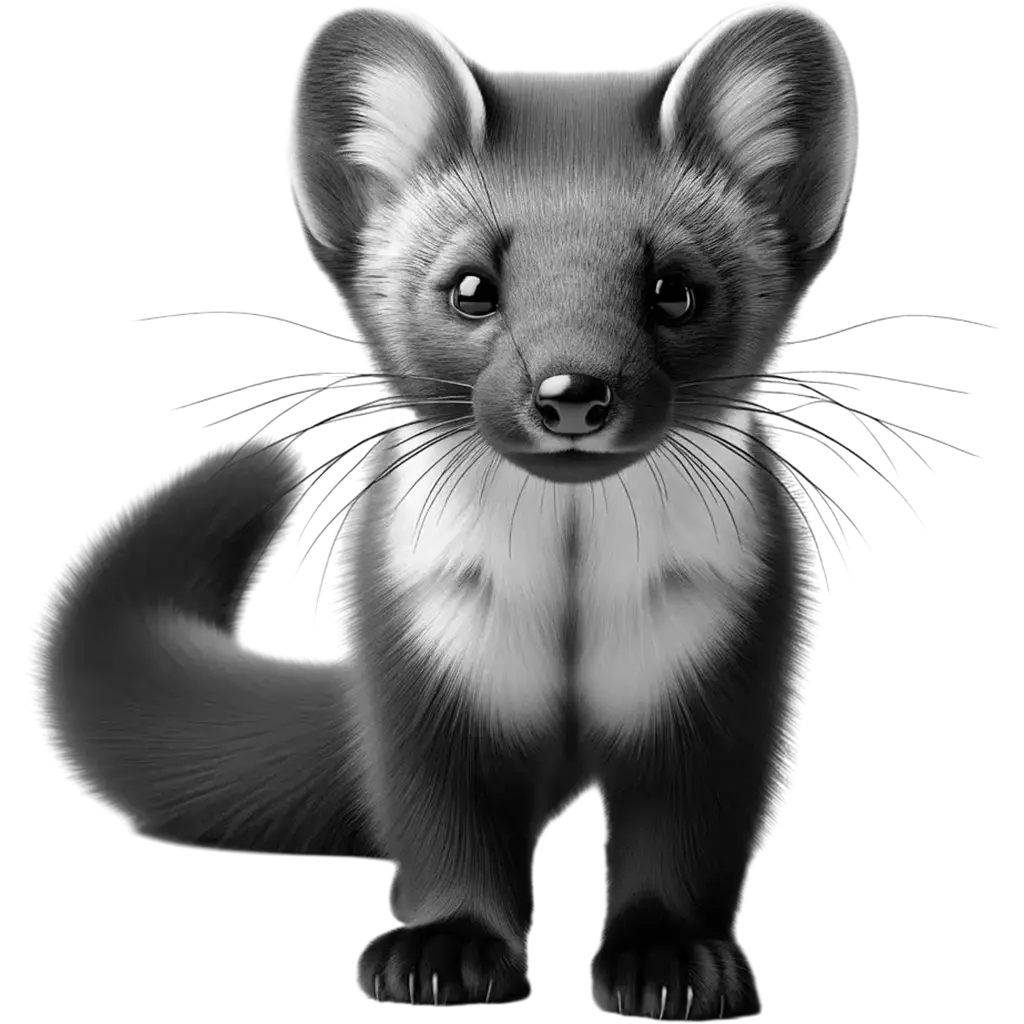
The European Pine Marten, martes martes, is a medium-sized carnivore distinguished by its slender body, bushy tail, and luxurious fur. This species has a rich brown coat with a distinctive creamy-yellow bib on its throat, extending down its chest. Adult pine martens have a body length ranging from 45 to
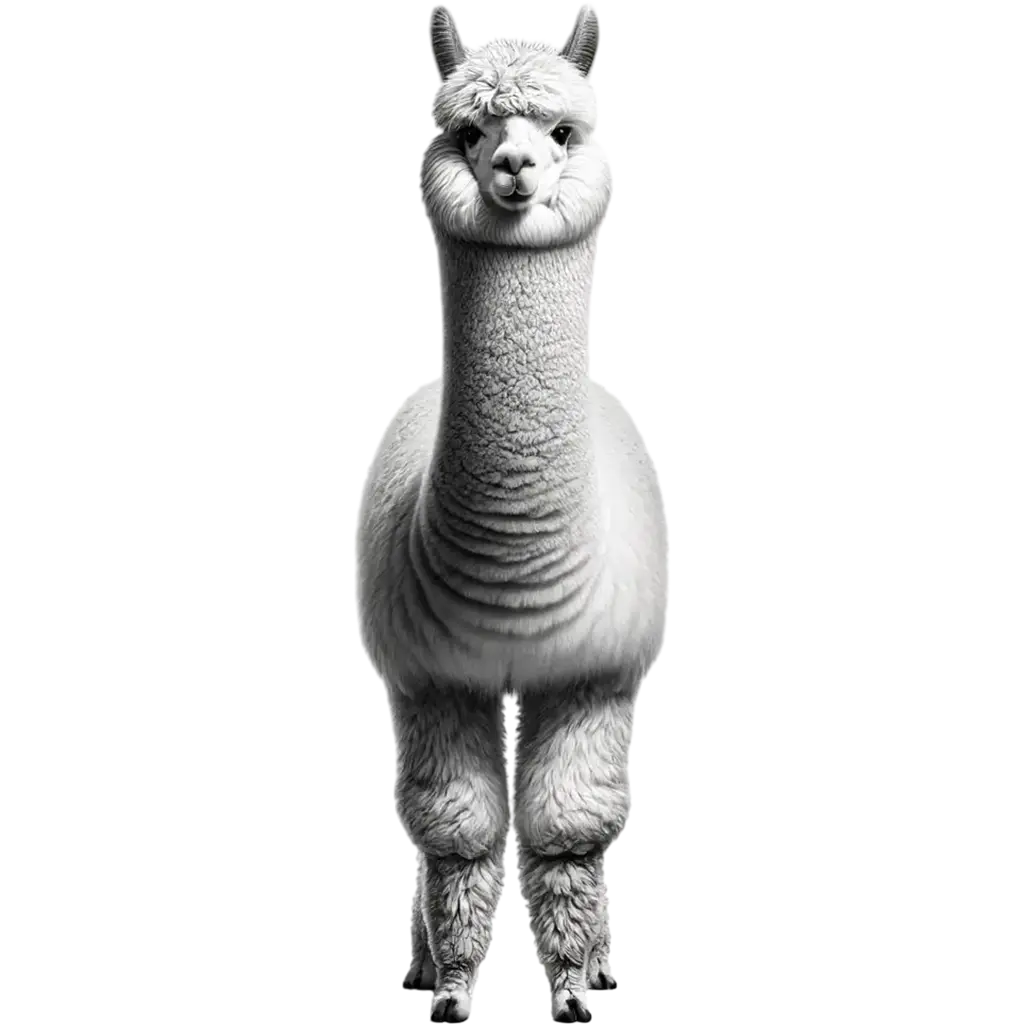
The Alpaca, lama pacos, is a domesticated species of South American camelid, closely related to the llama. Alpacas are renowned for their soft, luxurious fleece, which comes in a variety of shades, including white, black, brown, and gray, allowing for over 22 recognized colors in total. Standing at an average
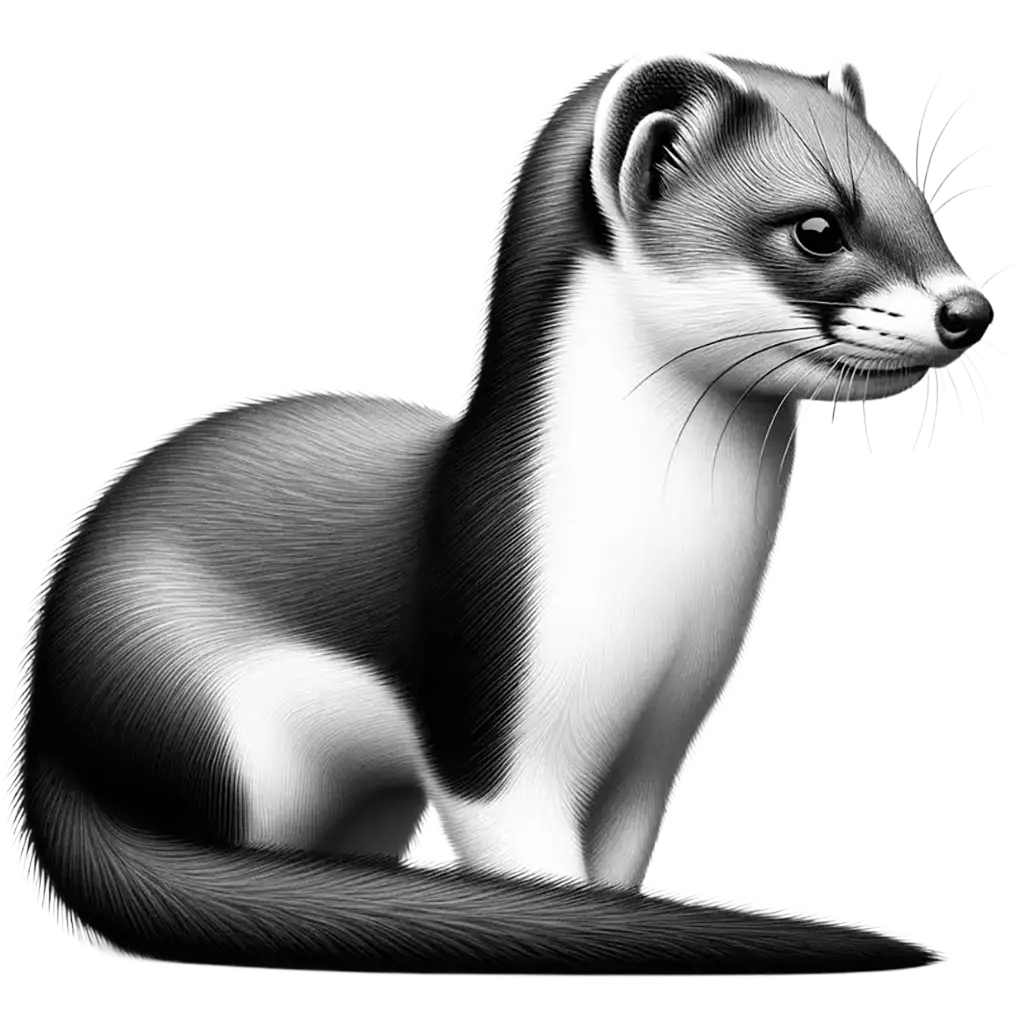
The Stoat, mustela erminea, also known as the ermine in its winter coat, is a small yet fierce carnivorous mammal known for its agility and hunting prowess. Adults can reach lengths of 17 to 32 cm, excluding a tail of 7 to 12 cm, and weigh between 90 to 350